This page was last updated on 30 September 2026.
On 15 May 2026, an outbreak of Ebola disease, caused by the Bundibugyo virus, was declared by Democratic Republic of Congo (DRC) health authorities. It has become a public health emergency of international concern.
This outbreak was identified following alerts of unusual deaths in early May in an area northwest of Bunia, the capital of Ituri province in DRC. The outbreak has spread fast in DRC, in an area of extreme insecurity. The outbreak in neighbouring Uganda has been declared over.
Despite significant efforts to scale up the response, the outbreak remains a real public health emergency, especially as it continues to spread at an alarming rate, with around 4,000 deaths reported to date. This is the fastest growing Ebola disease outbreak on record, and the largest ever in DRC.
MSF has extensive experience in responding to Ebola outbreaks. However, this outbreak is of the Bundibugyo virus, which poses particular challenges, given there is a short supply of testing kits for diagnosis, and this virus does not benefit from approved treatments nor vaccines.
Between the start of our response and 27 September, MSF teams have been providing care in Ebola treatment centres:
3,500
3,5
1,600
1,6
580
58
What to know about the 2026 Ebola disease outbreak
How is MSF responding to the 2026 Ebola outbreak?
What is needed to end the Ebola disease outbreak?
Is the 2026 Ebola outbreak different from previous Ebola disease outbreaks?
Where is the 2026 Ebola outbreak happening?
What is the Bundibugyo strain and are there treatments and vaccines?
Why are experts concerned about the 2026 Ebola outbreak?
Is MSF experienced in responding to Ebola outbreaks?
Latest news about MSF’s Ebola outbreak response in DRC
DRC Ebola outbreaks
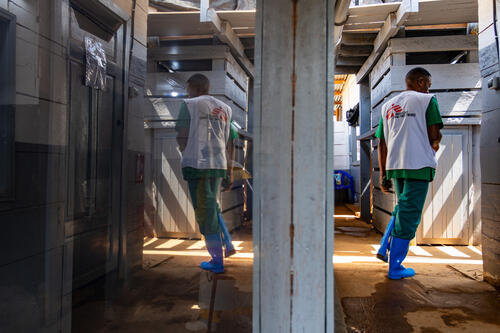
Children are being left behind in the current Ebola disease outbreak response
Press Release
15 Oct 2026
DRC Ebola outbreaks
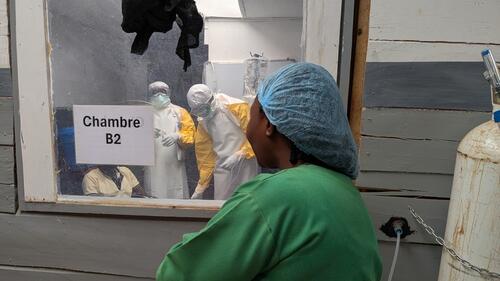
Ebola disease outbreak spreads like a megafire in North Kivu as new hotspots multiply
Project Update
5 Oct 2026
Democratic Republic of Congo
MSF staff member tests positive for Ebola disease and is medically evacuated
Statement
1 Oct 2026