



MSF provided support to communities in Laos from 1989, handing over our last project in 2007.
MSF first worked in Laos in 1989 at the outset of the repatriation of Thailand’s Laotian refugees to the country. In 1992, we began running a technical assistance programme where we provided training at hospitals for local staff and renovated hospitals to improve their quality and expand services. We responded to a cholera outbreak in 1994, and in 1998 began distributing rice to families who were relocated by the Laotian government.
We opened an HIV project in Savannakhet province in 2001, working until 2007, when we handed it over to the Ministry of Health.
1989
1989
MSF Speaking Out Podcast: MSF and the Rohingya 1992-2014
Podcast: MSF and the Rohingya 1992-2014
This podcast is adapted from the MSF Speaking Out Case Study “MSF and the Rohingya 1992–2014”.
It brings to light two decades of MSF advocacy activities as part of its humanitarian assistance to the Rohingya people in Bangladesh and Myanmar.
It examines the challenges that MSF teams in the field and headquarters encountered when deciding whether and how MSF could publicly speak out about the plight of the Rohingya facing persecutions and violence in Myanmar and Bangladesh. During the 1992-2014 period, MSF worked mostly through diplomatic channels “behind closed doors” to advocate about the Rohingya’s plight with foreign diplomats and United Nations agencies. This “silent advocacy” was challenged within MSF by those who felt that the lack of public speaking out meant MSF was abandoning a persecuted population. They considered that maintaining an operational presence without speaking out publicly was not an ethically justifiable option for an independent and impartial humanitarian organisation like MSF.
Over 7 episodes, the podcast explores the challenges, dilemmas and internal disagreements underlying MSF’s humanitarian response to assist the Rohingya under the Myanmar authoritarian regime.
This podcast is available on all podcast platforms.
Episode 1: Bangladesh in the 1990s
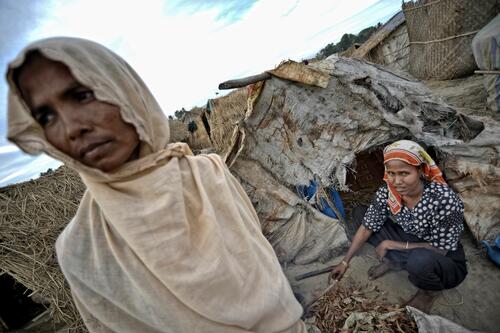
In 1991–1992, Myanmar’s military repression forced over 250,000 Rohingya to flee to Bangladesh, where they settled in refugee camps. In the camps near Cox’s Bazar, MSF observed dire living conditions and violence, while Bangladeshi authorities limited aid and force repatriations. MSF engaged in “silent advocacy,” raising concerns only with political stakeholders to maintain activities in the camps. This episode highlights enduring dilemmas in MSF’s humanitarian approach with the Rohingya: publicly speaking out versus staying silent to preserve access.
Photo credits: © Generic MSF
Episode 2: Years of Growth and Silence
In Myanmar an increasingly authoritarian regime was taking shape, inhibiting the return of refugees and making the lives of the Rohingya who’ve remained in Rakhine State increasingly difficult. MSF documented systematic persecution but is divided over how to approach the dilemma of access versus speaking out. While from 1994, MSF Holland opted for “silent diplomacy” to expand its malaria and HIV/AIDs programmes in Myanmar, MSF France decided to withdraw in 2006, denouncing the authorities lack of transparency.
Photo credits: © Carlos Quarenghi
Episode 3: A Slow Opening at MSF
In 2006, following MSF’s internal reorganisation, MSF Operational Centre Amsterdam (OCA) refocused advocacy on the Rohingya marking a shift in its approach to testimony. To bypass Myanmar’s restrictions, strengthened through violent crackdowns on protesters after 2007’s Saffron Revolution, most of the speaking out concerned the fate of unregistered refugees in Bangladesh. Nonetheless, in Myanmar, MSF OCA spoke out on the humanitarian consequences of state-sponsored discrimination, repression, and lack of access to healthcare for both the Rohingya and people living with AIDS.
Photo credits: © Giulio Di Sturco
Episode 4: Myanmar Opens Up
In 2008, Cyclone Nargis devastated Myanmar’s Irrawaddy Delta, killing over 130,000 people. The crisis opened a humanitarian space. From 2009 onwards, MSF intensified its advocacy on the Rohingya including the “Fatal Policy: How the Rohingya Suffer the Consequences of Statelessness” report that highlighted the health consequences of restrictive policies in Myanmar. Though never publicly published, it becomes a key tool in bilateral advocacy. Throughout, MSF balanced the need for advocacy with operational access, gradually developing a comprehensive regional strategy that highlighted the Rohingya crisis as a major humanitarian and political issue.
Photo credits: © Generic MSF
Episode 5: Renewed Violence and Loss of Access to Myanmar
In 2012, violence broke out in Myanmar’s Rakhine State between Buddhists and Rohingya after a Buddhist woman was allegedly killed by Rohingya men. Retaliatory attacks displaced tens of thousands and created widespread insecurity. MSF struggled to provide healthcare amid harassment, access restrictions, and arrests of Rohingya staff, forcing a suspension of operations. MSF faced ethical challenges in maintaining neutrality and impartiality while being seen by other communities in Rakhine as biased toward Muslims. With the regime detaining two MSF staff members, the organisation found itself once again in a difficult position when it comes to speaking out.
Photo credits: © Kaung Htet
Episode 6: Under Pressure in Myanmar
In January 2014, in Du Chee Yar Tan, Rakhine State, MSF OCA treated wounded Rohingya after a violent attack and issued a public statement. The Myanmar government denied the violence, pressured MSF for patient details, and accused it of exaggeration. Over the following weeks, MSF issued cautious public statements emphasising neutrality and commitment to medical needs. Teams face harassment, protests, and accusations of misinformation from the Myanmar government. Negotiations over the renewal of MSF’s Memorandum of Understanding in the country collapsed. On 27 February 2014, MSF OCA was ordered to close all programs in Myanmar.
Photo credits: © Chris Huby
Episode 7: Introspection at MSF
Eventually, the Myanmar Government backed down and limited the ban to MSF activities in Rakhine. This still left the organisation with a dilemma: speaking out on Rohingya persecution versus preserving life-saving programmes in other states. After tense debates, MSF OCA leadership decided to withdraw from Rakhine to retain access elsewhere. Many argued that this compromises principles for access. In 2017, mass violence drove Rohingya into Bangladesh with thousands killed, which MSF documented and publicly denounced. International legal cases accused Myanmar of genocide, while abuses persisted. MSF continues to question its 2014 choices and the balance between speaking out and access.
Photo credits: © Eddy McCall/MSF
Anchor Links
Hero Image
Headline
Podcast: MSF and the Rohingya 1992-2014
Background
Image
Schedule content for publication
Off
Description
This podcast is adapted from the MSF Speaking Out Case Study “MSF and the Rohingya 1992–2014”.
It brings to light two decades of MSF advocacy activities as part of its humanitarian assistance to the Rohingya people in Bangladesh and Myanmar.
It examines the challenges that MSF teams in the field and headquarters encountered when deciding whether and how MSF could publicly speak out about the plight of the Rohingya facing persecutions and violence in Myanmar and Bangladesh. During the 1992-2014 period, MSF worked mostly through diplomatic channels “behind closed doors” to advocate about the Rohingya’s plight with foreign diplomats and United Nations agencies. This “silent advocacy” was challenged within MSF by those who felt that the lack of public speaking out meant MSF was abandoning a persecuted population. They considered that maintaining an operational presence without speaking out publicly was not an ethically justifiable option for an independent and impartial humanitarian organisation like MSF.
Over 7 episodes, the podcast explores the challenges, dilemmas and internal disagreements underlying MSF’s humanitarian response to assist the Rohingya under the Myanmar authoritarian regime.
It brings to light two decades of MSF advocacy activities as part of its humanitarian assistance to the Rohingya people in Bangladesh and Myanmar.
It examines the challenges that MSF teams in the field and headquarters encountered when deciding whether and how MSF could publicly speak out about the plight of the Rohingya facing persecutions and violence in Myanmar and Bangladesh. During the 1992-2014 period, MSF worked mostly through diplomatic channels “behind closed doors” to advocate about the Rohingya’s plight with foreign diplomats and United Nations agencies. This “silent advocacy” was challenged within MSF by those who felt that the lack of public speaking out meant MSF was abandoning a persecuted population. They considered that maintaining an operational presence without speaking out publicly was not an ethically justifiable option for an independent and impartial humanitarian organisation like MSF.
Over 7 episodes, the podcast explores the challenges, dilemmas and internal disagreements underlying MSF’s humanitarian response to assist the Rohingya under the Myanmar authoritarian regime.
Eyebrow
Country
Thumbnail Image
Topic
Do not include into latest
On
Select caption
Short caption
Use a custom breadcrumb
No
Somalia
Survey of displaced families in Baidoa finds every second child malnourished
Press Release
11 Aug 2026
Podcast: War Crimes and Politics of Terror in Chechnya 1994–2004
Podcast: War Crimes and Politics of Terror in Chechnya 1994–2004
This podcast is adapted from the case study “War Crimes and Politics of Terror in Chechnya, 1994–2004”. Over 9 episodes, it explores the challenges and dilemmas MSF faced during the two wars in Chechnya between 1994 and 2004. These wars raised many questions for MSF on when and how the organisation should speak out publicly about the war crimes its staff witness and the chilling effects of the politics of terror on the Chechen people.
Through MSF press releases, internal reports, speeches, and news articles of the time as well as eyewitness testimonies from MSF staff, this podcast series examines the challenges MSF faced when access to those in need was repeatedly blocked by the Russian authorities, forcing international staff to operate and train Caucasus teams at a distance. Later on, when staff members were kidnapped, MSF was confronted with a new dilemma - whether to raise a voice or lay low until their colleagues were released?
This podcast is available on all podcast platforms.
Episode 1: The First War in Chechnya
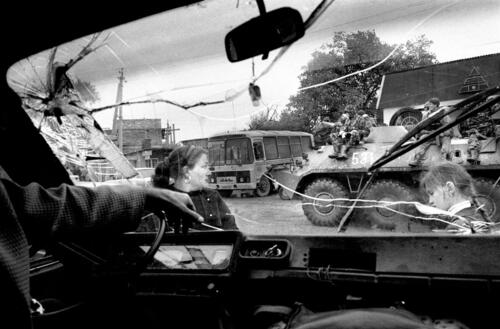
The first war of independence of Chechnya with the Russian Federation starts in 1994 and runs for two years during which access was regularly blocked by Russian forces. MSF feeds the press with information on the rapidly deteriorating conditions and the Russian’s refusal to let them into many areas of the country.
Photo credits: © Generic MSF
Episode 2: A Far Cry from Peace
In 1999, while the country and its people are still struggling to recover, the Russian authorities start bombing Chechnya again. The Russian Federation President, Boris Yeltsin talks publicly about a peace plan but his forces carry out a ruthless bombing campaign on rebel-held villages in southern Chechnya. MSF sections are united in wanting to speak out about what their staff witnessed before being forced out of the region. So what is the best way to draw the world's attention to the plight of the Chechen population, without endangering the national staff who continue to work in southern Chechnya?
Photo crédits: © Olivier Jobard/MYOP
Episode 3: Advocacy Without Access
With hostilities in Chechnya flaring up again in what the Russian Federation terms as “anti-terrorist operations”, MSF leaders decide to take advantage of the ceremony of the reception of Nobel Peace Prize to call on the international community to intervene. But MSF teams are struggling to work in a Chechnya facing all-out war and dangerous security problems. Instead, MSF starts support refugees in the neighbouring republics where they collect first-hands accounts. Inside Chechnya, operations are run through staff members from the Caucasus who are trained, supported, and managed from afar by international teams in the region. MSF is in a difficult situation that raises many questions: Should MSF be speaking out based on refugees’ testimonies if there are no operational activities with international staff permanently on the ground sin Chechnya? When dealing with a regime in denial of the realities of a war, why is it important to use the word ‘war’? Is it up to MSF to call for this qualification?
Photo crédits: © Sandra Aslaksen
Episode 4: A Cautious Re-Entry to Chechnya
Throughout the year 2000, MSF seizes every opportunity to raise the alarm on the Chechen’s fate with governments and institutions around the world, but to little concrete effect other than general condemnation. With still no international staff in the country, MSF sections resort to so-called ‘remote control’ management, using locally hired employees to deliver aid on the ground. Concerns over the organisation’s legitimacy in speaking out remain and soon one of the sections starts making unauthorised and dangerous trips over the border into Chechnya from Dagestan where they ran distributions of basic care items. Under attack in the Russian media, MSF wonders whether it should ignore or address the accusations of espionage regularly thrown at the organization?
Photo credits: © Gazelle Gaignaire
Episode 5: All on the Same Page
MSF’s operations in Chechnya are slowly starting back up again after 3 years of being run remotely. Although the bombing stops, general insecurity is pervasive and restarting these programmes is not without risks.
With an international team back on the ground in Chechnya, everyone agrees on the need to document the situation more thoroughly. A collection of patients’ accounts in the report “Chechnya: The politics of terror” is handed over at a press conference. The various MSF sections agree on a coordinated media strategy for getting news out of Chechnya and into the press, in particular the Russian media.
Photo credits: © Gazelle Gaignaire
Episode 6: 'Kidnapped by Mistake'
Kidnappings are becoming more commonplace in Chechnya and closer to home for MSF as various staff members are held for questioning. At the start of 2001, a key member of the team in the North Caucasus is taken hostage and questions are asked as to whether there's a causal link between MSF’s decision to speak out in the media and the kidnapping? MSF is faced with the following dilemma: should the organisation speak out in the media to create visibility and hopefully bring their colleague some much-needed protection? Or should MSF be as discreet as possible to avoid a rise in the hostage’s so-called ‘market value’? Is it wise to take active steps to secure the hostage's release, such as publicly denouncing the responsibilities, negligence or even complicity of the government controlling the territory where the kidnapping took place?
Photo credits: © Eddy Van Wessel
Episode 7: Anti-Terrorist Rhetoric
MSF’s operations have been closed down in Chechnya in response to the MSF Coordinator’s kidnapping. After his release, three weeks later, MSF tries to restart its operations in Chechnya but there are delays due to security issues, and for now, the only programmes in the country are run through remote control management from Dagestan, on Chechnya eastern border. Most of MSF’s Caucasus staff are behind the return and support MSF speaking out in the media. Meanwhile and in a statement after the September 11th 2001 attacks in New York and Washington, Vladimir Putin, President of the Russian Federation links Russian military operations in Chechnya with the anti-terrorist combat launched by the American government.
After the events of 11 September 2001, the West's attitude and view of Russia became more complacent, which weakened the impact of MSF's efforts to raise awareness of the plight of the Chechen population.
Photo credits: © Olivier Jobard
Episode 8: A Deliberate Strategy of Non-Assistance
The situation in the North Caucasus is becoming increasingly violent. The Russian federal authorities are forcing Chechen refugees to return to Chechnya, where they reign terror. They are also putting pressure on humanitarian organisations to stop helping refugees in 'Ingushetia, which would encourage them to return. When colleagues at other organisations are kidnapped in Chechnya, MSF closes down all operations in the country again. With a diminishing international presence in the warzone, MSF is once again faced with dilemmas - should it continue to speak out about human rights abuses its staff haven't witnessed? How can they help those in need and in danger in the region? And how long will it be before one of their own staff is once again held hostage?
Photo credits: © Simon Norfolk
Episode 9: Speaking Out in a Time of Kidnapping
In August 2002, the threat to MSF becomes a reality and another Coordinator, a Dutch national for the MSF Swiss section, is kidnapped in Dagestan. The organisation is once again faced with the dilemma of how and when to speak out on the situation in the North Caucasus while one of its members is held hostage. MSF opts to keep quiet at first, but as the weeks turn into months and the MSF Coordinator is still not released, MSF starts questioning whether it should take active steps to secure the hostage’s release by publicly pointing out a government’s responsibilities, negligence, or even complicity when a kidnapping occurs on its soil, or should it not enter into these conversations to avoid the potential for a government to dig in its heels? Tensions are running high, especially between MSF, the Dutch authorities and the family of the hostage, and some feel the structures within the organisation are not helping the situation.
Photo credits: © Michael Yassukovich
Anchor Links
Hero Image
Headline
Podcast: War Crimes and Politics of Terror in Chechnya 1994–2004
Background
Image
Schedule content for publication
Off
Description
This podcast is adapted from the case study “War Crimes and Politics of Terror in Chechnya, 1994-2004”. Over 9 episodes, it explores the challenges and dilemmas MSF faced during the two wars in Chechnya between 1994 and 2004. These wars raised many questions for MSF on when and how the organisation should speak out publicly about the war crimes its staff witness and the chilling effects of the politics of terror on the Chechen people.
Through MSF press releases, internal reports, speeches, and news articles of the time as well as eyewitness testimonies from MSF staff, this podcast series examines the challenges MSF faced when access to those in need was repeatedly blocked by the Russian authorities, forcing international staff to operate and train Caucasus teams at a distance. Later on, when staff members were kidnapped, MSF was confronted with a new dilemma - whether to raise a voice or lay low until their colleagues were released?
Through MSF press releases, internal reports, speeches, and news articles of the time as well as eyewitness testimonies from MSF staff, this podcast series examines the challenges MSF faced when access to those in need was repeatedly blocked by the Russian authorities, forcing international staff to operate and train Caucasus teams at a distance. Later on, when staff members were kidnapped, MSF was confronted with a new dilemma - whether to raise a voice or lay low until their colleagues were released?
Eyebrow
Thumbnail Image
Do not include into latest
On
Select caption
Short caption
Use a custom breadcrumb
No
Podcast: The Hunting and Killing of Rwandan Refugees in Zaire-Congo 1996-1997
Podcast: The Hunting and Killing of Rwandan Refugees in Zaire-Congo 1996-1997
This podcast is adapted from the case study “The Hunting and Killing of Rwandan Refugees in Zaire-Congo 1996-1997". In 8 episodes, it investigates MSF's experience in the aftermath of the 1994 Rwandan Tutsi genocide, and in particular, with the impact on local populations and refugees living in the Democratic Republic of Congo (formerly Zaire).
The series expresses on the constraints, questions, and dilemmas faced by MSF teams attempting to bring relief to Rwandan refugees and local populations.
This podcast is available on all podcast platforms.
Episode 1: Resumption of War in Eastern Zaire
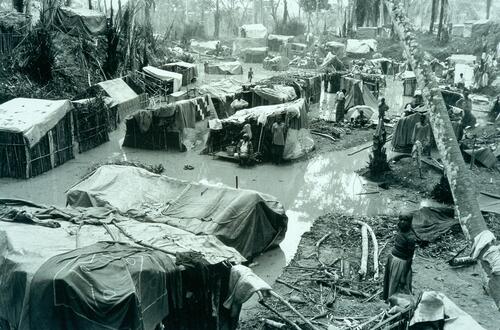
In 1996, MSF attempts to alert the international community about the resurgence of conflict in eastern Zaire, as witnessed by teams on the ground. The perpetrators of the Rwandan Tutsi genocide, living in refugee camps, threaten and attack the Zairean civilian population. The same perpetrators are holding Rwandan refugees that fled the 1994 genocide, hostage within the camps. The new Rwandan regime and its Zairian ally, the Alliance of Democratic Forces for the Liberation of Congo-Zaire (ADFL), launches counter attacks on the refugee camps.
Photo credits : © Wim Van Cappellen
Episode 2: Information War Over Refugee Numbers
As the instability of the region increases, MSF and other humanitarian organisations are eventually forced out of eastern Zaire entirely. MSF suspects that thousands of refugees are suffering and at risk of dying. The organisation decides to launch an appeal for an armed international intervention and communicates about the plight of the population, predicting a health catastrophe, if access for aid agencies is not provided.
Photo credits: © Frederic Sautereau
Episode 3: Under Fire in the Press
In November 1996, the offensive led by the ADFL and Rwandan forces empties the camps in eastern Zaire of their population. Some refugees were repatriated to Rwanda and others fled into the neighboring forest. MSF denounces the repatriation conditions and is reproached by the press for "catastrophic" forecasts made a few weeks earlier.
Photo credits: © Frederic Sautereau
Episode 4: Humanitarians Used as Bait
Finally allowed into South Kivu, a province in eastern Zaire, the MSF teams discover that refugees are being massacred by the ADFL and its allies, particularly in the Massisi and the Shabunda regions. MSF realises that MSF teams are used as bait by the ADFL to lure the refugees out of the forests and kill them.
Photo credits: © Wim Van Cappellen
Episode 5: Forest Exodus
The ADFL takes control of all of the Kivu province and refugees continue to flee their rapid advance eastwards through the forest. MSF struggles to maintain access to the refugees amidst the violence, restrictions, and threats to team safety, while receiving continued reports about refugee massacres.
Photo credits: © Wim Van Cappellen
Episode 6: Silent vs Public Advocacy
MSF's exploratory mission teams complete their reports on their Masisi and Shabunda visits. Details of mass graves, massacres, and the fact that the ADFL used humanitarian teams as bait to lure refugees out of the forests, sent shock waves through MSF offices. A debate about the use of the information collected ensued: should it be made public or not?
Photo credits: © Wim Van Cappellen
Episode 7: The ‘Forced Flight’ Report
In May 1997, MSF published a new study describing the movements of refugees in the Great Lakes region of Africa and the fate of refugees. MSF planned to distribute the report to a small group of journalists, asking them not to cite MSF as the source of the information. However, a lack of communication between MSF offices and with the teams in the field, exacerbates tensions.
Photo credits: © Frederic Sautereau
Episode 8: Learning from Retrospective Reports
From mid-1997, MSF teams try to work together again. The organisation publishes retrospective studies that trace the odyssey of the Rwandan refugees through the Zairean jungle and contributes testimony to international investigations on human rights violations in the region.
Photo credits: © Wim Van Cappellen
Anchor Links
Hero Image
Headline
Podcast: The Hunting and Killing of Rwandan Refugees in Zaire-Congo 1996-1997
Background
Image
Schedule content for publication
Off
Description
This podcast is adapted from the case study “The Hunting and Killing of Rwandan Refugees in Zaire-Congo 1996-1997". In 8 episodes, it investigates MSF's experience in the aftermath of the 1994 Rwandan Tutsi genocide, and in particular, with the impact on local populations and refugees living in the Democratic Republic of Congo (formerly Zaire).
The series expresses on the constraints, questions, and dilemmas faced by MSF teams attempting to bring relief to Rwandan refugees and local populations.
The series expresses on the constraints, questions, and dilemmas faced by MSF teams attempting to bring relief to Rwandan refugees and local populations.
Eyebrow
Thumbnail Image
Do not include into latest
On
Select caption
Short caption
Use a custom breadcrumb
No
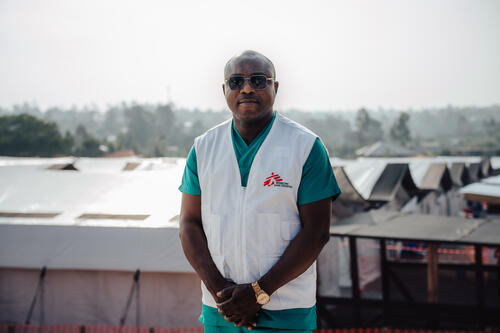
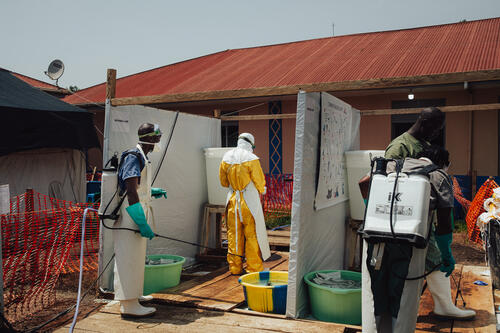
تفشي الإيبولا في الكونغو الديمقراطيّة
ثلاثة أسئلة حول التجربة السريرية الجديدة لتفشّي مرض الإيبولا في جمهورية الكونغو الديمقراطية
مقابلة
11 Aug 2026
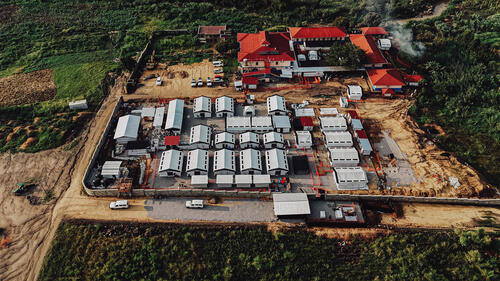
DRC Ebola outbreaks
Three questions about the new clinical trial for the Ebola disease outbreak in DRC
Interview
11 Aug 2026
Podcast prises de parole publiques de MSF : MSF et Srebrenica 1993-2003
Podcast prises de parole publiques de MSF : MSF et Srebrenica 1993-2003
Cette série de podcast est basée sur l’étude de cas «MSF et Srebrenica 1993–2003».
Les cinq épisodes examinent les contraintes, questionnements et dilemmes posés par la prise de parole publique aux équipes de MSF présentes dans l’enclave musulmane de Srebrenica depuis le début de son siège par les forces bosno-serbes, en 1993, jusqu’à sa chute, en juillet 1995 et les massacres qui ont suivi, qualifiés, depuis, d’«actes de génocide» par la justice internationale.
Prologue
Crédits photo : René Caravielhe/MSF
Épisode 1 : Entrer dans l’enclave
Alors que les Nations unies (ONU) ont déclaré Srebrenica «zone de sécurité» en mars 1993, la communauté musulmane piégée à l'intérieur de la ville vit sous des bombardements constants. MSF fourni des soins médicaux tout en commençant à se demander quelle protection l'ONU peut réellement offrir.
Crédits photo : René Caravielhe/MSF
Épisode 2 : Une prison à ciel ouvert
Alors que la violence s’intensifie MSF est la seule source de soins médicaux à Srebrenica. L’association se demande si son rôle dans la ville assiégée n’est pas celui de médecins geôliers. MSF contribue t'elle sans le vouloir à la purification ethnique menée par les Serbes de Bosnie ? Appeler à l'évacuation des Bosniaques pourrait-il avoir pour effet d'aider la politique de nettoyage ethnique conduite par les Serbes de Bosnie afin de chasser les Musulmans et revendiquer leurs terres ? Et si les Bosniaques veulent partir, quelle devrait être la position de MSF ?
Crédits photo : © Rip Hopkins
Épisode 3 : La chute de la «zone de sécurité»
En juillet 1995, Srebrenica est tombe aux mains des Serbes de Bosnie et environ 8 000 hommes et garçons musulmans sont massacrés. Comment cela peut-il se produire en présence de Casques bleus des Nations unies (ONU) dans une ville déclarée « zone de sécurité » ? Quels mécanismes MSF met-elle en place pour dénoncer l'incapacité de l'ONU à protéger la population de Srebrenica ?
Crédits photo: © Olivier Jobard/MYOP
Episode 4 : Pas d’accords de paix au détriment de la justice
Après la chute de Srebrenica, des milliers de personnes sont mortes, portées disparues ou ont été transférées dans des camps de réfugiés. MSF s’interroge sur ce qui peut être fait pour s’assurer que la paix ne soit pas conclue au détriment de la justice. Où résident les responsabilités ayant conduit à ce drame ?
Crédits photo : © Hans Ullens/MSF
Épisode 5 : Établir les responsabilités
Plusieurs pays n’assument pas la responsabilité de leurs (in)actions dans l'enclave. MSF France décide de faire pression sur le Parlement français pour qu'il enquête sur le rôle de la France dans la chute de Srebrenica, en lançant un appel à une commission d'enquête parlementaire. Une organisation humanitaire doit-elle s'exprimer et plaider en faveur d'enquêtes gouvernementales officielles afin d’établir les responsabilités, de documenter les événements, de demander justice et de défendre les droits humains ?
Crédits photo : © Generic MSF
Anchor Links
Headline
Podcast prises de parole publiques de MSF : MSF et Srebrenica 1993-2003
Background
None
Schedule content for publication
Off
Description
Cette série de podcast est basée sur l’étude de cas «MSF et Srebrenica 1993-2003».
Les cinq épisodes examinent les contraintes, questionnements et dilemmes posés par la prise de parole publique aux équipes de MSF présentes dans l’enclave musulmane de Srebrenica depuis le début de son siège par les forces bosno-serbes, en 1993, jusqu’à sa chute, en juillet 1995 et les massacres qui ont suivi, qualifiés, depuis, d’«actes de génocide» par la justice internationale.
Les cinq épisodes examinent les contraintes, questionnements et dilemmes posés par la prise de parole publique aux équipes de MSF présentes dans l’enclave musulmane de Srebrenica depuis le début de son siège par les forces bosno-serbes, en 1993, jusqu’à sa chute, en juillet 1995 et les massacres qui ont suivi, qualifiés, depuis, d’«actes de génocide» par la justice internationale.
Country
Thumbnail Image
Do not include into latest
On
Select caption
Short caption
Use a custom breadcrumb
No
Podcast: MSF and Srebrenica 1993-2003
Podcast: MSF and Srebrenica 1993-2003
This podcast series is adapted from the MSF in Srebrenica 1993-2003 case study. 5 episodes examine the speaking out constraints, questions, and dilemmas faced by MSF teams in Srebrenica. MSF was present in the enclave since the beginning of its siege by the Bosnian Serb forces in 1993 until it fell in July 1995. During the fall, thousands of Bosnian Muslims were massacred. These massacres were qualified by the International Criminal Tribunal for the former Yugoslavia as genocide in 2004.
This podcast is available on all podcast platforms.
Episode 1: Entering the Enclave
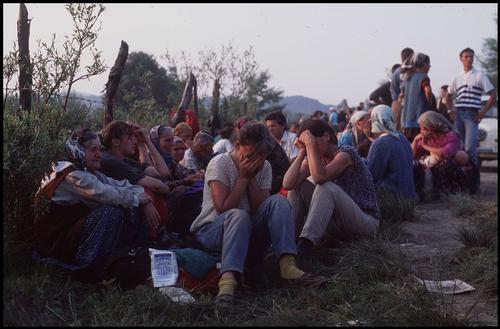
Even after the United Nations (UN) declared Srebrenica a ‘safe area’ in March 1993, the Muslim community trapped inside the city was living under constant shelling. MSF provided medical care while starting to question how much protection the UN could actually provide.
Photo credits: René Caravielhe/MSF
Episode 2: Prison Doctors
MSF was the only provider of medical care in Srebrenica as the violence intensified. MSF wondered if our role had become more like de facto prison doctors in the besieged city. Was MSF inadvertently contributing to the Bosnian Serbs' strategy of ethnic cleansing? Would calling for the evacuation of Bosnian Muslims actually result in aiding the Bosnian Serb’s ethnic cleansing policy of driving the people out and claiming the land? And what if Bosnian Muslims wanted to leave? What should the position of MSF have been?
Photo credits: © Rip Hopkins
Episode 3: The Fall of Srebrenica, the So Called "Safe Zone"
Srebrenica fell to the Bosnian Serbs in July 1995 and approximately 8,000 Bosnian Muslim men and boys were massacred. How could this happen in the presence of United Nations (UN) peacekeepers in this so-called ‘safe zone’? What mechanisms did MSF put in place to speak out over the UN’s inability to protect the people of Srebrenica?
Photo credits: © Olivier Jobard/MYOP
Episode 4: Peace Agreement Versus Justice
Following the fall of Srebrenica, thousands were dead, missing or relocated to refugee camps. MSF questioned what could be done to ensure that peace did not take precedence over justice. Where did the responsibility for these actions and inactions lie?
Photo credits: © Hans Ullens/MSF
Episode 5: Mechanisms and Expectations
Several nations were not taking responsibility for their (in)actions in the enclave. MSF France decided to put pressure on the French parliament to investigate France’s role in the fall of Srebrenica, by issuing an appeal for an investigative parliamentary commission. Should a humanitarian organisation speak out and advocate for official government inquiries in order to place responsibility, document events, seek justice and defend human rights?
Photo credits: © Generic MSF
Anchor Links
Hero Image
Headline
Podcast: MSF and Srebrenica 1993-2003
Background
Image
Schedule content for publication
Off
Description
This podcast series is adapted from the MSF and Srebrenica 1993-2003 case study. 5 episodes examine the speaking out constraints, questions, and dilemmas faced by MSF teams in Srebrenica. MSF was present in the enclave since the beginning of its siege by the Bosnian Serb forces in 1993 until it fell in July 1995. During the fall, thousands of Bosnian Muslims were massacred. These massacres were qualified by the International Criminal Tribunal for the former Yugoslavia as genocide in 2004.
Eyebrow
Country
Thumbnail Image
Do not include into latest
On
Select caption
Short caption
Use a custom breadcrumb
No
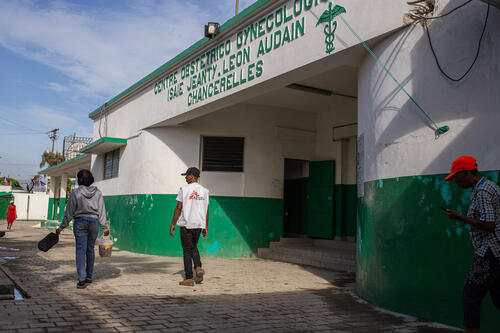
Haiti
Haiti: MSF forced once again to suspend operations at the Isaïe Jeanty Maternity hospital amid violence
Statement
9 Aug 2026
تفشي الإيبولا في الكونغو الديمقراطيّة
تفشّي الإيبولا: بيان أطباء بلا حدود بشأن الزيارة رفيعة المستوى للمدير العام لمنظمة الصحة العالمية إلى جمهورية الكونغو الديمقراطية
تصريح
5 Aug 2026