


Since the publication of this article, Cepheid and Danaher reduced the price of the Xpert MTB/RIF test by 20 per cent in high-TB-burden countries, from US$9.98 to US$7.97 per test. Subsequently, Johnson & Johnson dropped its secondary patents on the lifesaving TB drug, bedaquiline.
- Ahead of the global tuberculosis High-Level Meeting at the United Nations, MSF calls on Johnson & Johnson not to enforce any secondary patents for bedaquiline in any country with a high burden of TB.
- We also call on Cepheid to drop the price of the GeneXpert TB test from US$10 to US$5 in order to save lives.
Geneva/New York - Next week, world leaders meet for the second-ever global tuberculosis (TB) High-Level Meeting at the United Nations (UN) in New York, to endorse ambitious commitments to ramp up TB testing, treatment and prevention, in light of innovative medical tools that have become available over the last decade but that still do not reach hundreds of thousands of people who need them – in large part because of corporations’ monopolies.
Médecins Sans Frontières (MSF) strongly calls on US corporations Johnson & Johnson (J&J) and Cepheid to publicly announce by the High-Level Meeting on 22 September that they will take action to improve access to the lifesaving TB drug bedaquiline and GeneXpert tests, respectively, so these can be made available for everyone who needs them, everywhere.
MSF calls on J&J not to enforce any ‘secondary’ patents for bedaquiline in any country with a high burden of TB, and to withdraw and abandon all pending secondary patent applications for this critical drug everywhere. MSF also calls on Cepheid, and its parent corporation Danaher, to drop the price of the GeneXpert TB tests from US$15 and US$10, to US$5*.
We are calling on Johnson & Johnson, Cepheid and its parent company Danaher... to do the right thing now and pledge to make bedaquiline and the GeneXpert test universally available and affordable to help countries tackle this age-old killer disease...Dr Christos Christou, International President of MSF
MSF welcomed the recent price drop for bedaquiline to US$130 per six-month treatment course announced by the Stop TB Partnership/Global Drug Facility (GDF), which resulted from generic competitors entering the market, and has finally brought the price closer to the target price of $0.50 per day as estimated in 2017. However, access to lowest-priced generics will be blocked in the future for high-TB-burden countries in Eastern Europe and Central Asia, which remain excluded from the deal due to patent barriers.
“After a gap of half a century, we finally have groundbreaking oral TB drugs like bedaquiline and crucial diagnostic tests including GeneXpert, and yet people in high-TB-burden countries continue to die or endure needless suffering because corporate monopolies prevent them from accessing these lifesaving tools,” says Dr Christos Christou, MSF International President.
“We are calling on Johnson & Johnson, Cepheid and its parent company Danaher in the strongest possible terms to do the right thing now and pledge to make bedaquiline and the GeneXpert test universally available and affordable to help countries tackle this age-old killer disease and save many more lives worldwide.”
Video
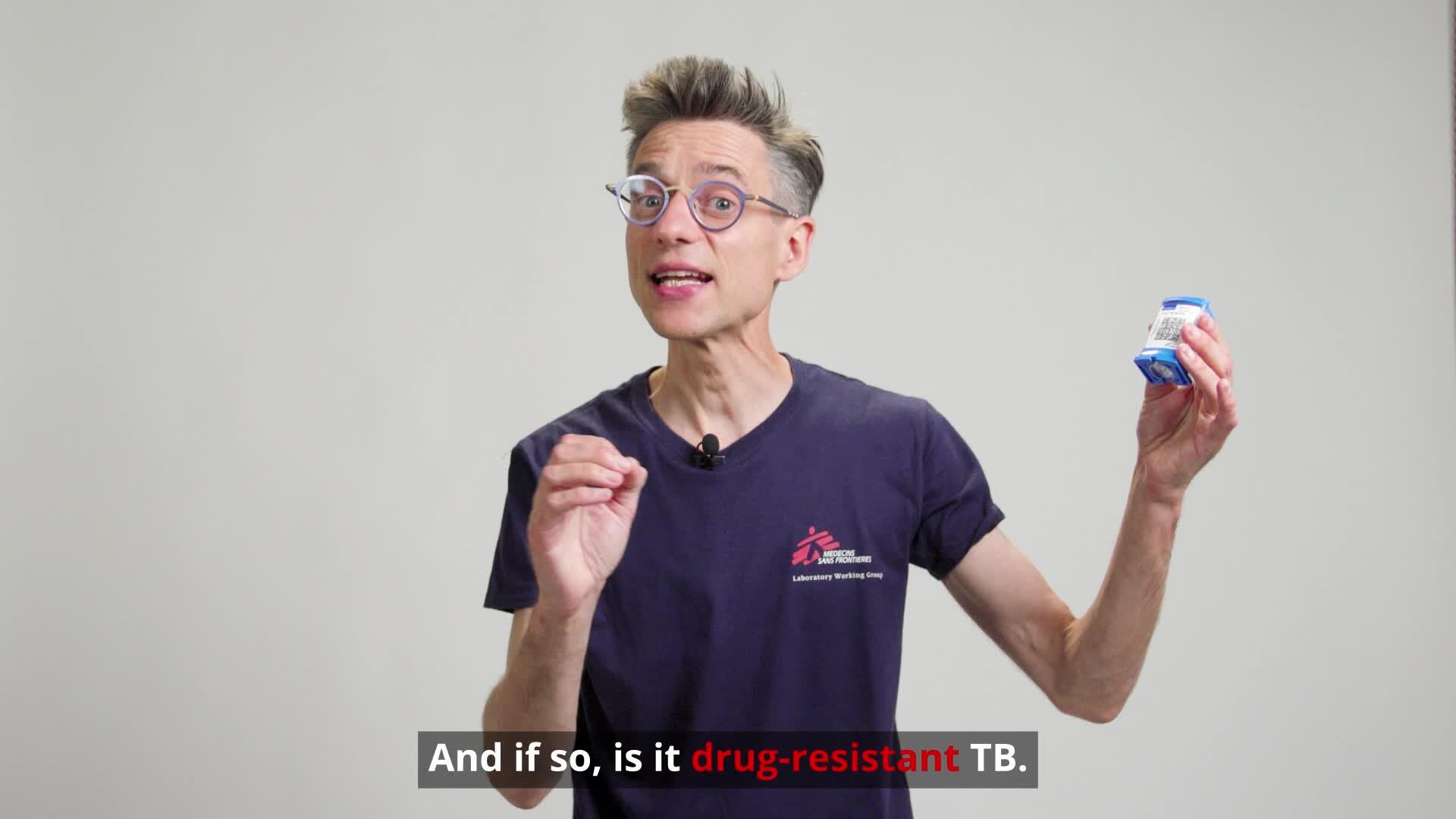
Time for $5
The TB drug bedaquiline, developed by J&J, is the World Health Organization-recommended backbone of drug resistant-TB (DR-TB) treatment regimens, and has enabled an improved, shorter, better-tolerated and more-effective treatment for people with DR-TB. However, access to more affordable generic versions of this drug will continue to be blocked by the additional ‘secondary patents’ that J&J has obtained in multiple countries with a high burden of TB, TB-HIV or DR-TB.
This aggressive patent evergreening strategy employed by J&J to extend its monopoly on this drug beyond the 20-year primary patent is particularly outrageous given that public investment in the development of bedaquiline was up to five times that of the corporation’s own investment.
Following a successful effort by two women to block J&J’s attempt to obtain an additional, longer patent on bedaquiline in India, MSF called on J&J to withdraw all secondary patents it may have anywhere, so that all countries can import more affordable generic versions made in India.
Nandita Venkatesan and Phumeza Tisile both survived DR-TB but could not access bedaquiline and had to take older drugs, which made them go deaf. J&J recently announced a deal with the Stop TB Partnership/Global Drug Facility (GDF) allowing access to generics in many countries and quoted a price drop of $130 per six-month treatment course. However, the deal still excludes key high-TB burden countries.
“Nobody should have to endure what we went through with the older drugs, when more effective options are now available that can save more lives and make treatment much more tolerable for people,” says Phumeza Tisile, a TB activist from Khayelitsha, South Africa. “What good is it to have medical advances if they’re not reaching the people who need them most? We need to see J&J and Cepheid do the right thing now.”
Cepheid and Danaher must stop prioritising their profits over people, and J&J must surrender on its persistent aggressive patenting strategy, so that more lives can be saved...Dr Cathy Hewison, MSF's working group lead for TB
The GeneXpert diagnostic testing technology produced by the US corporation Cepheid has revolutionised TB testing since entering the market in 2010. But because of the high price that Cepheid continues to charge for the GeneXpert tests, scaling up TB testing to all people who need it remains a challenge and still forces many TB care providers to rely on cheaper but less sensitive testing using microscopes, a method developed in the 1800s.
MSF analysis has estimated that it costs Cepheid less than US$5 to manufacture one GeneXpert TB test, while Cepheid has been charging MSF and high-burden low- and middle-income countries double and triple that price per TB tests, and even up to four times that for other disease tests*. Based on this evidence, MSF calls on Cepheid to lower the price of the GeneXpert cartridges to US$5 each for all diseases.
While advances in tackling TB have been made, the harsh reality is that TB remains the top infectious killer, with about 10.6 million new cases and 1.6 million deaths in 2021. Only about one-third of people with DR-TB were able to access treatment, with the majority of people remaining undiagnosed and therefore untreated.
“In our persistent efforts to provide treatment for the most difficult forms of drug-resistant TB, we remain disheartened by the significant loss of lives, especially among the most vulnerable people, including people living with HIV, those affected by conflicts, and children in high-TB-burden countries,” says Dr Cathy Hewison, MSF's working group lead for TB.
“While an urgent scale-up of improved treatments and testing is the need of the hour, high prices still charged by some companies not only limit access for people who urgently need them, but also mean less money is available in health budgets to cover other crucial TB care.
“Cepheid and Danaher must stop prioritising their profits over people, and J&J must surrender on its persistent aggressive patenting strategy, so that more lives can be saved by this revolution in TB medical tools.”
*Cepheid charges about $10 for TB and $15 for XDR-TB (extensively drug-resistant TB) tests; $15 for HIV, hepatitis, and COVID tests; $16-19 for sexually transmitted disease tests; and about $20 for Ebola tests.
Tuberculosis
Landmark clinical trial redefines multidrug-resistant tuberculosis treatment options
Press Release
15 Nov 2023
Access to Healthcare
Urgent measures needed to address gaps in Universal Health Coverage targets
Report
13 Sep 2023
Access to Healthcare
Universal Health Coverage targets leave behind the most vulnerable
Interview
13 Sep 2023