


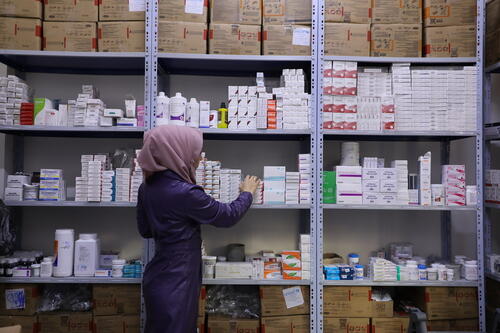


In the 72 countries where Médecins Sans Frontières (MSF) worked in 2025, over 40 per cent of our projects were in places experiencing conflict. Responding to the needs of people caught up in conflict has been a key component of our operations since we started treating war-wounded people during the Lebanese Civil War 50 years ago. More recently, our teams have honed decades’ worth of experience and skills during wars in Iraq, Sudan, Yemen, Afghanistan, and Palestine.
My colleagues have treated some devastating injuries in these countries, including wounds caused by shrapnel embedded in limbs following explosions and shattered bones from live ammunition. We are still actively working in all of these countries.
Alongside addressing the physical and psychological wounds resulting from conflict, we face another more insidious threat to health following this type of injury: antimicrobial-resistant infections.
Antimicrobial resistance (AMR) occurs when bacteria, viruses, fungi, or parasites change in ways that reduce the effectiveness of medicines used to treat infections, such as antibiotics. As a result, infections become harder to treat and last longer; they are more likely to spread, cause severe illness, or lead to amputations, or even death.
As a result, infections become harder to treat and last longer; they are more likely to spread, cause severe illness, or lead to amputations, or even death.
The main drivers of these drug-resistant infections are a lack of access to clean water, proper sanitation, and healthcare with effective infection prevention and control measures, diagnostic infrastructure, and medicines and vaccines. Another is the overuse or misuse of antibiotics. We have seen this in many of the places where we work; for example in countries in southwestern Asia,1 such as Iraq, where antibiotics are frequently available over the counter, rather than solely on prescription by a doctor. In Gaza, Palestine, samples taken six months before and after the Great March of Return protests during 2018 and 2019 showed a staggering 300 per cent increase in antibiotic resistance in bone and tissue cultures.2
Low- and middle-income countries endure a disproportionately high burden of AMR, and conflict amplifies its drivers even more.3 This is because, during conflict, people may have weakened immune systems due to stress and malnutrition, making them more susceptible to infection. Overcrowding in refugee and displacement camps also facilitates the spread of resistant bacteria. In addition, health facilities have been destroyed or damaged, and they often experience shortages of trained staff, diagnostic tools, and medicines, including antibiotics, during conflicts. In 2025, one hospital in Ukraine resorted to using a broad-spectrum antibiotic during surgery, rather than the recommended formulation, because it had been donated and was freely available.
With health systems weakened by war, vaccination campaigns get skipped, and disease surveillance can fall by the wayside. This makes it more difficult to prevent and detect potential outbreaks, track resistance patterns, and make treatment decisions.

So how does MSF respond to AMR? How should we respond, especially in conflict settings?
Our work on AMR is organised around three complementary pillars. The first, infection prevention and control, aims to minimise the spread of bacteria. The second, antimicrobial stewardship, ensures that the right antimicrobial, or antibiotic, is used, at the right dose, for the right duration, to tackle the infection. The third pillar, diagnostics and surveillance, poses some of the biggest challenges in addressing AMR.
Some progress has been made in recent years on improving diagnostics and surveillance, with the introduction of the MiniLab and Antibiogo. The Minilab is a portable, simplified bacteriology laboratory, adapted to low-resource settings. Antibiogo is a diagnostic tool which enables non-expert laboratory technicians to measure and interpret antibiograms, the test that determines the sensitivity of bacteria to different antibiotics.
We reinforce these core activities with health promotion, vaccinations, improvements to water and sanitation, advocacy, and operational research.
However, it is often challenging to fully implement all these measures in active conflict settings. Much of our work is carried out post conflict, when we can support rebuilding laboratories, donating supplies to pharmacies, and strengthening antimicrobial stewardship.
To be more effective, these activities should be implemented before a conflict begins. This means investing in tackling AMR in fragile settings by improving access to care, water and sanitation, and vaccination – but not only.
To be more effective, these activities should be implemented before a conflict begins. This means investing in tackling AMR in fragile settings by improving access to care, water and sanitation, and vaccination – but not only. We must also adapt infection prevention and antimicrobial stewardship to local realities, and strengthen basic microbiology to understand which resistant bacteria are present. This would allow us to develop practical treatment guidelines and be better prepared should conflict erupt.
In some locations, such as Gaza, we were better prepared to deal with casualties with complex trauma, because we already had trained doctors and access to microbiological data in place. In areas of Sudan, however, we had not built up this level of expertise and local knowledge. In many of the countries where we work, such as Democratic Republic of Congo, greater investment is needed. Some countries have not created national plans to tackle AMR, while others have plans but lack the resources to implement them.
In all our projects in places prone to conflict and instability, we are planning to strengthen our response to AMR. We’re developing simplified guidelines, adapting tools to conflict situations, and strengthening microbiology capacity in fragile settings. In doing so, this broader investment in AMR preparedness is essential to improve the outcomes of patients with life-threatening trauma.
AMR is a global problem, which knows no borders. This is why AMR prevention needs to be on a global scale to be effective, and investment in tackling AMR in fragile settings is of huge importance.
Qamar, A. K. A.; Habboub, T. M.; Elmanama, A. A. Antimicrobial resistance of bacteria isolated at the European Gaza hospital before and after the Great Return protests: A retrospective study. The Lancet, 2022, 399, S14. https://doi.org/10.1016/S0140-6736(22)01149-7
MSF report, The broken lens: Antimicrobial resistance in humanitarian settings, https://www.msf.org/broken-lens-antimicrobial-resistance-humanitarian-settings