


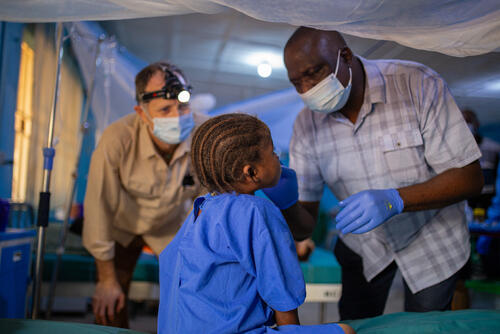
In the most remote places in the world, people are daily battling diseases that many people may never have heard of. Called neglected tropical diseases, the World Health Organization (WHO) officially recognises 20 such conditions. They’re called neglected diseases because diagnostics and treatments for them are overlooked by governments, pharmaceutical companies, and philanthropists.
In Médecins Sans Frontières (MSF) projects, from South Sudan to Nigeria, and Ethiopia to Honduras, these diseases are hard to neglect. Our teams see how they are distressing, disfiguring, and stigmatising for people who are infected. Here are four neglected tropical diseases we see in communities we serve, and what can be done to prevent, control, eliminate, and eradicate them.

1. Noma
In the extreme northwest of Nigeria, an MSF team works with the Ministry of Health at the Sokoto noma hospital - a place where noma patients can receive treatment, reconstructive surgery, and mental health support away from stigma. Noma is a disease that disfigures the people it infects, and it can be fatal for 90 per cent of children who contract it.
Noma begins as ulcers in the mouth that quickly turn gangrenous, eating away at facial tissue. If antibiotics are used early enough, noma is completely treatable. That’s why our project also focuses on community outreach activities, as awareness and prevention measures.
Noma is the newest neglected tropical disease recognised by WHO. It was added to the official list in December 2023 after years of advocacy from noma survivors and people who support them. While we hope that the addition of noma to the list will mean more investment into understanding, preventing, and treating the disease, new developments are yet to be seen. Insights into noma will be a game changer for the estimated 140,000 people who are infected every year.

2. Schistosomiasis
Schistosomiasis gets its common name, snail fever, because it is caused by a parasite in snails. These snails live in freshwater, making people who live near lakes and rivers susceptible to the disease. Schistosomiasis is found in tropical and subtropical countries around the world, but in South Sudan, the highest prevalence of the disease is in Jonglei state, where MSF runs a hospital in the remote town of Old Fangak.
Old Fangak is subject to frequent and extreme flooding, and our teams suspect that many women and girls there are suffering from an advanced form of schistosomiasis, female genital schistosomiasis. Many of the interventions for the disease are preventive, and a vaccine is even in the early stages of development. But this is little comfort for people who have already been infected. People with female genital schistosomiasis have debilitating inflammation, and the disease can turn into cancer. In Old Fangak, we are working to ensure women and girls are accurately diagnosed and provided with the best treatment.
3. Visceral leishmaniasis
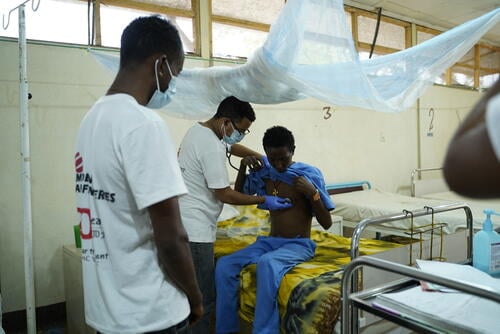
Visceral leishmaniasis is also called kala azar (‘black fever’ in Hindi), and is most commonly found in Brazil, across East Africa, and in India. We’ve been treating visceral leishmaniasis for decades in Ethiopia. People infected with this neglected tropical disease will have their tissue attacked by a parasite, which is transmitted through the bites of sandflies. Initial mild symptoms – often mistaken for other diseases – develop into a prolonged fever, enlarged spleen, anaemia, and substantial weight loss. Without treatment, it can quickly become fatal.
Thankfully, there is a cure. A combination of two drugs injected daily for 17 days can save an infected person’s life. Timely diagnosis and access to the drugs remain a challenge in the treatment of visceral leishmaniasis in East Africa, but continued advocacy has made progress in the last few years.
4. Sleeping sickness
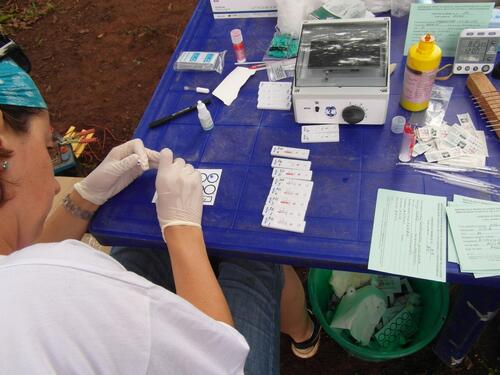
In the last 25 years, there has been a 97 per cent reduction in the number of people suffering from sleeping sickness, also known as human African trypanosomiasis. This neglected disease, caused by parasites from tsetse fly bites, was eliminated in Equatorial Guinea, Côte d’Ivoire, Benin, Togo, Uganda, and Chad in 2024. Now, Guinea also joins the list of countries that have eliminated sleeping sickness.
The parasites that cause sleeping sickness attack the brain and spinal cord, leaving infected people to eventually fall into a coma. Without treatment, it’s fatal. Before the 1970s, the only available treatment, derived from arsenic, killed one in 20 people. Today, thanks to the work of our partner organisation Drugs for Neglected Diseases initiative, there is a simple and safe oral treatment.
DRC Ebola outbreaks
Ebola disease outbreak spreads like a megafire in North Kivu as new hotspots multiply
Project Update
5 Oct 2026
Gaza-Israel war
Three years on, Israel is asphyxiating Gaza and dismantling the means of survival
Press Release
5 Oct 2026
Democratic Republic of Congo
MSF staff member tests positive for Ebola disease and is medically evacuated
Statement
1 Oct 2026