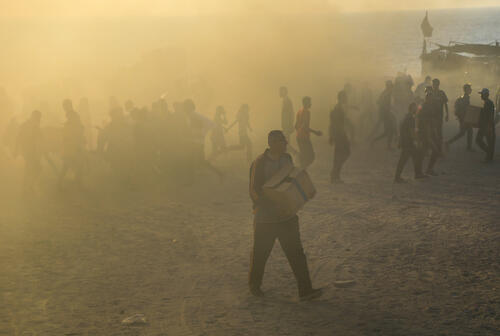
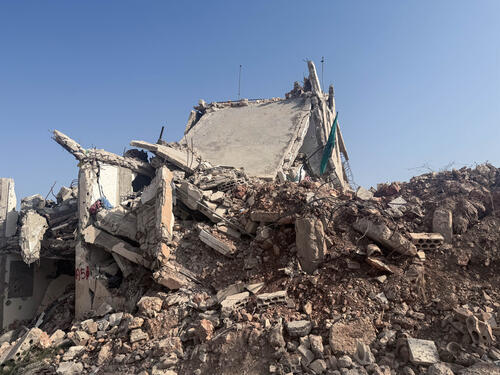
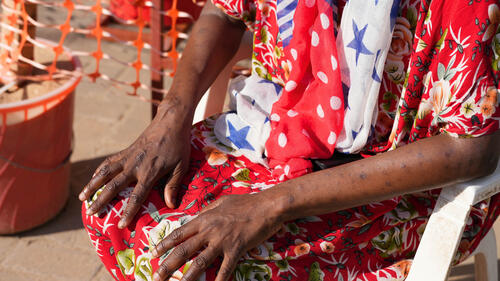
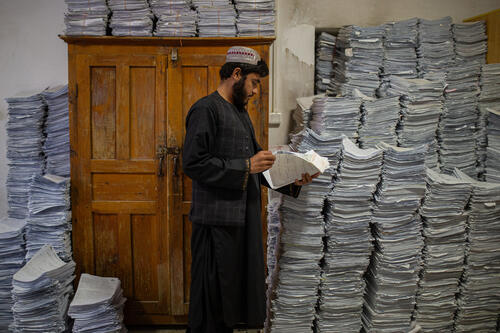
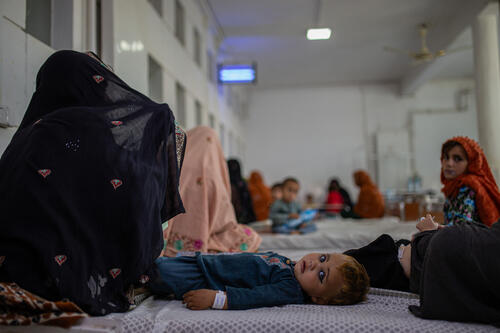
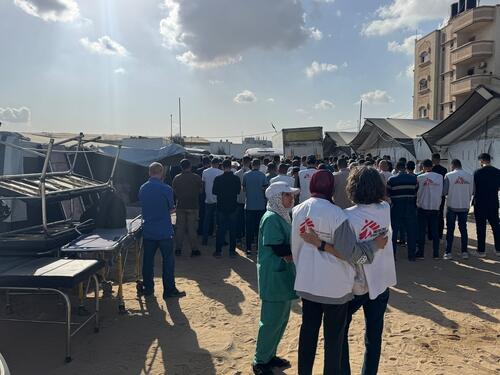
Palestinians at the GHF distribution site in Netzarim putting their lives at risk to receive some food.

The Gaza Humanitarian Foundation (GHF). All four distribution sites operated by the GHF are located in areas under full Israeli military control and “secured” by private American armed contractors.

Between 7 June and 24  July 2025, MSF health centres in close proximity received 1,380  injured people, including 28 dead bodies from the GHF sites with 174 gunshot wounded.

MSF calls for an immediate cessation of the GHF distribution mechanism and urges states and private donors to refrain from funding what is essentially a death trap.
A man walks away with supplies amid the chaos of a Gaza Humanitarian Foundation distribution site in Netzarim. Palestinians put their lives at risk to receive some food from the sites, located in areas under Israeli military control and “secured” by armed private American contractors. Gaza Strip, Palestine, July 2025.
© MSF

A Year in Pictures 2025

A man walks away with supplies amid the chaos of a Gaza Humanitarian Foundation distribution site in Netzarim. Palestinians put their lives at risk to receive some food from the sites, located in areas under Israeli military control and “secured” by armed private American contractors. Gaza Strip, Palestine, July 2025.
© MSF
Ebola disease in DRC: find out how we're responding
Learn more

In 2025, Médecins Sans Frontières (MSF) teams continued to respond to some of the world’s most urgent crises. Wars in Gaza and Ukraine dragged on, violence in Sudan escalated, and millions of people were displaced amid growing barriers to migration and shrinking humanitarian support. These overlapping emergencies left countless communities without the assistance they desperately need, while insecurity and funding gaps across the rest of the humanitarian sector forced us to make difficult decisions about where and how we could operate.

Despite these challenges, our teams remained committed to providing lifesaving medical care wherever it was needed — whether in conflict zones, along migration routes, or in areas struck by disease outbreaks. This Year in Pictures captures both breaking points and moments of resilience of the people we assist and our staff: from suspending activities in parts of Haiti due to violence, to witnessing a newborn’s first breath in a maternity ward in Yemen. These images remind us that bearing witness is not only about documenting suffering—it is about creating a human connection.
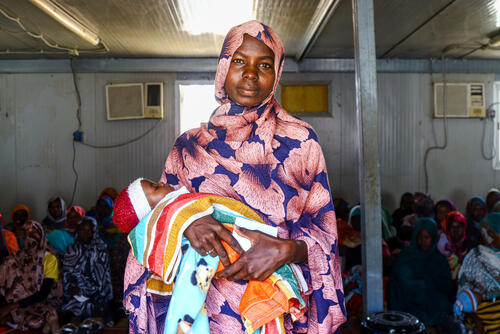
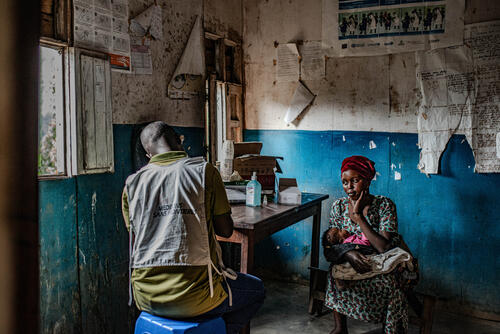
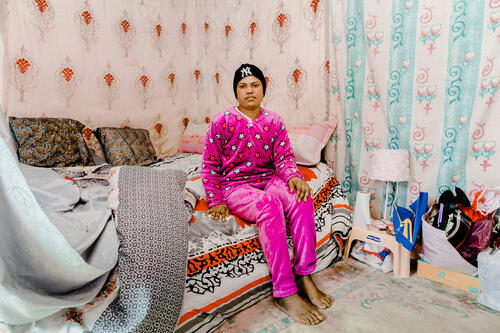
Rehab Musa, 19 years old, attends  her second follow-up appointment with a doctor, at the Kalma camp health centre run by MSF.


“My name is Rehab Musa, and I am 19 years old. I live here in Kalma camp for displaced people. I was born in this camp, and now I have given birth to my first child, yet we still live the life of the displaced. I am a mother to a little boy, Ayman Ali, who is nine months old. I gave birth under extremely difficult circumstances, and those days were some of the hardest times in my life. I thank God that Ayman is now healthy and well, thanks to the care we received here. The efforts of Médecins Sans Frontières (Doctors Without Borders) are invaluable to us displaced people in Kalma camp. I suffered from complications after giving birth and was sick for a long time, but thanks to the healthcare I received, my condition improved significantly. Now, all I want is for my son to grow up in a safe environment, with good health, and a better future. Recently, I was enrolled in the Médecins Sans Frontières nutrition program for pregnant and breastfeeding mothers. This program is a lifeline for me and other mothers, as it provides us with some of the essential food supplies we desperately need. I feel a true sense of relief knowing that my son will get the nutrition he needs to grow properly. Despite all the suffering we endure here, I hold on to the hope that this war will end one day and that we will be able to return to our homes and normal lives. All I dream of is a bright future for my son, Ayman—a future free from pain and suffering.”
Rehab Musa holds her first baby after attending a follow-up appointment with a doctor at the health centre run by MSF in Kalma displaced people’s camp. South Darfur, Sudan, December 2024.
Abdoalsalam Abdallah
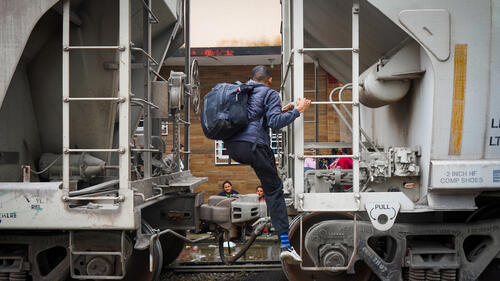
The executive orders on migration from the new U.S. administration leave hundreds of thousands of people along the Latin American migration corridor in great uncertainty, exposed to even greater dangers on a route already marked by extreme violence. MSF teams in Mexico are already witnessing the direct impact of these political measures on the well-being and mental health of some of their patients.
A man climbs on to a freight train, a common way to travel for people on the Central American migration route between South America and the US/Mexico border. Recent migration announcements from the new US government have left hundreds of thousands of people along the route in great uncertainty and danger, and MSF teams in Mexico are already witnessing the impact of these political measures on people’s mental health. Veracruz, Mexico, January 2025.
Yotibel Moreno/MSF
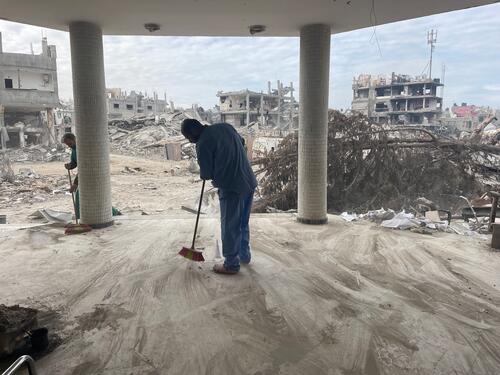
After 15 months Israel‘s war on Gaza, Palestine, and the implementation of the ceasefire on 19 January 2025, displaced Palestinians are attempting to return home to the southern city of Rafah. While people try to rebuild the ruins, Rafah is totally destroyed, with homes, shops, streets and healthcare facilities in ruins and electricity and water systems damaged – and unsafe due to scattered unexploded ordnance in the ruins of buildings. 

In May 2024, Rafah had the largest concentration of displaced Palestinians in the Strip with an estimated 1.5 million Palestinian living in tents and makeshift shelters. People were living in inhumane conditions, facing disease outbreaks, malnutrition, and the psychological impact of being forcibly displaced multiple times. Médecins Sans Frontières / Doctors Without Borders teams working in Rafah were providing primary health care, mental health support in the Shabboura clinic and supporting pediatric and maternity care in the Ministry of Health Emirati hospital in Rafah.   

Eventually, MSF teams were forced to close activities and evacuate the area after continuous bombings and evacuations orders by Israeli forces, as the looming threat of a ground invasion by Israeli forces, which began on May 6, 2024. The military operations by Israeli forces led to the emptying of Rafah, mass destruction of the city, and to the closure of the Rafah crossing, severely hindering the delivery of humanitarian aid into the Strip. Rafah was also the home to many of MSF colleagues, many who had fled other parts of the Gaza Strip.
Three days after a ceasefire took effect, men clean out the rubble inside the Emirati hospital in Rafah. After 15 months of Israel‘s war on Gaza, displaced Palestinians are attempting to return home and rebuild Rafah, which has been left in ruins. Gaza Strip, Palestine, January 2025.
MSF
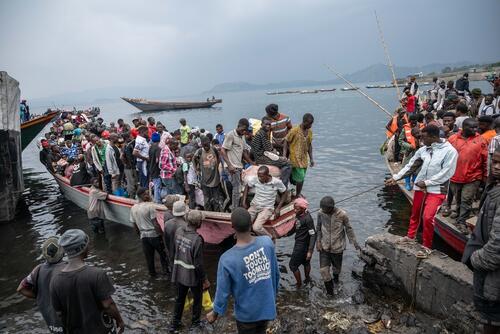
People arriving at the Kituku Port in Goma. They are fleeing the ongoing fightings in North and South Kivu.
People arrive by boat at the Kituku port on Lake Kivu, having fled the ongoing fighting in North and South Kivu provinces. Goma, North Kivu province, Democratic Republic of Congo, January 2025.
Moses Sawasawa
Before the fighting broke out in the Goma, MSF teams were working in Kyeshero hospital, located in the western part of the city, supporting the Ministry of Health. They were providing care for malnourished children; most of whom came from the displaced people camps near the city. When fighting broke out in the city in the last week of January, MSF quickly put in place a plan for a mass influx of wounded, in particular to support the International Commitee of the Red Cross’s (ICRC) work in Ndosho hospital.
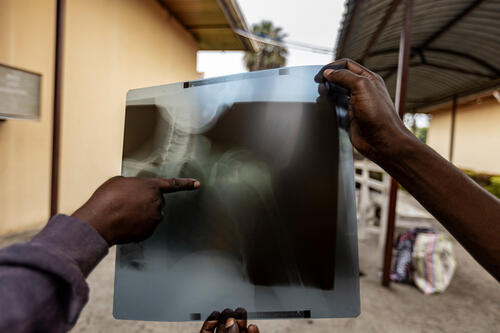
Staff at Kyeshero hospital in Goma review an x-ray of a patient with a bullet lodged in the shoulder; fighting had recently broken out in the city. Goma, North Kivu province, Democratic Republic of Congo, January 2025. 
Michel Lunanga
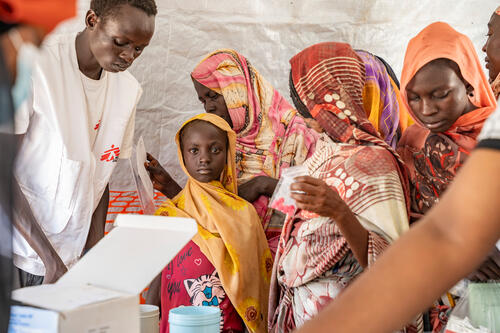
Aisha Ibrahim is accompanying her mother to the mobile clinic run by MSF for displaced people from Sudan in Atam, Renk County. After thousands of people entered South Sudan’s Renk County fleeing conflict in Sudan, MSF has started running mobile clinics in Girbanat and Atam.
Aisha Ibrahim accompanies her mother to a mobile clinic in Atam run by MSF for refugees fleeing war in Sudan. Renk county, South Sudan, January 2025.
Paula Casado Aguirregabiria/MSF
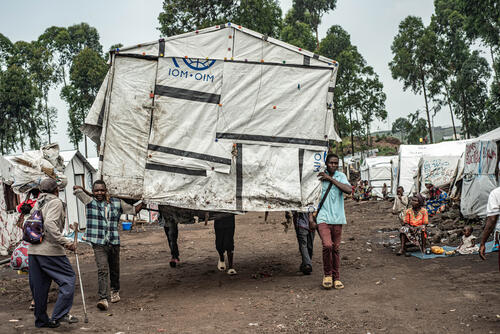
ENG // Residents of the Kashaka displacement camp move a shelter to avoid theft and looting at night. 

FR // Des résidents du camp de déplacés de Kashaka déplacent un abri pour éviter les vols et pillages pendant la nuit.
Residents of Kashaka displacement camp move a shelter to avoid theft and looting at night. North Kivu province, Democratic Republic of Congo, February 2025.
Daniel Buuma
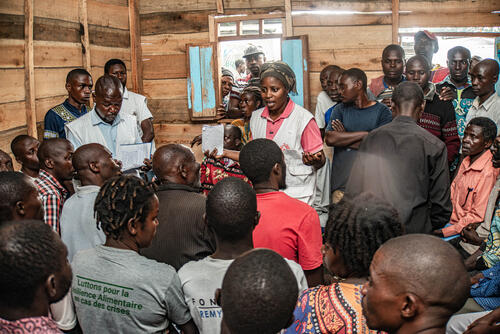
ENG //MSF health promotion teams meet people in the Kashaka displacement camp, west of Goma, to assess their needs. 

FR// Une équipe de promotion de la santé de MSF se réunit avec les habitants du camp de déplacés de Kashaka, situé à l’ouest de Goma, pour évaluer les besoins.
MSF health promotion teams meet people in the Kashaka displacement camp, west of Goma, to assess their needs. North Kivu province, Democratic Republic of Congo, February 2025.
Daniel Buuma
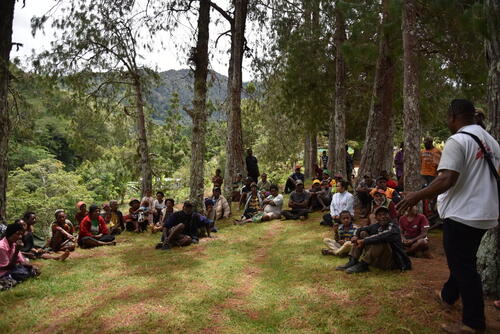
MSF’s health promotion team talks to people in Mondumil village, Jiwaka province, Papua New Guinea.
An MSF health promotion team talks to people in Mondumil village, as part of a strategy to strengthen healthcare for survivors of violence. Jiwaka province, Papua New Guinea, February 2025. 
Sophie McNamara/MSF
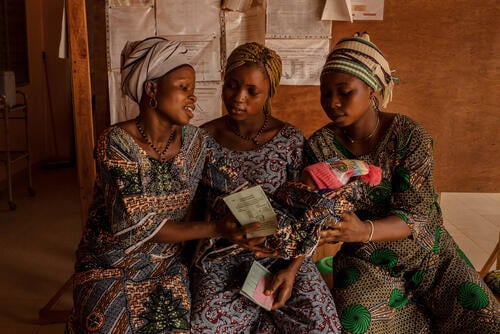
Hortense, a 25-year-old mother of 5, gave birth to a baby girl 3 days ago, while alone at home, handing her newborn baby to Melanie, 16, 6 months pregnant, while both were waiting for a consultation at the Klouékanmè health centre, Benin, on 16 January 2025.
Hortense (left) hands her newborn baby to Melanie (right), who is 6 months’ pregnant, while they wait for a consultation at the Klouékanmè health centre. Hortense gave birth to her daughter three days earlier while alone at home. Couffo, Benin, January 2025.
Adrienne Surprenant
Les équipes MSF ont organisé des cliniques mobiles dans plusieurs localités reculées du Nord-Kivu afin d’évaluer les besoins des populations et d’apporter un soutien aux déplacés des camps de Goma revenus dans leur village d’origine. 

ENG 

MSF teams have organized mobile clinics in several remote localities in North Kivu to assess the needs of the population and provide support to displaced people from the Goma camps who have returned to their villages of origin.
A mother and her baby receive a consultation at an MSF mobile clinic, one of several that have been set up in remote localities in North Kivu to provide support to displaced people from the camps in Goma who have returned to their villages of origin. North Kivu province, Democratic Republic of Congo, February 2025. 
Daniel Buuma
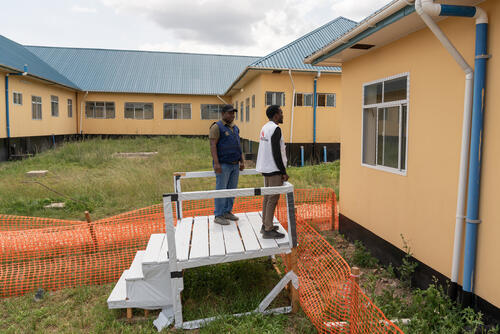
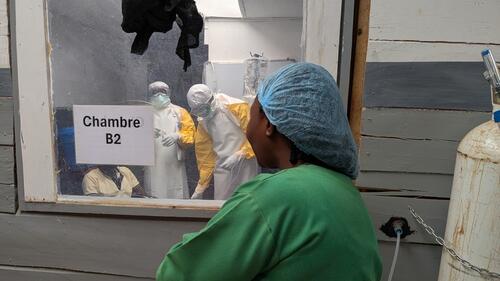
Dr Michael Keremeji, Ministry of Health director of Emergency at Biharamuro Marburg treatment unit and Florian D Mwabesa, MSF doctor, check the ward of the suspected Marburg-positive patient. To support the Ministry of Health response to the Marburg outbreak, MSF has installed larger windows and built semi-permanent structures to allow the medical team to check on the patient without being exposed, and for the patient's relatives to maintain visual contact with their loved ones.
Dr Michael Keremeji, Ministry of Health director of emergency and Dr Florian D Mwabesa, an MSF doctor, check the ward of a patient suspected of having Marburg. As part of MSF’s support to the Marburg outbreak, our teams built structures with large windows to allow the medical team to check on patients without being exposed, and for the patients’ relatives to maintain visual contact. Kagera region, Tanzania, February 2025.
Florence Dozol/MSF
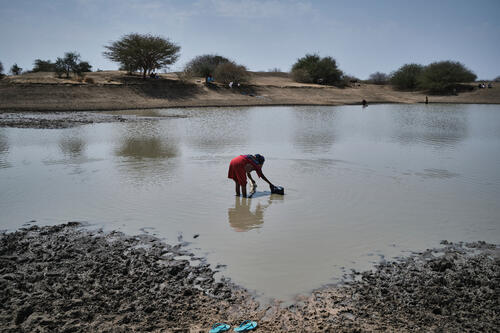
A woman collects water from a reservoir in Jerbana. Untreated water can lead to serious stomach illnesses.
A woman collects water from a reservoir in Jerbana. Untreated water can lead to serious stomach illnesses. Renk, South Sudan, February 2025.
Diego Menjíbar
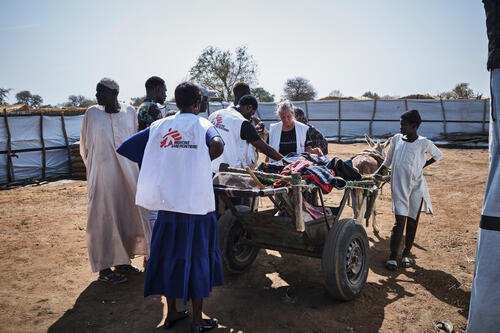
The MSF medical team in Atham attends to an emergency patient who arrived in a donkey-drawn cart. MSF is the only medical organization present in the area. The patient was later transferred by ambulance to Renk.
The MSF medical team in Atam attends to an emergency patient who arrived in a donkey-drawn cart. MSF is the only medical organisation present in the area. The patient was later transferred by ambulance to Renk. South Sudan, February 2025. 
Diego Menjíbar
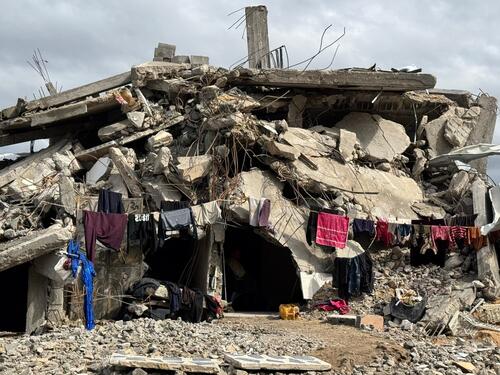
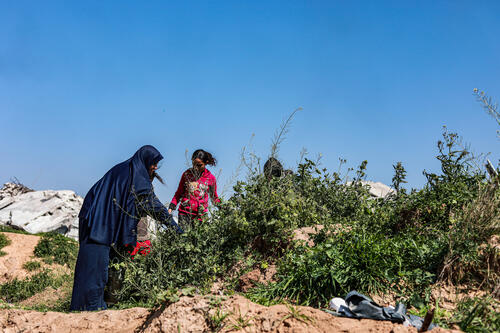
Palestinian family set up a place over the rubbles of their destroyed house to live in Beit Lahia city, north of Gaza strip.
Laundry dries on a makeshift clothesline a Palestinian family has set up in the rubble of their destroyed home in Beit Lahia. Gaza Strip, Palestine, February 2025.
Nour Alsaqqa/MSF
Short caption: 
Beatrice, 29, at her home which she shares with three other migrant women in the southern suburb of Beirut. Four months ago, she broke both of her ankles trying to save herself from an Israeli airstrike. 


Long caption:
29-year-old Beatrice is from Sierra Leone. She came to Lebanon in 2022 to find work to support her mother and two children back home. She lives in the southern suburb of Beirut, a hard-hit area during the recent Israeli war in the country.

One day, Beatrice’s employer for the day locked her in his house while she was cleaning. At the sight of a nearby airstrike, she jumped off the building to save herself. She broke both of her ankles. She spent two months recovering at the hospital post-surgery. MSF and another organisation covered the healthcare expenses as it was expensive for her to do so.

“I’m scared to get out of the house. Other than for work, I don’t go anywhere. If I face a problem, this is not my country, and my family can’t help me.”
Beatrice, who is from Sierra Leone, sits at her home which she shares with three other migrant women in a southern suburb of Beirut. Four months ago, she broke both of her ankles while trying to save herself from an Israeli airstrike. Beirut, Lebanon, February 2025. 
Myriam Boulos/Magnum
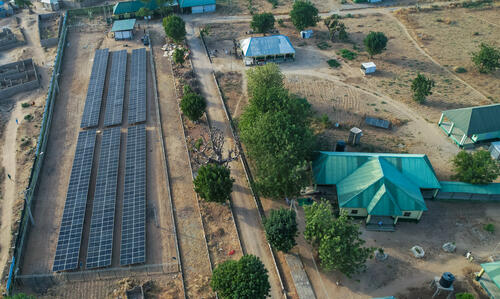
An aerial view of the solar panels installed at Zurmi General Hospital.
An aerial view of the solar panels installed at Zurmi General hospital. Solar panels not only reduce hospitals’ dependency on fuels and their carbon footprint, it also notably reduces noise within the hospital grounds, benefiting the wellbeing of patients and staff. Zamfara state, Nigeria, February 2025.
Isaac Buay/MSF
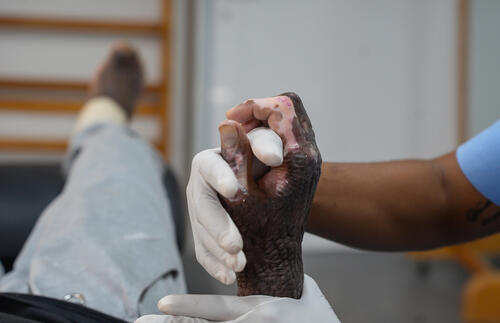
A physiotherapist is manipulating the hand of a burn patient at MSF hospital in Tabarre.
A physiotherapist manipulates the hand of a burns patient during a physiotherapy session at MSF’s hospital in Tabarre. Port-au-Prince, Haiti, March, 2025.
Marx Stanley Léveillé/MSF
Hanan and her great granddaughter search for mallow among the debris. Once a traditional food, the plant has become a vital source of nutrition amid shortages caused by the blockade and ongoing conflict.
Hanan and her great-granddaughter search for mallow among the debris. Once a traditional food, the plant has become a vital source of nutrition amid shortages caused by the blockade and ongoing war. Gaza Strip, Palestine, March 2025 
Nour Alsaqqa/MSF
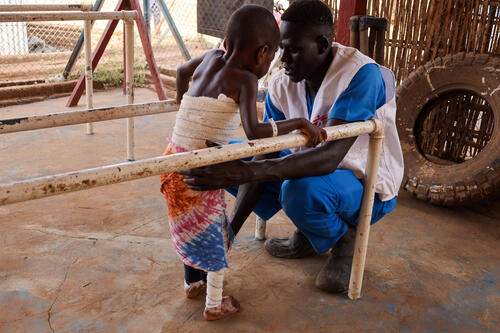
MSF Physiotherapist helps a young patient suffering from burns to walk again.
The physiotherapy unit located in the MSF supported hospital in Aweil is focused on helping children.
John Chol Machar, MSF physiotherapist, helps David Longar, who fell in boiling water and suffered extensive burns, at the physiotherapy unit located in the MSF-supported hospital in Aweil. South Sudan, March 2025. 
Frederic Seguin/MSF
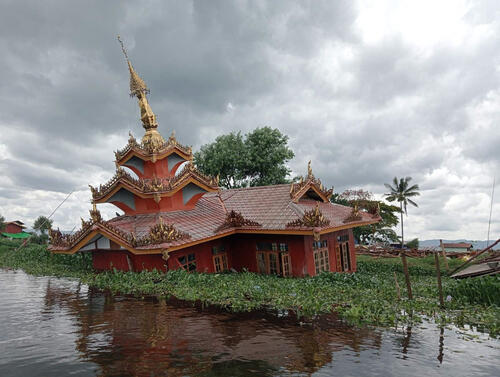
This monastery, built on stilts above the water at Inle Lake, Southern Shan, collapsed in the 7.7 magnitude earthquake on March 28.
A monastery, built on stilts above the water at Lake Inle, collapsed following the 7.7 magnitude earthquake on 28 March. Shan state, Myanmar, April 2025.
Nicolas Schreiner/MSF
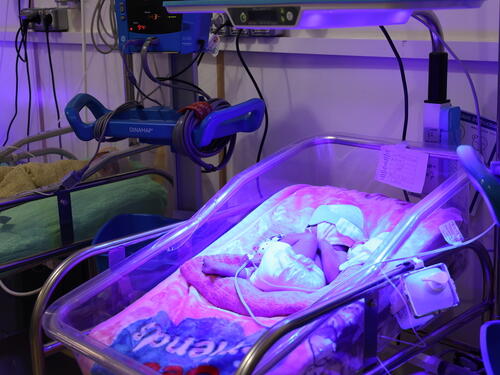
A new born baby in the Neonatal Intensive Care Unit in Al Salam hospital in northern Yemen.
A newborn baby receives care in the neonatal intensive care unit in Al-Salam hospital. Khamer, Yemen, April 2025.
Charlotte Sujobert/MSF
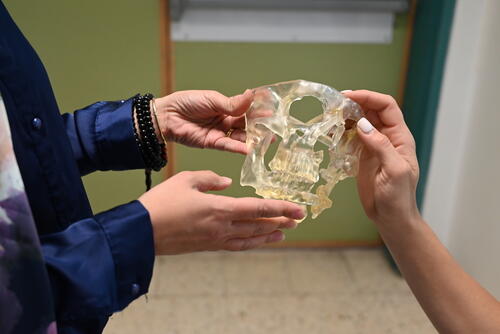
Dr. Samar Ismaiel demonstrates the prosthetic hands used for recovering patients at the Reconstructive Surgery Hospital in Amman, Jordan.
Dr Samar Ismaiel demonstrates the prosthetics used for recovering patients at the Reconstructive Surgery hospital in Amman. Jordan, April 2025.
Chrysoula Patsou/MSF
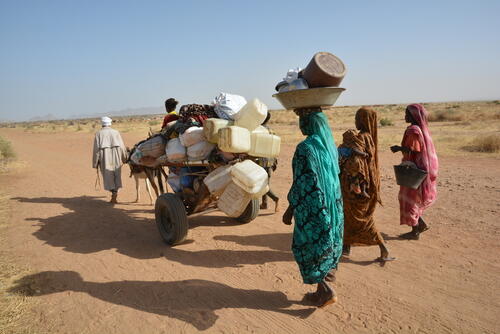
Images of displacement in an daround Tawila.
A family carries their belongings as they are forced to move due to the ongoing conflict around Tawila. Darfur, Sudan, April 2025
Jérôme Tubiana
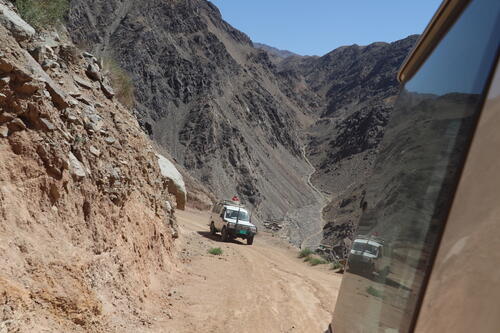
An MSF vehicle drives up a narrow, winding dirt road in the central highlands of Bamyan province, Afghanistan, on 22 April 2025, on the way to the MSF-supported subhealth centre in the Baghak village in Shibar district. The subhealth centre provides maternal and child health services, along with routine vaccine administration and outpatient consultations.
An MSF vehicle drives up a narrow, winding dirt road in the central highlands of Bamyan province, on the way to an MSF-supported health centre in Shibar district. Afghanistan, April 2025.
Logan Turner/MSF
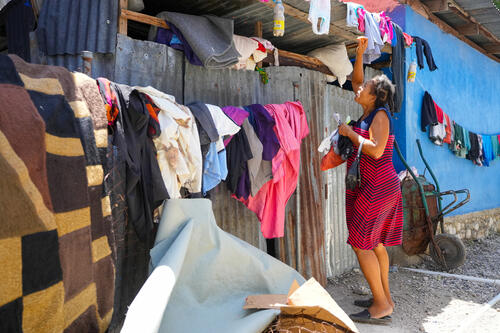
In port-au-Prince, a displaced woman removes the clothes she had put out to dry in the sun on the roof of her small shelter.
A displaced woman removes the clothes she had put out to dry in the sun on the roof of her small shelter. Extreme violence in different neighbourhoods of Port-au-Prince has forced people from their homes. Port-au-Prince, Haiti, May 2025.
Marx Stanley Léveillé/MSF
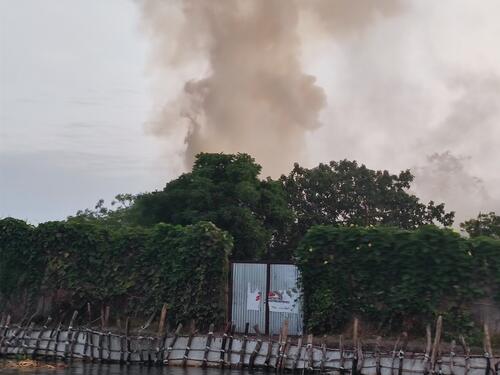
MSF hospital in Old Fangak, South Sudan, after being deliberately bombed on 3 May 2025.
Smoke rises above the MSF hospital in Old Fangak, after it was deliberately bombed. South Sudan, May 2025.
MSF
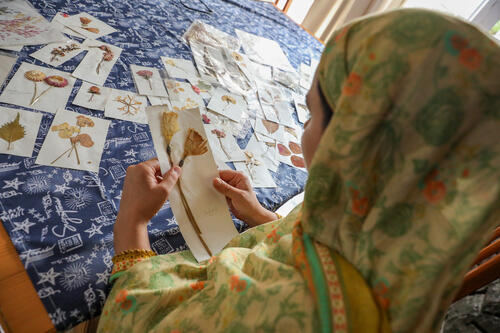
Nadia Ishfaq Nahvi, Doctors Without Borders India/Médecins Sans Frontière (MSF) mental health supervisor, enjoys collecting and preserving flowers to create artistic collages. his attention to beauty and preservation mirrors her approach to her patients—seeing the value in what others might overlook and helping to preserve and strengthen what’s already there.
Nadia Ishfaq Nahvi, MSF mental health supervisor, collects and preserves flowers to create artistic collages. This attention to beauty and preservation mirrors her approach to her patients—seeing the value in what others might overlook and helping to preserve and strengthen what’s already there. Kashmir, India, May 2025.
Deepak Bhatia/MSF
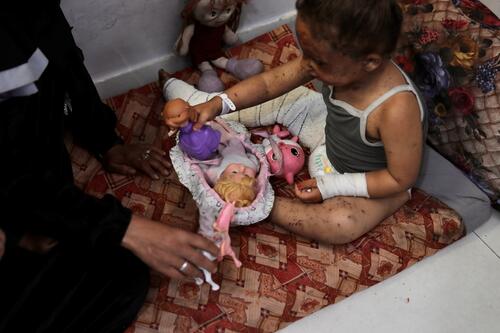
A 4-years-old child lost her mother and two siblings in an Israeli airstrike that struck their tent in Al-Mawasi, Khan Younis. She was severely burned as a result of the strike and is a patient of the MSF burn unit in Nasser hospital. Her prolonged healing process is hindered by the lack of proper nutrition and protein; unavailable due to the two months long Israeli siege of Gaza strip.
Nasser hospital, Khan younis, Gaza. May 2025.
A toddler plays with dolls in MSF’s burns unit in Nasser hospital. She was severely burned in an Israeli airstrike that struck her family’s tent in Al-Mawasi, which also killed her mother and two siblings. The healing process is being hindered by a lack of proper nutrition and protein for the child, unavailable due to the Israeli siege of the Gaza Strip. Palestine, May 2025.
Nour Alsaqqa/MSF
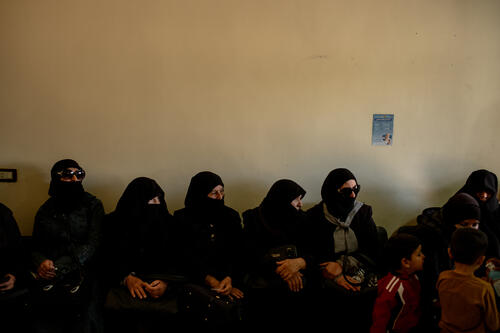
Patients wait their turn in a mobile clinic set up by Médecins Sans Frontières in Hamouriyah in Eastern Ghouta on the outskirts of Damascus, Syria, on 7 May 2025.
Patients wait to receive a consultation in a mobile clinic set up by MSF in Hamouriyah in East Ghouta. MSF teams returned to the area, on the outskirts of Damascus, at the start of the year for the first time in over a decade. Syria, May 2025.
Philémon Barbier/Hors Format
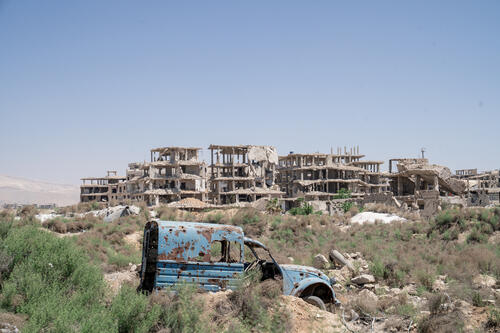
Ruined buildings destroyed by the war in Hamouriyah, in Eastern Ghouta on the outskirts of Damascus, Syria, on 7 May 2025.
A car and buildings destroyed by the war lie deserted in Hamouriyah, East Ghouta. Syria, May 2025.
Philémon Barbier/Hors Format
Clinical mentor, Momoh Sao and nurse aide, Aminata Koroma, examining 6-months-old Ogar Boima in the Emergency Room of the MSF Mother and Child hospital in Kenema district, Sierra Leone.  

Boima had a high fever and was brought to the hospital by his mother, Fatmata Gbassay.
Aminata Koroma (left) and Momoh Sao (middle) examine 6-month-old Ogar Boima, watched by his mother, Fatmata Gbassay (right) in the emergency room of MSF’s Mother and Child hospital in Kenema district. Sierra Leone, May 2025.
Noor Ahmad Saleem/MSF
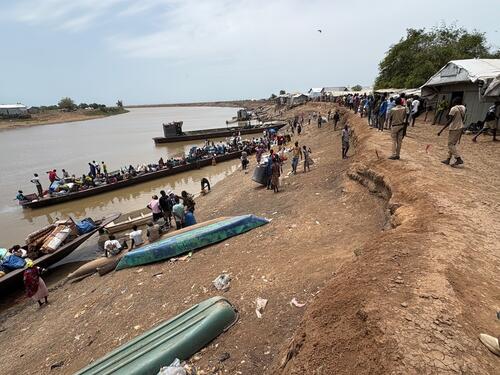
Baro river, Burbieye Kebele, Gambella region, Ethiopia.  May 2025.

South Sudanese refugees who have been staying in Burbieye, Gambella region of Ethiopia preparing to relocate to Mattar, Gambella region of Ethiopia due to the ongoing conflict in Burbie.
People gather on the banks of the Baro river; South Sudanese refugees who have been staying in Burbieye, Ethiopia prepare to relocate to Mattar, in Ethiopia’s Gambella region, due to the ongoing conflict. Ethiopia, May 2025. 
MSF
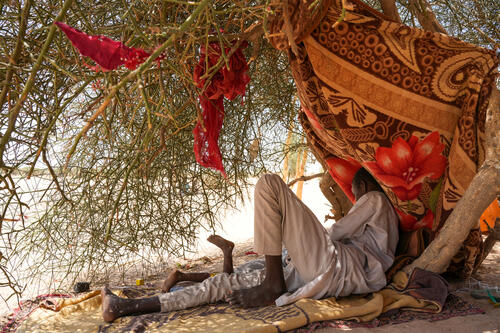
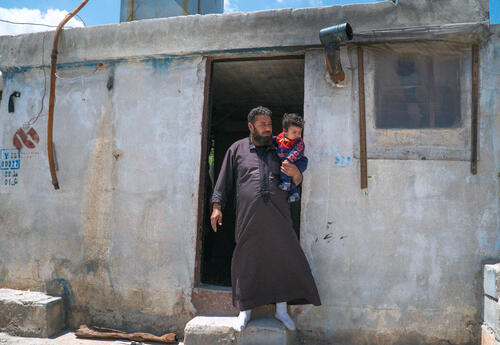
Walid and his youngest son outside their shelter in Al-Kuwaiti camp, Idlib, northwest Syria.
Walid and his youngest son outside their shelter in Al-Kuwaiti camp, Idlib province. Since the fall of the Assad regime in early December 2024, thousands of displaced families have tried, and been unable, to return home. When Walid and his family went back to their village a few weeks ago, they found empty ruins filled with the remains of landmines left behind by the regime. Syria, May 2025.
Ahmad Amer/MSF
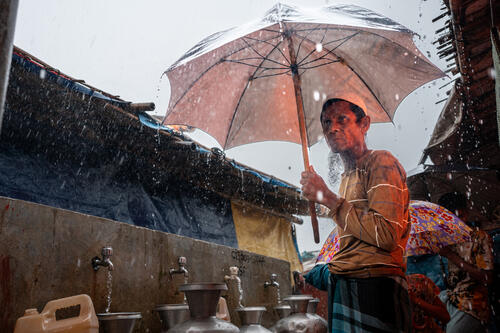
Kutupalong Refugee Camp, Rohingya Response: Ershadullah (60) at an MSF water point in the Kutupalong refugee camp. He fled to Bangladesh in 2017.
Ershadullah, a Rohingya refugee who fled Myanmar in 2017, shelters under an umbrella during heavy rain at an MSF water point in Kutupalong refugee camp. Cox’s Bazar, Bangladesh, May 2025.
Ante Bussmann/MSF
Kutupalong Refugee Camp, Rohingya Response: Shofi Mohammad (4 years) is getting treatment for multiple abscesses in axilla and back in the ER of the MSF Kutupalong hospital. While Dr. Hasna Hena Mou and Medical Assistant Rajib Mazumdar are doing an incision and drainage, his father Anas Mohammad (50 years) tries to comfort him. The mother of Shofi and his brother are waiting outside. The family went to another health facility first, but they couldn't perform the procedure, that's why Shofi was referred to the MSF Kutupalong hospital. The family fled to Bangladesh from Myanmar 8 months ago (October 2024).

photo from a series (1/4)
Shofi Mohammad receives treatment for abscesses in the emergency room of MSF’s Kutupalong hospital. While Dr Hasna Hena Mou and medical assistant Rajib Mazumdar are doing an incision and drainage, Shofi’s father Anas Mohammad tries to comfort him. Cox’s Bazar, Bangladesh, May 2025. 
Ante Bussmann/MSF
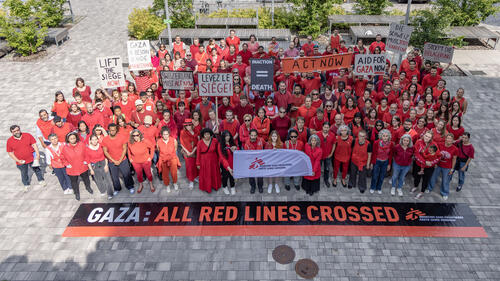
In a powerful act of solidarity, Médecins Sans Frontières (Doctors Without Borders) draw a literal red line in the heart of Geneva — a symbolic action underscoring a non-negotiable principle in humanitarian action: Aid must never be militarized. Geneva is the host of Geneva conventions and has a particular role to play in defending principled humanitarian action.​

​Set against the backdrop of International Geneva, this stunt aims to sound the alarm on the growing instrumentalization of humanitarian aid in Gaza, where access is being denied, aid is being used as leverage, and basic principles of International Humanitarian Law (IHL) are being eroded. Lift the siege now.​
In Geneva – the bastion of peace and international diplomacy – MSF staff gather to urge the Swiss and other world governments to act to stop the siege and restore humanitarian principles in Gaza. Geneva, Switzerland, June 2025. 
Pierre-Yves Bernard/MSF
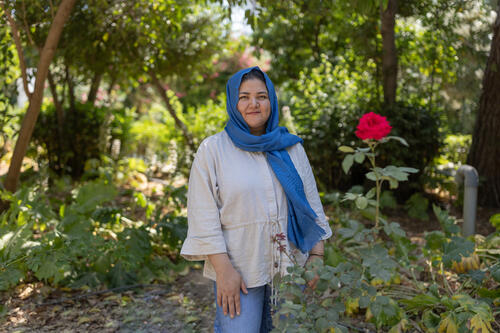
Fatimah: I am proud of the effort I am making. For my job, for my home, for my child who goes to school, for learning Greek. I like trying. I don't like staying at home doing nothing, just sitting around. In Afghanistan, I always worked, making carpets (wall hangings). By hand. One carpet a month. It's very difficult.
Now I work in restaurant. I'm in charge of the salads. I chop the lettuce, tomatoes, onions, vegetables, and I do all the prep work. After work, I go to the nursery to pick up my son, Elias, I do the housework, and then I go to Greek lessons. Only on Tuesdays do I have free time. That's the day I dedicate to myself. 
Fatimah is a resilient woman from Kabul, Afghanistan, who arrived in Greece five years ago after a difficult and dangerous journey across borders. Landing on the shores of Lesbos with no belongings, no phone, and no certainty, she took her first steps into a new life by asking a stranger to call her husband. Their emotional reunion days later marked the beginning of her rebuilding process.
Today, Fatimah lives in Greece with her family, where she balances work, motherhood, and education with unwavering determination. She works in a restaurant kitchen, proudly managing the preparation of fresh salads. After her shift, she picks up her young son, Elias, from nursery, takes care of their home, and attends Greek language classes in the evenings. Tuesdays are the only day she keeps for herself—a small but important act of self-care and autonomy.
Originally skilled in weaving intricate carpets by hand in Afghanistan, Fatimah continues to build with her hands—this time carving a future grounded in effort, learning, and belonging. Her motivation is rooted in her belief in progress and self-reliance.
Fatimah’s story is one of quiet leadership—of a woman who moves forward every day not only for herself but for her family and future, refusing passivity and choosing action.
A portrait of Fatimah, a resilient woman from Kabul, Afghanistan, who arrived in Greece five years ago after a difficult and dangerous journey across borders. Landing on the shores of Lesbos with no belongings, no phone, and no certainty, she took her first steps into a new life by asking a stranger to call her husband. Today, Fatimah lives in Greece with her family, where she balances work, motherhood, and education with unwavering determination. Greece, June 2025.  
Dimitris Tosidis
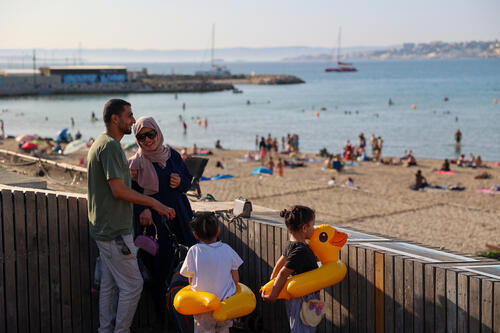
Emad's family at la pointe rouge in Marseille. Emad, 36, was evacuated from Gaza to France in March 2025. He has worked for MSF for the past 9 years in Gaza, as medical team leader and head of nursing activities. Originally from Jabalia camp in Northern Gaza, he recently arrived in Marseille with his wife and three daughters. One of them, Sila, 7, has a heart disease and was already waiting for a medical evacuation before October 2023. Marseille, France, June 2025.
Emad, his wife, and three daughters look out over a beach in Marseille. Emad, who worked for MSF in Gaza for nine years as medical team leader and head of nursing activities, and his family were evacuated from Gaza to France in March 2025. One of his daughters has a heart disease and was already waiting for a medical evacuation before the war in October 2023. Marseille, France, June 2025.
Mohammad Ghannam/MSF
Ayman and Amani playing in their makeshift shelter under a tree in Tine transit camp while their aunt, Halima Suleyman, 40 years old, tells their family story. 

“I was first displaced 16 years ago, from our home in Shangal Tubai, and settled in Zamzam. Recently, the enemy burned our house in Zamzam and took everything from us. We were uprooted again. When we arrived here in Tine, we received so much support from local people, blankets and food. Soon after we arrived, Kaltoum (her daughter) started her labour. I took her to the MSF clinic, and they referred her to the Centre de Santé where baby girl Arafa was born.” 

Ashia (Halima’s mother) continues: “When Zamzam was bombed, my daughters, Halima and Mariam, and my son put me on a horse to flee. We saw a lot of killed people along the road, we saw the enemy burning houses with people in it. We saw men being shot dead as they wanted to save their burning children.”
Siblings Ayman and Amani, displaced from Zamzam camp in Darfur, Sudan, play in their makeshift shelter under a tree in Tine transit camp. Chad, June 2025.
Julie David de Lossy/MSF
Amina is a shy 12-year-old child with a bright smile and a serious condition that requires careful management. A year ago, living in a displacement camp on the outskirts of Baidoa, Amina fell extremely ill with high fever, constant thirst, and weakness. Her mother initially thought it was a bad flu, but Amina only got worse. “She had a fever and suddenly became very sick,” recalls her father, Abdullahi. Desperate for answers, they spent what little money they had at a local pharmacy, where she was given pills and told to drink more water. Nothing helped. In fact, Amina lost weight rapidly and became almost too weak to stand.
Finally, a relative urged them to take Amina to MSF supported Bay Regional Hospital. There, doctors quickly discovered the truth: Amina’s blood sugar was dangerously high. The fever had likely masked the onset of Type 1 diabetes, a life-threatening condition if untreated. “We had no idea what diabetes was,” Abdullahi says. In their home area, chronic illnesses often go undiagnosed; there are no proper laboratories or specialists, and “apart from tablets like Paracetamol, there are no quality medicines available” locally. If not for the MSF team in Baidoa, Amina might have slipped into a diabetic coma. Instead, she received insulin and fluids that same day, and her condition stabilized. “Alhamdulillah, she is better now than she was when I first brought her,” her father says with a relieved smile.
Now, managing diabetes is part of Amina’s new normal and MSF continues to be by her side. Every four to six weeks, Amina and her father travel about two hours by tuk-tuk from their camp to the hospital for a check-up and insulin refills. The trip costs around $2, which, as Abdullahi notes, “is not too much money, Alhamdulillah”. What’s more important is that the care at the end of the ride is free and reliable. Amina has learned how to take her insulin injections and check her blood sugar with the help of MSF nurses. Whenever she experiences dizziness or back pain symptoms that used to terrify her, she knows it’s time for a visit. “I only get better when I come to the hospital,” Amina says frankly, adjusting the black bracelet she wears to hide where the IV went in.
Thanks to the consistent treatment, Amina is gaining back weight and even returning to school. She’s one of the few girls in her class who can explain what diabetes is and she does so without shame or fear. In fact, Amina proudly shows her friends the insulin pen that keeps her healthy. Her dream is to become a nurse one day, inspired by those who care for her. “The medicine is what I need, and I hope I will get better and better,” she says softly, confidence growing in her voice. For Amina’s family, the journey from despair to stability has been remarkable. They know diabetes is a long-term challenge, but with MSF’s support, they no longer feel alone in facing it. “This hospital is the one we rely on,” Abdullahi says. “Here, my daughter got a second chance.”
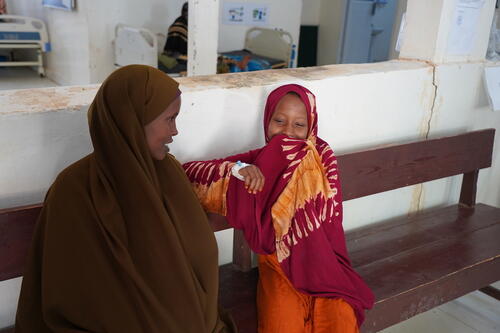
Amina (right) hides her giggle as she sits next to her mother at Bay Regional hospital, during one of her regular check-up visits to manage her type 1 diabetes. Baidoa, Somalia, June 2025. 
Hareth Mohammed/MSF
In June 2025, Rohingya photojournalist Zia Sahat Hero and MSF Australia photographer Victor Caringal produced a series of photographs to show how the Rohingya have adapted to daily life in the Kutapalong refugee camps near Cox’s Bazaar, Bangladesh.

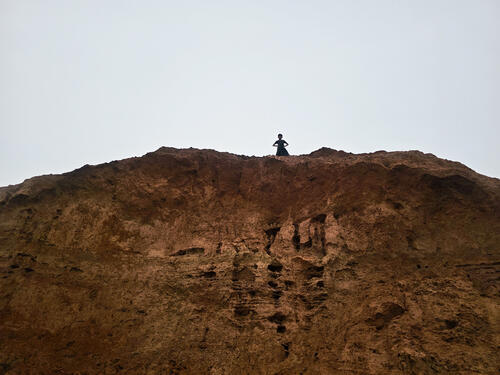
We selected this image to share the threat of landslides that occurs from monsoonal rain and flooding, and the eroded soil in the camps. Originally there were shelters built here, but these were lost in a landslide. The area now remains precarious and unoccupied, despite the child standing and smiling from the top of the hill.
A child stands on top of a hill in Kutapalong refugee camp, eroded by landslides that occur from monsoonal rain and flooding. Originally there were shelters built here, but these were lost in a landslide, and the area now remains precarious and unoccupied. Cox’s Bazar, Bangladesh, June 2025.
Sahat Zia Hero

Portrait d’une femme survivante de violences sexuelles, au milieu des différentes tentes de services de prise en charge des violences sexuelles et de santé féminine du centre de santé de Mugunga 3 à Goma. 

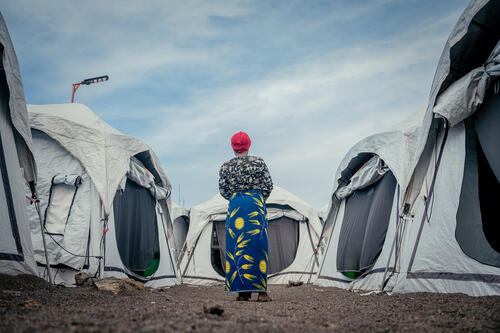
Portrait of a female patient standing between tents set up for the treatment of sexual violence survivors and women's health issues at Mugunga 3 Health Centre in Goma.
A female patient stands between tents set up to treat victims and survivors of sexual violence and provide care for women's health issues at Mugunga 3 health centre in Goma. North Kivu province, Democratic Republic of Congo, July 2025. 
Jospin Mwisha
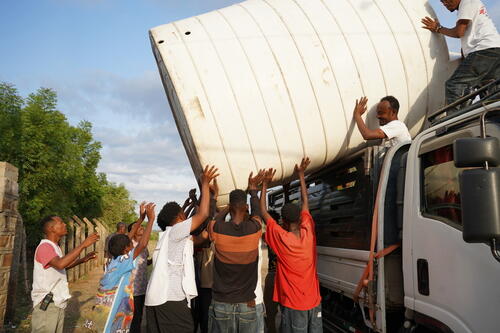
MSF staff and community members installing a water tank at the TVET IDP Camp in Sheraro, Tigray region, Ethiopia. 
 
Since December 2022, Médecins Sans Frontières (MSF) has resumed operations to support the recovery of the healthcare system in Northwest Tigray region of Ethiopia. The region, which was severely disrupted by the conflict which started in November 2020 reached a peace agreement in November 2022 
 
 
 For the past six months, the TVET camp has faced a lack of consistent access to clean water. MSF is working to install water tanks to help ensure a stable and reliable water supply for the displaced community.
MSF staff and community members install a water tank at the TVET displaced people’s camp in Sheraro, Tigray region. Thousands of people became displaced and the region was severely disrupted by a two year-long conflict, which started in November 2020. Tigray region, Ethiopia, July 2025.
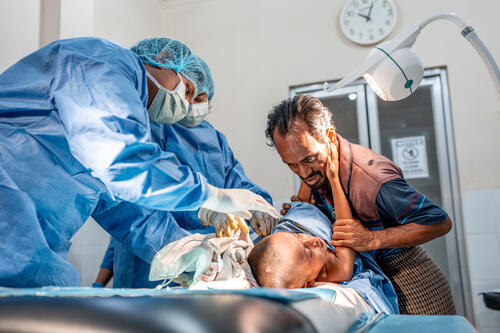
Roza Bekele/MSF
Palestinians at the GHF distribution site in Netzarim putting their lives at risk to receive some food.

The Gaza Humanitarian Foundation (GHF). All four distribution sites operated by the GHF are located in areas under full Israeli military control and “secured” by private American armed contractors.

Between 7 June and 24  July 2025, MSF health centres in close proximity received 1,380  injured people, including 28 dead bodies from the GHF sites with 174 gunshot wounded.

MSF calls for an immediate cessation of the GHF distribution mechanism and urges states and private donors to refrain from funding what is essentially a death trap.
A man walks away with supplies amid the chaos of a Gaza Humanitarian Foundation distribution site in Netzarim. Palestinians put their lives at risk to receive some food from the sites, located in areas under Israeli military control and “secured” by armed private American contractors. Gaza Strip, Palestine, July 2025.
MSF
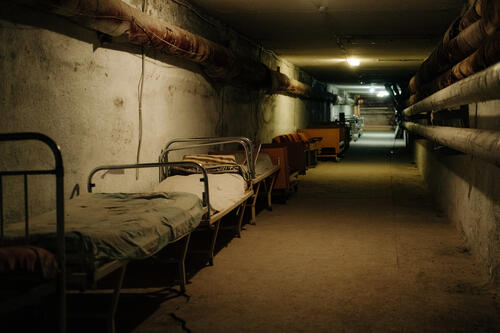
The MSF team we joined does not leave the hospital for a fortnight. This is for security reasons. The front is no more than 10 kilometres away. We sleep in the basement of the building. An impressive maze of corridors lay before us.
Beds line a basement corridor of a hospital in Kherson. The frontline is no more than 10 kilometres away, and the insecurity forces MSF teams to sleep in the basement of the building. Kherson, Ukraine, July 2025.
Julien Dewarichet/MSF
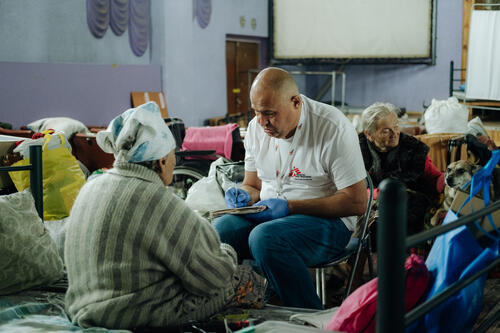
People from the frontline areas arrive at the transit centre for IDPs in Dnipropetrovsk region (eastern Ukraine). They usually spend a few days here before moving further west. The Médecins Sans Frontières mobile clinic comes here twice a week. Our doctors and nurses examine patients. They often have chronic illnesses, and some of them arrive with injuries from the hostilities. Our health promoters and psychologists also work with patients to identify their needs and provide psychological support.
An MSF staff member provides a consultation to a displaced woman during a mobile clinic. People from frontline areas arrive at a transit centre for internally displaced people in Dnipropetrovsk region, and usually spend a few days there before moving further west. MSF teams visit twice a week, providing consultations for chronic illnesses, war wounds, and mental health needs. Dnipro, Ukraine, July 2025.
Julien Dewarichet/MSF
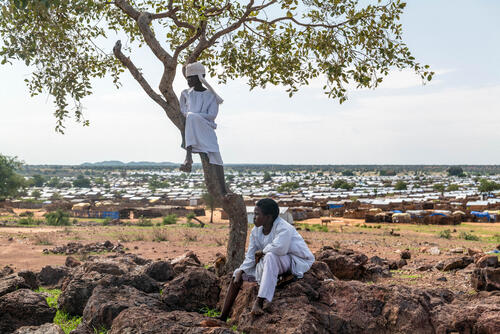
Aboutengue Camp, Ouaddai Province, Chad. 25 July, 2025.

Two Sudanese boys rest on a rocky hill overlooking the vast sprawl of Aboutengue refugee camp, home to tens of thousands who fled ethnic violence in Sudan's West Darfur region. The camp, near Chad's eastern border with Sudan, became a haven after renewed fighting erupted in 2023, devastating towns such as EL Geneina. Many here belong to the Masalit ethnic group, which bore the brunt of targeted attacks and mass killings by militias aligned with the Rapid Support Forces (RSF).
Life in Aboutengue remains precarious. Limited access to clean water, food shortages, and overstretched health services compound the trauma of displacement, while the rainy season worsens conditions, turning dust into mud and flooding fragile shelters. Recent aid cuts have deepened the hardship for families already living on the brink.
Two Sudanese boys rest on a rocky hill overlooking the vast sprawl of Aboutengue refugee camp, home to tens of thousands who fled ethnic violence in Sudan's West Darfur region. The camp, near Chad's eastern border with Sudan, became a haven after renewed fighting erupted in 2023, devastating towns such as El Geneina. Ouaddai province, Chad, July 2025. 
Moises Saman/Magnum Photos
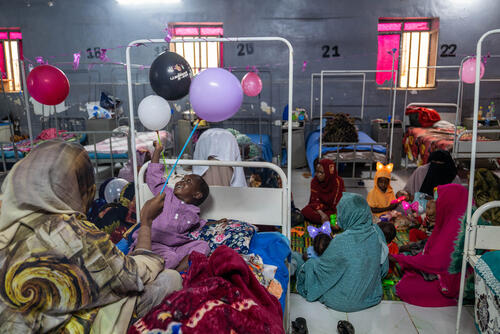
El Geneina, West Darfur, Sudan. July 29, 2025.

Inside the pediatric ward of the El Geneina Teaching Hospital, children take part in a psychological support session organized by Médecins Sans Frontières. Balloons and toys offer a rare moment of joy for young patients and displaced families living through the trauma of war. Alongside medical treatment, MSF provides psychosocial care to help children and caregivers cope with the fear, loss, and disruption brought by Sudanese conflict.
In the paediatric ward of El Geneina Teaching hospital, children take part in a mental health support session which uses balloons and toys, offering a rare moment of joy for young patients and displaced families living through the trauma of war. El Geneina, West Darfur, Sudan. July  2025.
Moises Saman/Magnum Photos
Ola holds her eight-month-old severely malnourished child, Nour Al-Shaer.
Ola Al-Shaer holds her eight-month-old daughter Nour, who has severe acute malnutrition, at MSF’s Attar clinic in Khan Younis. Ola is seeking treatment for Nour, amid a context of ongoing siege and escalating malnutrition rates in Gaza. Khan Younis, Gaza Strip, Palestine, August 2025.
Nour Alsaqqa/MSF
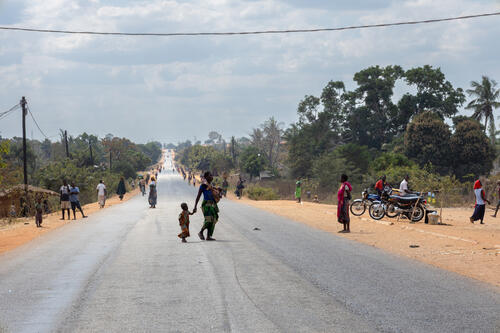
Caught between conflict and natural disasters, communities in Cabo Delgado have faced repeated displacement and ongoing trauma from the loss of their homes and livelihoods.
People walk along a road in Cabo Delgado province, which has experienced both conflict and natural disasters, often forcing communities to become repeatedly displaced and endure ongoing trauma from the loss of their homes and livelihoods. Cabo Delgado province, Mozambique, August 2025.
Marília Gurgel/MSF
El Geneina, West Darfur, Sudan. August 3, 2025.

Meskerem Mulugeta (right), a midwife with Médecins Sans Frontières from Ethiopia, helps deliver a healthy baby at El Geneina Teaching Hospital. 

With most hospitals destroyed or abandoned and critical shortages of medicines, blood, and personnel, childbirth in Sudan often turns deadly for mothers and infants.
El Geneina Teaching Hospital, one of the few public facilities still functioning in West Darfur, operates under extreme pressure to provide emergency obstetric care. 

Humanitarian organisations like MSF are the last lifeline for millions of women and children, yet even these services are threatened by escalating violence and massive cuts in global aid.

For every successful birth like this one, countless others end in preventable tragedy as the world's attention drifts elsewhere.
Meskerem Mulugeta (right), a midwife, has just helped deliver a woman’s healthy newborn baby at El Geneina Teaching hospital. El Geneina, West Darfur, Sudan, August 2025. 
Moises Saman/Magnum Photos
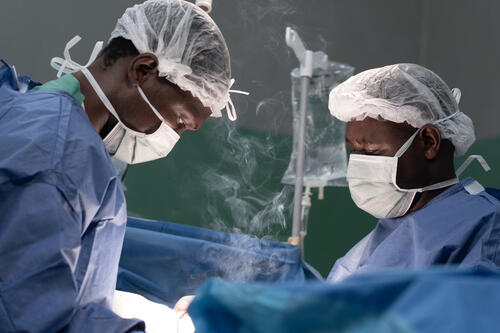
Surgeons at the Rutshuru General Reference Hospital cauterize a wound of a young gunshot victim.
Surgeons at the Rutshuru General Reference hospital cauterize a wound of a young gunshot victim. Democratic Republic of Congo, August 2025.
Sam Bradpiece/MSF
The war left extensive devastation across southern Lebanon, Baalbek-Hermel, and the suburbs of Beirut, compounding the effects of an ongoing economic collapse. Infrastructure—including health facilities, water, and electricity systems—was heavily damaged.
A destroyed building stands testament to the short, but brutal, war Israel inflicted across parts of Lebanon, leaving extensive devastation and compounding the effects of an ongoing economic collapse. Nabatieh, Lebanon, August 2025.
Maryam Srour/MSF
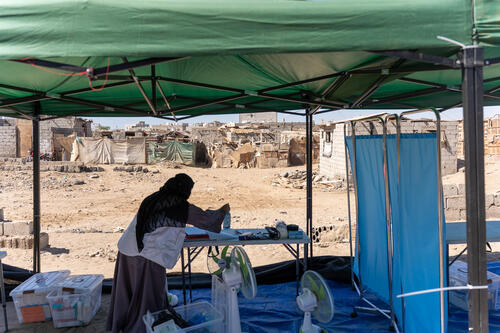
An MSF team prepares to establish a clinic in Patang camp, Kunar Province, where 1,000 families are being relocated after the earthquake. MSF medical and logistical teams work together to set up tents and containers that will serve as a clinic to treat displaced people living in the camp and people in nearby villages.
An MSF team prepares to establish a clinic in Patang camp, where 1,000 families are being relocated following a 6.0 magnitude earthquake which struck the area on 31 August. Kunar province, Afghanistan, September 2025.
Alexandre Marcou/MSF
An MSF health staff member holds Zahraa, a young child receiving follow-up care at Al-Mahdi Health Center in Sadr City, Baghdad. The team works to raise awareness and provide early TB screening for families in the community.
An MSF health promotion team member holds Zahraa, a young child receiving follow-up care at Al-Mahdi health centre in Sadr City. The team works to raise awareness and provide screening for tuberculosis for families in the community. Baghdad, Iraq, September 2025.
Deniz Fahmi/MSF
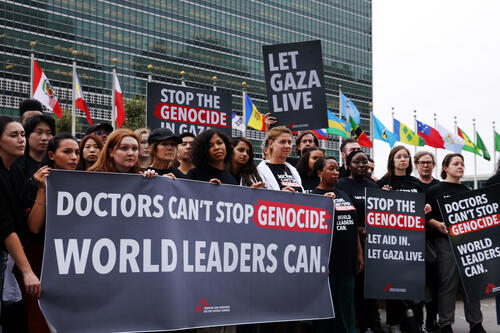
With the United Nations (UN) General Assembly underway, Doctors Without Borders/Médecins Sans Frontières USA (MSF USA) staff, medical aid workers, and supporters gather in front of the UN Headquarters in New York to call on world leaders to take action and end the genocide in Gaza.
With the UN General Assembly underway, MSF staff and supporters gather in front of the UN Headquarters in New York to call on world leaders to take action and end the genocide in Gaza. New York, USA, September 2025. 
Jason DeCrow/The Associated Press
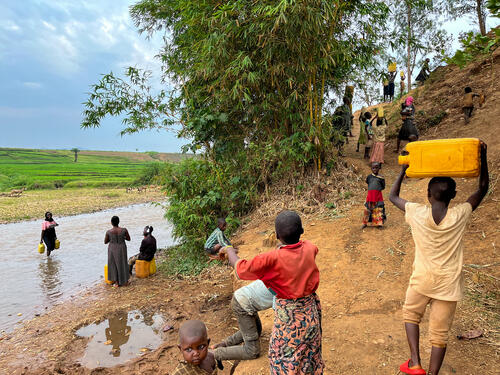
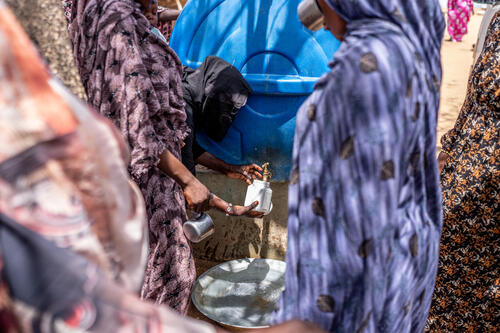
The inhabitants of Mparambo use the Nyakagunda River for their daily needs due to the lack of drinking water. The locality records the majority of cholera cases.
The residents of Mparambo carry water from the Nyakagunda River for their daily needs, due to the lack of drinking water. The locality records a significant number of cholera cases. Burundi, September 2025.
Dorine Niyungeko/MSF
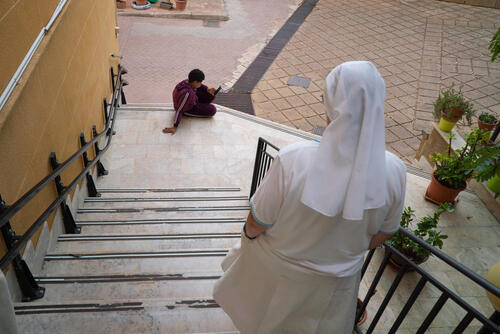
A glimpse of the welcome centre for migrant minors in Agrigento.
A glimpse of the welcome centre for migrant minors in Agrigento. Italy, September 2025.
Giuseppe La Rosa/MSF
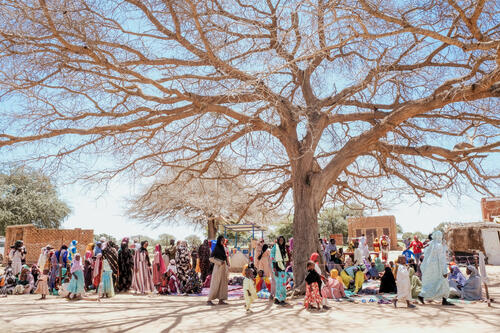
A vaccination campaign against cholera at a Première Urgence health centre in Koufroun, eastern Chad where MSF provided vaccines. 

MSF is involved in the fight against cholera in Adré, Aboutenge, Metché, Irdimi, Tulum, Tiné, Hadjer Hadid, Allacha, Goz Beida and Abdi through vaccination, cold chain management, active case finding, health promotion, soap distribution, water supply and water network rehabilitation, and the establishment of several cholera treatment units and centres.
People gather under a tree outside the Première Urgence health centre to receive a cholera vaccination. Koufroun, Chad, September 2025.
Léa Gillabert/MSF
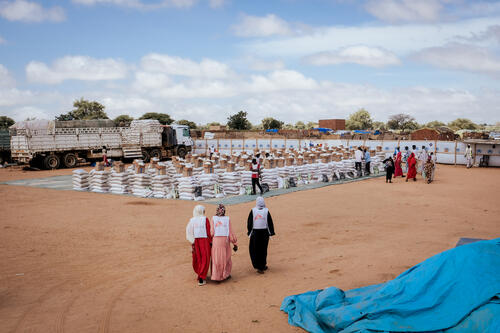
People wait at a soap and food distribution organized by MSF and WFP, through their partner Acted, in Adré, Eastern Chad. 6,528 kits containing 75 bars of soap were distributed. Each person received three bars of soap.

MSF is involved in the fight against cholera in Adré, Aboutenge, Metché, Irdimi, Tulum, Tiné, Hadjer Hadid, Allacha, Goz Beida and Abdi through vaccination, cold chain management, active case finding, health promotion, soap distribution, water supply and water network rehabilitation, and the establishment of several cholera treatment units and centres.
MSF staff verify the details as part of a food and hygiene kit distribution in Adré. Chad, September 2025.
Léa Gillabert/MSF
Rose Muthami, healed Mpox patient.
Rose Muthami shows the scars following her successful treatment for mpox. Mombasa, Kenya, September 2025.  
Zainab Mohammed/MSF
Inside MSF-supported Boost provincial hospital, a room is filled with patient medical information and records, filed by date.
Inside MSF-supported Boost provincial hospital, a staff member consults a file in a room filled with patient medical information and records, filed by date. Lashkar Gah, Helmand province, Afghanistan, September 2025.
Alexandre Marcou/MSF
Alizai, 30 years old, is the mother of one-year old Sediqullah. “He accidentally swallowed some pills and started having convulsions. I brought him here and after three nights he is finally feeling better, and his fever is reducing”.
One-year old Sediqullah lies on the bed next to his mother Alizai. He is receiving treatment at Boost provincial hospital, Lashkar Gah, after he accidentally swallowed some pills and started having convulsions. Helmand province, Afghanistan, September 2025.
Alexandre Marcou/MSF
Crowd gathering outside Nasser hospital while Abed El Hameed Qaradaya's remains are taken to the ambulance that will drive to the cemetary for the funerals.
A crowd, including MSF staff, gathers and prays outside Nasser hospital while Abed El Hameed Qaradaya's remains are taken to the ambulance that will drive to the cemetery for his funeral. Abed, an MSF staff member for 18 years and the physiotherapy activity manager in Gaza, was killed along with another MSF colleague, Omar Hayek, by an Israeli forces attack on the street where they waited for a bus to take them to work. Omar and Abed are the 14th and 15th MSF colleagues killed in Gaza since October 2023. Gaza Strip, Palestine, October 2025.
Nour Alsaqqa/MSF
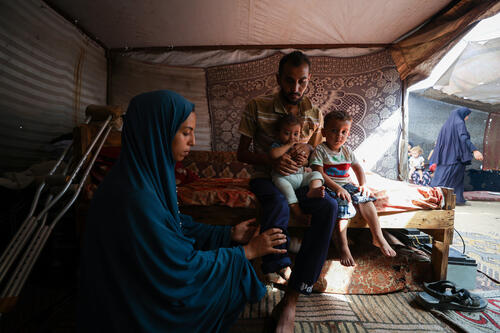
Bassel holds his children, nine-month-old Mohammed and 2.5-year-old Ibrahim, as his wife massages his amputated leg to relieve phantom limb pain. The family lives in a displacement tent in Mawasi, Khan Younis, after fleeing their home in Rafah. Bassel lost his leg after being shot months earlier while trying to access aid at a distribution point.
Bassel holds his children, nine-month-old Mohammed and 2.5-year-old Ibrahim, as his wife massages his amputated leg to relieve phantom limb pain. The family lives in a displacement tent in Al-Mawasi, Khan Younis, after fleeing their home in Rafah. Bassel lost his leg after being shot months earlier while trying to access aid at a distribution point. Gaza Strip, Palestine, October 2025.
Motasem Abu Aser/MSF
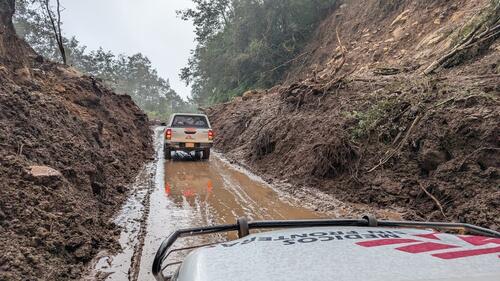
Médecins Sans Frontières (MSF) vehicles drive through landslides and muddy roads to reach isolated communities in the mountains of Hidalgo.
MSF vehicles drive through landslides and muddy roads to reach isolated communities in the mountains of Hidalgo. Mexico, October 2025.
Carlos Aguilar/MSF
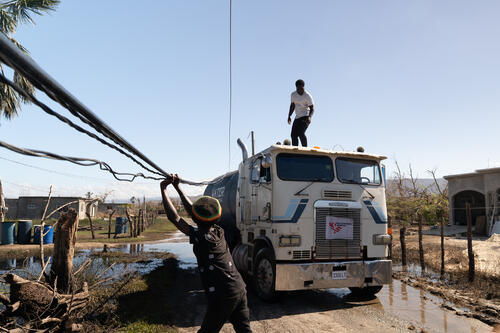
MSF water trucking efforts were slowed down considerably due to damaged infrastructure. Residents in St. Elisabeth parish helped by pushing damaged, non-electrified, electricity cables to the side.
A resident helps push damaged, non-electrified, power cables to the side to allow an MSF water truck to pass. MSF teams are responding following the destruction caused by category five hurricane Melissa. Saint Elizabeth parish, Jamaica, November 2025.  
Georg Gassauer/MSF
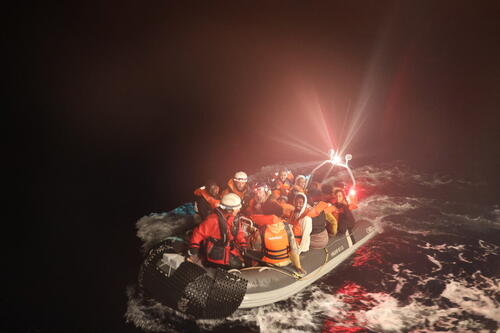
On the evening of 16 November 2025, the MSF team onboard Oyvon conducted a rescue for a group of 27 people who were in distress on a rubber boat. Everyone was disembarked safely the morning after in Lampedusa.
The MSF team brings back a group of 27 people who were in distress on a rubber boat onboard our new search and rescue vessel Oyvon. Everyone was disembarked safely the morning after in Lampedusa, Italy. Mediterranean Sea, November 2025.
Lisa Veran/MSF
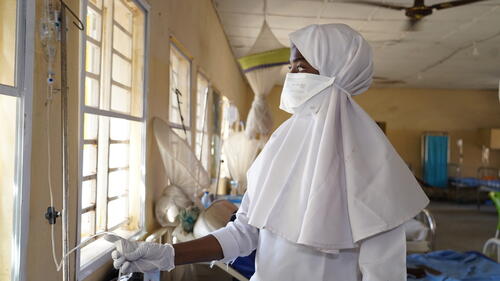
A nurse checks an IV drip inside a ward at the Diphtheria Treatment Centre, in the Infectious Diseases Hospital, Kano.
A nurse checks a patient’s IV drip inside the diphtheria treatment ward at the Infectious Diseases hospital, in Kano. Nigeria, November 2025.
Eugene Osidiana/MSF