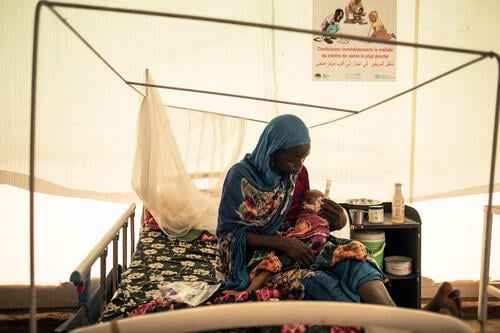
N'djamena – More than one in five pregnant and breastfeeding women screened by Médecins Sans Frontières (MSF) in the eastern Chadian border town of Adré during the first six months of 2026 were acutely malnourished. Three-quarters of them belonged to host communities excluded from local food distributions, due to rigid aid rules which limit access strictly to registered refugees amid critical funding shortfalls.
MSF is calling on international donors to fund Chad’s 2026 response plans and to explicitly include host communities in food and nutrition assistance. Amid crippling funding cuts, MSF stresses that Chadian authorities and UNHCR, the UN’s refugee agency, must guarantee that food, water, and health services meet emergency standards for both refugees and host communities before proceeding with any further relocations to Metché and Arkoum.
Refugees arrive in Adré physically shattered... [only to find] themselves in areas where host communities are already living in poverty.Léa Ledru, MSF project coordinator in Adré
Since the war in Sudan began, more than 930,000 Sudanese refugees have crossed into Chad, over 80 per cent of them women and children; more than 700,000 have crossed through Adré alone. Since April 2023, UNHCR and Chadian authorities have relocated 646,216 people from border transit sites inland, with 45,321 of those occurring since January 2026 under the accelerated programme.
“Having survived months of relentless violence, refugees arrive in Adré physically shattered, malnourished and deeply traumatised, only to be met with a brutal new reality, finding themselves in areas where host communities are already living in poverty and humanitarian actors remain scarce,” says Léa Ledru, MSF project coordinator in Adré. “Relocation does not resolve this: it simply moves the refugee population from one under-resourced host community’s doorstep to another’s.”
Between January and June 2026, MSF screened 5,785 lactating and pregnant women in Adré; 1,225, or 21.2%, were moderately or severely malnourished (GAM), significantly above the 15% emergency threshold that defines a critical humanitarian crisis. This includes 937 women (16.2%) with moderate acute malnutrition (MAM) and 288 (5%) with severe acute malnutrition (SAM), drastically elevating risks of miscarriage, obstetric haemorrhage, and premature birth.
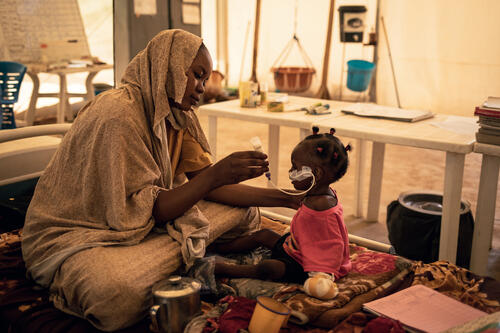
No organisation provides structured treatment for malnourished women; responses are limited to sporadic distributions of fortified flour blends whenever supplies are available. Meanwhile, child malnutrition admissions at the MSF-supported Adré health centre rose 30 per cent between January and April 2026 compared with the same period in 2025.
Financial constraints triggered stockouts of World Food Programme (WFP) supplies for treating MAM in May and June, disrupting care for moderately malnourished children and pregnant and lactating women. Stock delivered at the end of June is projected to run out in September, with no clarity on further donations.
Pipelines to treat acute malnutrition also remain severely strained; only two-thirds of annual therapeutic food needs are covered, forcing humanitarian organisations to ration treatment to 10 packets per child weekly, instead of 14. While this stretches stock into early 2027, full clinical doses of therapeutic food would exhaust supplies by November 2026. Meanwhile, host communities remain excluded from general food distributions in Adré, even as soaring local markets push basic essentials out of reach. For example, the cost of a 20-litre container of cooking oil has skyrocketed from 12,000 CFA francs (US$21) to 20,000 CFA francs ($35).
The funding gap is not abstract: chronic underfunding has forced WFP to prioritise, covering food assistance in Adré and Metché since January 2026 through bi-monthly cash transfers portioned to last only 30 of every 60 days. Even that reduced amount runs out this month, putting the ration at risk of stopping for refugees too.
More than 10,000 refugees from Adré are expected to arrive in Metché camp before the end of September, adding to the 43,300 refugees and host community members already living there. Meanwhile, MSF and Action Contre la Faim (ACF) remain the sole healthcare providers in the camp. In addition, teams are receiving malnourished children from Arkoum and Allacha amid fading support, driving paediatric admissions at the MSF-supported hospital up 75 per cent, from 382 in the first half of 2025 to 670 in the same period of 2026.
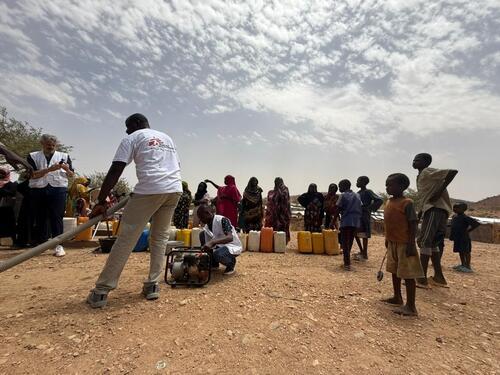
Water availability sits at just eight litres per person daily, well below the 20-litre emergency minimum, forcing families to drink directly from unsafe water sources. Consequently, diarrhoea cases surged from 634 in the first half of 2025 to 1,044 in 2026.
In camps lacking safe water and latrines, waterborne disease spreads rapidly among refugees and host communities alike, both already weakened by hunger. With the rainy season underway, these gaps echo the conditions behind last year's cholera outbreak, which killed 167 people among 2,979 cases between July and December 2025.
Chad
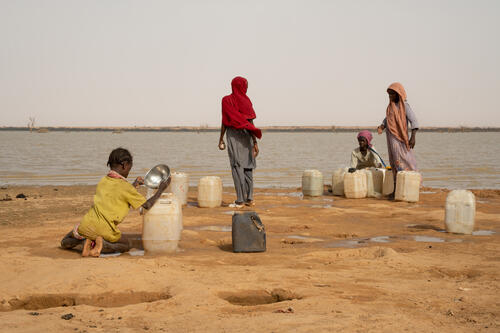
Sudanese refugees face the effects of humanitarian funding cuts in Ouré-Cassoni, Chad
Project Update
7 Sep 2026