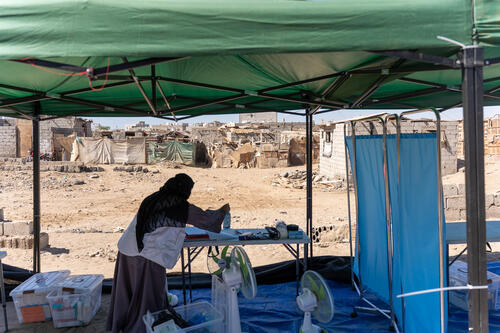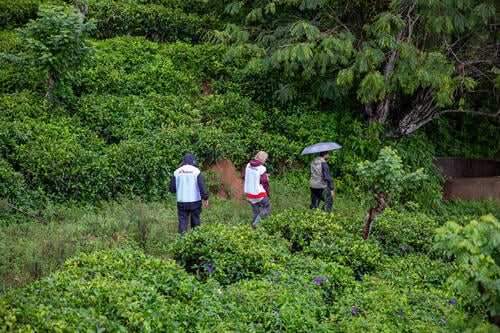
Médecins Sans Frontières (MSF) has completed our emergency response to cyclone Ditwah in Sri Lanka. The worst natural hazard to hit Sri Lanka in two decades caused widespread flooding and landslides across all districts, severely affecting both urban and rural communities. Since December 2025, MSF worked alongside local partners and authorities to address urgent and ongoing needs in affected communities in the central highlands of Sri Lanka.
Key outcomes
- Over 4,000 people reached with essential relief items, including maternity and dignity kits, warm clothing and blankets, helping to maintain hygiene, dignity and comfort during displacement.
- Restored water supply in eight locations, ensuring nearly 600 families had access to safe water for drinking, cooking and hygiene.
- Sanitation improvements and hygiene material distribution in 13 displacement centres, ensuring dignity and helping reduce the risk of disease outbreaks.
- Displaced people received psychosocial support through the efforts of over 80 trained community volunteers, who are empowered to continue supporting mental health needs in their communities.
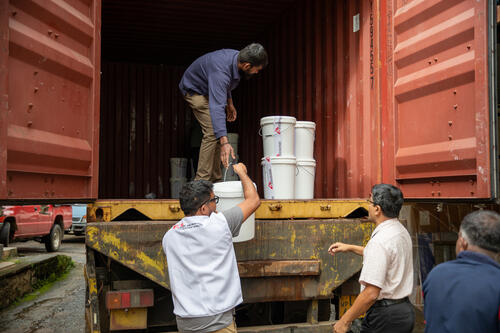
- MSF delivered 1,000 heavy-duty family tents and 1,500 heavy-duty plastic sheets to Sri Lanka's Disaster Management Centre, to support immediate relief efforts in colder regions.
Remaining needs
Nearly two months after cyclone Ditwah made landfall, many people have begun returning home and resuming their daily lives. However, thousands of people whose homes were destroyed or are located in high-risk areas remain displaced.
People living in temporary and transitional shelters will require ongoing assistance over the medium- to long-term. Additionally, marginalised communities, particularly those working on tea plantations in the central highlands, were disproportionately affected, and continue to face significant barriers in accessing relief services and information in Tamil language.
During the initial emergency phase, MSF focused on addressing immediate needs and supporting and strengthening local response capacity. As MSF transitions out of direct emergency operations, ongoing support will be needed for people affected by this disaster and for building preparedness for future climate-related emergencies.
DRC Ebola outbreaks
Children are being left behind in the current Ebola disease outbreak response
Press Release
15 Oct 2026
DRC Ebola outbreaks
What will it take to end the Ebola disease outbreak in Democratic Republic of Congo?
Project Update
30 Sep 2026