


Podcast: The Hunting and Killing of Rwandan Refugees in Zaire-Congo 1996-1997
This podcast is adapted from the case study “The Hunting and Killing of Rwandan Refugees in Zaire-Congo 1996-1997". In 8 episodes, it investigates MSF's experience in the aftermath of the 1994 Rwandan Tutsi genocide, and in particular, with the impact on local populations and refugees living in the Democratic Republic of Congo (formerly Zaire).
The series expresses on the constraints, questions, and dilemmas faced by MSF teams attempting to bring relief to Rwandan refugees and local populations.
This podcast is available on all podcast platforms.
Episode 1: Resumption of War in Eastern Zaire
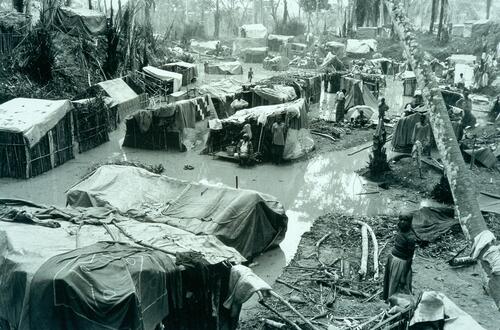
In 1996, MSF attempts to alert the international community about the resurgence of conflict in eastern Zaire, as witnessed by teams on the ground. The perpetrators of the Rwandan Tutsi genocide, living in refugee camps, threaten and attack the Zairean civilian population. The same perpetrators are holding Rwandan refugees that fled the 1994 genocide, hostage within the camps. The new Rwandan regime and its Zairian ally, the Alliance of Democratic Forces for the Liberation of Congo-Zaire (ADFL), launches counter attacks on the refugee camps.
Photo credits : © Wim Van Cappellen
Episode 2: Information War Over Refugee Numbers
As the instability of the region increases, MSF and other humanitarian organisations are eventually forced out of eastern Zaire entirely. MSF suspects that thousands of refugees are suffering and at risk of dying. The organisation decides to launch an appeal for an armed international intervention and communicates about the plight of the population, predicting a health catastrophe, if access for aid agencies is not provided.
Photo credits: © Frederic Sautereau
Episode 3: Under Fire in the Press
In November 1996, the offensive led by the ADFL and Rwandan forces empties the camps in eastern Zaire of their population. Some refugees were repatriated to Rwanda and others fled into the neighboring forest. MSF denounces the repatriation conditions and is reproached by the press for "catastrophic" forecasts made a few weeks earlier.
Photo credits: © Frederic Sautereau
Episode 4: Humanitarians Used as Bait
Finally allowed into South Kivu, a province in eastern Zaire, the MSF teams discover that refugees are being massacred by the ADFL and its allies, particularly in the Massisi and the Shabunda regions. MSF realises that MSF teams are used as bait by the ADFL to lure the refugees out of the forests and kill them.
Photo credits: © Wim Van Cappellen
Episode 5: Forest Exodus
The ADFL takes control of all of the Kivu province and refugees continue to flee their rapid advance eastwards through the forest. MSF struggles to maintain access to the refugees amidst the violence, restrictions, and threats to team safety, while receiving continued reports about refugee massacres.
Photo credits: © Wim Van Cappellen
Episode 6: Silent vs Public Advocacy
MSF's exploratory mission teams complete their reports on their Masisi and Shabunda visits. Details of mass graves, massacres, and the fact that the ADFL used humanitarian teams as bait to lure refugees out of the forests, sent shock waves through MSF offices. A debate about the use of the information collected ensued: should it be made public or not?
Photo credits: © Wim Van Cappellen
Episode 7: The ‘Forced Flight’ Report
In May 1997, MSF published a new study describing the movements of refugees in the Great Lakes region of Africa and the fate of refugees. MSF planned to distribute the report to a small group of journalists, asking them not to cite MSF as the source of the information. However, a lack of communication between MSF offices and with the teams in the field, exacerbates tensions.
Photo credits: © Frederic Sautereau
Episode 8: Learning from Retrospective Reports
From mid-1997, MSF teams try to work together again. The organisation publishes retrospective studies that trace the odyssey of the Rwandan refugees through the Zairean jungle and contributes testimony to international investigations on human rights violations in the region.
Photo credits: © Wim Van Cappellen