



Ebola disease in DRC: find out how we're responding
Learn more
4633 Results
 
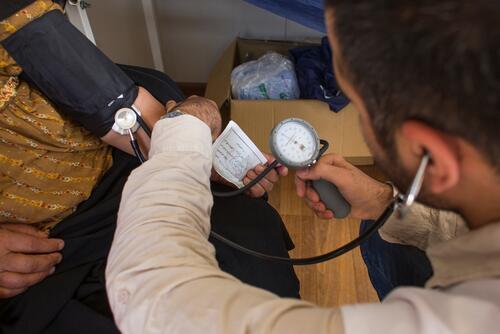
Non Communicable Disease clinic (MSF) in northeast Iraq.
Iraq

MSF hands over last projects in Diyala, Iraq, after six years

MSF teams provided healthcare services in Diyala governorate from late 2014 until August 2020 when they handed over their latest projects to the Health Directorate and other local and international organisations. Project Update - 13 Oct 2020
 
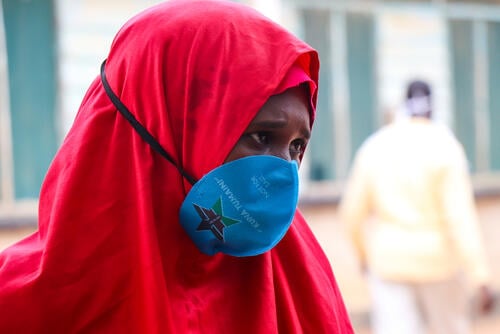
A refugee waits outside the mental health clinic for consultation.
Kenya

COVID-19 further fuels mental health crisis in Dadaab as durable solutions falter

The mental health of refugees in Kenya's Dadaab camp complex is dramatically deteriorating as COVID-19 hinders promises of durable solutions. Project Update - 9 Oct 2020
 
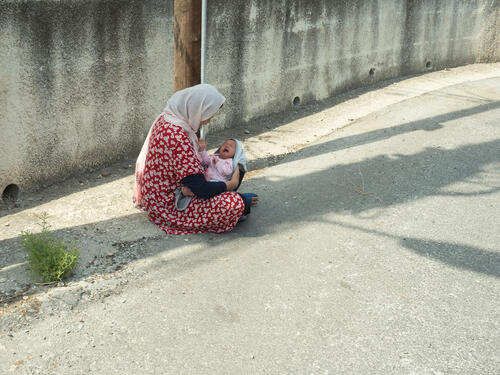
GREECE. Lesbos, 12 September 2020. Mother with her baby under the shade of a tree tried to feed it.
Greece

EU must stop trapping people in miserable conditions on the Greek islands

One month after a fire destroyed Moria refugee camp on the island of Lesbos, Greece, MSF and partner organisations are demanding EU leaders relocate people still stuck on the islands. Statement - 8 Oct 2020
 
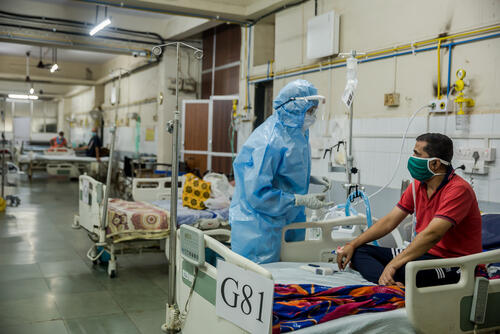
Medical doctor, Dr Ilham checking patient Pramod in the inpatient ward with High Flow Nasal Oxygen Equipment (HFNO) at Pandit Madan Mohan Malviya Shatabdi hospital located in Govandi M East ward Mumbai. MSF has closely been working in co-ordination with Municipal corporation of Greater Mumbai (MCGM) for screening, sample collection and diagnostics of Covid-19 cases and management of Mild  to moderate confirmed cases since June 2020. MSF has provided High Flow Nasal Oxygen Equipment (HFNO) to improve treatment outcomes at secondary level and decongest tertiary referral facilities.
Coronavirus COVID-19 pandemic

MSF supports India and South Africa ask to waive COVID-19 patent rights

MSF backs a demand by India and South Africa at the World Trade Organization to waive patent and intellectual property rights on coronavirus COVID-19 drugs and vaccines. Press Release - 7 Oct 2020
 
Most of the people admitted to Covid+ centres are homeless people sent from emergency shelters. When MSF mobile teams who intervene in these shelters diagnose someone as possibly having contracted the virus they try to test them——if they have the necessary kits.
From the medical perspective, we know the symptoms of the virus, so we can identify anyone suspected of having the disease. The Regional Health Authority then calls on the Red Cross, which handles transportation, to take them to Covid+ centres set up across Paris and the suburbs. 

In Chatenay-Malabry Covid+ centre (Paris suburbs), there are places for 50 people with confirmed or suspected Covid-19. We provide social support and paramedical/medical care in partnership with NGO Alteralia. This includes checking vital signs: blood pressure, temperature and oxygen saturation to see whether people are breathing properly. We also give advice on hygiene, wearing a mask and hand washing to prevent the infection spreading to other people. We also give medical examinations and, when necessary, take care of patients requiring long-term treatment for other conditions. We monitor them regularly, so if all of a sudden someone who’s really struggling to breathe—remember, this isn’t a hospital so we don't necessarily have the equipment to keep them on oxygen for any length of time—requires further tests, this is the kind of person we call the emergency services for so that they can take them to the hospital. 

MSF teams are on hand throughout the care chain: from the mobile teams, mobile clinic and care provided in the emergency centres through to the medical team who treat patients admitted to the Covid-19 treatment centres.
Coronavirus COVID-19 pandemic

High COVID-19 rates found among people living in extreme hardship in Paris

A survey has found that people living under hardship - such as in shelters or workers' hostels - in Paris have infection rates of coronavirus COVID-19 of up to 94% in some areas. Press Release - 6 Oct 2020
 
GREECE. Lesbos, 12 September 2020. Fires at Moria migrant camp left thousands homeless.
Refugees, IDPs and people on the move

Enough is enough: new pact, same misery for refugees

MSF International President Dr Christos Christou outlines in this op ed why the European Commission's proposed 'fresh start' on migration is simply the continuation of containment policies. Op-Ed - 5 Oct 2020
 
Golnegar with her family in front of her tent.
Golnegar is a mother of six children, four daughters and two sons. Her oldest child is a 12-year-old boy. She gave birth to her baby girl in Samos two months ago. Golnegar and her husband took the difficult decision to seek asylum in Europe after they had been targeted by armed groups in Afghanistan and their children’s lives were at risk. They have been in Vathy camp for more than 7 months, and despite the Golnegar’s pregnancy and medical condition they have not yet been offered a safe place to stay.

“There is something wrong with my kidney. I am in pain and I have headaches every day, but despite my efforts to see a doctor in the camp or in the local hospital, it has not been possible so far. All of my children have insect bites on their bodies, and they complain often that they feel sick, but there is nothing I can do for them,” says Golnegar. Her husband adds: “We only want a safe place for our children. We came here to save them from war and take them to school, but instead we found ourselves in this camp waiting in limbo for almost a year. We just want to start a peaceful life and take our children to school, and this is only possible on the mainland or in other European countries. How long will we have to stay in this makeshift camp?”
Greece

European policies of deterrence and containment degrade human life

Iorgos Karagiannis, the MSF head of mission in Greece, writes that while no-one wants to see 'another Moria' among camps, the EU is perpetuating the circumstances that led up to the fire. Op-Ed - 1 Oct 2020
 
South Sudan. The Greater Pibor Administrative Area. Lukurunyang payam. September 7, 2020. Dede, a mother of eight constructs a new shelter in Lakurunyarg after floodwater overwhelmed her house and a small farm. An MSF (Médecins Sans Frontières) mobile clinic brings life-saving medical care to Lukurunyarg after the flooding made the roads impassable.
South Sudan

Heavy floods threaten the lives of thousands of people in Greater Pibor

Ongoing severe flooding in Greater Pibor, South Sudan, has displaced thousands and worsened a devastating humanitarian crisis. MSF is urging organisations to scale up their response. Project Update - 23 Sep 2020
 
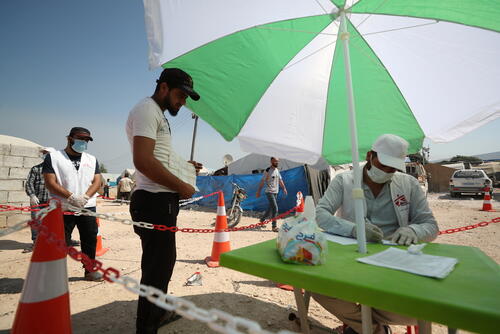
MSF has been engaged since April 2020 in distributing hygiene kits to displaced people living in camps in northwest Syria. Since then, the teams have distributed more than 63,000 hygiene kits including items such as soap and detergents to more than 26,000 displaced families in several camps in Idlib governorate and North Aleppo. 
In order to prevent overcrowding during the distribution, MSF teams have set up clear pathways from the entrance till the exit and put in place other measures such as asking people to maintain a safe distance among each other or asking only one person per family to come to the distribution site.
Coronavirus COVID-19 pandemic

Ten-fold increase in COVID-19 cases adds new challenges in northwest Syria

In just a month, the number of COVID-19 cases in northwest Syria have increased 10-fold, putting added pressure on the health system and creating more challenges in an already-dire situation.
Project Update - 22 Sep 2020
 
RHIB_drill
Mediterranean migration

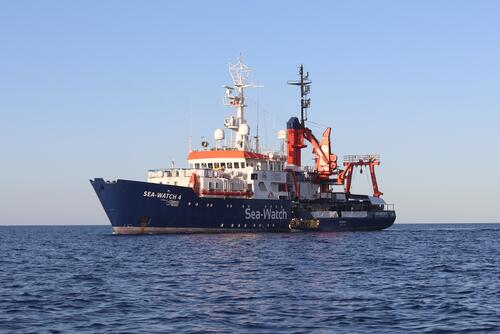
Detainment of fifth search and rescue ship in five months condemns people to die at sea

Misuse of maritime law is providing a smoke-screen for a political decision to prevent rescue ships from saving lives in the Mediterranean as the Sea-Watch 4 is detained by Italian port authorities. Press Release - 20 Sep 2020
Four mothers posing in a corridor of the Hospital in Bili. All four of them are staying in the hospital with their child, that's suffering from a severe case of malaria. Since the beginning of the project in 2016, the pediatric ward already treated more than 4.000 cases of complicated/severe form of malaria.
Médecins Sans Frontières (MSF)

Independent medical humanitarian assistance

We provide medical assistance to people affected by conflict, epidemics, disasters, or exclusion from healthcare. Our teams are made up of tens of thousands of health professionals, logistic and administrative staff - most of them hired locally. Our actions are guided by medical ethics and the principles of independence and impartiality. We are a non-profit, self-governed, member-based organisation.

Learn more