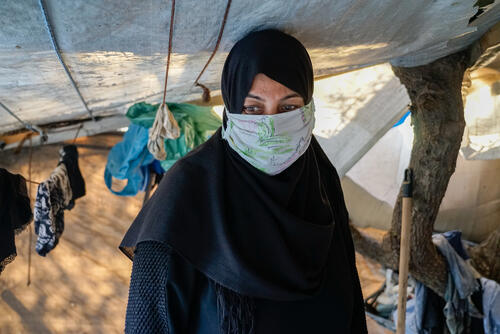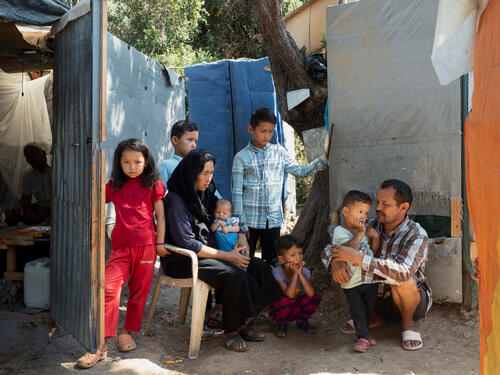

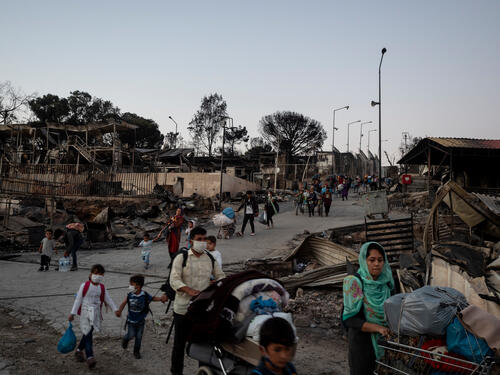
‘We do not want to see a new Moria again’ was the instinctive reaction of European leaders following the fire that ravaged the Moria Reception Centre on the island of Lesbos, Greece, three weeks ago. The disaster in Moria was not surprising. It was the fatal, and sadly inevitable, consequence of the EU’s deterrence and containment policies, which created the overcrowded and under-resourced camps on the Aegean islands. The EU has implemented these policies at any cost and by any means, no matter the suffering they cause.
The policy of containing refugees and asylum seekers that arrive in Europe and deterring others from making the journey will always give rise to new ‘Morias’. It is convenient for EU leaders to turn the other way, until a fire like the one in Moria makes them sit up, pay attention, and publicly manage their guilt, usually with promise to relocate a few dozen children or send money and other assistance.
Lesbos already has its new Moria, in the form of a makeshift camp hosting 10,000 people, while ‘Morias’ continue to exist on other Greek islands, where thousands of people are indefinitely trapped every year.
The policy of containing refugees and asylum seekers that arrive in Europe and deterring others from making the journey will always give rise to new ‘Morias’. It is convenient for EU leaders to turn the other way...Iorgos Karagiannis, MSF head of mission in Greece
The same cycle of misery on Samos
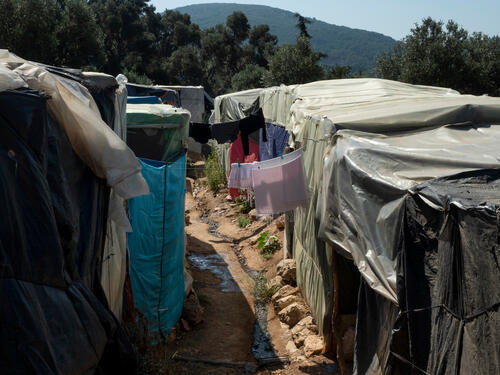
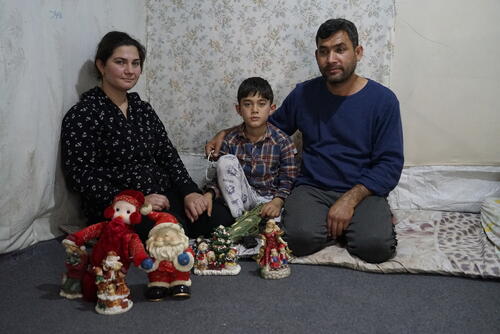
On Samos island, anyone forced to live in the Vathy reception centre continues to get sick, to be in danger every day and to be forced to survive without even basic supplies. Their only hope continues to be an asylum application that can take months or even years to be considered, with few chances of prosperity and without any promise of integration even if their claim for asylum is eventually recognised.
This is the experience of those who seek out the MSF Day Centres in Samos. We provide basic medical care, but we know that when they return to their crowded shelters, they will be tormented again; they will get sick from the miserable conditions they are forced to live in, and they will despair.
This reality is known to the Greek authorities, the European leaders and the financial mechanisms that enable it. Asylum seekers and refugees held on the Greek islands remain excluded and invisible because this is what works best for EU migration politics.
The only time they become visible is when they are targeted as troublemakers, as dangers to public health or as beneficiaries of EU aid.
Does anyone really believe that managing the arrival and processing asylum seekers and refugees is beyond the ability of European states? For years, MSF teams in Samos and Lesbos have witnessed and treated the unmeasurable suffering produced by these policies.
We have evidence that the existing system and the policies of deterrence and containment cause systemic harm and despair, and strip away the innate human dignity of those caught up within them.
Reception centres have never been safe; the people living in them have never had adequate access to healthcare. Human dignity is something that Europe has taken away from those trapped on the islands.
To stem the movements of people migrating and meet an ill-defined need to ‘secure’ its borders, the EU uses, and abuses, a sense of urgency and disaster to justify more restrictions on human freedoms.Iorgos Karagiannis, MSF head of mission in Greece
COVID-19 on Samos
On Samos, there are around 4,500 people trapped in Vathy today – a camp that has the capacity of 650 people. Among them are children, patients with chronic health problems and people whose lives will be endangered if exposed to COVID-19.
With the outbreak of COVID-19 in the camp now, these people are in real danger, and what’s worse there is still no clear medical response plan in place from the authorities.
MSF provides most of the drinking water and the toilets in the area around the official reception centre. Medical care for people held in the camp depends almost exclusively on humanitarian organisations and a few civil servants who have been left without any support from their government for months.
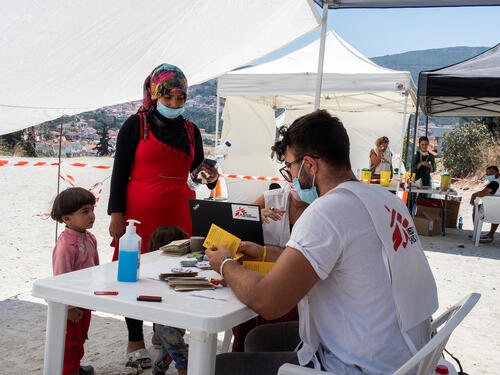
In this year of COVID-19, the plan for Samos is the same as it is anywhere involving reception centres: quarantine and isolation. All the other problems that co-exist do not concern anyone: accumulated pain, exposure to danger, no rights, exclusion, and the constant fear of being forgotten in a closed centre that will keep people locked in miserable conditions.
Europe consciously chooses this ongoing tragedy on its soil. To stem the movements of people migrating and meet an ill-defined need to ‘secure’ its borders, the EU uses, and abuses, a sense of urgency and disaster to justify more restrictions on human freedoms.
Europe is institutionalising human degradation, systematising containment and deterrence. In doing so, it is giving birth to a pattern of destruction and despair.
Greece
Alarming mental health distress among asylum seekers on Greek islands
Project Update
17 Dec 2020