



Ebola disease in DRC: find out how we're responding
Learn more
7999 Results
 
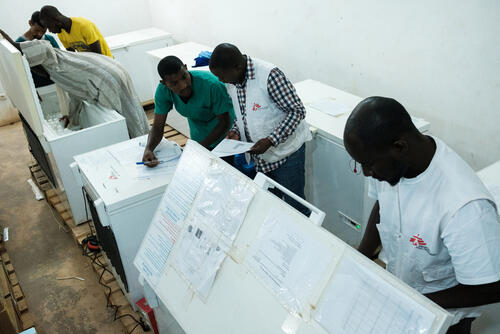
From centre left: Cheickh Ahmed Isselmou, Pharmacy Supervisor; Philemon Olivier, Project Pharmacist; and Kelly Thierno Moctar, a doctor and Assistant Medical Coordinator, readying vaccines at 6:30am at a Médecins Sans Frontières (MSF) facility in Bassikounou in the Hodh ech Chargui region of Mauritania on 7 August 2018. Located in Southeastern Mauritania, Bassikounou is the staging point for MSF operations in the Mbera refugee camp and the surrounding area.
Africa

Mauritania

We provide medical care to people who have fled from Mali. Country
 
El Rancho hostel in Piedras Negras.
The Americas

Mexico

Every year, an estimated 400,000 people flee violence and poverty in El Salvador, Honduras and Guatemala and enter Mexico with the hope of reaching the United States. In Mexico, they are systematically exposed to further episodes of violence. Country
 
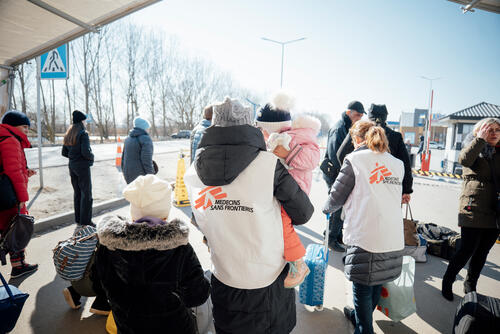
Adelina Ciumac, from Tudora, and Olena Starovoitova, from Cuciurgan, MSF community health workers, help people with general information and emotional support.
Europe & Central Asia

Moldova

MSF briefly returned to Moldova in 2022 to support Ukrainian refugees. Country
 
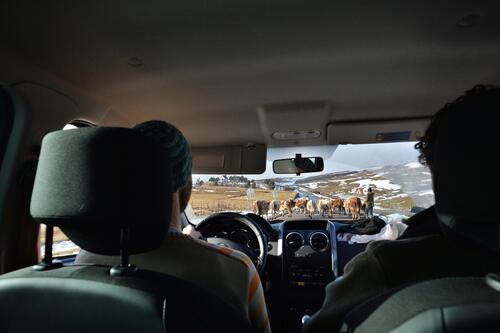
Mongolia: National staff in car..
In 2001 MSF supported some 30,000 people after a quarter of their livestock died due to the 'dzud', exceptionally cold and dry winter weather.  More details in supplementary caption.
Asia & Pacific

Mongolia

MSF closed its projects in Mongolia in 2010. Country
 
MSF driver Hrvoje and Head of Mission Stuart Alexander Zimble driving to Tutin in the South East of Serbia near the border with Montenegro.
Europe & Central Asia

Montenegro

MSF closed its projects in Montenegroin 2005. Country
 
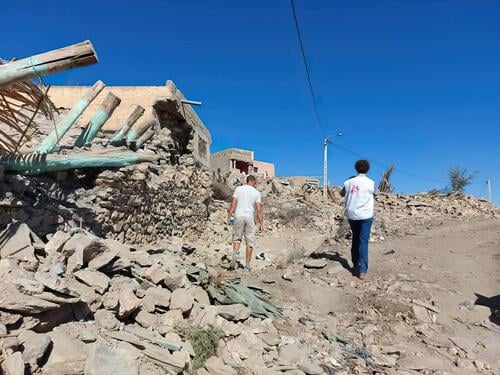
MSF teams are assessing the needs in Taharat village, after a powerful earthquake struck the centre of Morocco on 8 September 2023.
Middle East & North Africa

Morocco

Learn about MSF's previous activities in Morocco. Country
 
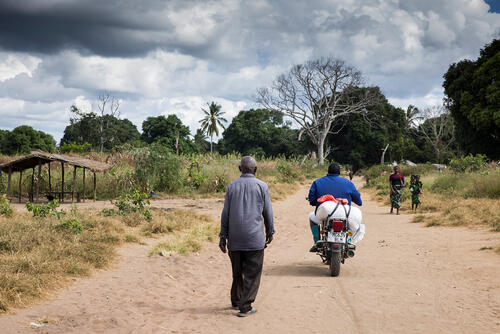
Lucas Matagodi at Lianda IDP camp in Mueda. Lucas Matangodi Shilongo is over 70 years old, but he doesn't know exactly how old. He is in Lyanda IDP camp in Mueda district, far from his home in Nangade district further north. 

"If we were at home we would know how to get food, but not here. 

Many of Lucas' neighbours in the camp are also from Nangade. The war there forced thousands of people to flee. Lucas says that in one of the attacks, insurgents killed his wife, one of his children and another of his grandchildren. He cries when he remembers them, especially his wife. He misses her. He is devastated.

"I dream that I'm running away and falling. I dream that I am being chased," he says. 

Lucas lives with his sister and other relatives in one of the windowed cottages built in this part of the camp. His daughter cooks with her granddaughter inside the hut. In the next room, where the conversation takes place, there is a tin roof and an empty sack of rice from India. Lucas recalls the attack on his village. 
"They came in and burnt the houses, they kidnapped many people, I was sleeping in the forest, because they had already tried to attack twice and we were waiting for them, the people had left their houses pre-emptively and were mostly sleeping in the forest on the day of the attack. They attacked during sunset. They burnt houses.

It was not then that his wife, son and grandson were killed. It was in another attack. Many of the camp residents report fleeing several villages and suffering several attacks along the way. 

"Before that attack, my wife went to another village to visit my son, and on the same day the insurgents attacked, captured the village and killed my wife, son and grandson. The other grandchildren fled and they were the ones who informed us". 
Lucas went to the mobile clinic set up by Médecins Sans Frontières in Lyanda camp today for the first time to seek relief. He needs psychological help. 
"On a daily basis, I think mainly of my wife. I am alone. Sometimes I cry. When I wake up, I'm no longer sleepy and I start to think. I feel bad for my grandchildren, I don't want to talk to them about what happened. I don't have any more worries, because I have the support of my grandchildren. What I think about is that I will never be able to see my wife again. 
"For the moment I don't think about going back. I want to stay because I am safe here, what worries me is only the food, because it is not enough".
Africa

Mozambique

Learn about our medical projects in Mozambique, where we provide specialised care to help curb the country's HIV epidemic while also assisting people in conflict-ridden Cabo Delgado. Country
 
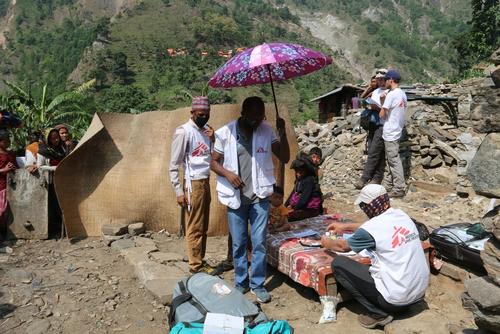
Medical consultation in Korbalesi.
Asia & Pacific

Nepal

MSF first worked in Nepal in 2002 and closed our last project in 2020. Country
 
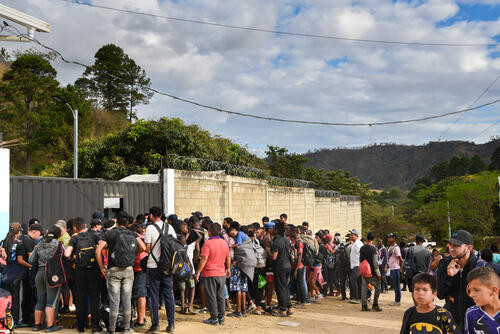
The situation for migrants at the border between Nicaragua and Honduras has worsened in recent months. Since the beginning of March, a new wave of people who are migrating has been crossing the eastern borders of Honduras. From January to March, more than 30,000 people have entered the country irregularly between the municipalities of Trojes and Danli, both border points with Nicaragua. Médecins Sans Frontières (MSF) mobile clinics continue to travel to different points in the area to provide medical and humanitarian assistance to people on the move.
 
In the midst of these consultations, MSF teams listen to the stories of people who arrive affected by physical exhaustion and have experienced situations of violence that impact their mental and emotional health. This was the case for Natasha and René, who had to leave Venezuela with their puppy Juan Pablo to cross the Darien jungle between Colombia and Panama to Danli.
 
Their testimony was captured in a coloring book to try to bring people closer to this type of situation in a different way; as well, to give health promotion teams something they can provide children waiting at border points with to awaken their interest in drawing, as well as use as a child-friendly support tool to help them see others are also facing this difficult journey.
 
Like Natasha and René, between 80 and 160 people are treated every day at the MSF clinic for different health conditions. In 2022, the teams provided more than 17,000 medical consultations at two border points in the country: Danli and Trojes. Of these people, a large percentage are minors, pregnant women and people with chronic diseases.
The Americas

Nicaragua

Discover how we delivered medical humanitarian assistance in Nicaragua. Country
 
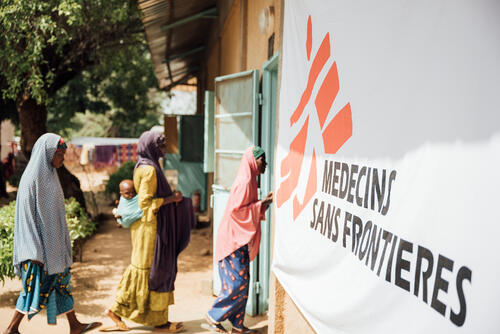
Patients and relatives of patients entering one of the MSF wards in the District Hospital of Magaria, that is supported by MSF in paediatrics and malnutrition.
Africa

Niger

Niger is affected by violence and displacement around its border regions. Country
Four mothers posing in a corridor of the Hospital in Bili. All four of them are staying in the hospital with their child, that's suffering from a severe case of malaria. Since the beginning of the project in 2016, the pediatric ward already treated more than 4.000 cases of complicated/severe form of malaria.
Médecins Sans Frontières (MSF)

Independent medical humanitarian assistance

We provide medical assistance to people affected by conflict, epidemics, disasters, or exclusion from healthcare. Our teams are made up of tens of thousands of health professionals, logistic and administrative staff - most of them hired locally. Our actions are guided by medical ethics and the principles of independence and impartiality. We are a non-profit, self-governed, member-based organisation.

Learn more