



Ebola disease in DRC: find out how we're responding
Learn more
7999 Results
 
msf-placeholder
Syria

MSF activities inside the country

Within Syria, the MSF operations are scaling up as fast as is safely possible, but are still limited to four pockets where MSF is able to have teams on the ground running high quality medical activities. Project Update - 8 May 2013
 
msf-placeholder
Syria

An overview of MSF programmes in and around the country

An overview of MSF programmes inside Syria and for Syrian refugees in neighbouring countries. Project Update - 8 May 2013
 
msf-placeholder
Syria

MSF activities for Syrian refugees

Project Update - 8 May 2013
 
Eighteen-year-old Salwah Mekrsh is unable to walk. She was shot by a sniper in Aleppo. In this photo, taken in April 2013, she is about to start a mental health consultation with MSF staff in Kilis (Turkey).
Syria

"Now I feel better, but I can’t walk"

A young woman from Syria starts a new life in Turkey after being shot by a sniper. Voices from the Field - 6 May 2013
 
A ‘flying’ MSF tuberculosis (TB) surgery team has successfully completed surgery on six drug-resistant (DR) TB patients in Yeravan, Armenia – the first mobile TB surgery ever carried out by the international humanitarian medical organisation. Surgery used to be a key intervention for TB in the pre-chemotherapy era to remove part or all of a lung affected by the disease. In the 1960s, the development of new anti-TB drugs improved medical treatment outcomes and consequently reduced the use of surgery. However, the emergence of multi-drug resistant (MDR) and extensive drug-resistant (XDR) TB in recent years has seen some patients end up with minimal chances of recovery through medication alone. The relevance of TB surgery has therefore risen again but presents new challenges in high-burden TB countries. <br/>The MSF TB surgery team comprised experienced multi-disciplinary team of a thoracic surgeon, anesthesiologist, operating theatre nurse and a chest physiotherapist, who worked closely to share their skills with Armenian Ministry of Health counterparts.In addition to treating patients who acutely needed operations, the objective of the MSF surgery mission was to improve the procedures and skills of the local surgical team at Armenia’s national TB hospital. The key constraints preventing Armenian health authorities and those in many countries around the world from conducting this kind of surgery include a lack of qualified and experienced surgical staff, as well as a lack of modern operating theatre equipment. <br/>Preparation was key to the success of the visit. Well ahead of the arrival of the team, a multi-disciplinary team comprising MSF and Ministry of Health staff meticulously planned the entire process, including the careful selection of patients for operations and what would be needed in the weeks following the surgery. <br/>Following the success of the initiative, the MSF mobile surgery team aims to conduct regular visits to Armenia to continue to improve the skills and capacity of the local staff and offer patients a chance to reclaim their lives from this devastating disease.
Armenia

MSF mobile TB surgery brings hope to patients

A mobile MSF tuberculosis (TB) surgery mission has successfully completed surgery on six drug-resistant (DR) TB patients in Yeravan, Armenia – the first mobile TB surgery ever carried out by the international medical humanitarian organisation. Project Update - 3 May 2013
 
An elderly Syrian refugee suffering from Parkinson's disease sleeps in a room in a ramshackle home on a cattle ground in Tripoli, Lebanon, surrounded by his daughter-in-law and granddaughter, January 22, 2013.  He and 19 members of his family, forced from their home in Idlib, Syria because of armed conflict, live in two cramped rooms in the fetid settlement.  The family pays $175 for the shelter, which has no heating or refrigerator.  They draw water from a nearby well, likely contaminated by cow manure.
Syria

Flashbacks, nightmares and baby clothes

Voices from the Field - 2 May 2013
 
MSF outreach team in Pinga preparing to depart for the day's activities. (2 May 2013) Heavy fighting over the last few days in Pinga, a town in the conflict-afflicted North Kivu province of the Democratic Republic of Congo (DRC), has made it difficult for Médecins Sans Frontières to carry out its vital medical work. Thousands of the town’s inhabitants have fled into the surrounding forests and eleven of MSF’s Congolese staff members are missing.
Democratic Republic of Congo

Renewed violence hits Pinga

Statement - 2 May 2013
 
For the first time since the departure of Iraq in 2004, MSF has been able to establish an international team in the Arab part of Iraq in 2008: in October a project was started in the General Hospital of Basra, in the southern of the country. The project intends to improve pre, intra and post operative care through reintroduction of hygiene standards, universal precautions, monitoring of patients and safety in surgical and anaesthesia care. This aims to reduce the risks of post-operative infection for patients. A team of international and Iraqi MSF staff work together with hospital surgeons, doctors and nurses providing training and coaching.
Iraq

Healing Iraqis: The challenges of providing mental health care in Iraq

Decades of conflict, political instability and social upheaval have left many Iraqis vulnerable to psychological stress, mental health disorders and in need of mental health care says MSF in a new report launched in Baghdad today. Report - 29 Apr 2013
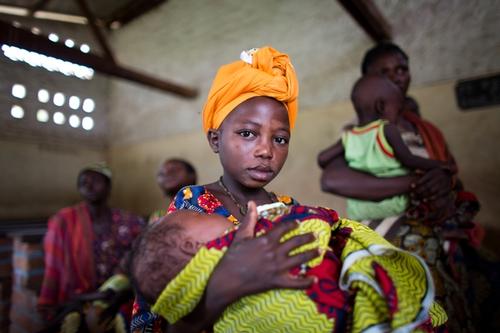
Four mothers posing in a corridor of the Hospital in Bili. All four of them are staying in the hospital with their child, that's suffering from a severe case of malaria. Since the beginning of the project in 2016, the pediatric ward already treated more than 4.000 cases of complicated/severe form of malaria.
Médecins Sans Frontières (MSF)

Independent medical humanitarian assistance

We provide medical assistance to people affected by conflict, epidemics, disasters, or exclusion from healthcare. Our teams are made up of tens of thousands of health professionals, logistic and administrative staff - most of them hired locally. Our actions are guided by medical ethics and the principles of independence and impartiality. We are a non-profit, self-governed, member-based organisation.

Learn more