



Ebola disease in DRC: find out how we're responding
Learn more
7999 Results
 
A Malian refugee who arrived in a convoy from the Fassala transit camp, near the border with Mali, to the main Mbera refugee camp on 6 March 2013.

In March 2012, following the influx of thousands of refugees, MSF has begun providing medical and nutritional activities for refugees and local populations in the district Bassikounou in Mauritania. MSF offers free primary health care, secondary and antenatal care. By installing two health centers in  Mbera camp Mbera andsupporting health posts in Fassala and Mberavillage, medical teams have provided more than 85,000 consultations, 200 deliveries and supported about 1,000 severely malnourished children. Knowing that the nearest hospital is located about more than 200 km, MSF has installed an operational theater in Bassikounou village to allow prompt medical care and stabilization of severe cases before referral to Nema hospital . Protecting children from measles is also a health priority in the camps where MSF teams involved. Indeed, a measles outbreak can be devastating for children who live in crowded camps and often suffer from chronic malnutrition. That is why, in support of health authorities, MSF has vaccinated nearly 10,000 children since March 2012.
Mauritania

Stranded in the desert

MSF report calls for urgent aid effort for 70,000 Malians
Report - 13 Apr 2013
 
The Mbera refugee camp for Malian refugees on 2 March 2013.

As of January 2012, the Malian crisis has resulted in population movements. Nearly 150,000 refugees now live in refugee camps in Burkina Faso, Mauritania and Niger, where MSF teams are providing maternal, primary and secondary health care. Since the beginning of 2013, MSF has recorded nearly 12,000 consultations and 5,000 vaccinations in these three countries. Mauritania is the country with the largest number of refugees.  Mbera camp nearly 70,000 refugees who have fled for fear of reprisals or lack of access to food since the beginning of the conflict. In February 2013, the border post of Fassala (Mauritania) recorded an average of 300 arrivals per day. They are mostly women and children from Timbuktu, Lere, Goundam Larnab and Nianfuke. These Malian refugees continue to live in precarious conditions with no future prospects.
Mauritania

Refugees stranded in desert

Some 70,000 refugees from Mali are living in difficult conditions in the middle of the Mauritanian desert, with ethnic tensions in northern Mali quashing any hopes of a swift return home. A report released today by MSF entitled 'Stranded in the desert' calls on aid organisations to urgently renew efforts to meet the refugees’ basic needs. Press Release - 13 Apr 2013
 
msf-placeholder
Access to medicines

Patent Opposition Database

Patents prevent the open competition that could drive prices down to lower, affordable levels. Campaign - 11 Apr 2013
 
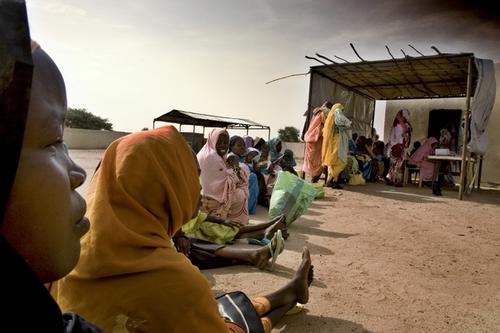
Since early 2013, violent clashes have erupted between several tribes in Darfur, leading to the displacement of thousands of people. About 70 000 persons, mainly women and children, have crossed the border to seek refuge into neighboring Chad, in Tissi, a village located accross Chadian, Sudanese and Central African borders. Deprived from any assistance for several weeks, families live under makeshift shelters or trees, without food and drinkable water. An MSF team came to assess their medical needs, conduct consultations et transfer the most serious cases to Goz Beida hospital. <br/> Depuis le début de l'année 2013, de violents combats opposent plusieurs tribus du Darfour et provoquent le déplacement de dizaines de milliers de personnes. Près de 70 000 personnes, dont une majorité de femmes et d'enfants, ont traversé la frontière pour se réfugier au Tchad voisin, dans la région de Tissi, village situé à la croisée des frontières soudanaise, tchadienne et centrafricaine. Privées d'assistance pendant plusieurs semaines, les familles vivent dans des abris de fortune ou sous des arbres, sans nourriture ni eau potable. Une équipe de Médecins Sans Frontières s'est rendue auprès d'elles pour évaluer leurs besoins médicaux, mener des consultations et transférer les cas les plus graves vers l'hôpital de Goz Beida.
Chad

More than 10 000 refugees arrived in Tissi

Project Update - 11 Apr 2013
 
 *** Local Caption *** Bangui avril 2013, Intervention d'urgence de MSF dans l'Hopital Communautaire de Bangui, après le coup le coup d'Etat survenu le 24 mars en RCA<br> MSF emergency operation in the Hopital Communautaire in Bangui, after the March 24 coup.
Central African Republic

Lootings and armed theft against humanitarian response

MSF, targeted by armed groups, calls on the new government to take responsibility and restore order in the Central African Republic. Many people remain without medical care due to the evacuation of humanitarian teams. Press Release - 10 Apr 2013
 
Syrian Kurdish refugee children stand with their mother on a road in the Domeez camp in northwest Iraqi Kurdistan, January 25, 2013.  Approximately 32,000 people who have fled conflict and economic insecurity in Syria live in the camp. Housing in the camp ranges from tents for newly-arrived refugees to concrete structures for those who have been living longer in the camp.
Iraq

Growing number of Syrian refugees in Domeez

The registered number of refugees gathering at the Domeez camp, near the city of Dohuk in the Kurdish region of Iraq, is increasing daily. While 700 to 1,000 newcomers are registering every day the services provided in the camp remain insufficient to cope with mounting needs. Project Update - 10 Apr 2013
 
Activists from across Europe stage flashmob in front of the European Parliament calling on Europe to drop harmful provisions.
As European Commission (EC) pressure mounts on India to rush into signing a free trade agreement (FTA) by mid-April, activists from across Europe mobilised in Brussels today to demand the EC withdraw provisions that will harm people’s access to medicines in India and across the developing world. Civil society organisations have learnt through leaked texts that the EC, in closed-door negotiations, is aggressively pushing for stronger industry control at the expense of public health, threatening millions of lives.
Project Update

EU-India free trade deal puts millions of lives at risk

Activists from across Europe stage flashmob in front of the European Parliament calling on Europe to drop harmful provisions. Press Release - 9 Apr 2013
 
As the opposition group Seleka took power in CAR in March 2013, MSF teams support surgery activities at the community hospital in Bangui where victims of violence receive medical treatment. OCP, OCA and OCBA and present in the country.
Central African Republic

The situation stabilises but remains tense

Ten days after the takeover of Bangui by the opposition group Seleka, life in the capital is gradually returning to normal. Médecins Sans Frontières (MSF) continues its medical activities and strengthens its teams across the country. Project Update - 4 Apr 2013
 
A girl and her mother sweep the area around their tent at the Mbera camp for Malian refugees in Mauritania on 3 March 2013.

As of January 2012, the Malian crisis has resulted in population movements. Nearly 150,000 refugees now live in refugee camps in Burkina Faso, Mauritania and Niger, where MSF teams are providing maternal, primary and secondary health care. Since the beginning of 2013, MSF has recorded nearly 12,000 consultations and 5,000 vaccinations in these three countries. Mauritania is the country with the largest number of refugees.  Mbera camp nearly 70,000 refugees who have fled for fear of reprisals or lack of access to food since the beginning of the conflict. In February 2013, the border post of Fassala (Mauritania) recorded an average of 300 arrivals per day. They are mostly women and children from Timbuktu, Lere, Goundam Larnab and Nianfuke. These Malian refugees continue to live in precarious conditions with no future prospects.
Mali

Deadly clashes in Timbuktu

Project Update - 4 Apr 2013
 
Village de Awarta, prise en charge d'une famille traumatisee *** Local Caption *** Depuis 2004, MSF mène un programme psycho-médico-social à Naplouse, Cisjordanie. <br/>
Cette activité est dédiée aux personnes souffrant des conséquences psychologiques, directes ou indirectes, de la violence liée aux conflits, externe et interne (isolement, restriction voire interdiction de se déplacer, difficultés d'accès aux soins, arrestations, etc.) <br/>
Nos patients sont des hommes et des femmes de tous âges. L'action de nos équipes (médecins, psychologues et travailleurs sociaux) consiste à prévenir et à réduire les effets psychologiques (stress, peur, angoisse) sur la population (enfants, adolescents et adultes) la plus gravement affectée par la violence, via une thérapie brève (individuelle, familiale ou de groupe) dès que l'événement à l'origine du traumatisme se produit. <br/>
En 2010, à Naplouse, nos équipes ont concentré leur action sur les habitants des villages les plus exposés à la violence entre populations palestiniennes et colons israéliens, notamment au sud du district ; et sur les cinq camps de réfugiés de la zone, théâtres réguliers d?affrontements avec l?armée israélienne. Dans le district de Qalqilya, voisin de celui de Naplouse, la situation entre les colons israéliens et la population palestinienne est particulièrement tendue, surtout dans six villages. En 2010, MSF a initié une intervention dans quatre de villages de la zone et a aussi concentré son action sur les victimes du conflit inter-palestinien. <br/>
Entre janvier et fin avril 2011, 104 patients ont été pris en charge ; 233 sessions psychologiques et 86 consultations médicales ont été effectuées.<br/>
MSF est présente dans les Territoires palestiniens depuis 1989.
Palestine

The fight against hopelessness

Since the Israeli army first occupied the West Bank in 1967, there has been a massive military presence in the area. A complex system has been developed to keep the local population under control, which extends far beyond the wall separating the West Bank from neighboring Israel. Project Update - 3 Apr 2013
Four mothers posing in a corridor of the Hospital in Bili. All four of them are staying in the hospital with their child, that's suffering from a severe case of malaria. Since the beginning of the project in 2016, the pediatric ward already treated more than 4.000 cases of complicated/severe form of malaria.
Médecins Sans Frontières (MSF)

Independent medical humanitarian assistance

We provide medical assistance to people affected by conflict, epidemics, disasters, or exclusion from healthcare. Our teams are made up of tens of thousands of health professionals, logistic and administrative staff - most of them hired locally. Our actions are guided by medical ethics and the principles of independence and impartiality. We are a non-profit, self-governed, member-based organisation.

Learn more