



Ebola disease in DRC: find out how we're responding
Learn more
7999 Results
 
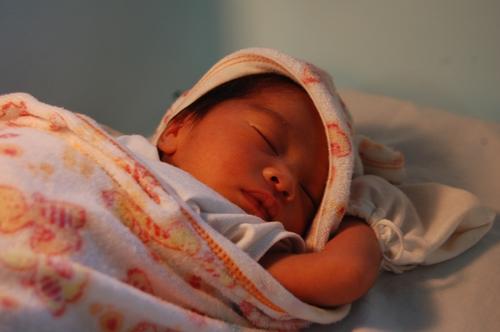
Justin James Warren, the first Baby born in the maternity ward of MSF in Guiuan.
Philippines

Typhoon Haiyan: First baby born in MSF maternity unit

At 2:50am on 20 November, a 2.2 kg baby boy was born in MSF maternity unit in Guiuan. Project Update - 21 Nov 2013
 
Mental health: a little boy very angry at the typhoon. Drawing is used as a therapy mean.
Philippines

“Depression can be as much of a disability as blindness”

Ana Maria Tijerino, MSF psychologist, is working with MSF emergency teams on Panay Island. Project Update - 21 Nov 2013
 
The country is facing a large influx of arrivals (11,000 people) and has begun preventing immigrants from entering its territory. Some 7,000 Syrians have been registered between January and October 2013. People face poor reception conditions and there is no access to healthcare and mental health support. As a result of the recent exploration carried out in 3 detention centres in Sofia (Vrezdevna, Voena Rampa) and in Harmanli (in Haskovo Province, South-central Bulgaria), MSF team is providing primary healthcare and non food items to asylum seekers and migrants in both cities.
Bulgaria

Syrian refugees face appalling conditions

MSF begins health activities to help Syrian refugees in Bulgaria. Press Release - 21 Nov 2013
 
Bethany Hospital. The hospital faces the sea. Everything inside is destroyed. There is some medical material that could still be usable.
Philippines

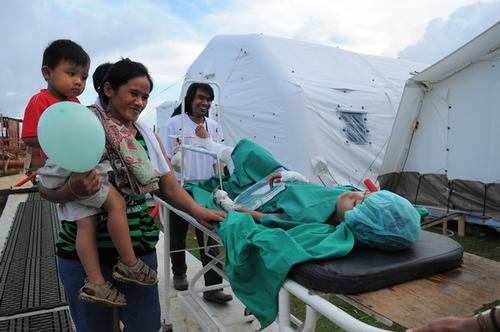
MSF team sets up inflatable hospital

A team from MSF has set up an inflatable hospital in the compound of Bethany hospital, on the damaged seafront of Tacloban, the Philippines city hardest hit by Typhoon Haiyan. Project Update - 21 Nov 2013
 
In some remote places where MSF teams arrived 9 days after Haiyan, villagers told them they were the first aid to reach the locality.
Project Update

Typhoon Haiyan: MSF nurse brings aid to her remote community

Cindy, a Filipino nurse working with MSF, explains the medical response in a remote areas of Panay island after typhoon Haiyan. Voices from the Field - 20 Nov 2013
 
Akira Takahsi, MSF midwife in the Mother and Child Health Centre (MCH),.<br/>Despite the tense security situation in Hangu, MSF has been working inside the Hangu Tehsil Headquarter (THQ) Hospital since May 2010.  *** Local Caption *** In 2011, MSF provided medical care to 20,440 patients in Hangu : 18,914 patients in the emergency room, 979 patients were provided with emergency surgeries in the operating theatre of the hospital. Throughout 2011, MSF medical teams also referred 460 cases to Peshawar for specialised surgical and medical care. During the rainy season, MSF treated 1,526 patients with acute watery diarrhoea from July to October. MSF has also established a mass casualty preparedness plan in the hospital, to be able to quickly respond and provide emergency life saving medical care to the victims of bomb blasts, clashes and other trauma cases. On the 22 of December of 2011, following a bomb blast near a private clinic in Hangu city, MSF received four injured patients, and immediately provided them with emergency surgery. Two of them were referred to Peshawar for further specialised surgery and medical treatment, but unfortunately one of them died later. The two others injured remain hospitalised in Hangu THQ hospital. In the Mother and Child Health Centre (MCH), MSF has had one expatriate midwife assisting in handling complicated delivery cases and providing training since May 2011, while the daily services inside the MCH are run by Ministry of Health staff. So far, MSF has assisted 134 complicated delivery cases with free of charge treatment. To ensure the safety of patients and medical staff, MSF implements a strict ?no-weapons? policy inside the hospital.
In 2012, MSF will continue its free, emergency, medical care in order to help meet the consistent medical needs in the area. In December 2011, MSF has about 130 international and Pakistani staff working in Hangu, including 61 staff in the emergency room and operating theatre, and one expatriate midwife supporting the MOH staff of the MCH.
Since 1986, MSF has been working in Pakistan with Pakistani communities and Afghan refugees who have been affected by armed conflict, natural disasters or a lack of access to medical. MSF teams ar
Pakistan

The challenge of giving birth and staying alive

MSF Peshawar's Women's hospital helps to ensure safe and secure childbirth Voices from the Field - 20 Nov 2013
 
MSF has sent an emergency mobile team in different places of CAR. They conduct mobile clinics for primary health care and refer complicated cases after being stabilized. In Bouar area, around 2000 consultations, of which 30% were under 5 years old, have been performed during a two weeks intervention, mainly for malaria and respiratory infections.
Central African Republic

MSF expands to respond to emergencies

MSF deploys new mobile medical teams in crisis-strewn CAR Voices from the Field - 19 Nov 2013
 
MSF mobile clinic around Roxas - kid & nurses
Philippines

Typhoon Haiyan: “We are building up a picture of the human suffering that has accompanied this disaster”

MSF’s Dr Natasha Reyes describes the physical and mental injuries prompting people to seek medical care. Project Update - 19 Nov 2013
 
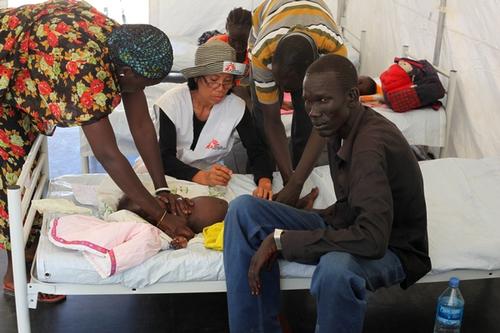
A five month old patient in the inpatient department of MSF's tented hospital in Guiuan, Samar island.
Philippines

Typhoon Haiyan: "We have nothing, we lost everything"

The story of Niño, an MSF patient from Guiuan suffering from dengue fever. Voices from the Field - 19 Nov 2013
 
MSF’s team based in Palo provided 150 general healthcare consultations in Tanauan, a town of 55,000 people which was devastated by the typhoon and where 5,800 families are still living in difficult condition in the open.
Philippines

Typhoon Haiyan: Aid urgently needed in rural areas

Ten days after Typhoon Haiyan struck the region, ports and airports are still congested with cargos of relief aid. Meanwhile communities in many remote areas continue to fend for themselves. Project Update - 19 Nov 2013
Four mothers posing in a corridor of the Hospital in Bili. All four of them are staying in the hospital with their child, that's suffering from a severe case of malaria. Since the beginning of the project in 2016, the pediatric ward already treated more than 4.000 cases of complicated/severe form of malaria.
Médecins Sans Frontières (MSF)

Independent medical humanitarian assistance

We provide medical assistance to people affected by conflict, epidemics, disasters, or exclusion from healthcare. Our teams are made up of tens of thousands of health professionals, logistic and administrative staff - most of them hired locally. Our actions are guided by medical ethics and the principles of independence and impartiality. We are a non-profit, self-governed, member-based organisation.

Learn more