



Ebola disease in DRC: find out how we're responding
Learn more
7999 Results
 
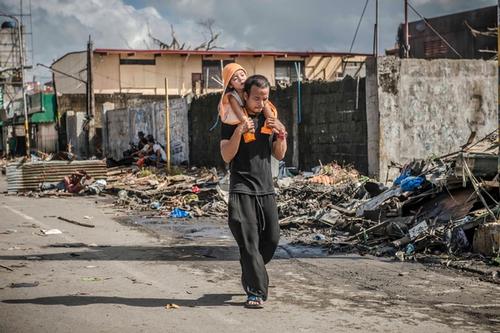
Guiuan is municipality of 45,000 people. 87 people dead but the devastation is massive. 99% of Guiuan is flattened. Trees, houses, infrastructures, livelihood means such as rice fields, fishing boats were destroyed. Marie Jeanne Bertol, an orthopaedic surgeon, one of the three MSF staff who assessed the situation and needs in Guiuan, said “from the medical stand point, it doesn’t mean that if you have small number of lives lost the damage is less. As a doctor I don’t want the number of deaths to increase by neglecting the needs of the injured people, open wounds slowly becoming infected, upper respiratory tract infection cases especially in children. Right now there are no reported cases of diarrhea so the earlier we could get our team in the community, the higher chance we prevent more lives being wasted.”
Philippines

Typhoon Haiyan: MSF reaches centre of storm path

Teams reach northern Cebu island, eastern Samar island, Panay Island, and western Leyte province Project Update - 13 Nov 2013
 
Survivors gathered at the airport, hoping for an evacuation. — at tacloban City, Leyte.
Philippines

Typhoon Haiyan: MSF medical activities start taking shape

137 staff now in Philippines, 232 tonnes of supplies arrived Project Update - 13 Nov 2013
 
Medical and logistical supplies are being loaded at Ostend airport, from where two cargo planes will take off tomorrow morning to support the relief effort in the Philippines. MSF is sending 329 tonnes of medical and relief items which will arrive in Cebu within the next few days in four cargo planes, which are leaving today and tomorrow – 2 from Dubai and 2 from Ostende. The humanitarian cargo includes medical kits for treating wounded, material for medical consultations, tetanus vaccines, water and sanitation equipment, and relief items such as tents and hygiene kits. An additional cargo is being prepared due to leave later this week from Bordeaux with an inflatable hospital and medical material.
Philippines

Typhoon Haiyan: MSF working to reach worst affected areas

“People have lost everything” Project Update - 12 Nov 2013
 
Natasha Reyes Filipino MedCo Emergency Coordinator speaks English and Filipino
Philippines

Typhoon Haiyan: Interview with MSF emergency coordinator

"This sort of disaster is unprecedented in the Philippines" Voices from the Field - 11 Nov 2013
 
Medical and logistical supplies are being loaded at MSF Supply's warehouse in Brussels, Belgium. The trucks will travel tonight to Ostende airport, from where two cargo planes will take off tomorrow morning to support the relief effort in the Philippines. MSF is sending 329 tonnes of medical and relief items which will arrive in Cebu within the next few days in four cargo planes, which are leaving today and tomorrow – 2 from Dubai and 2 from Ostende. The humanitarian cargo includes medical kits for treating wounded, material for medical consultations, tetanus vaccines, water and sanitation equipment, and relief items such as tents and hygiene kits. An additional cargo is being prepared due to leave later this week from Bordeaux with an inflatable hospital and medical material.
Philippines

MSF sends two cargo planes of medical and relief items while first teams arrive in Cebu

Update on Typhoon Haiyan response. Project Update - 10 Nov 2013
 
Sizakela Nhlabatsi, 30, MDR-TB patient: ‘In March 2013 I became sick. I coughed a lot and felt pain in my chest. I went to the MSF clinic to be tested and I was diagnosed with MDR-TB. In the beginning the side effects of the medications were hard. My bones hurt, I could not walk, I had to vomit, had cramps. In the second month I wanted to give up treatment, but with the support of MSF I have succeeded to go on. Now I feel better, I can walk again and do not have to vomit anymore. ’
‘Nobody was able to take care of me, I am the oldest of 4 children, my parents have died. I live about 5 km from the clinic and was too sick to come to the clinic for the treatment. That’s why MSF decided to put me in CANA house. I am worried about my brothers, they have to survive without me and they have no income.’ Swaziland, Cana House (MSF residence for patients on treatment) in Makanyane. October 2013.
Tuberculosis

Risk Factors Associated with Default from Multi- and Extensively Drug-Resistant Tuberculosis Treatment, Uzbekistan: A Retrospective Cohort Analysis

Improved support should be provided to TB patients, especially those at risk of stopping treatment. Journal article - 6 Nov 2013
 
Nurse Abdi Somad Ahmed Moktar (38) places an IV with a malnourished child.
Somalia

A timeline of MSF in Somalia

Médecins Sans Frontières (MSF) first worked in Somalia in 1979 and was present in the country with few interruptions between 1991 and 2013. Project Update - 4 Nov 2013
 
Aphe, care taker of Abino (pseudonym), 20 years old, MDR-TB patient gives her anti-TB medicines. Abino says, “I live in a big family of 10 members. Yet no one cares for me or talks to me, except my sister in law, Aphe. When I could not get up, she brought me food and water. She gives me the medicines on time every day.” 

Since 2010, Medecins Sans Frontieres (MSF) has been comprehensively supporting the Civil Hospital in Mon – a remote area of India’s north easternmost state, Nagaland. Together with the local authorities, MSF started treating patients with drug-susceptible TB and drug-resistant-TB (DR-TB) in April 2012.  Since then, around 255 sensitive TB patients have been put on treatment and eight DR-TB patients. People in this remote and mountainous region have severely limited access to health care, with very few health workers and almost no medical specialists. They must often travel for hours to reach the nearest hospital. For this reason, MSF has introduced the decentralized model of care in Mon. Medicines are given to these patients and their caretakers on a monthly basis, so that they can avoid the need to travel to clinic more often – an expense they can rarely afford.
Tuberculosis

DR-TB drugs under the microscope: Sources and prices for drug-resistant tuberculosis medicines - 3rd Edition

MSF and the International Union Against Tuberculosis and Lung Disease today released DR-TB Drugs Under the Microscope, a report on the prices, sources, access environment and R&D landscape for DR-TB medicines. Report - 30 Oct 2013
 
Bedaquiline pills are counted in a Kara-Suu district FGP (Family Group Practitioner) clinic. Kara-Suu district.
Tuberculosis

First new TB drug in 50 years risks being squandered without better research and pricing strategies

First new TB drug in 50 years risks being squandered without better research and pricing strategies. Press Release - 30 Oct 2013
 
Sudanese refugees began streaming across the border into South Sudan in June 2011 when conflict erupted between the Khartoum government and the rebels of the Sudan People’s Liberation Movement-North (SPLM-N) in Sudan’s South Kordofan State. At the height of the crisis in Yida camp last summer, high mortality rates were reported among young children admitted to MSF’s hospital with respiratory tract infections, such as pneumonia, one of the leading causes of death. MSF determined that vaccinating with the pneumococcal conjugate vaccine (PCV) could result in a substantial mortality reduction in Yida. MSF has been working since September 2012 to procure PCV but faced significant delays due to lengthy negotiations and international legal procurement constraints. MSF was eventually able to obtain the vaccine from GSK at a reduced price, but delays have now pushed the planned vaccination into the logistically challenging rainy season.

The objective is to immunize approximately 5,000 children under the age of 2 against several pathogens, including haemophilus influenza type B and pneumococcus. This is the first time that PCV is being used in South Sudan and one of the first vaccines to be implemented in compliance with the new WHO emergency vaccination recommendations.
Access to medicines

Global alliance for vaccinations meets to examine progress, MSF points to needed policy changes

Key policy changes are urgently needed at GAVI Alliance to help reduce the number of children not benefitting from vaccination globally (22.6 million in 2012), MSF said ahead of meeting in Stockholm. Press Release - 28 Oct 2013
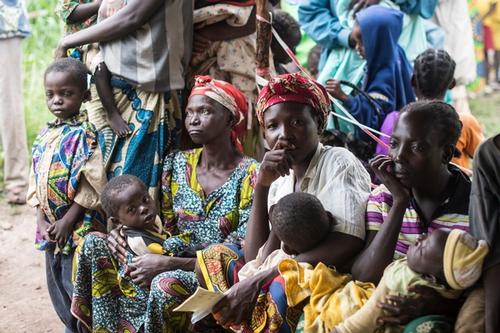
Four mothers posing in a corridor of the Hospital in Bili. All four of them are staying in the hospital with their child, that's suffering from a severe case of malaria. Since the beginning of the project in 2016, the pediatric ward already treated more than 4.000 cases of complicated/severe form of malaria.
Médecins Sans Frontières (MSF)

Independent medical humanitarian assistance

We provide medical assistance to people affected by conflict, epidemics, disasters, or exclusion from healthcare. Our teams are made up of tens of thousands of health professionals, logistic and administrative staff - most of them hired locally. Our actions are guided by medical ethics and the principles of independence and impartiality. We are a non-profit, self-governed, member-based organisation.

Learn more