




Ebola disease in DRC: find out how we're responding
Learn more
7999 Results
 
msf-placeholder
Niger

Thousands facing precarious conditions after being forced to leave Lake Chad

MSF is one of the few organisations providing assistance to this vulnerable population Voices from the Field - 8 May 2015
 
Watta Jabateh is an Ebola survivor who lost nine family members, including her daughter.
Liberia

Counting the cost of the Ebola outbreak

As the World Health Organization declares Liberia Ebola-free on 9 May – having recorded no new cases of Ebola for 42 days – MSF takes a look at how Liberians are putting back together their fractured lives and shattered communities, nearly a year on from Liberia’s first recorded case of Ebola. Liberia has been hit the hardest by the Ebola outbreak, with 10,212 cases including 4,573 deaths. Mothers have lost children; children have lost parents; brothers and sisters have lost siblings. Communities have been decimated. But there are stories of survival and hope. Voices from the Field - 8 May 2015
 
msf-placeholder
Mediterranean migration

Testimony from Mediterranean migrant Makone Mare

One of the 369 people rescued from the Mediterranean by MSF last Sunday. Voices from the Field - 7 May 2015
 
In the IDP camps of North East Nigeria, many people are attacked by armed actors when they leave the compound to gather firewood. Micahael Githinji was dispatched by the Displacement Unit, to examine ways of reducing IDPs exposure  to the violence.
Michael is a "Maker" part inventor, part economist and part salesman. His job is to see if innovative technical solutions can be employed to reducing violence against IDPs.
Website

MSF Scientific Days

MSF Scientific Days present innovation and research from our field programmes around the world. msf.org.uk
 
A keke napep carrying patients entering the MSF health centre in the Nigerian town of Gwoza. These three-wheeled vehicles, known as Keke napeps, are customised as makeshift ambulances to ferry patients from their homes to the MSF health centre.
MSF Scientific Day

A chance to showcase research, technology and innovation from MSF’s frontline projects

Two day science and technology conference in London and New Delhi a chance to showcase research, technology and innovation from MSF’s frontline projects. Event - 6 May 2015
 
msf-placeholder
Ebola and haemorrhagic fevers

Ebola crisis update - 6 May 2015

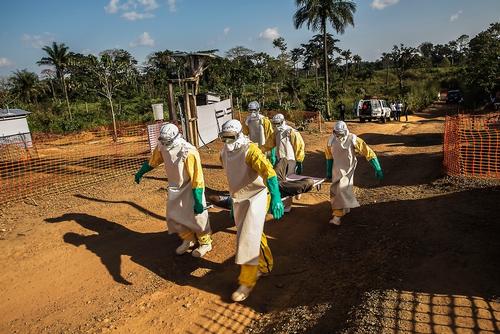
The epidemic is at its lowest but not over yet. Key ‘pillars’ of the response are still missing. Crisis Update - 6 May 2015
 
 *** Local Caption *** Since the on-start of the conflict in South Sudan, mid-December 2013, according to the UNCHR, more than 1,400,000 persons have been internally displaced and more than 450,000 would have sought refuge in the neighboring countries, amongst which 190,000 in Gambella region, western Ethiopia. The rainy season has temporarily slowed the stream of people arriving into the camps. The rate of new arrivals has slowed down in the last several months, from 1000 new arrivals per day in February to approximately 100 per week today. However UNHCR forecast expected an additional of 110,000 new arrivals in 2015 with restarting of the fighting in South Sudan during the dry season.<br/>
The current refugee population in Gambella region remains in a critical situation and additional population influxes could further destabilize an already difficult situation. In order to reduce child mortality, MSF is carrying out vaccination campaign targeting 50,000 children for PCV / vaccine and  26,000 children for DPT- Hib-HepB vaccine.<br/>
This vaccination campaign is a challenge due to logistical constraints (cold chain, waste management, transport, access, etc.) and the 2 doses minimum required for effective protection.<br/>
Extended preventive package in emergency situations is a major issue. New preventive strategy, including vaccination, could improve more rapidly the mortality and burden of diseases in acute phase of emergencies. This intervention is an example showing that is possible to extend the vaccination package in emergency situation and should be a first step to review current policy.
Ethiopia

MSF broadens vaccination package for South Sudanese refugees

MSF teams in Gamballa expanding the vaccine package being provided to South Sudanese refugees to include PCV (Pneumococcal conjugate vaccine) and Hib (Haemophilus influenzae type B) in order to reduce child mortality. Project Update - 5 May 2015
 
Health promoter Fabi gives information about best practices for hygiene to patients and care aids at the Bikenge health centre.
--

--
The 42-bed health centre is jointly run with the Ministry of Health. MSF has set up new temporary structures including an emergency room, a pediatric ward, a post-operative care ward, a maternity ward and operating theatre, as well as a triage area, a pharmacy, a lab and four consultation rooms. In late 2015 and early 2016 a new health centre, better adapted to the needs of the population, will be built. The organisation is also rehabilitating a local water source for use at the health centre and by the local population.
Democratic Republic of Congo

MSF begins medical activities in Bikenge, Maniema Province

Its remote location means that access to quality healthcare is more or less impossible for most people. Voices from the Field - 5 May 2015
 
An MSF team visits heavily affected villages in the mountains to the north-west of Kathmandu by helicopter, where little or no assistance has reached. They did a health and damage assessment and provided basic medical assistance to patients. While the most critically injured people were evacuated in the days immediately after the earthquake, those remaining have been trapped in their villages as roads and walking tracks have been cut off by avalanches and landslides. MSF's teams are seeing people in need of basic healthcare, as well as a number of people presenting with wounds sustained in the earthquake that have now become infected.
Nepal

MSF starts reaching people in remote mountain regions by helicopter and on foot following the earthquake

Medical teams have started reaching people, spread across isolated mountain villages, by helicopter and on foot. Crisis Update - 5 May 2015
Four mothers posing in a corridor of the Hospital in Bili. All four of them are staying in the hospital with their child, that's suffering from a severe case of malaria. Since the beginning of the project in 2016, the pediatric ward already treated more than 4.000 cases of complicated/severe form of malaria.
Médecins Sans Frontières (MSF)

Independent medical humanitarian assistance

We provide medical assistance to people affected by conflict, epidemics, disasters, or exclusion from healthcare. Our teams are made up of tens of thousands of health professionals, logistic and administrative staff - most of them hired locally. Our actions are guided by medical ethics and the principles of independence and impartiality. We are a non-profit, self-governed, member-based organisation.

Learn more