



Ebola disease in DRC: find out how we're responding
Learn more
7999 Results
 
MSF teams checking in 800 kg of medical material at the Brussels airport on their way to Nepal in response to the 25th of April 2015 earthquake.
Nepal

MSF teams have arrived and are assessing needs

One 17-member team in Kathmandu has carried out an initial assessment of the damage by helicopter. Crisis Update - 27 Apr 2015
 
msf-placeholder
Nepal

MSF sending teams and supplies to Nepal

MSF sent teams of medical and non-medical staff to Nepal to assist those affected by the earthquake. The teams left yesterday from Brussels (Belgium) and Bihar state in India, Project Update - 27 Apr 2015
 
New MSF surgical team who arrived on 8th April on board a boat from Djibouti, performing surgery at the MSF hospital in Aden.
Yemen

Population flees Haradh as latest attacks leave 11 dead and 67 wounded

At least 11 people have been killed and 67 injured since 21 April during constant airstrikes and shelling in Haradh district Press Release - 27 Apr 2015
 
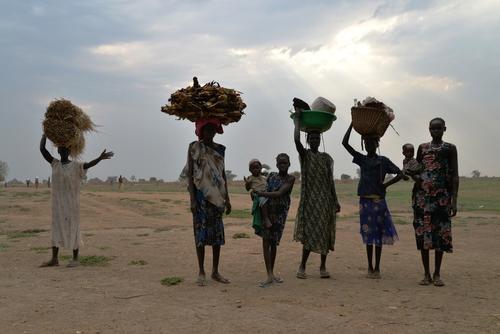
Continuing clashes in Upper Nile state in South Sudan are leading to more deaths and displacements of people. Since the beginning of April, over 6,600 people have fled their homes to seek shelter at the congested UN protection of civilians (PoC) base in Malakal. The new internally displaced people are living in big tents, with dozens of families sharing the same tent and sleeping on the floor.
South Sudan

Nomads of war - perpetual displacements of South Sudanese families in Upper Nile

In Malakal, over 6,600 people have fled to shelter at UN base, while in Melut over 1,665 families have sought refuge since April. Press Release - 27 Apr 2015
 
msf-placeholder
Nepal

MSF sending more medical and relief teams to assist victims of the Nepal earthquake

A 7.8-magnitude earthquake shook the Kathmandu Valley before noon on Saturday, April 25. Although the full extent of the damage is still unknown, initial reports say houses and buildings collapsed in Kathmandu and surrounding areas. Crisis Update - 26 Apr 2015
 
msf-placeholder
Nepal

MSF is sending medical and non-medical teams to assist victims of the Nepal Earthquake

Sending four teams of staff and 3,000 kits of non-food items and medical kits to Nepal. Statement - 25 Apr 2015
 
De novembre 2014 à janvier 2015, l’Hôpital Général de Référence de Rutshuru, dans la province du Nord-Kivu, en RDC, a soigné des centaines d’enfants, premières victimes d’un pic de paludisme sans précédent. Il s’agit du pic de paludisme le plus important auquel le personnel congolais ait jamais eu à faire face, à la fois en termes de gravité, mais aussi de nombre des cas et de durée du pic. Une situation encore compliquée par des pathologies affectant les cas les plus graves: de nombreuses infections respiratoires et des états septiques sévères. L’appui de MSF à l’HGR de Rutshuru (287 lits d’hospitalisation), dans la province du Nord Kivu, a démarré en octobre 2005. MSF gère le « pôle chaud » : chirurgie, soins intensifs, urgences, grands brûlés et prise en charge des victimes de violences sexuelles. <br/> From November 2014 to January 2015, the General Hospital of reference (HGR) of Rutshuru in the province of North Kivu, DRC, has treated hundreds of children, the first victims of an unprecedented malaria peak. This is the most important malaria peak which the Congolese staff has ever faced, both in terms of severity, but also number of cases and duration of the peak. A situation worsened by pathologies affecting the worst case: many respiratory infections and severe sepsis. MSF is supporting the Rutshuru HGR (287 hospital beds) in the North Kivu province since October 2005. MSF runs the "hot pole": surgery, intensive care, emergency and burn support and case management for victims of sexual violence.
Democratic Republic of Congo

Malaria epidemic in “a pediatric unit crammed with beds”

From late November 2014 to early February 2015, Dr. Brice Daverton worked with MSF in the general hospital of Rutshuru in the North Kivu province, Democratic Republic of Congo (DRC). Dr Daverton explained how our medical teams treat children, the principal victims of an unprecedented malaria epidemic. Voices from the Field - 25 Apr 2015
 
Project coordinator of MSF (Médecins Sans Frontières) in Sicily, Chiara Montaldo, stands next to the boats left at the landing port of Pozzallo in Sicily. Chiara together with the MSF team, works inside the reception center conducting health screening and triage for the migrants, asylum seekers and refugees upon their arrival since the beginning of 2014.
Mediterranean migration

Seeing families, children, and babies coming off the boats

Dr Chiara Montaldo is coordinating MSF’s efforts in Sicily to provide medical and psychological care to migrants rescued from boats in the Mediterranean Voices from the Field - 24 Apr 2015
 
msf-placeholder
Democratic Republic of Congo

Treating children during the Malaria peak at Rutshuru General Hospital

Rutshuru, in east Democratic Republic of Congo, is subjected to an average of two malaria peaks a year.

World Malaria Day (on April 25th) is a good opportunity to take a closer look at this killer disease.
Voices from the Field - 24 Apr 2015
 
Positive malaria tests in Kouango (CAR)
Malaria

Working to prevent children from falling ill

MSF Tropical Medicine Advisor discusses the recent strategies we have implemented to prevent malaria. Voices from the Field - 24 Apr 2015
Four mothers posing in a corridor of the Hospital in Bili. All four of them are staying in the hospital with their child, that's suffering from a severe case of malaria. Since the beginning of the project in 2016, the pediatric ward already treated more than 4.000 cases of complicated/severe form of malaria.
Médecins Sans Frontières (MSF)

Independent medical humanitarian assistance

We provide medical assistance to people affected by conflict, epidemics, disasters, or exclusion from healthcare. Our teams are made up of tens of thousands of health professionals, logistic and administrative staff - most of them hired locally. Our actions are guided by medical ethics and the principles of independence and impartiality. We are a non-profit, self-governed, member-based organisation.

Learn more