



Ebola disease in DRC: find out how we're responding
Learn more
8009 Results
 
Local villagers in Abaiang conducting blood pressure tests to screen women of child-bearing age for hypertension. MSF has provided testing equipment and conducted training with local community members.
Kiribati

Dedicated health professionals improve care for people on Kiribati

Kiribati has some of the highest burdens of disease in the Pacific region, and one of the lowest rates of access to primary healthcare. MSF’s collaboration with the Ministry of Health is helping to strengthen care for women and children in remote communities.
Project Update - 23 May 2025
 
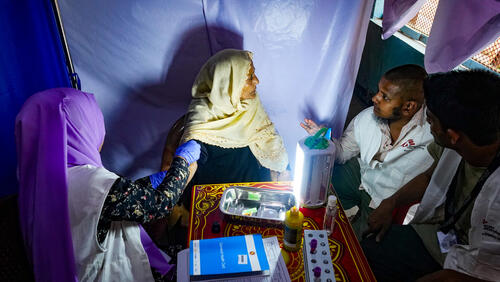
An MSF nurse is collecting samples for viral load testing as part of a large-scale "test and treat" campaign launched by MSF in the Rohingya camps. Another camp-based team member offers a comforting talk, easing a patient's fear of needles, ensuring everyone can access this life-saving diagnosis.
Hepatitis C

Additional 30,000 Rohingya to receive hepatitis C treatment in Cox’s Bazar

We aim to reach 30,000 people with care for hepatitis C by the end of 2026. Press Release - 22 May 2025
 
On 19 May, Israeli forces struck Nasser hospital compound, 100 metres away from the intensive care unit and the inpatient department that are run by MSF. This is the third time in two months that Nasser hospital compound has been struck, once again depriving people of treatment and care. To reduce exposure, our teams were forced to temporarily close both the outpatient department and sedation room for patients awaiting or recovering from surgery, as well as suspend physiotherapy and mental health activities, which are essential for burn patients – most of whom are children.

This strike severely damaged the Ministry of Health pharmacy store, putting additional pressure on supplies at a time when medical stocks are running critically low due to the siege.

On the same day, Israeli forces have issued widescale evacuation orders, further limiting people’s access to medical care and MSF’s ability to provide it. An evacuation order covering almost the entire eastern part of Khan Younis, at the edge of Nasser hospital, forced people to immediately move towards Al Mawasi area, which resulted in a small number of patients in Nasser hospital on 20 May.
Gaza-Israel war

Aid instrumentalised, health system under fire: Gaza is being deliberately asphyxiated by Israeli forces

Twenty medical facilities have been damaged, or forced partially or completely out of service, in Gaza, Palestine, in the last week. Press Release - 21 May 2025
 
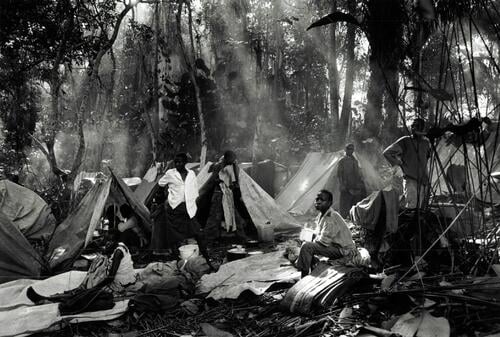
At the village of Biaro. The Zairian Red Cross are present (brought here by the rebels of Kabila, who want to make sure the bodies are burried as fast as possible, fearing typhus epidemic) and make a count of all the orphans: above 1000 children. They are lined up along the railway tracks.Tens of thousands of Rwandan Hutu refugees, (they all come from the refugee camps of Goma and Bukavu), fleeing the Zairian rebels of Laurent- Desire Kabila, for the last 5 months, hiding in the bush, exhausted, famished, and all waiting to return home, to Rwanda, are today in the midst of a new nightmare. They had taken residence in camps in 1994, when they fled their country in fear of retribution for the massacres of hundreds of thousands of Rwandan Tutsi by Hutu extremists. The presence of Hutu nettled Zairian Tutsi, who joined forces with Kabila, a longtime Mobutu foe, and  launched the insurgency. The fighting forced most of the Rwandan refugees to go home in Autumn 96, but about 350.000 of them have been marooned in tough eastern Zaire, fighting terrain. They are dying at an alarming rate. They need food, water ans safe passage home. But no one has made the refugees a priority. The Zairian rebels of Kabila who seized Kisangani, Zaire'sthird city, had ordered the Rwandan Hutu Refugees, who were in this region's camps, to move back south.
MSF Speaking Out

Does speaking out defend, expand, or limit humanitarian access and humanitarian space?

This course is an interactive self-study course, which includes a learning journey.

The series of MSF Speaking Out Case Studies (SOCS) learning modules emphasise and expand critical thinking and analysis skills using a two-part approach. These courses are based on MSF's speaking out dilemmas in complex humanitarian contexts. Pat one is thematics-based and is focused on humanitarian access, humanitarian space and speaking out. Part two investigates the case study, The Hunting and Killing of Rwandan Refugees in Zaire-Congo: 1996-1997 and speaking out dilemmas surrounding how MSF was instrumentalised – used as refugee "bait".
- 19 May 2025
 
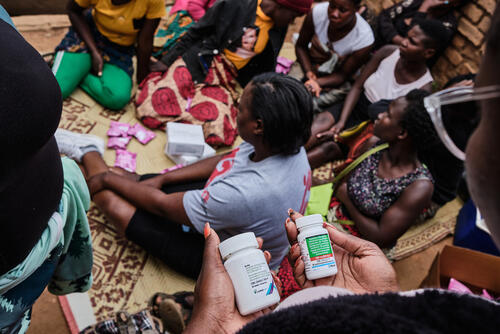
Jacqueline Zulu, MSF's health promotion officer, holds PREP and PEP medication before giving it to sex workers. MSF provides anti-HIV drugs to sex workers to prevent sexually transmitted diseases. Sex workers have an HIV prevalence of 60% in Malawi and are the key population most affected by the disease.
Access to medicines

Deadly Gaps: Don't turn away from saving lives

MSF released a report covering the challenges that the worldwide response to malaria, HIV, and tuberculosis may face if the Global Fund's upcoming replenishment conference is insufficient. Report - 15 May 2025
 
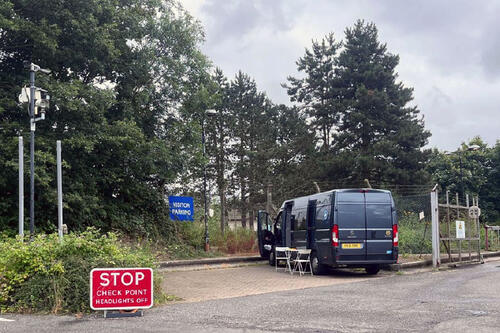
For over one year from autumn 2023, a team from Doctors of the World (DOTW) UK and Médecins Sans Frontières (MSF) provided primary healthcare to individuals accommodated at Wethersfield mass containment site. In May 2024, we released a report documenting a mental crisis unfolding at the site. Over the following months, our team continued to respond to high levels of mental distress amongst patients and identified worrying numbers of people for whom the site was unsuitable. Men attending our clinic had experienced abuse and violence in their countries of origin and on their journeys to the UK and were subjected to poor conditions and structural violence at the site.
United Kingdom

UK government must immediately close Wethersfield mass containment site for asylum seekers

Prime Minister Starmer has refused to set a date for the site’s closure despite evidence of psychological harm and suffering. Press Release - 15 May 2025
 
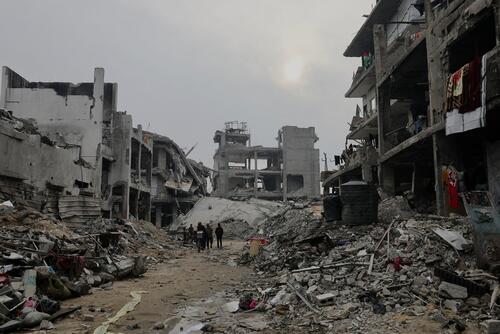
Destroyed streets and buildings in Beit Lahia, Gaza North.
Gaza-Israel war

MSF denounces deliberate humanitarian catastrophe caused by siege on Gaza

We are witnessing, in real time, the creation of conditions for the eradication of Palestinian lives in Gaza. Statement - 14 May 2025
 
A survivor of violence makes handicrafts as part of her recovery at MSF’s Comprehensive Care Centre (CAI in Spanish). The CAI's social work team organizes artistic activities as part of the multidisciplinary treatment for people who have been victims of extreme violence and mistreatment. Patients receive medical, psychological and physiotherapeutic care, among other services, at the CAI. In this centre patients are both migrants and Mexican citizs who have suffered acts of violence in their countries of origin or while traveling, such as rape, kidnapping or torture.
Mexico

Increase in admissions at MSF centre specialised in treating people for extreme violence in Mexico City

We are seeing more people for post-traumatic stress disorder, depression, and acute stress at our Mexico City centre. Project Update - 13 May 2025
 
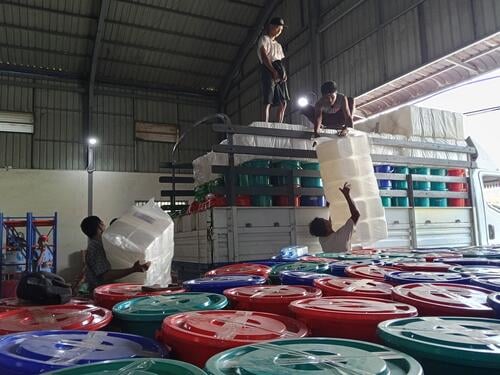
Two trucks are being packed with non-food items at the MSF warehouse in Mandalay. This NFI kit usually contains: a lighter, blanket, tarp, mosquito net, jerry can, soap, towel, toothbrush, toothpaste, menstrual pads, bucket with lid, hairbrush, chlorine, nappy.
Myanmar

Response to devastating earthquake in Myanmar driven by solidarity and dedication

Jessa Pontevedra describes how entire communities came together to respond to, and support each other through, Myanmar's earthquake emergency. Voices from the Field - 9 May 2025
 
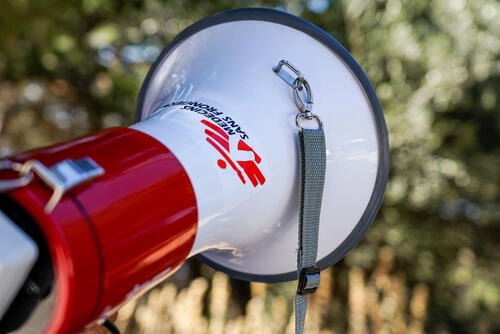
Close-up of an MSF speakerphone during an emergency medical aid response in Samos island, Greece. MSF has been responding to requests for emergency medical assistance to people arriving by boat on the island of Samos since August 2021. MSF’s emergency response has shown the high medical and humanitarian needs amongst new arrivals. During our interventions, most people we assist are exhausted and severely distressed. A lot of them are dehydrated after spending a long time, sometimes several days, in the bush without access to food and water.
Conflict in Sudan

Sudan: MSF returns to Khartoum’s Bashair Teaching hospital amidst soaring cholera needs

We have again joined Ministry of Health staff at Bashair Teaching hospital in Khartoum, Sudan, after a suspension in January 2025. Project Update - 9 May 2025
Four mothers posing in a corridor of the Hospital in Bili. All four of them are staying in the hospital with their child, that's suffering from a severe case of malaria. Since the beginning of the project in 2016, the pediatric ward already treated more than 4.000 cases of complicated/severe form of malaria.
Médecins Sans Frontières (MSF)

Independent medical humanitarian assistance

We provide medical assistance to people affected by conflict, epidemics, disasters, or exclusion from healthcare. Our teams are made up of tens of thousands of health professionals, logistic and administrative staff - most of them hired locally. Our actions are guided by medical ethics and the principles of independence and impartiality. We are a non-profit, self-governed, member-based organisation.

Learn more