



Ebola disease in DRC: find out how we're responding
Learn more
7996 Results
 
Daniel Kuju, health promotion supervisor and Beatrice Johnson, community health educator visit semi-nomadic communities in Labarab, Greater Pibor Administrative Area to conduct health awareness sessions.
Content Portal

Latest

Discover all our latest news, stories and publications. Use the filter to get to the content you're looking for.
 
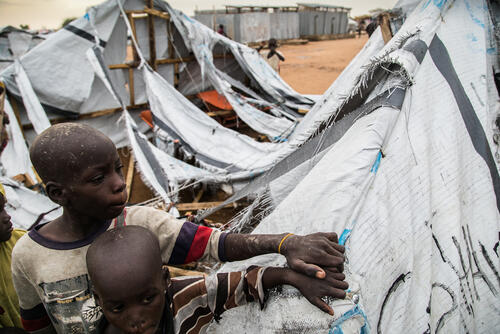
Al Zara from Mainok (often under attack by Boko Haram) accompanied her daughter in law and her two grand-childdren after being referred to intensive care by MSF form ATFC in Benicheickh. They arrived the day before and both children were diagnose with severe malnutrition. Al Zara' son father of the two girls died during Boko Haram attack.
Nigeria

Treating malnourished children in Beni Shiekh

Project Update - 25 Apr 2018
 
msf-placeholder
Yemen

MSF condemns airstrikes on a wedding party in Hajjah

Médecins Sans Frontières (MSF) received 63 casualties in a hospital it supports in Hajjah, following a series of night-time airstrikes by the Saudi and Emirati-led coalition on a wedding party that took place in a remote, impoverished village in Bani Qays district in Yemen, on Sunday 22 April. Press Release - 25 Apr 2018
 
msf-placeholder
Women's health

Malaria in pregnancy: a call for a safe, efficient, and patient-centred approach to first-trimester treatment

World Malaria Day 2018 is themed “Ready to beat malaria”, but circulated key talking points ignore an important group: pregnant women. Unpublished reports from Médecins Sans Frontières (MSF) programmes, in contexts where up to 50% of women attending antenatal care routinely test positive for malaria, suggest that current WHO recommendations on malaria in pregnancy cause confusion and may risk poor outcomes in this highly vulnerable population. The Lancet Global Health - 24 Apr 2018
 
Khairiya, 77-year old, had three children who died in Syria, and beneath that shy smile, you can sense her grief. She has been suffering from diabetes for 15 years, and the disease has taken its toll on her body: her vision has become blurry, voices sound distant in her ears and her legs can no longer hold her as they used to.


In December 2014, MSF opened a non-communicable diseases (NCDs) project in Irbid governorate with two clinics, providing medical treatment for Syrian refugees and vulnerable Jordanians with a range of chronic diseases, including diabetes, hypertension, asthma, cardiovascular diseases and chronic obstructive pulmonary disease. The NCD project also provides health education and psychosocial support to help patients lead healthy lives.  

At present, MSF has 3,374 patients enrolled in its NCDs project in Irbid; 2,113 (62.6%) of them are being treated for both types of diabetes. MSF teams have provided 58,181 consultations, including home visits, since the start of the NCDs project in December 2014.
Jordan

Syrians’ access to medical care at risk

Ahead of the Brussels conference on Syria, Médecins Sans Frontières (MSF) urges the international community to scale-up healthcare funding for Syrian refugees in the region. A recent decision in Jordan to increase public health care fees for Syrian refugees could impact their access to healthcare and lead to increased vulnerability, says MSF. Press Release - 22 Apr 2018
 
In Alqsa Hospital, MSF team of surgeon, anesthesiologist and OT nurse, support the team of the local hospital with the massive influx of injured due to gunshots
Palestine

MSF teams in Gaza observe unusually severe and devastating gunshot injuries

Since 1 April, MSF teams in Gaza, Palestine, have provided post-operative care to more than 500 people injured by gunshots during the March of Return demonstrations. Project Update - 19 Apr 2018
 
Churches and religious service are an important opportunity for the community to come together and share in their experiences. People can better come together with their issues when they do so in a collective manner.
South Sudan

The mounting mental health toll in Upper Nile State

The Malakal Protection of Civilian site (PoC) was created at the beginning of 2014 to offer temporary protection to the population of the area who were caught up in fighting in South Sudan's Upper Nile region. But four years on, the difficult living conditions, the loss of hope, feelings of enclosure, as well as limited livelihood opportunities have had an effect on the mental health of those who are trapped inside. Voices from the Field - 17 Apr 2018
 
Chantier de l’hôpital MSF : préparation du béton devant servir à couler la dalle. 
L’ hôpital de 100 lits que MSF a construit au milieu du camp de Kutupalong-Balukhali où vivent les réfugiés rohingya, est ouvert depuis le 14 avril.

Construction site of the MSF hospital: mixing of the concrete to be used to pour the slab. 
MSF has built a 100 bed hospital in the middle of the Kutupalong-Balukhali camp which opened on April 14.
Bangladesh

The hospital on the hill providing care to Rohingya refugees

MSF has opened a new hospital in the heart of vast Kutupalong-Balukhali camp, which provides refuge to some 700,000 Rohingya refugees in Bangladesh. Not hard to find, as it is on one of the many hills that form the landscape of Cox’s Bazar, its name says it all: ‘The hospital on the hill’. It is the third MSF facility opened in the district of Cox’s Bazar since the end of March. Project Update - 16 Apr 2018
 
Qalaat Al Madiq hospital
Syria

Zero point – displaced from East Ghouta and in need of treatment

Close to 60,000 people have been displaced from East Ghouta to northwest Syria in the space of just a month. A significant number of these men, women and children are injured or sick and in need of medical care. Médecins Sans Frontières (MSF) participated in the medical response. MSF supports the main hospital in charge of triaging and treating these patients at a location known as “zero point”, where the new arrivals descend from buses. Refaat Al Obed, the hospital’s Medical Director, describes the situation. Voices from the Field - 13 Apr 2018
 
Name changed for their safety: Akech (wife) and Kuany (husband)

Akech (33) tries to cultivate a small garden with some veggies like eggplants and greens on the polluted soil of the PoC Camp in Bentiu. 

Akech and her husband  Kuany, parents of 9 children, came with the first waves of refugees on 27-12-2013 to the PoC Camp in Bentiu. They had a bright and wonderful life in the city of Bentiu. 

But with the beginning of the clashes between the official SPLA soldiers and the troops in opposition (SPLA/IO) the killing started. 

„Bodies over bodies were to be seen on the streets and we started to run with all our kids to the Camp Site“, says Kuany thoughtfully. „I lost during all this fightings and burnings all my documents, incl my University tittle prooving that I am received, teacher. We lost our identities, nothing is left. We had a great life, 35 cows, a garden with veggies and flowers. I can still remember their smell. Now we are here, under most awful and miserable conditions, and limited food access.“

Besides the terrifying wood collecting for some extra money of his wife due to the many sexual outbreaks of violence outside the camps, the food was not enough. One day in 2014, Kuany decided to go with friends to Nyabol, a place rich in fishes.  

"We didn't even have the chances to install us when official troops (SPLA) started to shoot. We jumped into the water and hid in the swampy bushes. I remember the voice calling us. Are you shot? I recognized the voice, the voice of one of my former students. I went out of the water and he questioned me what I was doing here. My explanation of the hunger and the need to feed my wife and kids were good enough. He and his others SPLA mates were visibly surprised and all of my friends were allowed to come out and to leave alive the area. Over hours I was shaking, the shock was deep inside my body and soul."

Kuany went for Christmas 2015 to the city of Bentiu to check on his property. Nothing was left, no roof, no
South Sudan

Enduring Bentiu

A Daily Struggle in South Sudan's Protection of Civilians Site Photo Story - 12 Apr 2018
Four mothers posing in a corridor of the Hospital in Bili. All four of them are staying in the hospital with their child, that's suffering from a severe case of malaria. Since the beginning of the project in 2016, the pediatric ward already treated more than 4.000 cases of complicated/severe form of malaria.
Médecins Sans Frontières (MSF)

Independent medical humanitarian assistance

We provide medical assistance to people affected by conflict, epidemics, disasters, or exclusion from healthcare. Our teams are made up of tens of thousands of health professionals, logistic and administrative staff - most of them hired locally. Our actions are guided by medical ethics and the principles of independence and impartiality. We are a non-profit, self-governed, member-based organisation.

Learn more