



Ebola disease in DRC: find out how we're responding
Learn more
8006 Results
 
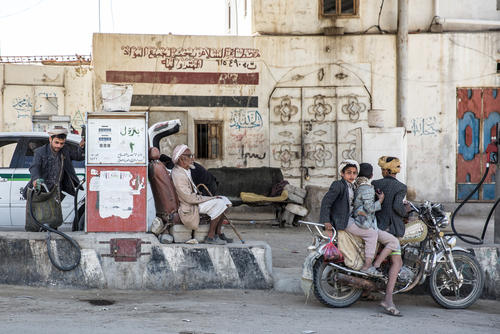
Yemen, gouvernorat d'Amran, Khamer, mars 2018. Des hommes font le plein d'essence dans l'une des stations service de Khamer.

Yemen, governorate of Amran, Khamer, in March, 2018. Men fill up with gas in one of the gas stations of Khamer.
Yemen

Is Yemen on the brink of famine?

MSF operations desk manager Caroline Seguin discusses the recent warnings of famine in Yemen—a country that has been at war for almost four years. Interview - 24 Oct 2018
 
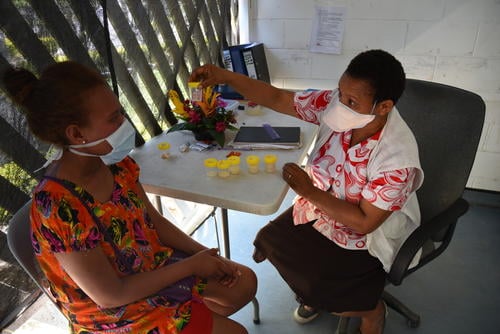
Giakila, left, has been diagnosed with drug-resistant TB. Here she talks to MSF's counsellor about her medication. The counsellor uses the rice in the sample jars to explain how the amount of sputum in her lungs will reduce each month as she continues to take medication.
Tuberculosis

High prices restrict access to best drug-resistant tuberculosis treatment

MSF calls on US pharma corporation Johnson & Johnson to halve the price of the newer TB drug bedaquiline. Press Release - 23 Oct 2018
 
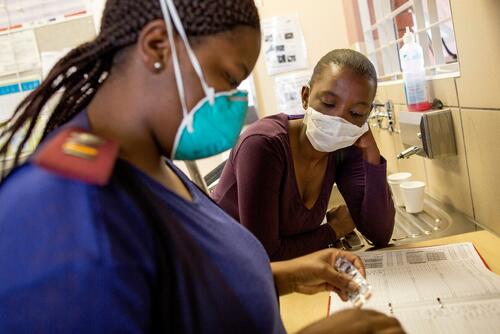
Simbongile  Xesha collects her medication from the pharmacy at Town 2 Clinic, Kuyasa, Khayelitsha.

Simbongile’s current DR-TB regimen: bedaquiline, linezolid, clofazimine, terizidone, levofloxacin, pyrazinamide.

Simbongile Xesha

“Last year, end- September, I started coughing and didn’t want to eat. My partner had XDR-TB so I probably caught it from him.  He passed away in May this year.
I brought myself to the clinic and within a week, in October 2015 I started full treatment for XDR-TB, with monthly supplies of drugs from my local clinic, which included bedaquiline.
I live with my mum and two sisters, and our children. 
I know from Dr Jenny that many patients need bedaquiline. I didn’t have to wait and was taking bedaquiline from the first day of treatment. I think that’s why my sputum started to change so quickly. I stick to my treatment same time every day and I go to a support group.
Today I work as a cashier at a frozen yoghurt place in Khayelitsha. I feel great. I’ve been taking bedaquiline for six months now.  I take all the tablets at the same time. The medication makes me very nauseous and knocks me out for one or two hours. But it makes me strong too.”
Tuberculosis

DR-TB Drugs Under the Microscope, 5th Edition (Abridged)

Despite some positive developments, access to safe and effective treatment for drug-resistant tuberculosis (TB) remains poor. msfaccess.org - 22 Oct 2018
 
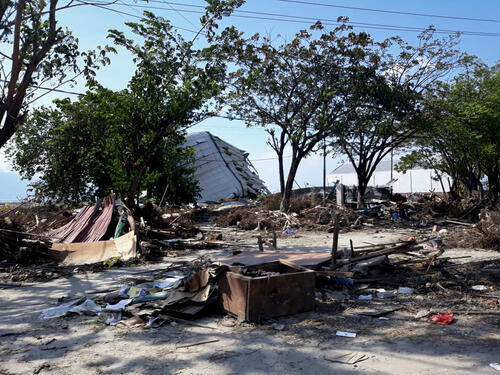
This is the damage in Talise Village, Mantikulore Sub district, Palu City, Central Sulawesi, Indonesia. It was taken by the MSF assessment team on 4rd day (02/10/2018) after the earthquake and tsunami hit the area on September 28, 2018. ©
Indonesia

Caring for the victims of the triple disaster in Central Sulawesi

Dr Yusuf Toba, an Indonesian medical doctor and first-time MSF field worker, describes his role in the response to the earthquake, tsunami and liquefaction that hit Indonesia's Central Sulawesi province on 28 September 2018. msf-seasia.org - 20 Oct 2018
 
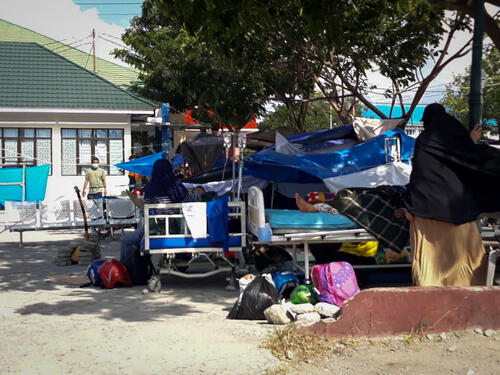
The building of Undata Hospital (02/10/2018), the regional public hospital in Palu City, Central Sulawesi Indonesia, has been damaged because of the earthquake on September 28, 2018 and its aftershocks. 
Patients have to be treated outside of the building. 

©Dirna Mayasari/MSF
Indonesia

"Central Sulawesi took its toll on me"

Dr Rangi W. Sudrajat describes her and her medical team's daily mobile clinic activities in the 13 villages of South Dolo district following the earthquakes and tsunami that hit Indonesia's Central Sulawesi province on 28 September 2018. msf-seasia.org - 19 Oct 2018
 
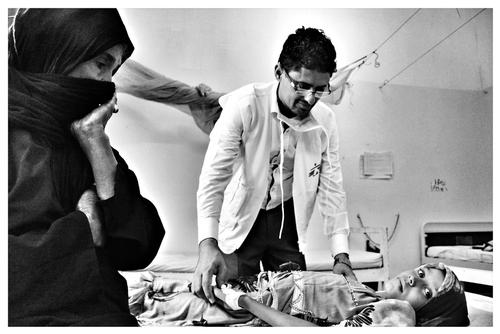
MSF Inpatient Department (IPD) Mansour Al-Ezzi is checking on Ghalia Qaboos who is diagnosed as Kala Azar in MSF supported hospital in Abs on 12th June,2016
Yemen

“Some pregnant women and sick children arrive so late, we can’t save them”

Interview with Gisela Vallès, medical team leader at the MSF hospital in Abs, Yemen, explains the challenges and obstacles her team face in providing assistance to the displaced groups and host communities as increased fighting in the region causes new waves of displacement. Interview - 18 Oct 2018
 
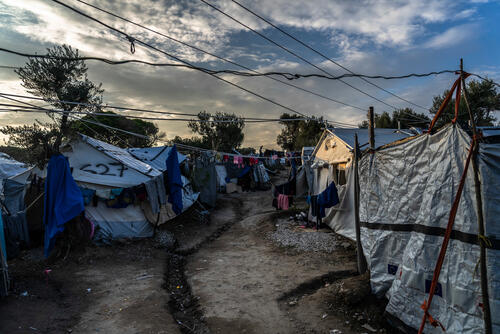
A general of the olive grove next to Moria camp. Due to overcrowded camp of Moria about 2000 asylum seekers have moved to the area next to Moria camp where they have created makeshift shelters. Due to the recent rains residents in the olive grove had nowhere to sleep as the tents were usually flooded.
Greece

No roof, no recovery

A victim of torture's first-hand account of how homelessness and inappropriate living conditions act as a barrier to torture survivors’ rehabilitation in Greece. Voices from the Field - 17 Oct 2018
 
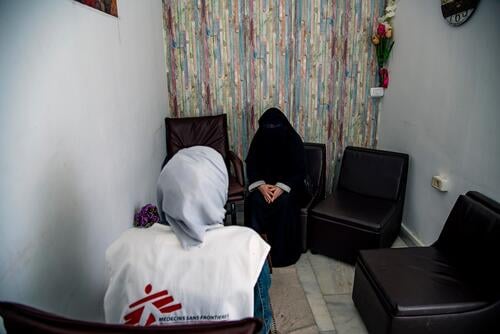
During a Mental Health session at MSF NCD clinic in northern Jordan.
The MSF Non-communicable disease project in Irbid, Jordan, works with Syrian refugees living outside camps since December 2014. MSF opened this project to respond to the massive needs of the Syrian refugee living in non-camp settings and vulnerable Jordanians.
Jordan

Mental health and the work of planting hope

Amal Bani Khalaf, a Jordanian psychologist who has worked with MSF since 2014, gives an account of her work in MSF’s non-communicable diseases (NCD) project in Irbid, Jordan. Voices from the Field - 17 Oct 2018
 
Bilal an MSF psychologist during one of the Mental Health counselling sessions in the MSF NCD clinic in Irbid city,  northern Jordan.
“One of the main complaints we receive at the NCD clinic is related directly to problems like the family conflicts, which is caused by the challenging financial status Syrian families are going through, which leads to having more than one family in the same house.  These problems are usually triggered by other prolonged problems and complains such as the NCD, displacement/migration, and sometimes age.” Says Bilal.
The MSF Non-communicable disease project in Irbid, Jordan, works with Syrian refugees living outside camps since December 2014. MSF opened this project to respond to the massive needs of the Syrian refugee living in non-camp settings and vulnerable Jordanians.
Jordan

The less visible humanitarian crisis: Refugee mental health needs in urban Jordan

MSF mental health activities manager Heidi Mitton explains the mental healthcare needs and services in Irbid, Jordan, where MSF runs a non-communicable diseases (NCD) project for Syrian refugees and vulnerable Jordanians. Voices from the Field - 17 Oct 2018
Four mothers posing in a corridor of the Hospital in Bili. All four of them are staying in the hospital with their child, that's suffering from a severe case of malaria. Since the beginning of the project in 2016, the pediatric ward already treated more than 4.000 cases of complicated/severe form of malaria.
Médecins Sans Frontières (MSF)

Independent medical humanitarian assistance

We provide medical assistance to people affected by conflict, epidemics, disasters, or exclusion from healthcare. Our teams are made up of tens of thousands of health professionals, logistic and administrative staff - most of them hired locally. Our actions are guided by medical ethics and the principles of independence and impartiality. We are a non-profit, self-governed, member-based organisation.

Learn more