



Ebola disease in DRC: find out how we're responding
Learn more
8000 Results
 
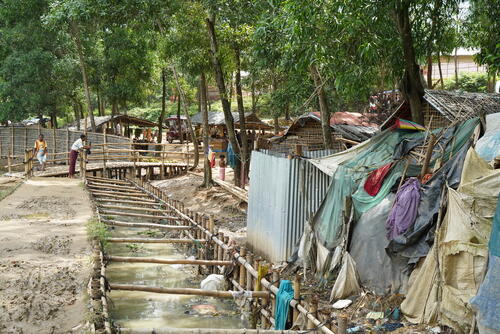
People are seen on a walkway in Kutupalong megacamp, which runs next to an open sewer.
Rohingya refugee crisis

Two years on: No solutions in sight for the Rohingya

Hear the fears, hopes and daily reality of Rohingya people in Myanmar, Bangladesh and Malaysia, two years since the biggest ever exodus of Rohingya from Myanmar’s Rakhine state. Project Update - 20 Aug 2019
 
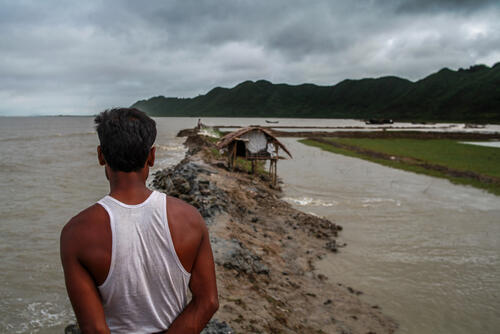
A young man looks on at the outskirts of Ah Nauk Ye camp. This camp is home to almost 5,000 people. It is overcrowded, squalid and prone to floods during the rainy season. MSF is the only provider of medical services in Ah Nauk Ye, and runs a regular mobile clinic here.
Rohingya refugee crisis

Being Rohingya in Myanmar: “We hold our frustration inside because we cannot speak out”

Read the story of Suleiman, an MSF watchman living in Nget Chaung village, central Rakhine State, Myanmar. Voices from the Field - 20 Aug 2019
 
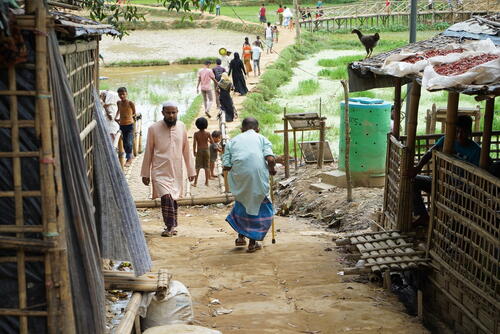
An old man makes his way through Kutupalong megacamp. Bangladesh now hosts over 912,000 Rohingya refugees, of which over 700,000 arrived since 25 August 2019. Thousands more Rohingya are scattered across the region.
Two years on since the biggest ever influx of Rohingya refugees into Bangladesh, housing in the refugee camps in Bangladesh remain rudimentary, as do latrines and other basic infrastructure. Refugees have very little privacy or shelter from the elements. In one of the most flood and cyclone-prone areas of the world, shelters can be often destroyed, damaged or entirely washed away by heavy rains. The Rohingya lack legal status in Bangladesh, Malaysia and other host countries, meaning they are unable to access formal education, employment or build a future for themselves. They are unable to enjoy the right of freedom of movement and live with great uncertainty for what the future holds. They remain dependent on humanitarian assistance, living in a state of perpetual limbo and privation. 
Despite vocal international condemnation at the violence committed by Myanmar security forces against the Rohingya in 2017, there has been little meaningful diplomatic pressure on the Myanmar government, where the origin of the problem lies. Some 550,000-600,000 Rohingya still live in Rakhine state.  Approximately 130,000 Rohingya and other Muslims remain in de facto detention camps in central Rakhine state, unable to access basic services such as education or healthcare, or earn a living. In northern Rakhine, hundreds of thousands of Rohingya are completely cut off from international humanitarian aid. Our repeated requests for access to this region continue to be ignored or denied by the authorities.
MSF has been working with the Rohingya for decades – in Bangladesh on and off since 1985, in Myanmar since 1994, and in Malaysia starting in 2004.
Rohingya refugee crisis

Being Rohingya in Bangladesh: “The population has been completely suspended in time”

Arunn Jegan, emergency coordinator for MSF in Bangladesh, describes the restrictions, fears and hopes among the Rohingya living in Cox’s Bazar Voices from the Field - 20 Aug 2019
 
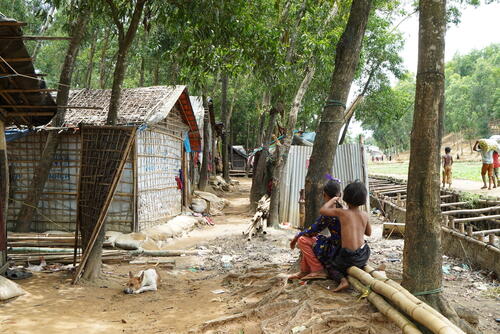
Girls play with their hair near a dog in the Kutupalong megacamp. Bangladesh now hosts over 912,000 Rohingya refugees, of which over 700,000 arrived since 25 August 2017. Thousands more Rohingya are scattered across the region.
Two years on since the biggest ever influx of Rohingya refugees into Bangladesh, housing in the refugee camps in Bangladesh remain rudimentary, as do latrines and other basic infrastructure. Refugees have very little privacy or shelter from the elements. In one of the most flood and cyclone-prone areas of the world, shelters can be often destroyed, damaged or entirely washed away by heavy rains. The Rohingya lack legal status in Bangladesh, Malaysia and other host countries, meaning they are unable to access formal education, employment or build a future for themselves. They are unable to enjoy the right of freedom of movement and live with great uncertainty for what the future holds. They remain dependent on humanitarian assistance, living in a state of perpetual limbo and privation. 
Despite vocal international condemnation at the violence committed by Myanmar security forces against the Rohingya in 2017, there has been little meaningful diplomatic pressure on the Myanmar government, where the origin of the problem lies. Some 550,000-600,000 Rohingya still live in Rakhine state.  Approximately 130,000 Rohingya and other Muslims remain in de facto detention camps in central Rakhine state, unable to access basic services such as education or healthcare, or earn a living. In northern Rakhine, hundreds of thousands of Rohingya are completely cut off from international humanitarian aid. MSF has been working with the Rohingya for decades – in Bangladesh on and off since 1985, in Myanmar since 1994, and in Malaysia starting in 2004.
Rohingya refugee crisis

“The collective fate of the Rohingya is in our hands”

A Rohingya refugee from Myanmar, now living in the Kutupalong-Balukhali megacamp in Cox’s Bazar, Bangladesh, shares his hopes and fears for the future. Voices from the Field - 20 Aug 2019
 
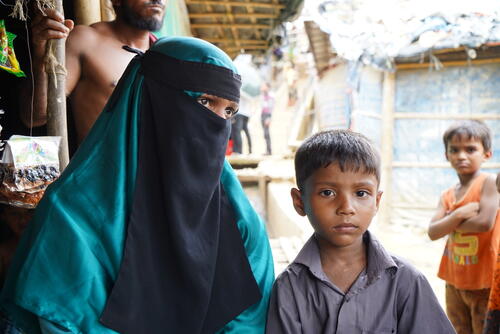
Rohingya refugee Bibi Jan sits at a tea stall with her five year old son, Fayezorahman, in Kutupalong megacamp. She tells MSF: 
“I’ve been here for two years. We are suffering a lot. It’s difficult to get out of the house as I need to wear a burka to go to the toilet or fetch water. The showers and toilets are far away from our house and it is difficult for us to get there. Before, when we were in Myanmar, the toilets and shower were inside the house. Here we need to go out to use them. Our country is on fire, so we are in Bangladesh today. We built a house in Myanmar but we could only stay there five days. They killed two of my brothers. Our village was set on fire and everything was razed to the ground. Most of the people were killed and burnt. Most were tortured. We were stabbed – I have the marks.
When we left Myanmar, we didn’t take anything. So we need everything: clothes, food, medicine, light, ventilation, water, everything. It’s very warm inside the shelters and we are so hot. We have to wear burqa to go to the market or shops. The Myanmar government did not accept us as Rohingya. We tried to get the National Verification Card (proving citizenship) but we were refused. In Bangladesh, we are told if we do not register that we will not get food or other rations. We wouldn’t need food rations if we were allowed to work. Sometimes we want to buy vegetables, fish and meat but we don’t have enough money. During the day we sleep, recite Qu’ran. We’re not allowed to go far from the camp, so we mostly stay inside our shelter. We are safe at night; in Myanmar it wasn’t safe. 
I have two children one son and one daughter. They go to a children’s centre, and most of what they do there is play- they are not getting a proper education. I want to send my children to school but right now I don’t have enough money and we can’t leave the camp, so it’s difficult to plan a future for our children. 
We want to eat meat and fish but we cannot. We still feel hungry. In our country we ate meat, fish and other things, but we cannot eat that here. We are provided with pulses and a sack of rice, and with this we can eat one time. After the second time, the children get dirrahea.
When it rains the tents leak and the house stays wet for a long time. My son has had a fever for eight days now. The clinic nearby our house only gave us two paracetamol and he has not improved. They just told us to buy some medicine from the pharmacy but we can’t afford that. We are on our way to the MSF clinic now.”
Rohingya refugee crisis

People are suspended in time: Two years on from the Rohingya refugee crisis

blogs.msf.org - 19 Aug 2019
 
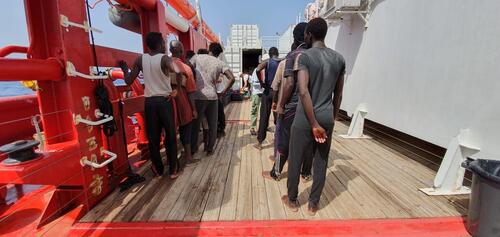
On board of the Ocean Viking, rescued people in line for the registration.

The MSF medical team triage all those coming on board, treating the most immediate medical cases first. 

Everyone receives a rescue kit which includes water, high energy food, clothes and a blanket.
Mediterranean migration

On board the Ocean Viking: “We feel humbled by their courage”

Medical team leader Stefanie describes the physical – and above all psychological – wounds MSF is treating among the 356 people on board the Ocean Viking Voices from the Field - 19 Aug 2019
 
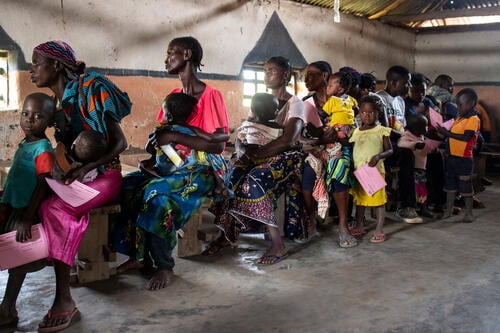
Parents and their children are waiting for the vaccination in Etebe health area

Des parents et leurs enfants attendent la vaccination dans l’aire de santé d’Etebe.
Democratic Republic of Congo

A deadly measles outbreak is spreading like wildfire

The Democratic Republic of Congo (DRC) is experiencing its deadliest measles epidemic since 2011-2012. Without the necessary assistance, it is only getting worse. Project Update - 16 Aug 2019
 
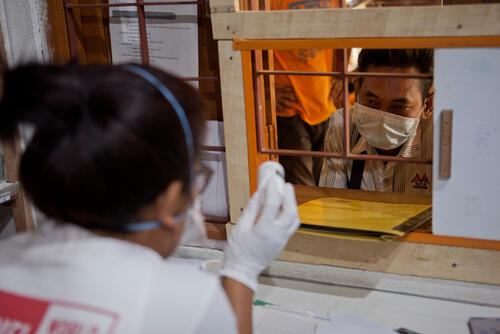
A patient at the MSF clinic in Moreh receives medication from a nurse at hospital pharmacy. MSF started providing specialised care for HIV and TB in Manipur in 2005 and 2007, respectively. At its three clinics in Chakpikarong, Churachandpur and Moreh, MSF provides screening, diagnosis and treatment for HIV, TB, Hepatitis C and co-infections.  MSF, which is the only international NGO in Manipur, has put a patient-focused model of care at the heart of its operations in order to improve outcomes and minimise the spread of the diseases.
Tuberculosis

Promising new tuberculosis drug pretomanid approved, but will it be affordable?

Pretomanid – the third new tuberculosis (TB) drug to be approved in over half a century – could be a lifesaver for people with extensively drug-resistant TB (XDR-TB), but it must be affordable to make a real difference. Press Release - 15 Aug 2019
 
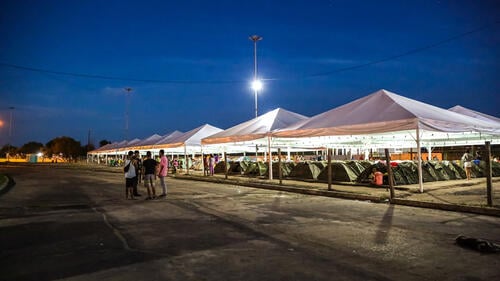
Tents located behind Boa Vista’s bus station, where Venezuelan migrants and asylum seekers – who are not in shelters or in another type of housing – stay at night. They are allowed to access this site every day late afternoon and they must leave it in the following day by 6.a.m.
Brazil

The struggle of Venezuelan migrants and asylum seekers in northern Brazil

Thousands of people who have fled crisis-ridden Venezuela are now living in precarious conditions and struggle to find proper medical care in the Brazilian state of Roraima. Project Update - 14 Aug 2019
 
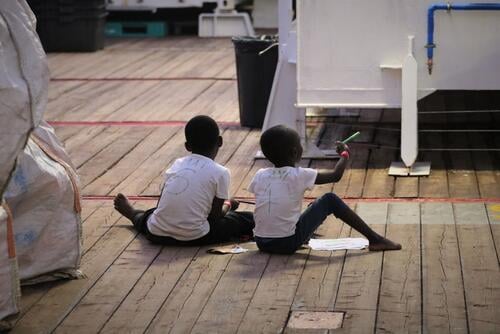
On board of the Ocean Viking,  two rescued children are drawing together.

The MSF medical team triage all those coming on board, treating the most immediate medical cases first.
Mediterranean migration

Place of safety needed for 356 people rescued in Central Mediterranean

With 356 vulnerable men, women and children on board the Ocean Viking, MSF and SOS MEDITERRANEE are calling for a place of safety that meets the requirements of international law. Press Release - 13 Aug 2019
Four mothers posing in a corridor of the Hospital in Bili. All four of them are staying in the hospital with their child, that's suffering from a severe case of malaria. Since the beginning of the project in 2016, the pediatric ward already treated more than 4.000 cases of complicated/severe form of malaria.
Médecins Sans Frontières (MSF)

Independent medical humanitarian assistance

We provide medical assistance to people affected by conflict, epidemics, disasters, or exclusion from healthcare. Our teams are made up of tens of thousands of health professionals, logistic and administrative staff - most of them hired locally. Our actions are guided by medical ethics and the principles of independence and impartiality. We are a non-profit, self-governed, member-based organisation.

Learn more