



Ebola disease in DRC: find out how we're responding
Learn more
7996 Results
 
Villages on the road from Mambasa to Biakato.
DRC Ebola outbreaks

Military presence leads MSF to stop activities in Ebola-affected Biakato

The presence of armed military personnel in health structures in Biakato, DRC, has led MSF to follow our principles and make the tough decision to stop activities, including providing Ebola treatment. Press Release - 24 Dec 2019
 
Last February, the Libyan coast guard caught up with the boat I was trying to leave Libya on. After the arrest, I was taken to the Souk al Khamis detention centre in Khoms city.
My name is Ahmed*, I am 21 years old and from Mogadishu, Somalia. UNHCR teams came to see us in Souk al Khamis and registered me, I was waiting to be transferred to Tripoli. A few days later, the prison managers told us to board two minibuses. Finally, we were going to be transferred. That's what I thought. But after several hours on the bus, we were going deeper and deeper into the desert. That's when I realized that we were not driving to Tripoli, but that we were in danger of being sold to traffickers. This risk was confirmed when I spotted armed men approaching in their pick-ups. In haste and fear, we all decided to try to escape by surprise, even if it meant losing our lives. At least two people died in the ensuing shooting.
I am part of the group that managed to escape to a small town at dawn whose name I do not know. There, an old Libyan man offered us something to drink and eat, and he went to warn the authorities of our presence. We were taken to the Sirte detention centre - we stayed there for five months. MSF teams who knew us in Souk al Khamis came to see us several times in Sirte to treat those who were sick. Then we were sent to another prison in Misrata. It was really the worst. I was not feeling well and MSF brought me to the hospital to treat my tuberculosis.
I learned that the Misrata detention centre has closed and that the group with which I survived this adventure had to go to Souk Al Khamis, where they tried to sell us... Back to square one.
Libya

Trading in suffering: detention, exploitation and abuse in Libya

Trapped - either from going home, from fleeing across the sea, or in a detention centre - refugees and migrants in Libya are exposed to violence, rape, exploitation and abuse. Photo Story - 23 Dec 2019
 
Joseph Drobho Giria holds his two-year-old daughter, Bhileru Drobho, who suffers from measles, in the measles unit run by MSF at Biringi Hospital, Ituri Province, northeastern Democratic Republic of Congo, on 06 November 2019. PHOTO: ALEXIS HUGUET/MSF
Democratic Republic of Congo

More effort needed to stop deadly measles epidemic

A massive measles outbreak is currently gripping all 26 provinces of Democratic Republic of Congo. MSF teams are treating cases and vaccinating people all over the country to try to halt the spread of the deadly disease. Project Update - 20 Dec 2019
 
In the West of Maiduguri, MSF is caring for measles patients in Gwange hospital where the number of children arriving with measles has doubled since January. There are so many patients that the 73-beds are now all full.
Nigeria

Medical assistance urgently needed outside northeast ‘garrison’ towns

Solutions can be found to provide medical assistance in areas of Nigeria the government doesn't control, says MSF’s head of programmes in Nigeria and Niger. Interview - 19 Dec 2019
 
An MSF team in Tame, Arauca is focusing on treating people walking from Venezuela, more than 1,000 of whom enter Colombia in the Arauca area each month, on their way to other cities in Colombia or neighboring countries.
Colombia

Venezuelans in Colombia: an unattended crisis

The humanitarian response given to Venezuelan migrants and asylum seekers in Colombia is totally insufficient. Their situation is dire. Press Release - 18 Dec 2019
 
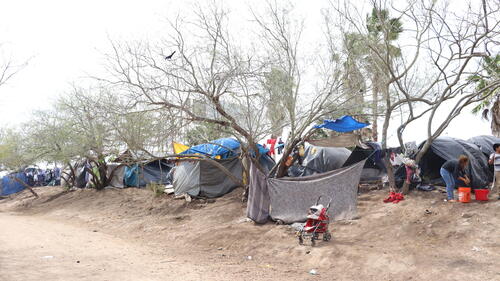
Since the implementation of The Migration Protection Protocol in Matamoros, Tamaulipas, MSF has seen around 100 people re-entry the country daily, in a city with no capacity to receive this population. Asylum seekers are forced to sleep in tents established right next to the bridge by the border, without any access to potable water and sanitation services; which may lead to different health issues, such as digestive and skin diseases.
Mexico

Hopelessness and anxiety: the consequences of waiting for US asylum

The migration policies of Mexico and the US and endangering the lives and health of asylum seekers in Mexico's Tamaulipas state. MSF's mental health supervisor in Mexico explains why. Interview - 18 Dec 2019
 
Migrants in Assamaka.
Niger

Niger, at the crossroads of migration

People forced to leave home have one objective: to find safety. On their journeys, many transit through Agadez in central Niger, where MSF teams provide care to people who have been through often traumatising experiences. Photo Story - 17 Dec 2019
 
Bardarah Refugee Camp, Iraq. October 31, 2019.

Syrian Kurdish refugees play soccer inside the Bardarash refugee camp in Iraqi-Kurdistan. 
According to the International Organization for Migration (IOM) as of November 6th more than 14,000 Syrian Kurds have fled their homes in Rojava, the Syrian-Kurdish enclave along the Turkish border in north-east Syria, and have taken refuge in camps inside Iraqi-Kurdistan. Bardarash camp houses over 12,000 Syrian-Kurdish refugees.
Photo story

A year in pictures 2019

MSF's A Year in Pictures collection for 2019 looks back on 12 months of providing medical care in extreme conditions and contexts across the globe. Photo Story - 17 Dec 2019
 
A child goes out from his family hut at the Bukombo IDP Camp in Masisi territory.
Democratic Republic of Congo

Extra humanitarian assistance urgently needed in southern North Kivu crisis

There are few organisations providing support to a humanitarian crisis that is affecting southern North Kivu province, where over 687,000 people are displaced and levels of malnutrition and sexual violence are high. Press Release - 16 Dec 2019
Four mothers posing in a corridor of the Hospital in Bili. All four of them are staying in the hospital with their child, that's suffering from a severe case of malaria. Since the beginning of the project in 2016, the pediatric ward already treated more than 4.000 cases of complicated/severe form of malaria.
Médecins Sans Frontières (MSF)

Independent medical humanitarian assistance

We provide medical assistance to people affected by conflict, epidemics, disasters, or exclusion from healthcare. Our teams are made up of tens of thousands of health professionals, logistic and administrative staff - most of them hired locally. Our actions are guided by medical ethics and the principles of independence and impartiality. We are a non-profit, self-governed, member-based organisation.

Learn more