



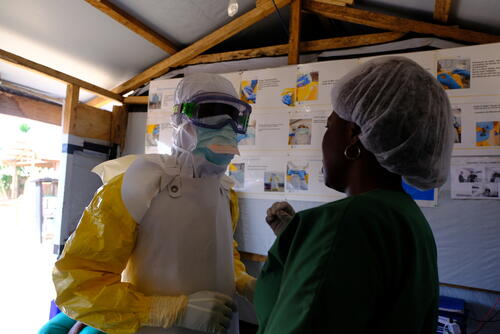

Ebola disease in DRC: find out how we're responding
Learn more
7996 Results
 
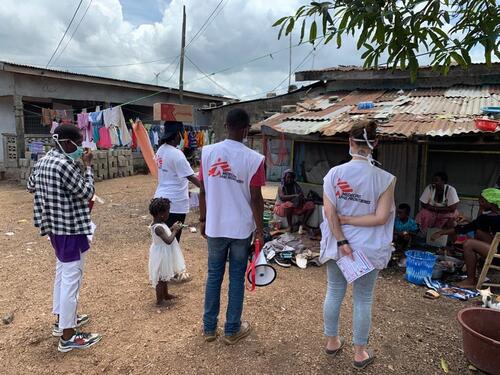
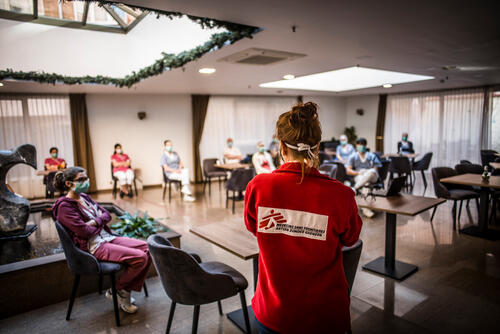
The MSF team conducting a health education session with refugees and asylum seekers in Hong Kong, answering many questions to help demystify the disease and address some of their fears and concerns.
Coronavirus COVID-19 pandemic

Supporting preparedness efforts to fend off coronavirus

MSF emergency coordinator Dr Tankred Stoebe is currently travelling across southeast Asia to assess how MSF can support countries for potential outbreaks of COVID-19 coronavirus. Voices from the Field - 14 Feb 2020
 
The MSF team is conducting a health education session with street cleaners in Hong Kong on the importance of prevention measures, such as frequent handwashing and wearing face masks properly, to avoid infection with the novel coronavirus.
Coronavirus COVID-19 pandemic

Providing materials, engaging communities in the COVID-19 coronavirus outbreak

MSF has sent medical equipment to a hospital in China, and teams are providing infection prevention information to people in Hong Kong, in response to the COVID-19 coronavirus outbreak. Project Update - 14 Feb 2020
 
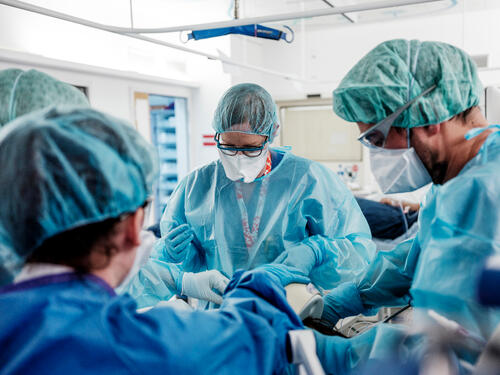
Doctors of Al-Hakim General Hospital
examining two simulated patients
during a mass casualty simulation at
the hospital. The simulation was
planned and supervised by MSF in
collaboration with the directorate of
health.
Iraq

Extending a helping hand in Iraqi health facilities

In the wake of protests across several cities in Iraq, MSF teams are providing training to local health staff and hospitals to help them cope with sudden influxes of wounded that the protests bring. Project Update - 14 Feb 2020
 
Arielle Vay, 68, rests in the MSF mobile clinic at the Rho IDP site, Djugu Territory, Ituri Province, 11 November 2019. PHOTO: ALEXIS HUGUET/MSF
Democratic Republic of Congo

The forgotten people of Ituri

Intra-communal violence in Ituri province, northeastern Democratic Republic of Congo, has forced 300,000 people to flee their homes. Many have settled in camps, living in dire conditions. Photo Story - 14 Feb 2020
 
May Chan (in red), a street cleaner in Hong Kong, attends the MSF health promotion session on novel coronavirus. “It is the first time to learn that if I cough without tissue, I should cough into my elbow but not my hands. This helps keep my hands clean and I think it is important for a cleaner to know that,” says May. She believes the proper application of infection prevention measures can keep her stay healthy.
Coronavirus COVID-19 pandemic

MSF update on COVID-19 coronavirus outbreak

Read more on what we know about COVID-19 coronavirus, including how contagious and dangerous it is, and how to prevent from becoming infected with coronavirus. Project Update - 14 Feb 2020
 
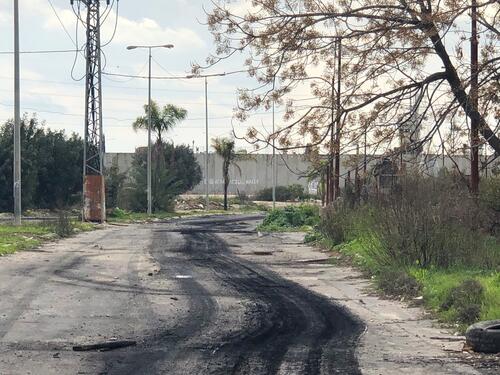
The road to Metuge is heavily damaged due to the cyclone and rains, making some areas difficult to reach by car and with equipment
Mozambique

Invisible conflict has very real consequences for people in northern Mozambique

MSF is working in Cabo Delgado province in northern Mozambique, where a little-known conflict and very few organisations working on the ground results in poor access to healthcare for people. Voices from the Field - 13 Feb 2020
 
Abraham brought his 10-year-old daughter Sidie to the clinic in the West Point township of Monrovia, Liberia, for an epilepsy consultation through the MSF program
Liberia

Community awareness and treatment changes lives for those with epilepsy

MSF is showing how increasing community awareness and providing treatment is life-changing for a growing cohort of epilepsy patients in Monrovia, Liberia Interview - 13 Feb 2020
 
One of the main bridges of the city, which is a transit point where travellers use to rest before continuing their journey on the Beast, the cargo train that conects the south and north borders of Mexico.

––––––

Uno de los puentes principales de la ciudad, la cual es un punto de tránsito donde los viajeros suelen tomar un descanso antes de continuar su viaje a bordo de la Bestia, el tren de carga que conecta las fronteras sur y norte de México.
Central American migration

Escaping violence into danger – no way out for Central American migrants

A new MSF report shows violence at home is a key push factor for many in Central America to make the dangerous journey north to the US, while exposing the devastating effects that the criminalisation of migration is having on people. Press Release - 11 Feb 2020
 
This sequence shows a couple of migrants trying cross the width of the Rio Bravo river, in front of the Eagle Pass International Bridge, where USA border police intercept them in the middle of the channel.
Central American migration

Report: No way out - The humanitarian crisis for Central American migrants and asylum seekers

The report, No way out: The humanitarian crisis for migrants and asylum seekers trapped between the United States, Mexico and the Northern Triangle of Central America, looks to expose the devastating effects that the criminalisation of migration is having on people fleeing violence. Report - 11 Feb 2020
 
The Kambe IDP site created in July 2019 following a new wave of violence. The Kambe site is composed of 4 blocks, 426 households, only 4 latrines and no shower space.
Democratic Republic of Congo

Displaced by community violence, living in dire conditions in Ituri province

Intra-community violence in northeastern DR Congo's Ituri province has forced hundreds of thousands of people to leave their homes, settling in camps of makeshift shelter, with little access to food, water or safe sanitary conditions. Project Update - 7 Feb 2020
Four mothers posing in a corridor of the Hospital in Bili. All four of them are staying in the hospital with their child, that's suffering from a severe case of malaria. Since the beginning of the project in 2016, the pediatric ward already treated more than 4.000 cases of complicated/severe form of malaria.
Médecins Sans Frontières (MSF)

Independent medical humanitarian assistance

We provide medical assistance to people affected by conflict, epidemics, disasters, or exclusion from healthcare. Our teams are made up of tens of thousands of health professionals, logistic and administrative staff - most of them hired locally. Our actions are guided by medical ethics and the principles of independence and impartiality. We are a non-profit, self-governed, member-based organisation.

Learn more