



Ebola disease in DRC: find out how we're responding
Learn more
7996 Results
 
Because of COVID-19 MSF has increased its activities in the camp with more comprehensive care staff. Also, the organization has been in touch with immigration and health authorities to have a better understanding and plan of action to be prepared in case a COVID-19 patient is detected.
Coronavirus COVID-19 pandemic

US must include asylum seekers in COVID-19 response, rather than shut border

The forced return to Mexico of migrants and asylum seekers by the US government on COVID-19 grounds puts the health of thousands at risk and goes against disease outbreak prevention measures.

Press Release - 27 Mar 2020
 
Hospital instalado por Medicos Sin Fronteras para tratar enfermos de coronavirus  en Leganes.
Foto: Olmo Calvo /MSF
Coronavirus COVID-19 pandemic

MSF steps up COVID-19 response with activities in Spain

MSF has started activities in Spain in response to the coronavirus COVID-19 pandemic, establishing temporary hospitals outside Madrid and providing infection control advice. Project Update - 25 Mar 2020
 
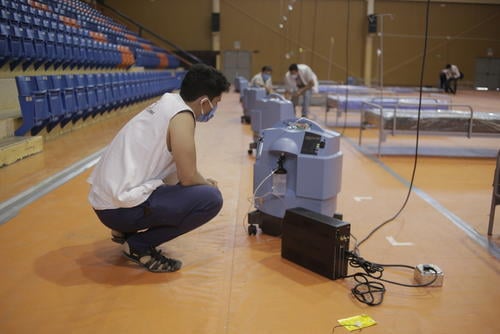
MSF teams are loading medical equipment including inflatable hospital in Merignac airport on 21 March 2020 to be sent to Ispahan, Iran to respond to the coronavirus pandemic.
Coronavirus COVID-19 pandemic

MSF “deeply surprised” that Iranian authorities put a stop to our COVID-19 response

In Iran, Ministry of Health officials have rescinded their approval of MSF’s COVID-19 intervention. We remain ready to help with the coronovirus response.
Press Release - 25 Mar 2020
 
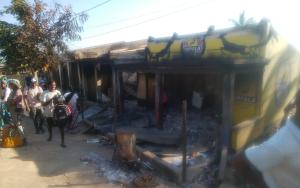
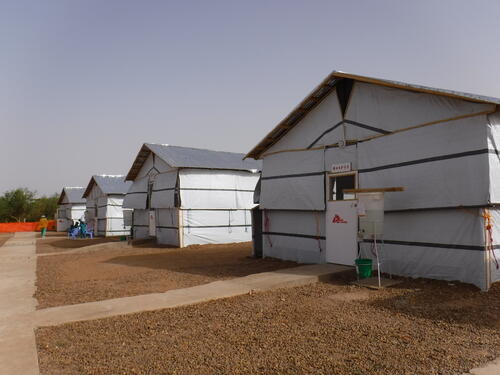
Opened on 04/01/19, this treatment center responds to the outbreak of new Ebola cases in Katwa. Located in the town of Butembo, Katwa Health Zone covers the western part of this urban area which has about 1 million inhabitants.
The total capacity of the ETC will be 70 beds divided into several areas to accommodate suspected and confirmed cases. At the moment, 32 patients can be supported. In this center, everything was thought for the well-being of patients, received in a single room with private bathroom, reducing at the same time the contacts between patients and therefore the risk of nosocomial infections. This device also improves care as caregivers can observe through a plexiglass pane the patients to gather as much information about their state of health without having to wear a PPEa that forced them to a reduced presence in risk areas.

Ouvert le 04/01/19, ce centre de traitement vient répondre à la flambée de nouveaux cas d’Ebola recensés à Katwa. Située dans la ville de Butembo, la zone de santé de Katwa couvre la partie ouest de cet ensemble urbain qui compte environ 1 million d’habitants.
La capacité totale du CTE sera de 70 lits divisé en plusieurs zones pour accueillir les cas suspects et confirmés. Pour l’instant, 32 patients peuvent être pris en charge. Dans ce centre, tout a été pensé pour le bien-être des patients, reçus en chambre individuelle avec sanitaires privés, réduisant dans le même temps les contacts entre les malades et donc les risques d’infections nosocomiales. Ce dispositif permet également d’améliorer la prise en charge car les soignants peuvent observer à travers une vitre en plexiglass les malades pour recueillir un maximum d’informations sur leur état de santé sans avoir à porter un PPE qui les contraignait à une présence réduite dans les zones à risques.
DRC Ebola outbreaks

How the Ebola response failed the people of DRC

As the Ebola outbreak in DRC winds down, MSF emergencies manager Karline Kleijer reflects on the response, and how it largely failed people's needs. Opinion - 24 Mar 2020
 
William Akol is a 46-year-old man from Payindwei village, one hour by car from Malakal. He is suffering from pulmonary tuberculosis. He has undergone treatment twice over the last two years, but this was interrupted both times. He is married and a father of two boys and two girls, aged between 7 and 14.
Tuberculosis

Between war and fragile health systems, tackling TB in Sudan and South Sudan

Years of war and a fragile health system have left many people without TB treatment in South Sudan and Sudan; MSF is improving diagnosis and treatment for those who've had to flee. Voices from the Field - 24 Mar 2020
 
Grace Siemtharmawi (17) is an MDR-TB patient. She is still at the beginning of treatment and receives a daily injection from one the MSF nurses. MSF has built her a small house next to her family home where she can live in order to prevent the rest of her family becoming infected.
MSF started providing specialised care for HIV and TB in Manipur in 2005 and 2007, respectively. At its three clinics in Chakpikarong, Churachandpur and Moreh, MSF provides screening, diagnosis and treatment for HIV, TB, Hepatitis C and co-infections.  MSF, which is the only international NGO in Manipur, has put a patient-focused model of care at the heart of its operations in order to improve outcomes and minimise the spread of the diseases.
“One of the simple ways we’ve tried to reduce the spread of drug-resistant strains of tuberculosis is to bring care to the patient, instead of making them come to us,” says Edoardo Nicolotti, MSF Project Coordinator. “When someone is newly diagnosed, we visit them at home to carry out an infection prevention and control assessment. If they live with family, we offer to build a simple house for them near to the house. This greatly minimises the risk of transmission to others but keeps the patient close enough to maintain normal interaction.” MSF has built nine such houses in 2018- 2019. MSF also sends a nurse to the patient’s house every day to carry out tests and ensure they are sticking to their treatment, which involves a challenging cocktail of drugs over roughly two years. Since DR-TB medication causes significant side effects, making it difficult for patients to complete treatment, MSF also provides counselling to encourage better outcomes. 

Along with treating partners of co-infected patients, MSF also treats hepatitis C patients who are mono-infected in an opioid substitution therapy (OST) centre in Churachandpur. At the same clinic, people who inject drugs can pick up clean needles and turn in their used ones, helping to reduce the risk of needle-sharing and further infection.
Additionally, MSF supports the district hospital in Churachandpur by treating the HIV cohort for hepatitis C. In 2018, MSF started using a new drug, bedaquiline, in the treatment of patients with extensively drug-resistant TB.
Coronavirus COVID-19 pandemic

COVID-19: Avoiding a ‘second tragedy’ for those with TB

As the world grapples with the coronavirus COVID-19 pandemic, MSF is concerned for vulnerable groups, especially people with tuberculosis (TB). Safeguarding TB diagnosis and treatment is essential. Project Update - 23 Mar 2020
 
MSF provides support with response in second worst affected province in Iran
Coronavirus COVID-19 pandemic

MSF sends hospital and medical team to treat COVID-19 patients in Iran

MSF has sent a 50-bed inflatable hospital and a medical team to Isfahan, in central Iran, to increase hospital capacity in treating those critically ill with coronavirus COVID-19. Project Update - 22 Mar 2020
 
Une infirmière effectue des soins sur un enfant.
Burkina Faso

Four questions on the unprecedented humanitarian emergency in Burkina Faso

Isabelle Defourny, MSF Director of Operations, was recently in Burkina Faso and raises the alarm on the humanitarian situation in the most conflict-affected areas of the country. Interview - 20 Mar 2020
 
Codogno Hospital, Lodi Province
Carlotta, nurse for MSF for 10 years, is the coordinator of the project in Codogno. Her priority is to protect the hospital staff.
Coronavirus COVID-19 pandemic

“Our priority is to protect hospital staff” where COVID-19 began in Italy

MSF staff having been working with frontline healthcare staff in Codogno hospital, the epicentre of the COVID-19 pandemic in northern Italy, helping to improve infection control measures. Project Update - 20 Mar 2020
 
Nearly one hundred patients requiring urgent medical attention, surgery or wound care at the Regional Hospital Maroua in the Far North Region of Cameroon. MSF supports the Ministry of Health by running the operating theater for emergency surgery and providing post-operative care.
Coronavirus COVID-19 pandemic

Vulnerable communities are bracing for impact of COVID-19

MSF Director of Analysis, Jonathan Whittal, describes how the coronavirus disease pandemic will affect some fragile settings and those without adequate access to healthcare more than others. Op-Ed - 20 Mar 2020
Four mothers posing in a corridor of the Hospital in Bili. All four of them are staying in the hospital with their child, that's suffering from a severe case of malaria. Since the beginning of the project in 2016, the pediatric ward already treated more than 4.000 cases of complicated/severe form of malaria.
Médecins Sans Frontières (MSF)

Independent medical humanitarian assistance

We provide medical assistance to people affected by conflict, epidemics, disasters, or exclusion from healthcare. Our teams are made up of tens of thousands of health professionals, logistic and administrative staff - most of them hired locally. Our actions are guided by medical ethics and the principles of independence and impartiality. We are a non-profit, self-governed, member-based organisation.

Learn more