



Ebola disease in DRC: find out how we're responding
Learn more
8000 Results
 
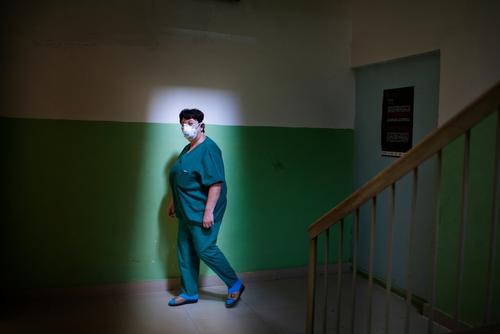
A nurse at work at Zugdidi regional TB hospital, in Georgia’s Samegrelo region, where MSF first started working in 2006.

“The question people ask me most often is, ‘aren’t you afraid of working here?’ I tell them, ‘of course not.’ And I give them more information about TB.”
Coronavirus COVID-19 pandemic

Challenges in supporting COVID-19 response

In a context where COVID-19 has spread to more than 100 countries, including those with developed and fragile health systems, what challenges does MSF face in responding? Interview - 16 Mar 2020
 
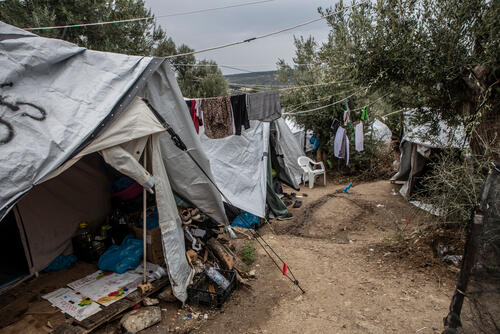
A general view of the olive grove next to the official camp of Moria.
At the moment, 13,000 people stranded in a camp designed to host just 3,000. People in the olive grove have to share their tents with other people with whom, they don’t have any previous relationship. The level of hygiene is very low and people have to share a toilet with another 90 people and a shower with 200. When it rains the tents are getting wet and the area turns into a muddy swamp. 
MSF team in the pediatric clinic in Moria see an average of 100 children and pregnant women per day. Currently with the recent increase of arrivals our team is struggling to respond to the need that arising. Most of the children our teams see are suffering from diseases which are directly connected with the living conditions such, respiratory tract infections, skin diseases, fever and diarrhea. We also receive children with chronic and complex medical cases who need specialized attention that is not available. Yet, they have to spend months living in unhygienic and unsafe conditions before they are moved to mainland in order to get the much-needed treatment.
Refugees, IDPs and people on the move

Evacuation of squalid Greek camps more urgent than ever over COVID-19 fears

MSF is calling for the immediate evacuation of migrants and refugees stuck living in unhygienic, cramped conditions on the Greek islands, in the wake of the first confirmed case of COVID-19 coronavirus on Lesbos. Press Release - 12 Mar 2020
 
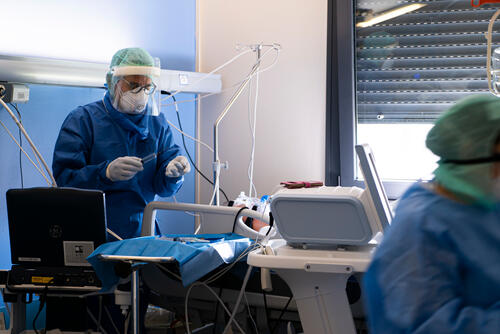
Stefano di Bartolomeo, anesthetist
Coronavirus COVID-19 pandemic

MSF starts COVID-19 response activities in four northern Italian hospitals

With hospitals in northern Italy under immense pressure from the COVID-19 coronavirus pandemic, MSF staff have stepped in to provide support in four hospitals. Press Release - 12 Mar 2020
 
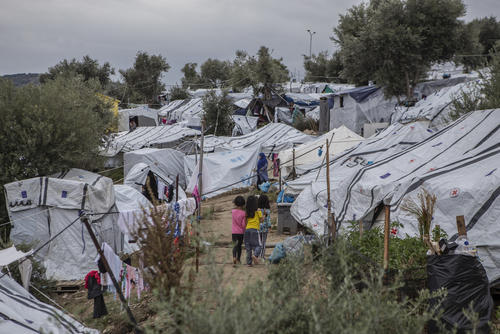
A general view of the olive grove next to the official camp of Moria.
At the moment, 13,000 people stranded in a camp designed to host just 3,000. People in the olive grove have to share their tents with other people with whom, they don’t have any previous relationship. The level of hygiene is very low and people have to share a toilet with another 90 people and a shower with 200. When it rains the tents are getting wet and the area turns into a muddy swamp. 
MSF team in the pediatric clinic in Moria see an average of 100 children and pregnant women per day. Currently with the recent increase of arrivals our team is struggling to respond to the need that arising. Most of the children our teams see are suffering from diseases which are directly connected with the living conditions such, respiratory tract infections, skin diseases, fever and diarrhea. We also receive children with chronic and complex medical cases who need specialized attention that is not available. Yet, they have to spend months living in unhygienic and unsafe conditions before they are moved to mainland in order to get the much-needed treatment.
Greece

Greece, the ‘shield’ of Europe, and EU leaders push migrants into danger

New Greek government migration measures and ongoing EU policies which demonise migration and criminalise people seeking asylum in Europe are pushing people fleeing war back into danger. Project Update - 11 Mar 2020
 
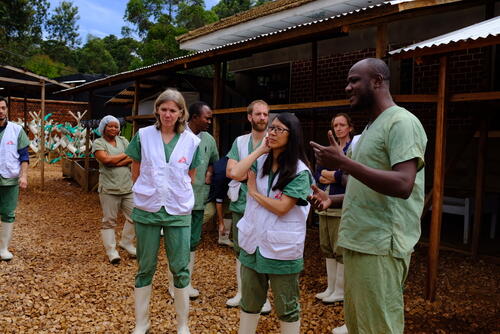
Joanne Liu, International President, visiting the Ebola treatment center in Butembo, DR Conco.
DRC Ebola outbreaks

After the fire - how we could have better managed the DRC Ebola outbreak

In the wake of an armed attack on an Ebola treatment centre in DRC, aid workers were pushed to radically rethink their approach to the disease, says MSF emergency coordinator Trish Newport. Op-Ed - 11 Mar 2020
 
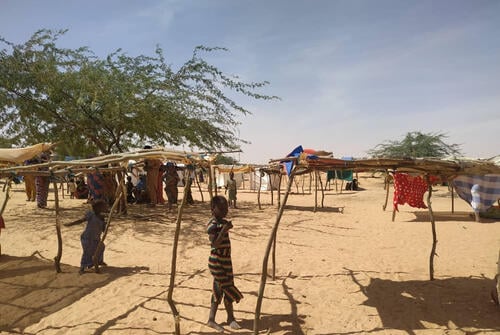
Many people who fled violence in the North of Niger in recent weeks to seek refuge in Anderamboukane, have no shelter other than makeshift tents. During the day, temperatures reach 40 degrees but drop sharply at night. In addition to these harsh temperatures, there are wind storms, which are very frequent at this time of year.
Mali

Fleeing violence in Niger, refugees in Mali remain vulnerable

Following waves of violence in a region where the Mali, Niger and Burkina Faso borders meet, thousands of people have fled their villages in Niger. MSF is providing healthcare to the displaced living in Mali. Project Update - 9 Mar 2020
 
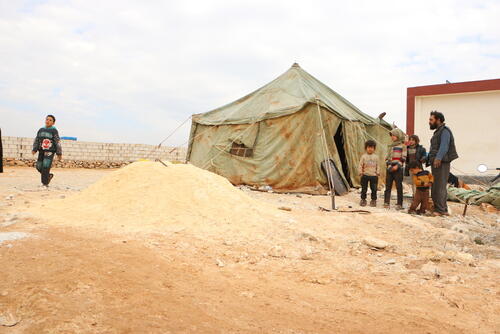
A displaced family in front of their tent, in Deir Hassan Camp (Al Wardah area). 

Deir Hassan camp consists of several settlements. It's overcrowded with 120 000 displacled people. Living conditions are dire as there is a severe lack of basic services with the influx of IDPs.

The MSF supported primary health centre which was previously in Takad was moved to Deir Hassan because of the bombings.

As the offensive conducted by the Syrian governmental forces with their Russian allies intensified in Idlib province, 900 000 people have fled since 1 December, northwards and towards the Turkish border.
Syria

Displaced people face a desperate situation in Idlib

Nearly one million people have been displaced in northwestern Syria in just the last three months. People in camps like Deir Hassan face a desperate situation, with a severe lack of basic services. Project Update - 9 Mar 2020
 
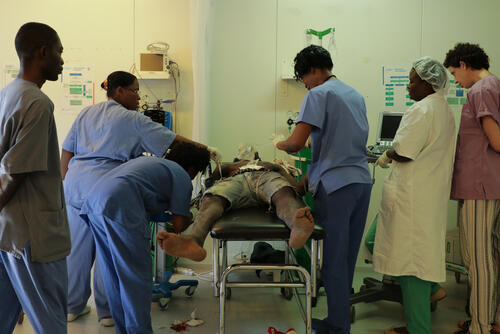
Hôpital de Tabarre, spécialisé dans les urgences traumatologiques, Port-au-Prince, Haïti, décembre 2019. Salle des urgences de l'hôpital MSF de Tabarre. Un patient victime d'une attaque à l'arme blanche est pris en charge par les équipes de l'hôpital.
Haiti

Port-au-Prince: Over 360 people admitted for lifesaving care in three months

In just three months, MSF teams have admitted over 360 people for lifesaving care in the Tabarre trauma hospital in Port-au-Prince, Haiti, with over 200 of those with violence-related injuries. Project Update - 6 Mar 2020
 
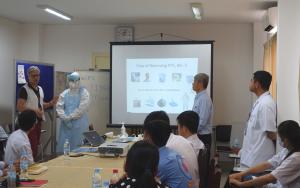
Training session for COVID-19 in Cambodia
Coronavirus COVID-19 pandemic

Preparing for COVID-19 in South-East Asia

MSF emergency coordinator Dr Tankred Stöbe visited several countries in South-East Asia to assess their preparedness for potential outbreaks of COVID-19 coronavirus. He describes providing training to healthcare staff in Cambodia and Papua New Guinea. Interview - 5 Mar 2020
 
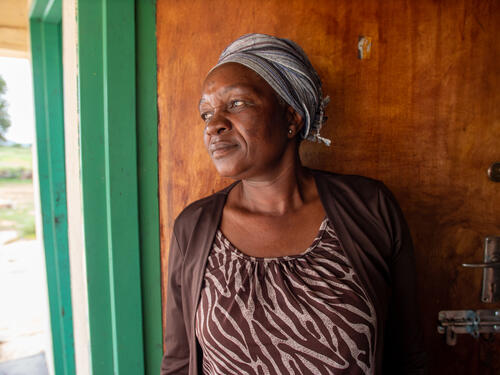
Rumbidzai, 51, was assisted by MSF after abnormalities were found during her VIAC screening. Chatikobo district, Zimbabwe. 

Rumbidzai Mushayi is a widow and a mother of three living in Chatikobo, Gutu district, Zimbabwe.  

She first learned of the cervical screening programme, and its importance, through her local health centre. 

In Rumbidzai’s first VIAC screening, the nurse found precancerous lesions on her cervix and treated them using cryotherapy. 

During her next VIAC screening she was again VIAC positive with lesions that were too widespread for cyrotherapy. She was referred for LEEP at a specialist hospital in Harare. (At the time, LEEP was not available in Gutu, but MSF subsequently supported its introduction at Gutu Rural Hospital so it is available by appointment.) A biopsy was performed on the cells removed during LEEP, and investigation of the tissue cells confirmed they were cancerous. 

Rumbidzai was referred for a total abdominal hysterectomy (removal of the uterus through the abdomen). 

Since her hysterectomy, Rumbidzai has attended regular follow-up VIAC screenings and has had negative (no) findings since 2018.  

N.B. all acronyms are spelled out in the generic project blurb so have not been spelled out again in the individual captions.
Non-communicable diseases

Why are so many women dying of cervical cancer?

Over 310,000 women died of cervical cancer in 2018. Yet, it's a preventable disease with screening and curable if detected early enough. Yet most of the disease burden is found in countries where MSF works, where are preventing and treating the disease. Project Update - 5 Mar 2020
Four mothers posing in a corridor of the Hospital in Bili. All four of them are staying in the hospital with their child, that's suffering from a severe case of malaria. Since the beginning of the project in 2016, the pediatric ward already treated more than 4.000 cases of complicated/severe form of malaria.
Médecins Sans Frontières (MSF)

Independent medical humanitarian assistance

We provide medical assistance to people affected by conflict, epidemics, disasters, or exclusion from healthcare. Our teams are made up of tens of thousands of health professionals, logistic and administrative staff - most of them hired locally. Our actions are guided by medical ethics and the principles of independence and impartiality. We are a non-profit, self-governed, member-based organisation.

Learn more