



Ebola disease in DRC: find out how we're responding
Learn more
8000 Results
 
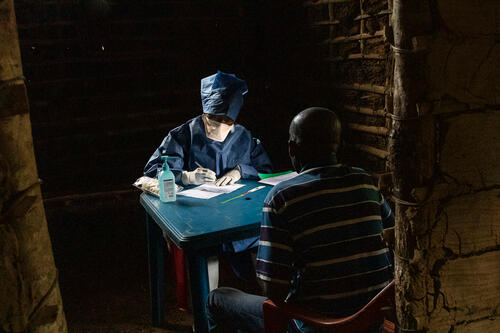
Dr Tathy, an MSF doctor, sees patients considered as non-Ebola suspects in consultation, as part of the mobile intervention clinic and training of local medical staff in the Ebola context, in the village of Bobua. This decentralization-based device aims to detect and isolate, if necessary, any person presenting symptoms close to Ebola (fevers, diarrhea, headaches, bleeding, etc.). But at the same time to treat other pathologies which are rife in the area, such as malaria or severe acute malnutrition. This is in order to increase the acceptance of MSF by the population in the area, and to avoid the stigmatization that affects Ebola patients, by getting as close as possible to the patients, and taking care of them where they live. Bobua.

***

Dr Tathy, médecin MSF, reçoit en consultation des patients considérés comme non suspects Ebola, dans le cadre des activités de clinique d'intervention mobile et de formation du personnel médical local en contexte Ebola, dans le village de Bobua. Ce dispositif axé sur la décentralisation, a pour but de déceler, et isoler le cas échéant, toute personne présentant des symptômes proches d'Ebola (fièvres, diarhhées, céphalées, saignements...). Mais de soigner en même temps d'autres pathologies qui sévissent dans la zone, telles que le paludisme ou la malnutrition aïgue sévère. Ceci afin d'augmenter l'acceptance de MSF par la population dans la zone, et d'éviter la stigmatisation qui affecte les patients Ebola, en se rapprochant au plus près des patients, et en les prenant en charge sur leur lieu de vie. Bobua.
DRC Ebola outbreaks

Improved medical response sees the end of DRC’s eleventh Ebola outbreak

Almost six months since the eleventh outbreak of Ebola was declared in DRC, new tools and an improved medical response have seen the epidemic come to an end. Project Update - 19 Nov 2020
 
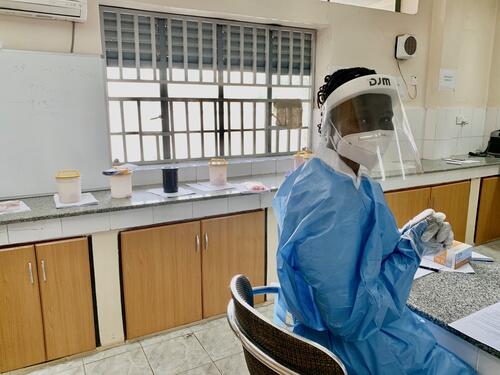
26-year-old biotechnologist Rebecca Achok, registers and codes samples of COVID-19 suspected cases in the National Public Health Laboratory (NPHL) in Juba. Rebecca is one of the eight biotechnologists of the NPHL’s reception area to where the samples are brought for testing from all over the country. After the samples are registered and coded, they are send to an extraction room where another technician will determine whether the sample is positive for COVID-19 virus.
Coronavirus COVID-19 pandemic

Governments must support landmark proposal to waive COVID-19 patents

MSF is urging all countries to join the 99 others who have expressed support for a landmark request to waive intellectual property on coronavirus COVID-19 drugs and vaccines, allowing for affordable access. Press Release - 19 Nov 2020
 
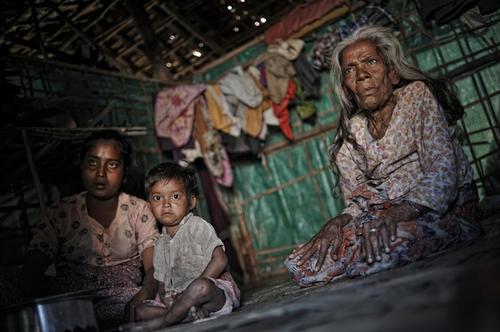
A family in their tent in a refugee camp on the outskirts of Sittwe, February 2, 2013. photo by Kaung Htet
MSF Speaking Out

MSF and the Rohingya 1992 - 2014

The case study "MSF and the Rohingya 1992 - 2014" brings to light two decades of MSF advocacy activities as part of its humanitarian assistance to the Rohingya people in Bangladesh and Myanmar and explores the questions and dilemmas the organisation was confronted with surrounding speaking out. Speaking Out Case Studies - 19 Nov 2020
 
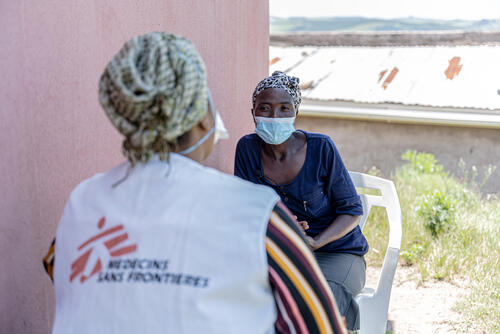
Phenduka Mtshali, a patient with Drug Resistant Tuberculosis (DR-TB), is seen at her home in Mbongolwane, South Africa speaking with MSF fieldworker, Jabulile. Phenduka lives in Mbongolwane a rural area of South Africa’s KwaZulu-Natal province at the epicentre of South Africa’s HIV & TB epidemic and where MSF is currently piloting a model of care aimed at upgrading the TB treatment cascade.

Everybody Breathes is a package documenting how the lessons learnt from the initial phases of the ‘Bending The Curves’ initiative in South Africa are now being used by MSF in Eshowe to tackle TB. The package will document interventions the project is putting in place in collaboration with its partners to prevent the spread of TB, provide a link for patients to get tested, locate missing cases and ensuring patients remain on treatment with structures that fit into their lives.

Under embargo until 24/03/2020.
Tuberculosis

Step up for TB report 2020

MSF and Stop TB Partnership present the 4th edition of the Step up for TB report, which surveys TB testing and treatment progress among 37 high TB-burden countries. Report - 16 Nov 2020
 
Svitlana was diagnosed with DR-TB two and a half months ago. Since starting treatment, she has already felt an improvement in her health.
Tuberculosis

MSF calls on governments and donors to speed up TB testing and treatment

A new MSF report shows that new drugs and testing for tuberculosis - the world's deadliest infectious disease - aren’t getting to people quickly enough. Press Release - 16 Nov 2020
 
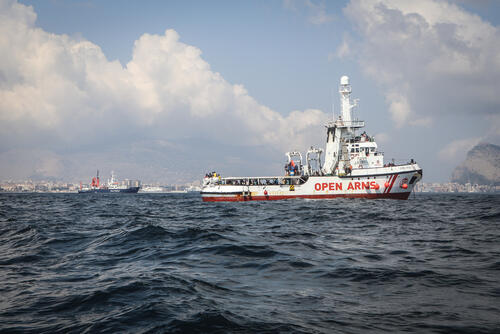
On the morning of September 17th, as Open Arms awaited instructions from authorities regarding the disembarkation of the 275 survivors rescued in the Mediterranean sea, more than 70 people jumped into the water in desperation. The Sea-Watch 4 was close by, at anchor outside the port of Palermo, and immediately responded by launching three RHIBs to provide assistance. MSF and Sea-Watch crews remained on scene until the situation stabilised.
Mediterranean migration

Carnage in the Mediterranean is the direct result of European state policies

Four separate shipwrecks in the central Mediterranean in less than 72 hours has cost the lives of more than 100 people - the result of EU migration policies. Press Release - 13 Nov 2020
 
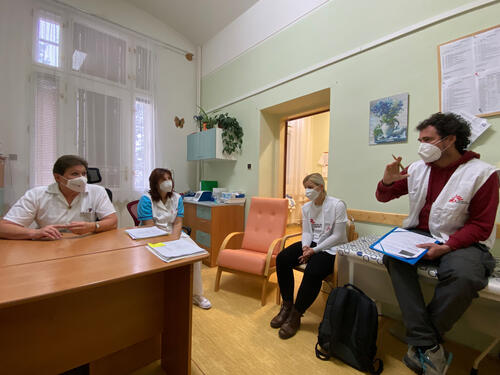
As a part of COVID-19 response in Czech Republic, MSF mobile team (consisted of a nurse and a logistician) visited care home in Božice, Southern Moravian region, Czech Republic. During the day, MSF staff with the care home's staff assessed and discussed improving IPC measures to protect clients of the home from COVID-19.
Coronavirus COVID-19 pandemic

MSF supports COVID-19 response in nursing homes in Czech Republic

MSF has started activities for the first time in the Czech Republic, where mobile teams are visiting nursing homes as part of the response to coronavirus COVID-19. Project Update - 13 Nov 2020
 
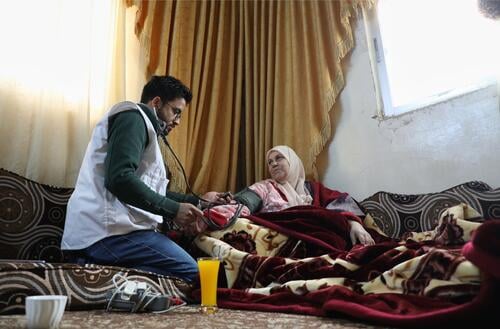
With the Syria crisis entering its ninth year in 2019, Jordan is hosting around 1.3 million Syrians of which 670,000 are registered as refugees.

With the arrival of winter, the suffering is renewed for Syrian refugees, let alone for those suffering from life-long diseases. Adding to this, winter is a season of additional torment that they still cannot avoid.

NCDs is one of the main health problems affecting Syrian and Jordanian population; it is estimated NCDs to account for 78% of all death in Jordan. Heart disease has become a leading threat to the health of the Jordanian population, with 41.5% of deaths last year 37% of them were related to heart disease.

Death due to NCDs is mainly due to complications of uncontrolled other Chronic Diseases like Diabetes and Hypertension. The lack of follow-up, diagnostics and clinical investigations, health awareness and high cost of secondary and tertiary health care like cardiac interventions are also significant reasons.( e.g.: Catheterization may reach 5000 JDs/7000 USD, excluding Hospital fees).

Like most of NCDs, the difficult economic conditions make life harder for those affected. The NCDs care and management is expensive in general and requires long term medications and regular follow ups, not a lot of patients have the financial ability to afford the treatment. It affects the access of medicines for patients. As a result, MSF intervened and operated two clinics in northern Jordan in Irbid governorate to respond to the NCDs needs between Syrian refugees and vulnerable Jordanians. MSF is helping both in Irbid governorate by providing these life-saving medications and follow up consultations free of charge.

At both clinics, MSF currently has cohort of 5500 patients out of which 3,639 are Syrian refugees and 1,619 are vulnerable Jordanian in the NCD program, out of which Type I Diabetes: 163 and Type II Diabetes: 3251, Hypertension: 3,773, Asthma 453, and Cardiovascular 1406. Many patients have more than one of these diseases.

MSF teams provide medical and mental healthcare,  including psychosocial support, physiotherapy and health promotion, and home visits to patients unable to visit the clinics due to mobility constrains.

MSF contribution doesn’t stop at providing health care to Syrian refugees. MSF believes that increasing patient’s familiarity about NCDs is important, given the lifelong nature of these diseases.

Some of the NCDs services available are provided with some cost taken from the patients. For many Syrian patients that cost is not affordable and would require a global support from donors and agencies to have affordable access to NCD treatment and health care.
Non-communicable diseases

Eight reasons why diabetes is a humanitarian emergency

Diabetes is a common, chronic disease - which can be managed with drugs such as insulin and a good diet. But it can be life-threatening for people living in conflict zones or refugee camps. Project Update - 13 Nov 2020
 
Most of the people admitted to Covid+ centres are homeless people sent from emergency shelters. When MSF mobile teams who intervene in these shelters diagnose someone as possibly having contracted the virus they try to test them——if they have the necessary kits.
From the medical perspective, we know the symptoms of the virus, so we can identify anyone suspected of having the disease. The Regional Health Authority then calls on the Red Cross, which handles transportation, to take them to Covid+ centres set up across Paris and the suburbs. 

In Chatenay-Malabry Covid+ centre (Paris suburbs), there are places for 50 people with confirmed or suspected Covid-19. We provide social support and paramedical/medical care in partnership with NGO Alteralia. This includes checking vital signs: blood pressure, temperature and oxygen saturation to see whether people are breathing properly. We also give advice on hygiene, wearing a mask and hand washing to prevent the infection spreading to other people. We also give medical examinations and, when necessary, take care of patients requiring long-term treatment for other conditions. We monitor them regularly, so if all of a sudden someone who’s really struggling to breathe—remember, this isn’t a hospital so we don't necessarily have the equipment to keep them on oxygen for any length of time—requires further tests, this is the kind of person we call the emergency services for so that they can take them to the hospital. 

MSF teams are on hand throughout the care chain: from the mobile teams, mobile clinic and care provided in the emergency centres through to the medical team who treat patients admitted to the Covid-19 treatment centres.
Coronavirus COVID-19 pandemic

MSF supports nursing home staff as urgent appeal for medical personnel in France launched

MSF is providing support to nursing home staff, and appealing for more medical staff to come forward, as the second wave of the coronavirus pandemic mounts in France. Project Update - 11 Nov 2020
 
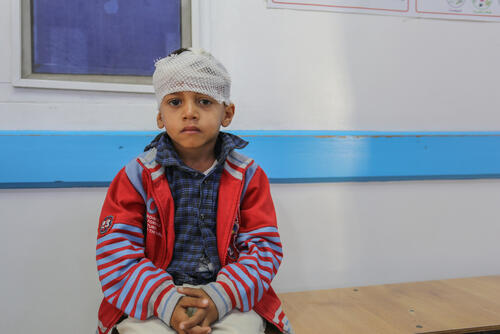
Abdullah Ali, 6 years old, fell from the top of the tree, suffered bruises in the head, and received treatment at Naser hospital supported by MSF in Ibb city.
Yemen

Humanitarian response in Yemen: time to go back to the drawing board

MSF Director of Operations in Geneva, Christine Jamet, explains why a reset is needed on the humanitarian response in Yemen. Op-Ed - 11 Nov 2020
Four mothers posing in a corridor of the Hospital in Bili. All four of them are staying in the hospital with their child, that's suffering from a severe case of malaria. Since the beginning of the project in 2016, the pediatric ward already treated more than 4.000 cases of complicated/severe form of malaria.
Médecins Sans Frontières (MSF)

Independent medical humanitarian assistance

We provide medical assistance to people affected by conflict, epidemics, disasters, or exclusion from healthcare. Our teams are made up of tens of thousands of health professionals, logistic and administrative staff - most of them hired locally. Our actions are guided by medical ethics and the principles of independence and impartiality. We are a non-profit, self-governed, member-based organisation.

Learn more