


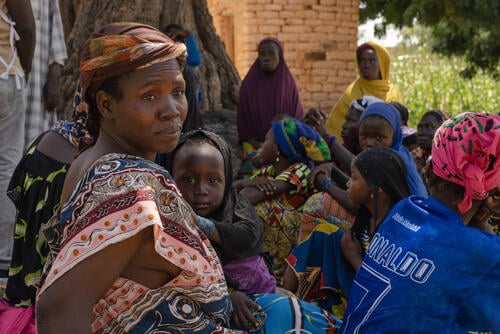

Ebola disease in DRC: find out how we're responding
Learn more
7996 Results
 
“This is my third child, Taha. He’s only 48 days old," says Balqees. "I gave birth to him in a health centre in the village. They told me that my son needed medical attention. In our area there are no hospitals, only clinics, so we drove for around two hours to get to this hospital. 
When we first arrived, Taha was taken for phototherapy because he had jaundice. We stayed a week in the hospital and then returned to the village. When his health deteriorated, I had to come back to the hospital.
I have been here for four days now. Even a simple walk tires me. I am still recovering from the trip – it was exhausting, especially being pregnant and with those difficult road conditions. 

My husband has not come to visit me in the hospital – our financial situation does not allow it, so he stays in the village. Even when I fall ill, I don’t seek healthcare, because we don’t have the money. I could never have afforded a private hospital."
Yemen

Behind the conflict in Yemen

storymaps - 30 Nov 2020
 
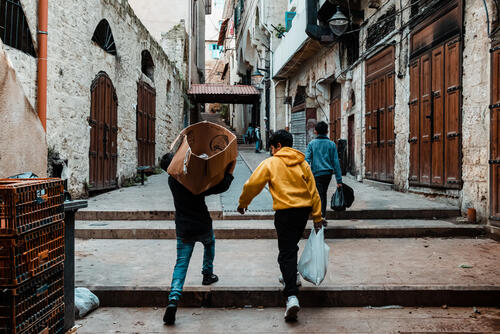
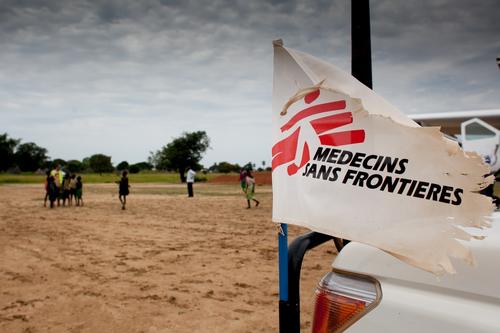
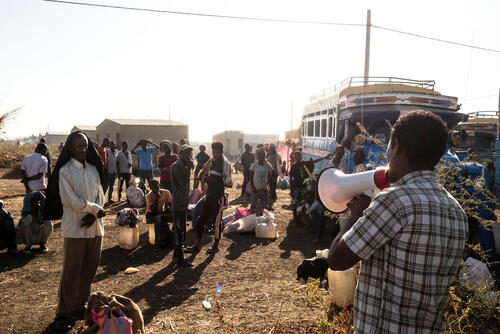
The Hamadayet border crossing, where refugees from Ethiopia cross the river into Sudan. New arrivals take whatever belongings they can carry with them, some have their livestock’s and  others left with nothing.
Ethiopia Tigray crisis

MSF providing medical care and assistance in Sudan to people fleeing violence in Ethiopia

In the wake of fresh conflict in northern Ethiopia, thousands of people have fled north into neighbouring Sudan, where MSF is providing medical care and assistance. Project Update - 27 Nov 2020
 
Laylan camp: IDPs are asked to load their belongings on trucks provided by the authorities as part of the camp closure.
Iraq

Displaced people in Iraq’s Laylan camp express fears as camp closes

Rushed camp closures and returns of internally displaced people in Iraq to their areas of origin will have serious humanitarian consequences, says MSF. Press Release - 24 Nov 2020
 
Alba Ramos is treated for MSF health workers in the intensive care unit inside  of the COVID-19 unit operated by MSF in collaboration with Pérez de León II Hospital in Caracas, Venezuela.

----

Alba Ramos es atendida por el equipo de MSF en la unidad de cuidados intensivos de COVID-19 que MSF opera en conjunto con el Hospital Pérez de León II en Caracas, Venezuela.
Coronavirus COVID-19 pandemic

Staff entry restrictions force MSF to withdraw from COVID-19 response in Venezuela hospital

Entry restrictions for MSF international staff in Venezuela have made it difficult to continue our work on COVID-19, forcing us to withdraw from our work in a Caracas hospital.
Press Release - 24 Nov 2020
 
202002, Kristof Vadino, Bosnia, refugees, in an abandonned old factory in Velika Kladusa, near 'The Factory', between 30 and 50 people sleep here, the wind blows trough, only 2 small confined spaces, no water or electricity
Mediterranean migration

“What Europe is experiencing today, is not a humanitarian crisis, but a crisis of humanity.”

MSF International President Dr Christos Christou speaks to governments High-level Interparliamentary Conference on Migration and Asylum in Europe on their migration obligations. Speech - 19 Nov 2020
 
Children playing in the street
Democratic Republic of Congo

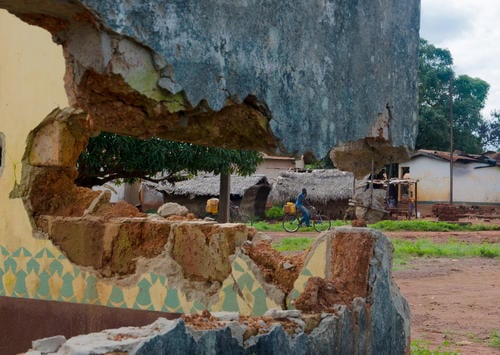
MSF denounces ongoing violence in Salamabila

Statement following further violence In Salamabila, Democratic Republic of Congo, where attacks on civilians and other human rights violations are frequent. Statement - 19 Nov 2020
 
Dr Tathy, an MSF doctor, sees patients considered as non-Ebola suspects in consultation, as part of the mobile intervention clinic and training of local medical staff in the Ebola context, in the village of Bobua. This decentralization-based device aims to detect and isolate, if necessary, any person presenting symptoms close to Ebola (fevers, diarrhea, headaches, bleeding, etc.). But at the same time to treat other pathologies which are rife in the area, such as malaria or severe acute malnutrition. This is in order to increase the acceptance of MSF by the population in the area, and to avoid the stigmatization that affects Ebola patients, by getting as close as possible to the patients, and taking care of them where they live. Bobua.

***

Dr Tathy, médecin MSF, reçoit en consultation des patients considérés comme non suspects Ebola, dans le cadre des activités de clinique d'intervention mobile et de formation du personnel médical local en contexte Ebola, dans le village de Bobua. Ce dispositif axé sur la décentralisation, a pour but de déceler, et isoler le cas échéant, toute personne présentant des symptômes proches d'Ebola (fièvres, diarhhées, céphalées, saignements...). Mais de soigner en même temps d'autres pathologies qui sévissent dans la zone, telles que le paludisme ou la malnutrition aïgue sévère. Ceci afin d'augmenter l'acceptance de MSF par la population dans la zone, et d'éviter la stigmatisation qui affecte les patients Ebola, en se rapprochant au plus près des patients, et en les prenant en charge sur leur lieu de vie. Bobua.
DRC Ebola outbreaks

Improved medical response sees the end of DRC’s eleventh Ebola outbreak

Almost six months since the eleventh outbreak of Ebola was declared in DRC, new tools and an improved medical response have seen the epidemic come to an end. Project Update - 19 Nov 2020
 
26-year-old biotechnologist Rebecca Achok, registers and codes samples of COVID-19 suspected cases in the National Public Health Laboratory (NPHL) in Juba. Rebecca is one of the eight biotechnologists of the NPHL’s reception area to where the samples are brought for testing from all over the country. After the samples are registered and coded, they are send to an extraction room where another technician will determine whether the sample is positive for COVID-19 virus.
Coronavirus COVID-19 pandemic

Governments must support landmark proposal to waive COVID-19 patents

MSF is urging all countries to join the 99 others who have expressed support for a landmark request to waive intellectual property on coronavirus COVID-19 drugs and vaccines, allowing for affordable access. Press Release - 19 Nov 2020
 
A family in their tent in a refugee camp on the outskirts of Sittwe, February 2, 2013. photo by Kaung Htet
MSF Speaking Out

MSF and the Rohingya 1992 - 2014

The case study "MSF and the Rohingya 1992 - 2014" brings to light two decades of MSF advocacy activities as part of its humanitarian assistance to the Rohingya people in Bangladesh and Myanmar and explores the questions and dilemmas the organisation was confronted with surrounding speaking out. Speaking Out Case Studies - 19 Nov 2020
 
Phenduka Mtshali, a patient with Drug Resistant Tuberculosis (DR-TB), is seen at her home in Mbongolwane, South Africa speaking with MSF fieldworker, Jabulile. Phenduka lives in Mbongolwane a rural area of South Africa’s KwaZulu-Natal province at the epicentre of South Africa’s HIV & TB epidemic and where MSF is currently piloting a model of care aimed at upgrading the TB treatment cascade.

Everybody Breathes is a package documenting how the lessons learnt from the initial phases of the ‘Bending The Curves’ initiative in South Africa are now being used by MSF in Eshowe to tackle TB. The package will document interventions the project is putting in place in collaboration with its partners to prevent the spread of TB, provide a link for patients to get tested, locate missing cases and ensuring patients remain on treatment with structures that fit into their lives.

Under embargo until 24/03/2020.
Tuberculosis

Step up for TB report 2020

MSF and Stop TB Partnership present the 4th edition of the Step up for TB report, which surveys TB testing and treatment progress among 37 high TB-burden countries. Report - 16 Nov 2020
Four mothers posing in a corridor of the Hospital in Bili. All four of them are staying in the hospital with their child, that's suffering from a severe case of malaria. Since the beginning of the project in 2016, the pediatric ward already treated more than 4.000 cases of complicated/severe form of malaria.
Médecins Sans Frontières (MSF)

Independent medical humanitarian assistance

We provide medical assistance to people affected by conflict, epidemics, disasters, or exclusion from healthcare. Our teams are made up of tens of thousands of health professionals, logistic and administrative staff - most of them hired locally. Our actions are guided by medical ethics and the principles of independence and impartiality. We are a non-profit, self-governed, member-based organisation.

Learn more