


Ebola disease in DRC: find out how we're responding
Learn more
7996 Results
 
MSF mobile clinic staff runs blood tests to diagnose sleeping sickness in the village of Emmaus, northeast DRC.
Neglected diseases

Overcoming neglect: Finding ways to manage and control NTDs

MSF's latest report on neglected tropical diseases (NTDs), Overcoming neglect, highlights persistent gaps and problems in treating NTDs in the areas we work. Report - 26 Jan 2021
 
MSF’s Mental Health Supervisor is checking on patients who are visiting our Kutupalong facility to have mental health support.
Rohingya refugee crisis

Relocations, reduced services leave Rohingya communities at breaking point in Bangladesh

Unable to work, Rohingya refugees in Cox's Bazar, Bangladesh, rely on aid for survival; but services have been scaled back due to COVID-19, and with many being relocated, leaving people anxious and stressed. Project Update - 21 Jan 2021
 
Patient is carried to the ambulance shortly after the start of a heavy rain in Tefé. She will go to the airport and from there to the state capital, Manaus, where there are more resources for her treatment of COVID-19. 

The transfer of this patient took place in late December 2020, before the health system in Manaus collapsed for the second time and referrals to the state capital were interrupted.
Brazil

COVID-19 leaves Amazonas health system saturated, overloaded and struggling

Coronavirus COVID-19 has caused the health system in Manaus, the capital of Brazil's Amazonas state, to collapse, forcing city hospitals to stop receiving serious patients from other towns. Project Update - 21 Jan 2021
 
Women from Riang, Jonglei state, carry items that MSF will distribute to local families. Hiring only women as porters is a way to support the most vulnerable people in the community.
South Sudan

Falling international funding exposes communities in Jonglei to a lack of healthcare

After a succession of floods and violence in the area, people in South Sudan's Jonglei state are vulnerable to a lack of access to medical care - made worse by falling levels of funding from international donors. Project Update - 19 Jan 2021
 
MSF Supported COVID19 Treatment Center at Al Kuwait Hospital in Sanaa
Yemen

Yemen: “These sanctions have to make clear that they do not apply to humanitarian aid”

As the United States prepares to designate Ansar Allah a 'foreign terrorist organisation' in Yemen, there are concerns about the impact on providing assistance in the country. Interview - 18 Jan 2021
 
MSF installed one 30- and two 15-cubic meter water tankers to provide water purification in Ndu, northern DRC, where thousands of people from the Central African Republic sought refuge due to a non-state armed group attack on Bangassou on January 3rd. According to some estimates, over 12,000 refugees arrived in Ndu in just a few days.
Central African Republic

MSF teams ramp up support as violence escalates

As the security and humanitarian situation in Central African Republic rapidly deteriorates, people have reduced access to essential medical services. Project Update - 14 Jan 2021
 
Hamdayet crossing point, Sudan, early morning. November 2020. This crowd walked miles from neighbooring Ethiopia to reach Sudan  to escape the conflict in their region. Once registered people will be able to get a ticket to move to further south camp, in Um Rakuba.
Ethiopia Tigray crisis

Providing assistance to people in Ethiopia and Sudan in wake of Tigray violence

Following the start of violence in the Tigray region of Ethiopia in November 2020, MSF teams are providing assistance to both internally displaced in Ethiopia, and those who've fled to neighbouring Sudan. Project Update - 12 Jan 2021
 
Switzerland, COVID-19 response in Intensive care unit of HUG. April 14, 2020. ©Nora Teylouni / MSF
Switzerland

Responding to the second wave of COVID-19 in Switzerland

After wrapping up COVID-19 response activities in Switzerland during the first wave in May 2020, MSF teams have returned to the country to address the growing second wave of the coronavirus pandemic. Project Update - 11 Jan 2021
 
A woman receives a vaccination  in Kinshasa. 

After an outbreak of yellow fever MSF is organising a large vaccination program in Kinshasa.
Yellow fever

Fractioning doses of yellow fever vaccine can help save more lives

A study from MSF/Epicentre has found that giving one-fifth of a normal dose of the yellow fever vaccine offers enough protection to prevent the deadly disease and save lives during outbreaks. Press Release - 8 Jan 2021
 
Children are carrying goods in the street of the old souk in Tripoli. The street is usually extremely busy but a lockdown was declared from 14th November to 30th November 2020 to slow down the spread of COVID-19. The lockdowns measures, although necessary, have contributed to exacerbating people’s financial difficulties, reducing the economic activities in the country.
Lebanon

Overlapping crises in Lebanon increase needs and worsen access to care

In the last year, Lebanon has faced political turmoil, social unrest, economic crisis, COVID-19 and the Beirut port blast. For many, Lebanese and refugees alike, the struggle to access healthcare has become even harder. Project Update - 8 Jan 2021
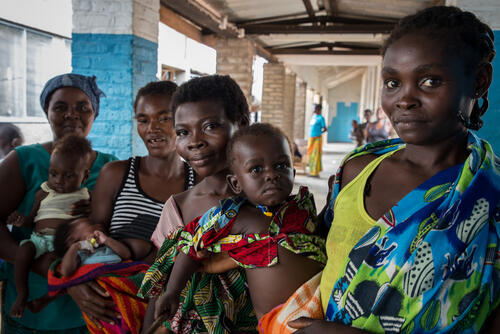
Four mothers posing in a corridor of the Hospital in Bili. All four of them are staying in the hospital with their child, that's suffering from a severe case of malaria. Since the beginning of the project in 2016, the pediatric ward already treated more than 4.000 cases of complicated/severe form of malaria.
Médecins Sans Frontières (MSF)

Independent medical humanitarian assistance

We provide medical assistance to people affected by conflict, epidemics, disasters, or exclusion from healthcare. Our teams are made up of tens of thousands of health professionals, logistic and administrative staff - most of them hired locally. Our actions are guided by medical ethics and the principles of independence and impartiality. We are a non-profit, self-governed, member-based organisation.

Learn more