



Ebola disease in DRC: find out how we're responding
Learn more
4633 Results
 
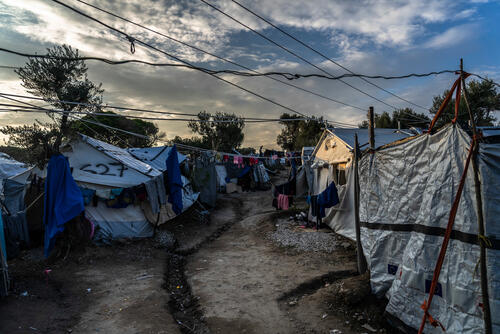
A general of the olive grove next to Moria camp. Due to overcrowded camp of Moria about 2000 asylum seekers have moved to the area next to Moria camp where they have created makeshift shelters. Due to the recent rains residents in the olive grove had nowhere to sleep as the tents were usually flooded.
Greece

No roof, no recovery

A victim of torture's first-hand account of how homelessness and inappropriate living conditions act as a barrier to torture survivors’ rehabilitation in Greece. Voices from the Field - 17 Oct 2018
 
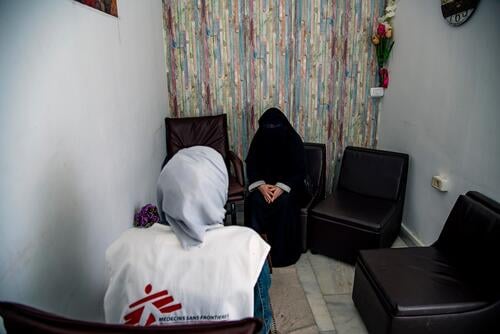
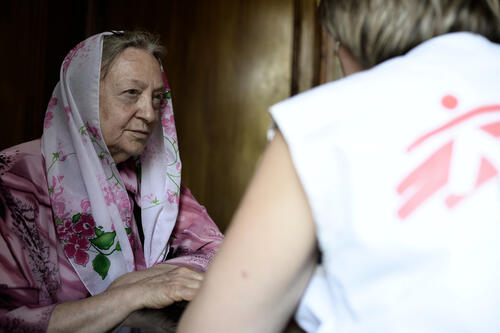
During a Mental Health session at MSF NCD clinic in northern Jordan.
The MSF Non-communicable disease project in Irbid, Jordan, works with Syrian refugees living outside camps since December 2014. MSF opened this project to respond to the massive needs of the Syrian refugee living in non-camp settings and vulnerable Jordanians.
Jordan

Mental health and the work of planting hope

Amal Bani Khalaf, a Jordanian psychologist who has worked with MSF since 2014, gives an account of her work in MSF’s non-communicable diseases (NCD) project in Irbid, Jordan. Voices from the Field - 17 Oct 2018
 
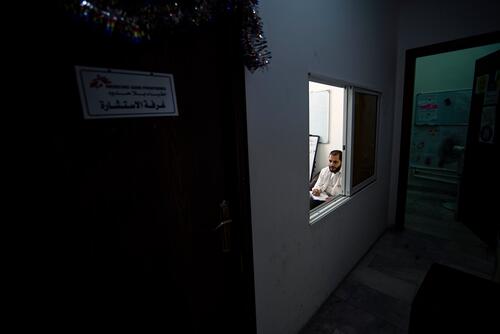
Bilal an MSF psychologist during one of the Mental Health counselling sessions in the MSF NCD clinic in Irbid city,  northern Jordan.
“One of the main complaints we receive at the NCD clinic is related directly to problems like the family conflicts, which is caused by the challenging financial status Syrian families are going through, which leads to having more than one family in the same house.  These problems are usually triggered by other prolonged problems and complains such as the NCD, displacement/migration, and sometimes age.” Says Bilal.
The MSF Non-communicable disease project in Irbid, Jordan, works with Syrian refugees living outside camps since December 2014. MSF opened this project to respond to the massive needs of the Syrian refugee living in non-camp settings and vulnerable Jordanians.
Jordan

The less visible humanitarian crisis: Refugee mental health needs in urban Jordan

MSF mental health activities manager Heidi Mitton explains the mental healthcare needs and services in Irbid, Jordan, where MSF runs a non-communicable diseases (NCD) project for Syrian refugees and vulnerable Jordanians. Voices from the Field - 17 Oct 2018
 
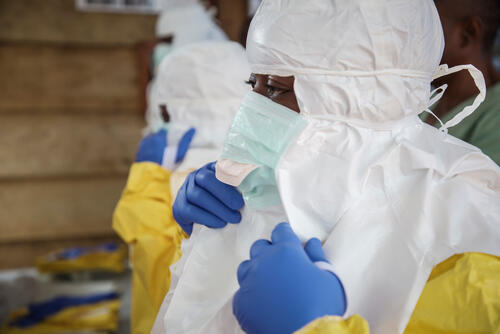
Seraphine is a MSF nurse who’s preparing herself together with her colleagues to go into the high risk zone of the Ebola Treatment centre (ETC). She’s from the region (North-Kivu) and has been working several years for MSF. She’s currently detached by the “Pool D’urgence de Congo” to help out in the Ebola project of Mangina. She got her first ebola experience earlier this year during the epidemic in the equator province. “During the first intervention I was really afraid to get sick (ebola),” she says. “At night I was all the time thinking about what I touched that day in the High risk zone of the ETC, worried that I might get Ebola. Now, I’m way more relaxed and I have more confidence!”
As an adolescent Seraphine wasn’t too keen to become a nurse, but she did because her aunt asked her.
“My aunt always complained that the people working in hospitals never smiled. That’s why she didn’t feel comfortable there. She literally asked me to become a nurse so she would encounter at least one person with a smile in the hospital. So that’s what I do now, I treat people in the best way I can, but more importantly, I also give them a big smile!”
DRC Ebola outbreaks

“Ebola is about human beings and trust”

Dr Hilde De Clerck is one of MSF’s most experienced Ebola doctors and has just returned from North Kivu, in eastern Democratic Republic of Congo (DRC), where the latest outbreak has proven hard to control.
Interview - 12 Oct 2018
 
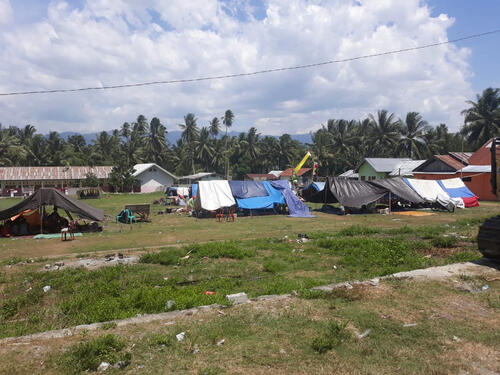
Emergency tents established by the community affected by the 7.7 magnitude earthquake which hit Central Sulawesi on 28 September 2018, in Sigi Regency, Central Sulawesi.
Indonesia

Getting healthcare and safe water to remote areas in Central Sulawesi

An MSF team from Indonesia is helping health centres in remote parts of Central Sulawesi get back on their feet and working to ensure communities have access to safe water, having assessed the medical and humanitarian needs in areas affected by the earthquake and tsunami that hit the island on 28 September. Project Update - 11 Oct 2018
 
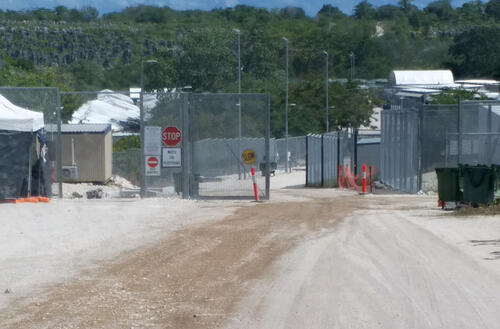
The regional processing centres known as RP3 and Anijuo, September 2017.
Nauru

Refugees' lives in danger with MSF forced to end mental healthcare activities

After almost a year of activity in Nauru, MSF has been informed by the government that our mental health activities were “no longer required”. We are extremely concerned for the impact this decision will have on our patients. Press Release - 11 Oct 2018
 
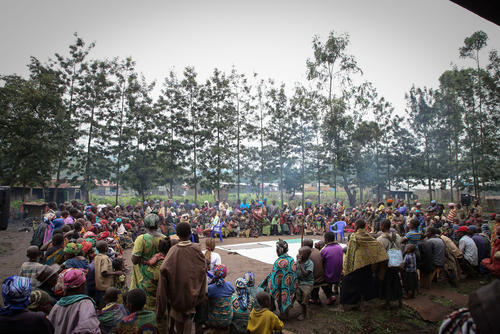
Every week, an MSF team of counsellors and health promoters puts on a play and conducts sensitisation activities with displaced people living outside and inside of Mweso school. Theatre is used as an effective means of health promotion and the performance touches on different themes, among them sexual and domestic violence. The MSF team use theater to present the different healthcare activities that are offered to people in Mweso.
Mental health

World Mental Health Day 2018: Beyond a healthy body

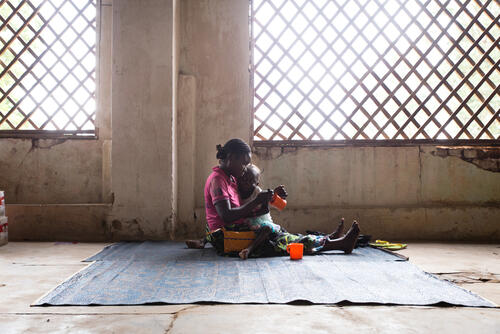
For people who have lived through violence or natural disasters, survival goes beyond ensuring physical well-being. Our professionals are there to provide mental healthcare to help heal our patients' psychological wounds. Project Update - 10 Oct 2018
 
Dans le centre médical de Tshibala (CNTA) les patients ne pouvant se rendre à l'hopital viennent se faire osculter par des médecins MSF. Si les enfants souffrent de malnutrition sévère ils seront ainsi ramenés à la base MSF et hospitalisés.
Democratic Republic of Congo

MSF adapts to changing needs in Greater Kasai region

Since MSF first launched an intervention to respond to the recent crisis in Kasai in May 2017, our teams have established medical projects in a total of five different locations in Kasai and Kasai Central provinces. Project Update - 9 Oct 2018
 
Nadiia, 79. from Mariupol listens to MSF nurse Tetiana as she goes over new treatment options. Nadiia receives medical treatment for heart and kidney problems. "I live alone in Mariupol. It was very hard being by myself during the conflict, as I live on the fourteenth floor of my building. I could hear shooting all the time, and it scared me a lot. It was a trying experience for me, but there are other people who have suffered more than me, so I don't feel I suffered that much. One lady from the village of Shyrokyne lost her entire house and garden. It has ruined her life for good. The conflict has affected many, many people in different ways. It destroyed them."
Mental health

Living with loneliness and trauma

How MSF’s patients cope with fear and hopelessness from four years of conflict in eastern Ukraine. Photo Story - 9 Oct 2018
 
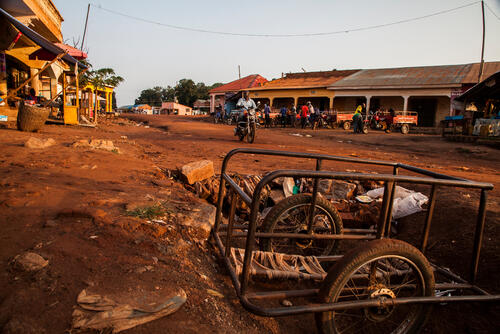
The main street in Yambio Town
South Sudan

Helping Yambio’s demobilised child soldiers come to terms with their past

MSF’s mental health support programme helps some of South Sudan’s estimated 19,500 former child soldiers come to terms with their experiences as they reintegrate their communities. Project Update - 5 Oct 2018
Four mothers posing in a corridor of the Hospital in Bili. All four of them are staying in the hospital with their child, that's suffering from a severe case of malaria. Since the beginning of the project in 2016, the pediatric ward already treated more than 4.000 cases of complicated/severe form of malaria.
Médecins Sans Frontières (MSF)

Independent medical humanitarian assistance

We provide medical assistance to people affected by conflict, epidemics, disasters, or exclusion from healthcare. Our teams are made up of tens of thousands of health professionals, logistic and administrative staff - most of them hired locally. Our actions are guided by medical ethics and the principles of independence and impartiality. We are a non-profit, self-governed, member-based organisation.

Learn more