



Ebola disease in DRC: find out how we're responding
Learn more
280 Results
 
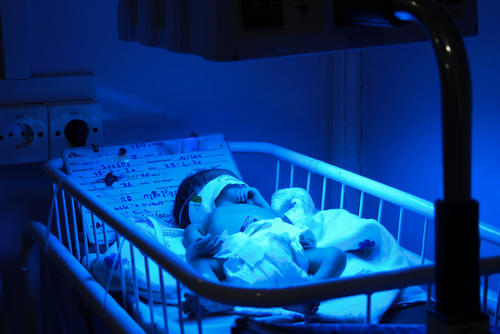
A baby is undergoing phototherapy treatment for jaundice in the newborn unit at Timergara DHQ hospital, Lower Dir.
Pakistan

Meeting regular health needs amid the COVID-19 pandemic in Pakistan

Amid staff forced to be quarantined and hospitals temporarily shutting during the coronavirus pandemic in Pakistan, MSF staff have continued to deliver thousands of babies each week and provide medication for people with hepatitis C. Project Update - 8 Sep 2020
 
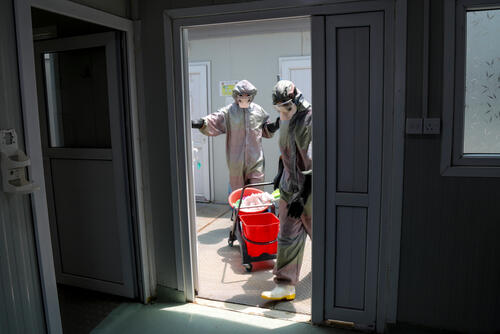
Infection prevention and control in MSF COVID-19 facility. MSF enhanced its infection control and medical protocols to face the COVID-19 pandemic in Mosul. MSF has responded quickly to the pandemic by temporarily repurposing its center for post operative care into a 62 bed facility for isolation and treatment of COVID-19 patients. So far the facility has received over 700 patients. On the other hand, MSF is maintaining most of its regular healthcare in the city including emergency, maternity and paediatrics.
Iraq

Mosul: MSF works on dual front of COVID-19 and lifesaving medical care

MSF teams in Mosul, Iraq are supporting a healthcare system severely impacted by years of conflict that now faces the COVID-19 coronavirus. Project Update - 5 Aug 2020
 
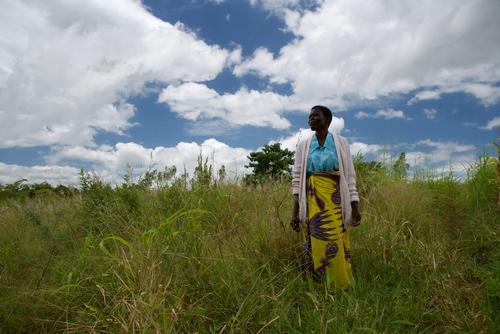
“I used to make a living out of farming and selling small things” says Elida Howa. “Once I got sick in 2018, I was too weak to work. I hope I will be soon able to go back to farming.”
Malawi

Tackling a silent woman-killer in Malawi

Cervical cancer kills over 2,300 women in Malawi every year. This grim reality is the result of issues with vaccination and screening, as well as limitations in treatment. Since 2018, MSF has been working to fill the gap in Blantyre district, in the country’s south. Voices from the Field - 9 Jul 2020
 
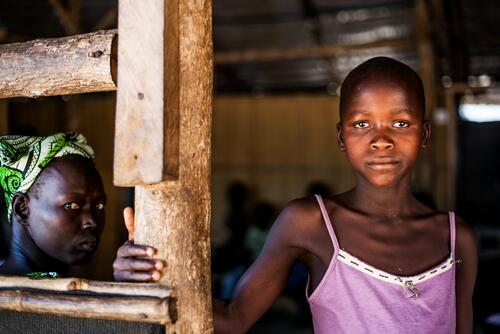
people waiting at Ayilo MSF hospital, Adjumani, Uganda
Women's health

Women and girls face greater dangers during COVID-19 pandemic

During COVID-19, MSF teams all over the world are seeing the challenges women face in accessing essential sexual and reproductive health services. We know the consequences can be deadly and we fear a massive increase in maternal and neonatal mortality. Project Update - 2 Jul 2020
 
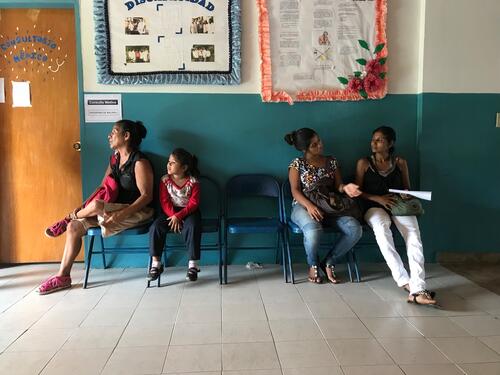
Patients wait at San Vicente clinic.

San Vicente clinic, in Andrés Eloy Blanco Municipality of Sucre State, is one of the five "hot spots" where there is a high incidence of malaria cases. The health centre operates 24 hours a day and serves an agricultural community. MSF provides assistance in not only the area of malaria diagnosis, treatment and prevention, but also in training of medical and non-medical staff, data registration, water and sanitation, provision of supplies and health promotion.

El Ambulatorio de San Vicente, del Municipio Andrés Eloy Blanco del Estado Sucre, es uno de los cinco puntos calientes donde hay alta incidencia de casos de malaria. El centro de salud atiende a una comunidad exclusivamente agrícola. MSF proporciona ayuda no solo en el área de diagnóstico, tratamiento y prevención de paludismo, sino también en capacitación de equipos médicos y no médicos, registro de datos, agua y saneamiento, rehabilitación de infraestructuras, dotación de insumos y promoción a la salud.
Venezuela

MSF helps fight against malaria in Venezuela’s Sucre state

MSF teams are providing support to healthcare centres in Sucre state, on Venezuela's northern coast, where malaria is endemic and health structures are in need of improvement. Project Update - 29 Jun 2020
 
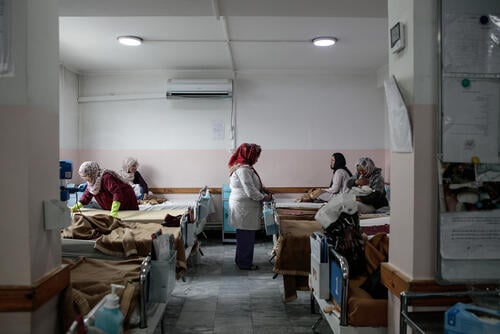
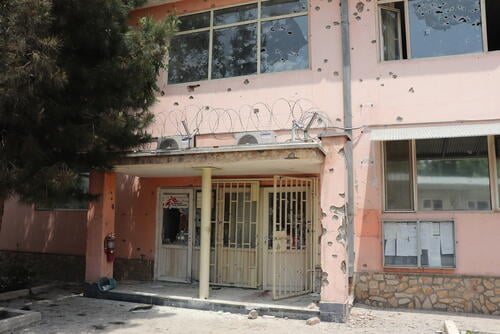
Post-partum room. Women stay around 6 hours on average, when they are not facing complications.
Afghanistan

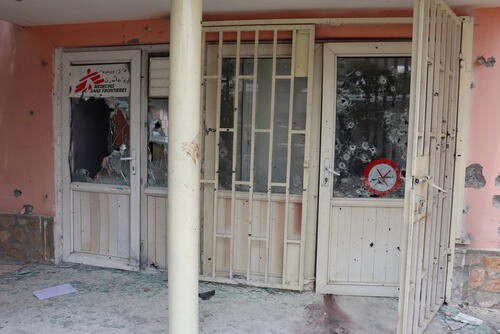
MSF withdraws from Dasht-e-Barchi following attack on patients and staff

Following the horrific attack on our maternity wing at Dasht-e-Barchi hospital, MSF has made the difficult decision to withdraw from the area, as the attack's death toll climbs to 16 mothers killed. Press Release - 15 Jun 2020
 
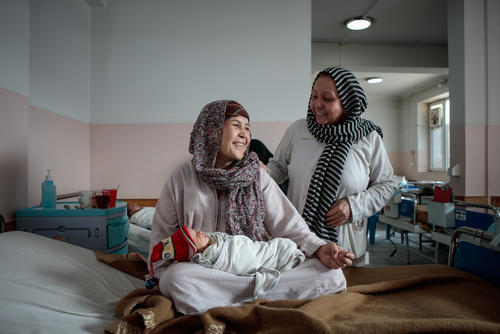
Zakia (32 years old), and her twins, Qassim and Abbas 
 
Zakia has just given birth to twins, Abbas and Qasim, born 20 minutes apart. Abbas, who came first, is also the smallest; he was hypoglycemic at birth and was placed in the incubator for a few hours.
 
Before her twins, Zakia, 32, had four other children: she is no longer a novice when it comes to newborns, but this time there are two of them. Her mother, Sakina, came to help her for a few days. When I ask her how many times she is a grandmother, Sakina needs to count... 18 times already. And not all her children are married yet. 
 
Zakia's first child was born at home, the next two in the hospital. For her fourth, finding a taxi to take her to the hospital took too long, she was already in labor and Zakia had to give birth at home. She is lucky, all her deliveries were the same: quick and easy. For her twins, once she arrived at the door of the maternity ward, she went straight to the delivery room.  
 
Six children, all boys. Zakia would have liked to have a girl, she hoped that this pregnancy would bring her one. Her mother would also have wanted her to have a daughter, to help her with her daily chores. Raising girls is more difficult according to both women: they have more to learn from the prospect of being married. More rules to follow too, more responsibilities. In Afghanistan, even though both parents are educating, mothers are more involved. 
 
Zakia and her family come from Ghazni. Ten years ago, they preferred to leave their region because they were afraid that the Taliban would recruit their husbands, both of whom have no permanent jobs. When the family arrived in Kabul, like many Hazara families arriving from the provinces, they lived in Dasht-e Barchi. A few years ago, the neighbourhood was accessible and very cheap. They had their own house for 2000 Afghanis per month (25 euros). Two years ago, their landlord wanted to take over the house and they moved here, to Karte Sakhi. They pay 2500 afghanis (30 euros) in rent but are three families sharing the house. Each family has its own room.
Afghanistan

“As midwives in Afghanistan, we are the silent leaders of our country.”

Nearly a month after the attack on MSF's maternity wing at Dasht-e-Barchi hospital in Kabul, which killed 15 mothers and an MSF midwife, MSF midwife supervisor Zahra Koochizad describes why midwives are so critical in Afghanistan. Voices from the Field - 10 Jun 2020
 
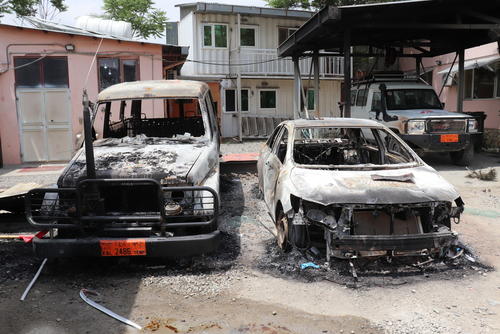
MSF Cars in parking lot.
Afghanistan

Fifteen mothers confirmed killed in Kabul maternity wing attack

Three weeks after an horrific, brutal attack on MSF's maternity wing at Dasht-e-Barchi hospital in Kabul, Afghanistan, we seek an inquiry as we confirm 15 mothers were killed. Project Update - 3 Jun 2020
 
Entrance to the main office in the compound.
Afghanistan

“They came to kill the mothers” in Kabul maternity hospital attack

Frederic Bonnot, MSF head of programmes in Afghanistan, was in the maternity wing of Dasht-e-Barchi hospital at the time of an horrific attack. He recounts the horrendous experience. Voices from the Field - 14 May 2020
 
Entrances to psychosocial unit and office.
Afghanistan

Revolting attack on maternity ward kills pregnant women and babies in Afghanistan

An horrific, cowardly attack on our maternity ward in Dasht-e-Barchi hospital in Kabul, Afghanistan, has left several patients and presumably one MSF staff member dead. Press Release - 13 May 2020
Four mothers posing in a corridor of the Hospital in Bili. All four of them are staying in the hospital with their child, that's suffering from a severe case of malaria. Since the beginning of the project in 2016, the pediatric ward already treated more than 4.000 cases of complicated/severe form of malaria.
Médecins Sans Frontières (MSF)

Independent medical humanitarian assistance

We provide medical assistance to people affected by conflict, epidemics, disasters, or exclusion from healthcare. Our teams are made up of tens of thousands of health professionals, logistic and administrative staff - most of them hired locally. Our actions are guided by medical ethics and the principles of independence and impartiality. We are a non-profit, self-governed, member-based organisation.

Learn more