


Ebola disease in DRC: find out how we're responding
Learn more
519 Results
 
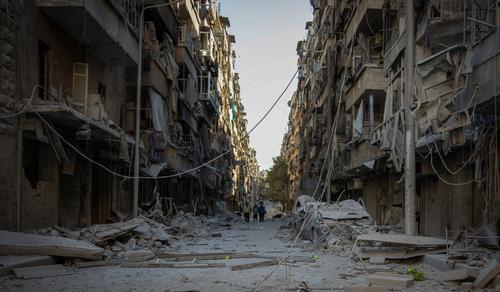
People walk down a street in Bustan Al Kasr neighbourhood after it was hit by airstrikes in mid-October 2016.
Syria

Warring groups must allow aid to population in need

MSF reiterates its call to warring groups to allow access to Syria so that victims of the war can receive medical assistance. Statement - 14 Mar 2017
 
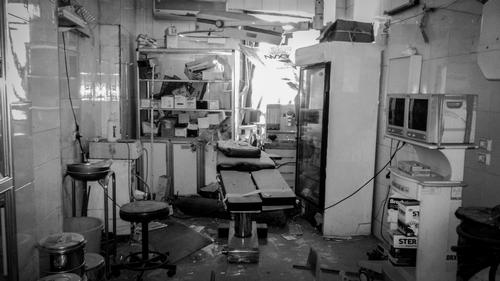
Heavy damaged sustained by al-Bayan hospital in July
Syria

Changes in medical practice in Syria

This report seeks to detail some of the ways in which the provision of medical care has been compromised or forced to adapt in light of security threats. Report - 13 Mar 2017
 
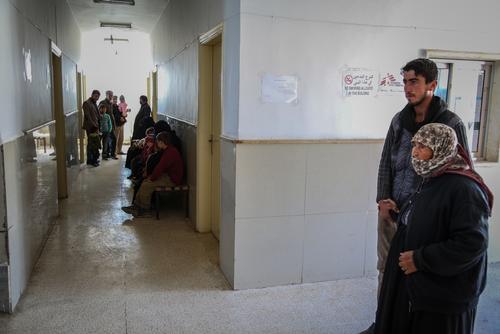
Clashes have intensified over the last months in Al Bab area of Aleppo governorate. Some of the areas that were previously under the control of Islamic State (IS) host today a range of people that goes from locals who were working in places like Aleppo city but came back to their homes because of the conflict or internally displaced people coming from different areas of Al Bab. MSF is providing primary healthcare in some locations. The average of patients arriving to one of the health centers is more than 100 a day. 

In the picture, patients walk through a corridor.
Syria

Bringing aid close to the frontline

An overview of the work of Médecins Sans Frontières (MSF) in Aleppo governorate, in the north of Syria, and the situation the population is faced with. Photo Story - 8 Mar 2017
 
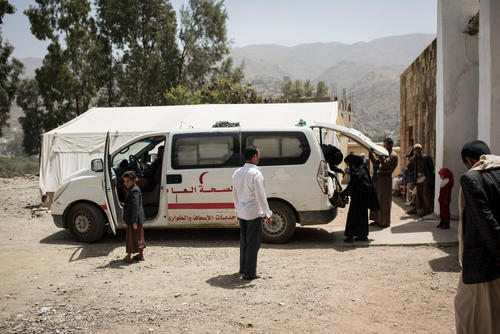
An ambulance awaits at the entrance of the Haydan hospital. A pregnant woman who had arrived with complication is being referred to the main hospital in Sa’ada city.
Yemen

MSF resumes medical work in Haydan hospital

“The situation is worsening by the day in Yemen and people’s need for medical care keeps rising,” says Ghassan Abou Chaar, MSF representative in Yemen. Press Release - 2 Mar 2017
 
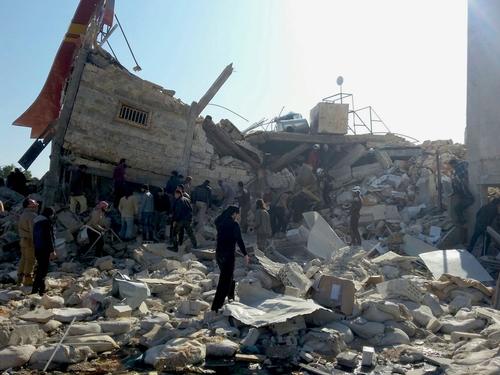
The MSF-supported hospital in Ma’arat Al Numan before it was attacked and destroyed on Monday 15th Feb. At least 25 people were killed, including nine staff members.
The 30-bed hospital  had 54 staff, two operating theatres, an outpatient department and an emergency room. The outpatient department treated around 1500 people a month, the ER carried out an average of 1,100 consultations a month, and around 140 operations a month, mainly orthopaedic and general surgery, were carried out in the operating theatres.

MSF has been supporting this hospital since September 2015 and covered all the needs of the facility including provision of medical supplies and running costs.
Attacks on medical care

Hospital bombings: Building evidence with images

Nearly 100 medical facilities belonging to, or supported by, Médecins Sans Frontières (MSF) have been bombed since 2015. Project Update - 15 Feb 2017
 
"We were living a decent life in our home. now, we live in this unfinished building where we do not have even toilets," says woman who lives in Al-Hoban district in Taiz. 

She fled with her family eight months ago. Her home now in the part of the city that has been under siege since August 2015. 

A siege has been imposed on the city by Houthis since late August 2015. MSF was not able to enter medical aid into the enclave area for five months. Only on January 16th, MSF got the authorization and delivered medical aid to Al-Thawra hospital inside the enclave area.
Yemen

Crisis update - January 2017

After 22 months of conflict, Yemen is a full-blown humanitarian emergency. Crisis Update - 31 Jan 2017
 
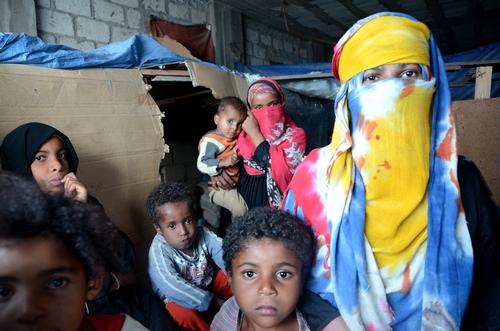
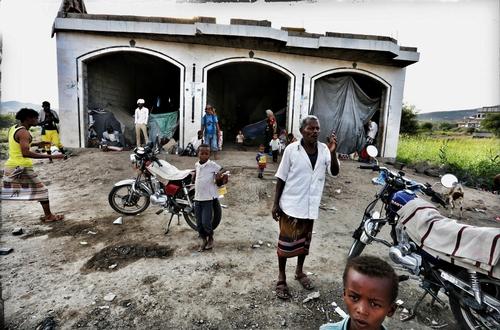
Six internally displaced families sharing an abandoned building in Al-Batra area in Huban district in Taiz.

The situation in Taiz remains extremely critical, with some of the heaviest fighting in the country.
Yemen

“Word had spread that I was a doctor, and people came to me for help all the time”

"There was very little I could do for them. I was able to buy some antibiotics, but I couldn't get hold of things like insulin or asthma medication". Voices from the Field - 30 Jan 2017
 
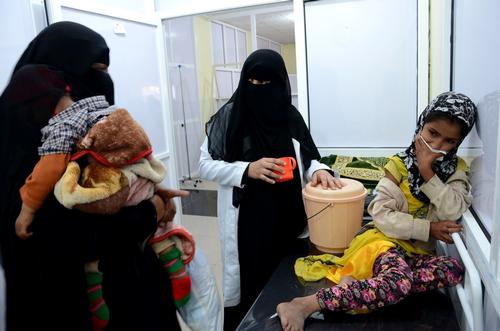
A child patient and her mother with MSF nurse in MSF mother and child hospital in Al-Hoban area. 
The mother said that she could not hospitalize her child when she had a fever and spasm. She had to wait until the next morning as there the fighting was ongoing and it was dangerous for them to go out. The family was internally displaced because of the intensive fighting in Taiz. 

MSF hospital was opened in Al-Houban, Taiz in November 2015. 

The hospital has a capacity of 100 bed for obstetrics and gynecology and pediatrics. the hospital receives at least 300 women and children every day since then.
Yemen

“That evening we had around 30 casualties, both wounded and dead.”

"People in Taiz have immense needs for food, medical care, water and sanitation and shelter," says Christopher McAleer, a former MSF logistician in Yemen. Voices from the Field - 30 Jan 2017
 
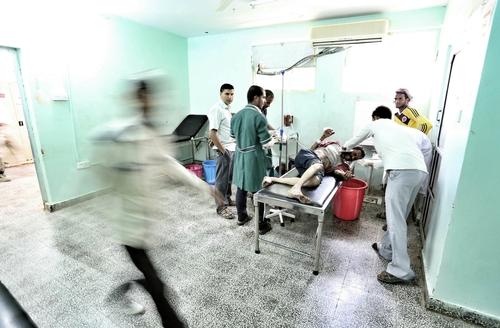
MSF medical team at AL-Nasr hospital in Al-Dhale governorate south of Yemen providing medical assistance to patient in the ER, the patient was injured due to road traffic accident.
Yemen

Healthcare under siege

Twenty months since fighting started in Taiz, the city’s health services have largely collapsed – the result of physical damage to hospitals and of shortages of staff and medical supplies. Photo Story - 30 Jan 2017
 
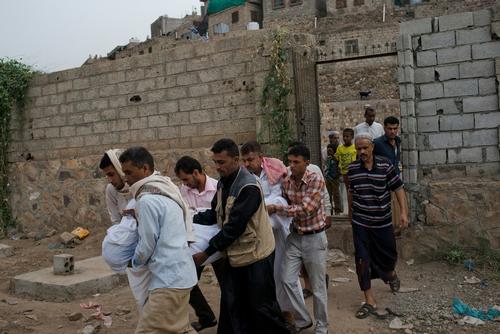
The family of Fakhira carries over her body to a local cemetery, after her house was hit by shelling on July 24, 2015 in Taiz, Yemen.
The Family gave their consent.
Yemen

Healthcare under siege in Taiz

In its new report, MSF reiterates its calls on all warring parties to ensure the protection of civilians and health workers and allow the wounded and sick access to healthcare. Report - 30 Jan 2017
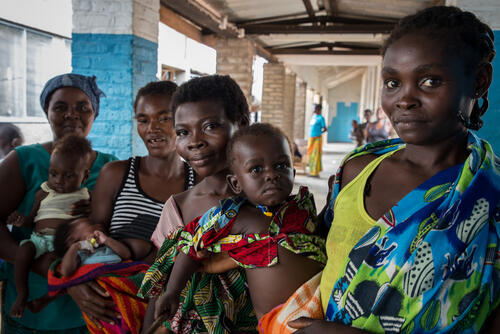
Four mothers posing in a corridor of the Hospital in Bili. All four of them are staying in the hospital with their child, that's suffering from a severe case of malaria. Since the beginning of the project in 2016, the pediatric ward already treated more than 4.000 cases of complicated/severe form of malaria.
Médecins Sans Frontières (MSF)

Independent medical humanitarian assistance

We provide medical assistance to people affected by conflict, epidemics, disasters, or exclusion from healthcare. Our teams are made up of tens of thousands of health professionals, logistic and administrative staff - most of them hired locally. Our actions are guided by medical ethics and the principles of independence and impartiality. We are a non-profit, self-governed, member-based organisation.

Learn more