Clashes have intensified over the last months in Al Bab area of Aleppo governorate. Some of the areas that were previously under the control of Islamic State (IS) host today a range of people that goes from locals who were working in places like Aleppo city but came back to their homes because of the conflict or internally displaced people coming from different areas of Al Bab. MSF is providing primary healthcare in some locations. The average of patients arriving to one of the health centers is more than 100 a day. 

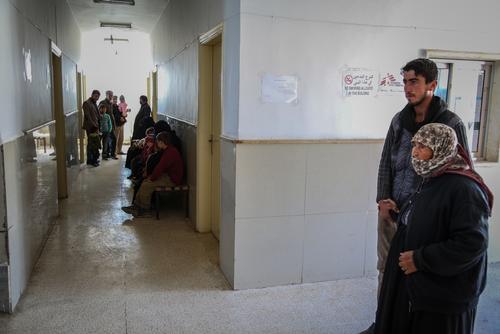
In the picture, patients walk through a corridor.
MSF is providing basic healthcare in the Al Bab area of Aleppo governorate. Some areas that were previously under the control of Islamic State now host internally displaced people, as well as locals who have returned from places like Aleppo city because of the conflict. More than 100 patients arrive at the health centres daily.
© MSF

Bringing aid close to the frontline

MSF is providing basic healthcare in the Al Bab area of Aleppo governorate. Some areas that were previously under the control of Islamic State now host internally displaced people, as well as locals who have returned from places like Aleppo city because of the conflict. More than 100 patients arrive at the health centres daily.
© MSF
Ebola disease in DRC: find out how we're responding
Learn more

An overview of the work of Médecins Sans Frontières (MSF) in Aleppo governorate, in the north of Syria, and the situation the population is faced with.

Aleppo governorate has open frontlines on its territory and is one of the areas most heavily affected by six years of war in the country. The area hosts dozens of camps for internally displaced people where some Iraqi nationals have also taken refuge.

Medical staff at Al Salamah, an MSF-run hospital near the Turkish border, have carried out thousands of consultations and surgical interventions and assisted hundreds of births. In the Al Bab area of Aleppo governorate, basic healthcare is provided to a population living in difficult conditions and without electricity. An immunisation programme is also underway, as the war has left many children unvaccinated against preventable diseases.
The Aleppo governorate, in north Syria, has been one of the areas most heavily affected by the last six years of war in the country, with different open frontlines in its territory. In the area there are dozens of camps for internally displaced people (IDPs) and also some Iraqi nationals have taken refuge here. Doctors Without Borders/ Médecins Sans Frontières (MSF) opened Al Salamah, a 34-bed hospital, situated close to the Turkish border in Azaz district in 2012. 

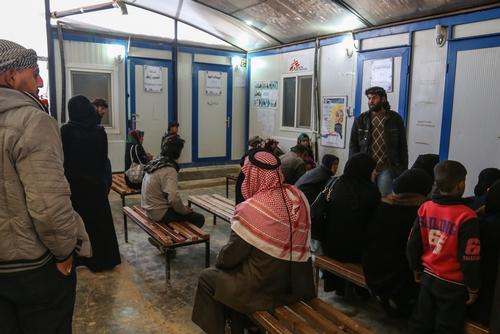
In the picture patients are waiting for their turns in the waiting room of the hospital.
Patients in the waiting room of Al Salamah, a 34-bed hospital that MSF opened in 2012 close to the Turkish border in the Azaz district.
MSF
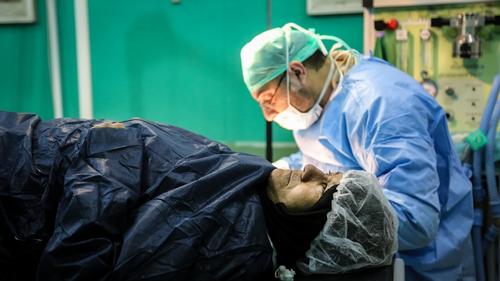
The Al Salamah hospital has become a reference in the area. In 2016, it had 46,337 outpatient consultations, 2,489 inpatient consultations, 26,091 emergency room treatments, 1,933 surgical procedures and there were 578 deliveries. It refers also patients to Turkey.

In the picture, a doctor who is operating an old lady places a sonda in her.
In 2016, staff at Al Salamah hospital conducted 46,337 outpatient consultations, 2,489 inpatient consultations, 26,091 emergency room treatments, 1,933 surgical procedures and assisted 578 births. The hospital also refers patients to Turkey.
MSF
The war in Syria has been terrible because of the violence, but also because of serious side effects that go unnoticed. Since the conflict escalated in 2012, the vast majority of children born in many parts of Syria are unvaccinated. Mass displacements of people mean medical authorities and non-governmental organizations (NGOs) have been unable to focus their efforts on these activities or have no resources for it. Syrian children are not prepared for a range of preventable diseases such as measles, rubella, tetanus or pneumonia.

In the picture, an MSF nurse in Al Salamah hospital vaccinates one child in the framework of an expanded immunization program (EPI).
Since the Syrian conflict escalated in 2012, the vast majority of children born in many parts of Syria have not been vaccinated against preventable diseases such as measles, rubella, tetanus or pneumonia. Here, an MSF nurse in Al Salamah hospital vaccinates a child as part of an expanded immunisation programme (EPI).
MSF
Clashes have intensified over the last months in Al Bab area of Aleppo governorate. Some of the areas that were previously under the control of Islamic State (IS) host today a range of people that goes from locals who were working in places like Aleppo city but came back to their homes because of the conflict or internally displaced people coming from different areas of Al Bab. MSF is providing primary healthcare in some locations. The average of patients arriving to one of the health centers is more than 100 a day. 

In the picture, patients walk through a corridor.
MSF is providing basic healthcare in the Al Bab area of Aleppo governorate. Some areas that were previously under the control of Islamic State now host internally displaced people, as well as locals who have returned from places like Aleppo city because of the conflict. More than 100 patients arrive at the health centres daily.
MSF
The population in Al Bab district faces huge economic constraints. In vast areas there is no electricity, conditions are basic and the local residents have little choices for accessing to healthcare.

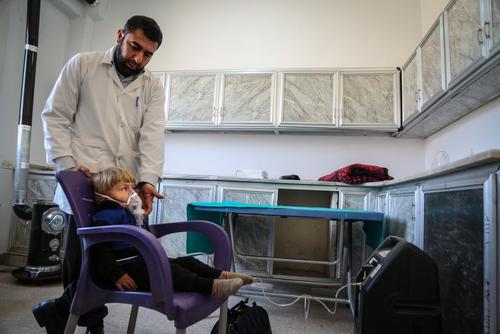
A nurse in an MSF health center in Al Bab district puts a respiratory mask on a child. Patients coming to the facility have all kinds of diseases.
A nurse in an MSF health centre in Al Bab district puts an oxygen mask on a child. Vast areas of the district are without electricity, living conditions are basic and healthcare is limited.
MSF
Six years of war in Syria has changed the life for millions. Services such as family planning, mental health or chronic care have fallen through the cracks, as medical staff have to prioritize other life-saving activities.
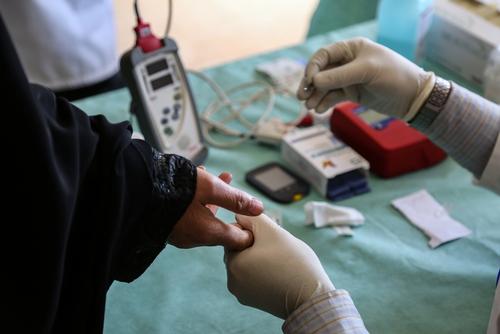
In the picture, a nurse pricks the finger of an old lady for a diabetic analysis in an MSF run health center in Al Bab district of Aleppo governorate.
A nurse pricks the finger of an elderly woman for a diabetic analysis at an MSF-run health centre in the Al Bab district of Aleppo governorate. Services such as care for chronic diseases, family planning and mental health have fallen by the wayside during the six years of war in Syria because medical staff have to prioritise emergencies.
MSF
The war is affecting also the medical practice in the sense that many medical personnel have left Syria and those ones who remain, have to conduct their activities with less available tools.
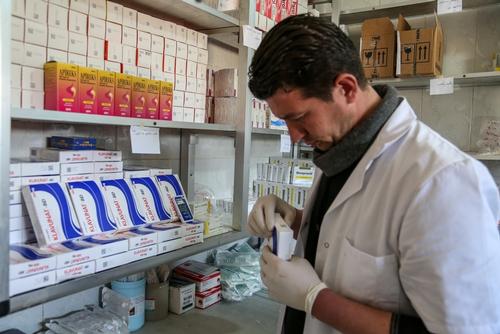
In the picture, a pharmacist checks the expiration date of one medicine before giving it to one patient.
Many medical staff have left Syria because of the war. Those who remain conduct their activities with limited supplies. Here, a pharmacist checks the expiration date of a medicine before giving it to a patient.
MSF
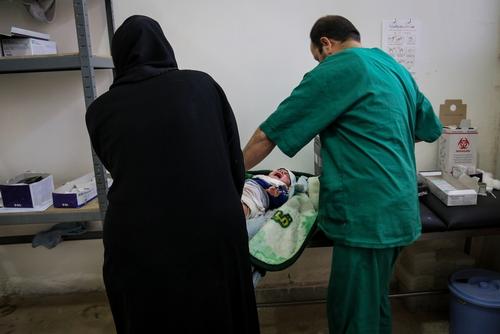
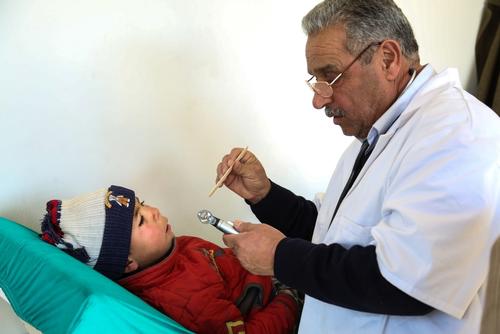
An MSF doctor is checking the medical condition of a kid in a health center in Aleppo governorate.
An MSF doctor checks the medical condition of a child in a health centre in Aleppo governorate.
MSF
Hundreds of thousands of people have already lost their lives after six years of war in Syria and in the country there continues to be many different frontlines.

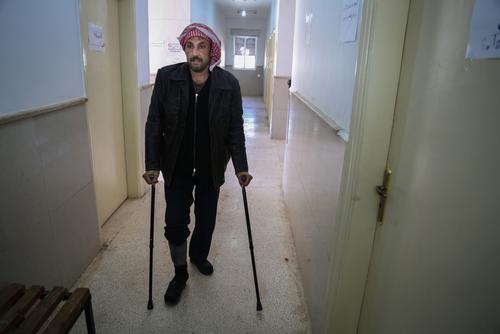
In the picture, a man who suffered a mine explosion walks through the corridor of an MSF health center in Al Bab district of Aleppo governorate.
Hundreds of thousands of lives have been lost during the six years of war in Syria. This man, who was injured in a mine explosion, walks through the corridor of an MSF health centre in the Al Bab district of Aleppo governorate.
MSF
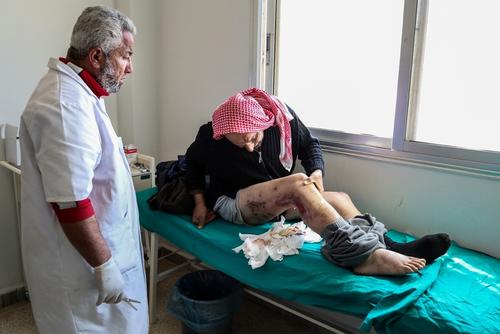
In the picture, a man who suffered a mine explosion is being treated for his wounds by an MSF doctor.
A man injured in a mine explosion is treated by an MSF doctor.
MSF