



Ebola disease in DRC: find out how we're responding
Learn more
1390 Results
 
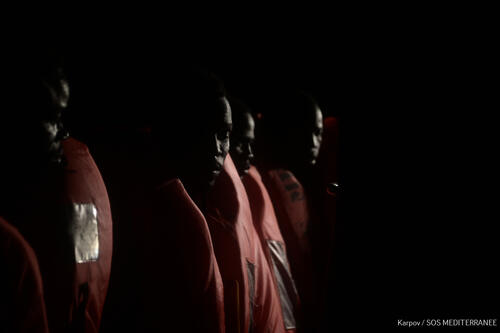
After an extremely busy night on the Central Mediterranean, starting late on June 9 and into the early hours of June 10, the Aquarius has 630 people on board from six different operations. The rescue of two rubber boats turned critical when one boat broke apart in the darkness, leaving over 40 people in the water. After rescuing 230 people from these boats, the Aquarius then took 400 more people on board at the request of the Italian Maritime Rescue Coordination Centre (IMRCC), who had been rescued by Italian navy and coastguard ships on 9 June. 

Over the next days, the Aquarius was embroiled in a political stand-off at sea over the fate of the people rescued in the Mediterranean. Although the rescue and transfers of the 630 people were initiated and coordinated by IMRCC, the Italian authorities denied Aquarius authorisation to bring them ashore in the closest port of safety in Italy. Malta, which had the nearest safe port, also refused to allow the Aquarius to disembark, citing Italy’s coordination role and responsibility.  Eventually, on 11 June, the Spanish government intervened and offered to let the Aquarius disembark in Valencia, 1,300 kilometres away. Despite MSF’s concerns about the humanitarian and medical impact of the sea journey to Valencia, the Italian authorities instructed Aquarius on 12 June to transfer 524 people back to Italian ships and embark with the remaining 106 rescued on a four-day journey to Spain. On June 17, one week after they had been rescued, all 630 people were disembarked in Valencia, Spain.
Mediterranean migration

European policies continue to claim lives on the Mediterranean Sea

A year on from Italy's decision to close its ports to search and rescue in the Mediterranean, people still attempt the crossing, with thousands dying, stranded at sea or illegally returned to Libya, exposing heartless European migration policies. Press Release - 12 Jun 2019
 
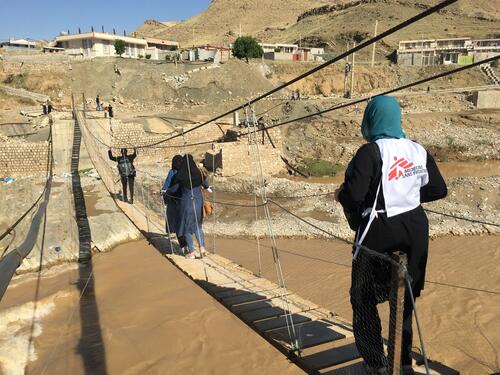
MSF Medical Team crossing Kyan Abad rope bridge to deploy a mobile clinic in Paran Parvis village on the ride side of Kashkan River.
Iran

Providing health care to vulnerable people in Lorestan after floods in Iran

Two months since violent flash floods stormed areas along the Kashkan River, in Lorestan province, west Iran, life is starting to return to normal. In Pol-e Dokhtar town, most of the sludge and rubble have been cleaned out while reconstruction of a few houses and shops are beginning in this devastated area. Project Update - 6 Jun 2019
 
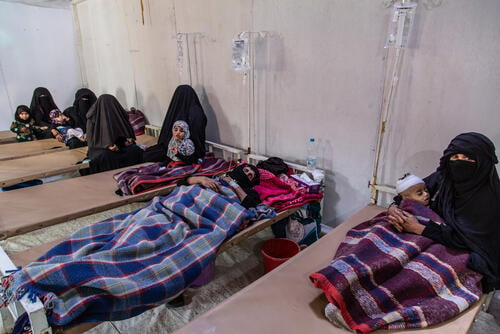
Yemen, Amran governorate, Khamer Cholera treatment Centre, 25 April 2019 - Women ward, Khamer CTC. Between 1 January and 26 March 2019, MSF has admitted 7,938 suspected cholera cases to its health facilities in Amran, Hajjah, Ibb and Taiz governorates, 50% of them coming from Ibb governorate. Over this period, the number of cholera patients treated by MSF increased from 140 to 2,000 per week. Results of rapid diagnostic tests done in MSF projects show that, in the same period, the percentage of cholera-positive cases increased from 58% to 70%.
MSF has scaled up its response: teams have opened a 42-bed cholera treatment centre in Khamer. Since March, there are around 30 patients every day in Khamer CTC, they are staying between 2 and 3 days. MSF teams have also increased the bed capacity of the cholera treatment unit in Taiz; have bolstered centres in Ibb and Kilo; and opened a cholera treatment centre in Al Kuwait hospital in Sana’a. During the last two weeks of April, our teams have observed a decrease of suspected cases in most of our projects. 
Cholera is endemic in Yemen: between 2016 and 2017, two waves of cholera hit the country. Although the disease was subsequently brought under control, health authorities and medical organisations have continued to see cholera cases in almost all governorates of the country since then.
Yemen

Endemic in Yemen, cholera still hits Yemenis hard

VIDEO REPORT: Although cholera is endemic in Yemen, a collapsed health system has resulted in waves of the disease over the last three years. Earlier this year, MSF teams saw yet another spike in cases, witnessing the impact on ordinary people struggling to cope. Project Update - 5 Jun 2019
 
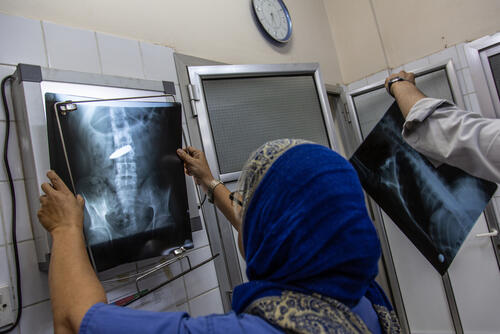
Yemen, Hodeidah, Al Salakhana hospital, 28 April 2019 - Maria Teresa Ingalla, ortho surgeon is watching the Xray of a patient injured by a gunshot in the abdomen. Mohammed, 18, was sitting in a street in Hodeidah, around 4.00pm when he was injured by a stray bullet: the bullet entered through his hip to his abdomen, next to one of his arteries. Luckily the bullet did not touch the spinal cord. It was removed after a laparotomy.
Yemen

A day treating wounded in Yemen's Al Salakhana hospital

VIDEO report: MSF teams started working in Al Salakhanah hospital, in the northeast of the port city of Hodeidah, Yemen, in September 2018 to provide care to the injured, including war-wounded civilians. Project Update - 30 May 2019
 
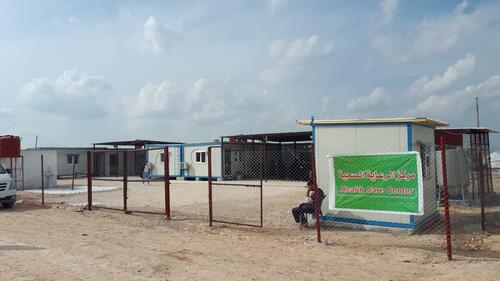
In March 12, the MSF healthcare center was fully functional and already receiving patients. Al Hol camp, Al Hassakeh Governorate
Syria

Women and children continue to suffer in northeast Syria’s Al Hol camp

Vulnerable people, mostly women and children, are living in overcrowded and substandard conditions in Al Hol camp, northeastern Syria, where a humanitarian crisis has unfolded and the needs of people in the camp remain unmet. Press Release - 16 May 2019
 
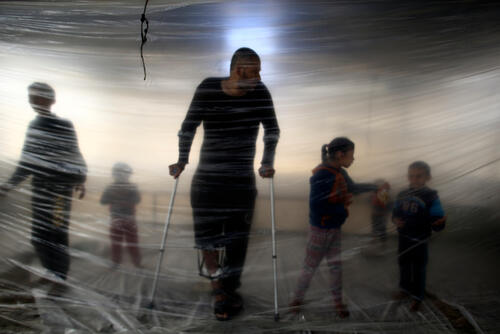
Ahmed, 38, a Palestinian shot and wounded by the Israeli army on 14 May 2018.
Palestine

Gaza, one year after the protests’ bloodiest day

On 14 May 2018, the Israeli army shot more than 1,300 Palestinians. A year later, many of those injured are still struggling with the devastating consequences of their wounds. Project Update - 14 May 2019
 
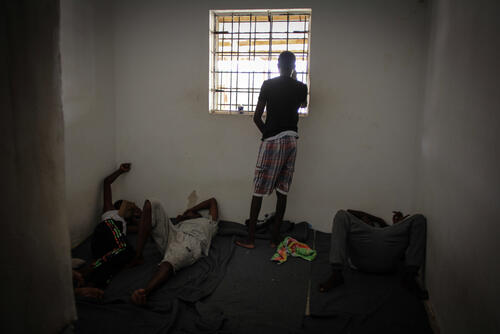
Men in the detention centre cells.

On September 2nd, 276 people were brought by the Libyan coast guard to Khoms (120 km east of Tripoli). They were then transferred to detention center where MSF works. Reportedly, they were in two rubber coats, one stopped due to engine failure, while the other boat continued to navigate for several hours before deflating and sinking. Survivors told MSF teams that over a hundred people died in the shipwreck.
Libya

More than medicine: A look at mental health needs in detention

As fighting endangers the lives of civilians and detainees in Tripoli, the physical and mental health of trapped refugees and migrants is worsening. Voices from the Field - 9 May 2019
 
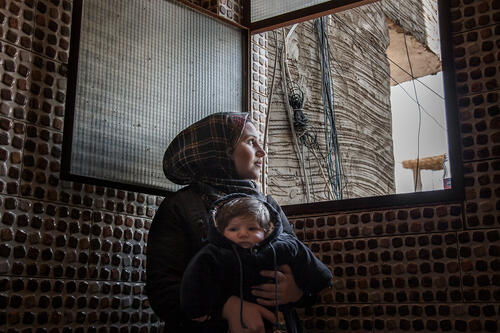
Bayan, 18 year old, is a mother of two children: Watan and Assil. After giving birth to Assil, who is now 2.5 months old, she decided to use family planning methods. She came to MSF’s clinic in Bourj El Barajneh camp for a family planning consultation. Bayan’s two pregnancies were followed up at MSF’s clinic. After her last delivery, she received all the information about family planning from a midwife, during the post-natal care visit. She says: "My second pregnancy was not planned; I gave birth to two children in 2 years, now I want to prevent any new pregnancy. I come here regularly for consultations, and “Em Shadi” is my favourite midwife.”
Lebanon

Empowered midwives, satisfied mothers – midwife-led care in Lebanon

For International Day of the Midwife, MSF Dr Laura Rinchey explains the benefits of midwife-led care for expectant and new mothers, and the efforts MSF is undertaking to improve midwife-led care in Lebanon. Voices from the Field - 3 May 2019
 
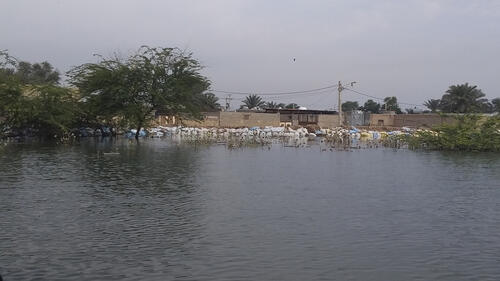
Flood in Khuzestan Province.
Iran

Flash floods in Iran wash away homes, roads and livelihoods

Flash flooding across Iran has washed away homes, roads and bridges, and the harvest, resulting in difficult access to many towns and leaving thousands of people homeless and displaced, and struggling with finding the basics to survive. Voices from the Field - 29 Apr 2019
 
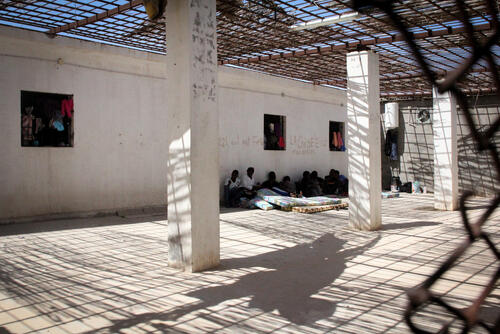
General view of detention centre

On September 2nd, 276 people were brought by the Libyan coast guard to Khoms (120 km east of Tripoli). They were then transferred to detention center where MSF works. Reportedly, they were in two rubber coats, one stopped due to engine failure, while the other boat continued to navigate for several hours before deflating and sinking. Survivors told MSF teams that over a hundred people died in the shipwreck.
Libya

Time running out for evacuations of trapped refugees in Tripoli amid shooting

On 23 April, reports surfaced of a violent incident in a Tripoli detention centre, where trapped migrants are being held. MSF has found evidence that multiple people were shot, and urges for all migrants' immediate evacuation. Press Release - 26 Apr 2019
Four mothers posing in a corridor of the Hospital in Bili. All four of them are staying in the hospital with their child, that's suffering from a severe case of malaria. Since the beginning of the project in 2016, the pediatric ward already treated more than 4.000 cases of complicated/severe form of malaria.
Médecins Sans Frontières (MSF)

Independent medical humanitarian assistance

We provide medical assistance to people affected by conflict, epidemics, disasters, or exclusion from healthcare. Our teams are made up of tens of thousands of health professionals, logistic and administrative staff - most of them hired locally. Our actions are guided by medical ethics and the principles of independence and impartiality. We are a non-profit, self-governed, member-based organisation.

Learn more