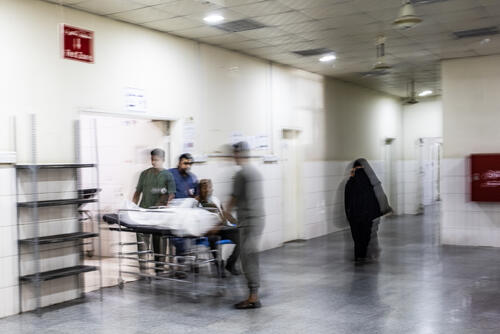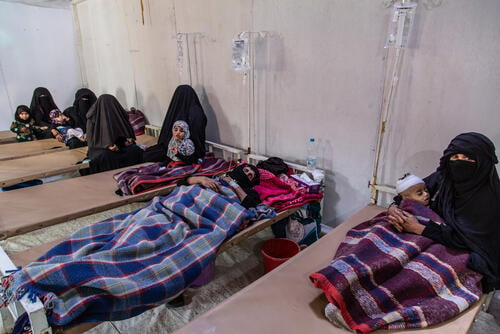
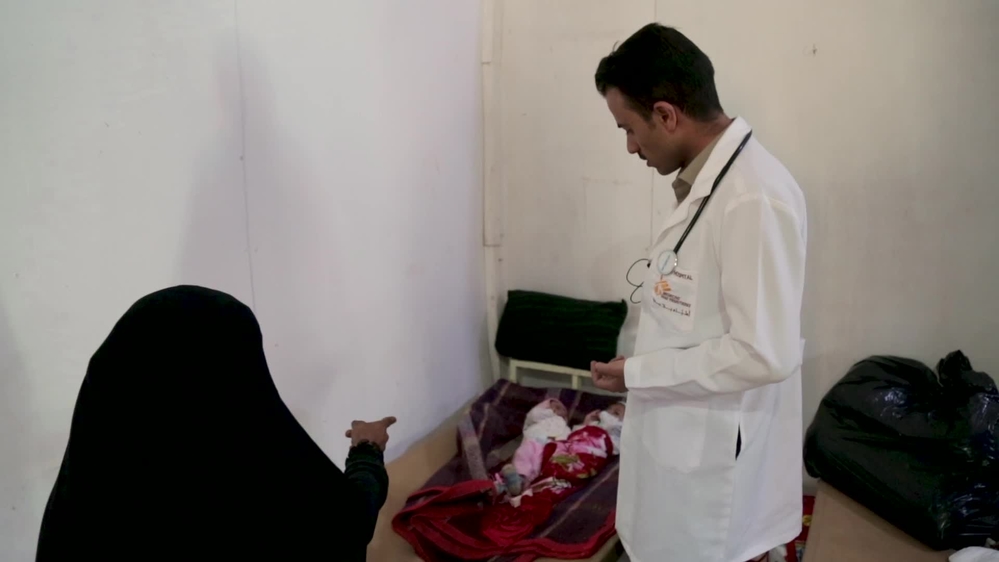
Yemen, Amran governorate, Khamer Cholera treatment Centre, 25 April 2019 - Women ward, Khamer CTC. Between 1 January and 26 March 2019, MSF has admitted 7,938 suspected cholera cases to its health facilities in Amran, Hajjah, Ibb and Taiz governorates, 50% of them coming from Ibb governorate. Over this period, the number of cholera patients treated by MSF increased from 140 to 2,000 per week. Results of rapid diagnostic tests done in MSF projects show that, in the same period, the percentage of cholera-positive cases increased from 58% to 70%.
MSF has scaled up its response: teams have opened a 42-bed cholera treatment centre in Khamer. Since March, there are around 30 patients every day in Khamer CTC, they are staying between 2 and 3 days. MSF teams have also increased the bed capacity of the cholera treatment unit in Taiz; have bolstered centres in Ibb and Kilo; and opened a cholera treatment centre in Al Kuwait hospital in Sana’a. During the last two weeks of April, our teams have observed a decrease of suspected cases in most of our projects. 
Cholera is endemic in Yemen: between 2016 and 2017, two waves of cholera hit the country. Although the disease was subsequently brought under control, health authorities and medical organisations have continued to see cholera cases in almost all governorates of the country since then.
Women and children with cholera recover from the disease in the cholera treatment centre in Khamer. Amran governorate, Yemen, 25 April 2019.
© Agnes Varraine-Leca/MSF

Endemic in Yemen, cholera still hits Yemenis hard

Women and children with cholera recover from the disease in the cholera treatment centre in Khamer. Amran governorate, Yemen, 25 April 2019.
© Agnes Varraine-Leca/MSF
Ebola disease in DRC: find out how we're responding
Learn more

Cholera is endemic in Yemen, but a collapsed health system – the result of more than four years of war – has meant the country has seen waves of cholera outbreaks since 2016.

Since the last cholera outbreak was brought under control towards the end of 2017, Médecins Sans Frontières (MSF) teams and other medical organisations and health authorities in the country have continued to see cases of the disease.  

Between January and March 2019, suspected cholera cases sharply increased in Yemen, even before the start of the rainy season, raising fears of a large-scale outbreak. Between January and March, the number of cholera patients treated by MSF increased from 140 to 2,000 per week. Following this exponential increase, we scaled up our response in March: teams opened a 50-bed cholera treatment centre in Khamer; increased the bed capacity of the cholera treatment unit in Taiz; bolstered centres in Ibb and Kilo; and opened a cholera treatment centre in Al Kuwait hospital in Sana’a.

From 1 January to 1 May 2019 in Amran, Hajjah, Sanaa, Ibb and Taiz governorates, Yemen:

Although the number of cases per month in our centres has now decreased, this video report highlights the ordinary Yemenis affected by cholera in a country ravaged by war – and the results of what happens when people cannot access the healthcare they so desperately need.
Video

Cholera in Yemen