



Ebola disease in DRC: find out how we're responding
Learn more
1758 Results
 
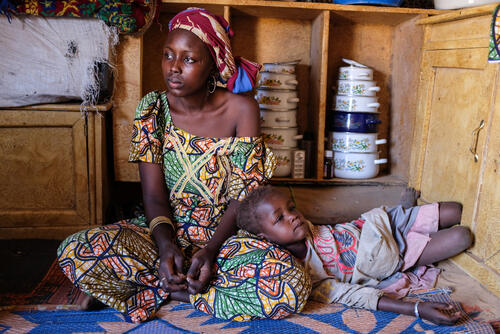
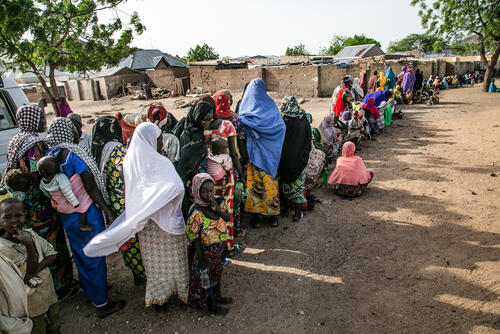
Athadjara, 20 years old, is a Nigerian refugee. She fled her village almost 4 years ago and settled in an informal camp site nearby from Diffa town. Since then she struggles to live on in precarious conditions with her two children.
Lake Chad Crisis

Fighting psychological fears in conflict-affected communities

Mental healthcare is an increasingly important part of MSF’s work with refugees, internally displaced people and host communities in the Lake Chad region. Project Update - 3 Aug 2018
 
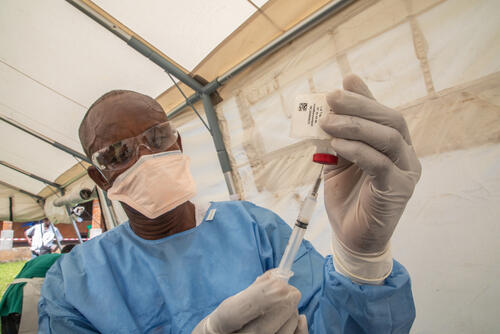
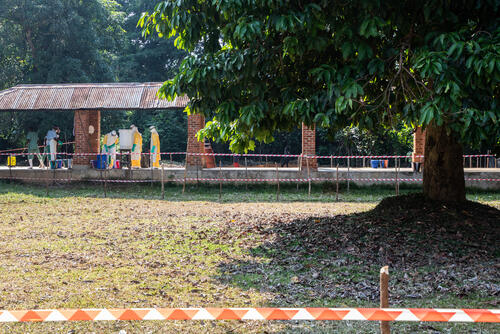
Nurse preparing the Ebola vaccine in the site of Bikoro.
DRC Ebola outbreaks

Ministry of Health declares Ebola epidemic over

MSF welcomes the end of the Ebola epidemic declared in DRC on 8 May 2018. Project Update - 25 Jul 2018
 
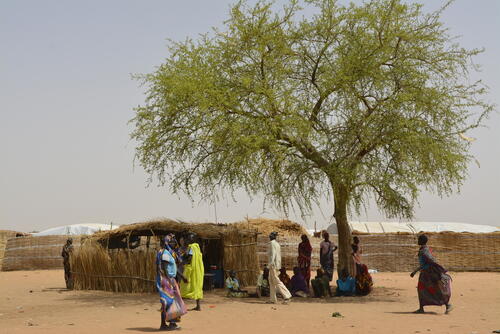
Kario camp, is the biggest refugee settlement in East Darfur, it was created in 2016, and hosting 20,000 South Sudanese refugees as per UNHCR figures. 
Most of the residents of the camp are Dinkas, they fled South Sudan because of food shortage and lack of job opportunities. When arrived to Sudan, the refugees continued to seek job opportunities, what makes the camp’s community in constant mobility. 
MSF intervened in this camp for the first time in June 2017, at the time when an acute watery diarrhoea (AWD) outbreak was declared in the camp with extremely high mortality rates.
In July 2017, MSF opened a Health Centre in Kario camp to provide free primary health care package and basic secondary health care services to the South Sudanese refugees and hosting community in Kario, East Darfur.
Sudan

Hardships follow South Sudan’s refugees into Sudan’s East Darfur

There are more than 750,000 South Sudanese refugees currently in Sudan and around 100,000 of them are in East Darfur. Since July 2017, MSF has been providing free primary and secondary healthcare services, including maternity, nutrition and vaccination programmes for almost 40,000 people living in the area - both refugees and the host community. Project Update - 23 Jul 2018
 
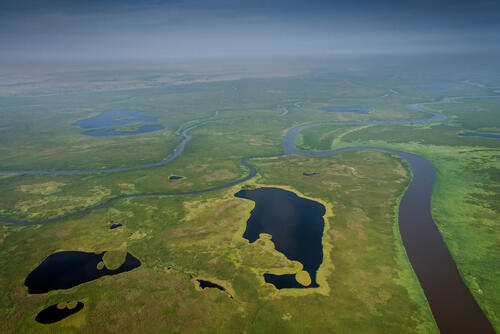
The Sudd is a vast swamp extending from Bor to Malakal.

Le Sudd est un vaste marécage s'étendant de la ville de Bor à celle de Malakal.
South Sudan

A hospital in the swamp

Despite the many challenges that patients and medical workers face in the remote area of Old Fangak, South Sudan, MSF's 'hospital in the swamp' remains the best hope for many people with serious conditions. Photo Story - 20 Jul 2018
 
Displaced people wait for a distribution of non-food items (NFIs) in Pulka town.
Nigeria

“The situation in northeast Nigeria is deteriorating after years of conflict”

The humanitarian situation in northeast Nigeria, where about 1.7 million people have been displaced, is deteriorating. Interview - 18 Jul 2018
 
A health promotion MSF worker at the referral hospital in Ansongo, where MSF has been running projects since 2012.
Mali

“Insecurity has pushed people to their limits”

Jamal Mrrouch has just returned from Mali, where he spent more than one year coordinating MSF’s work in the northern regions of Gao and Kidal, and in the central region of Mopti. Interview - 13 Jul 2018
 
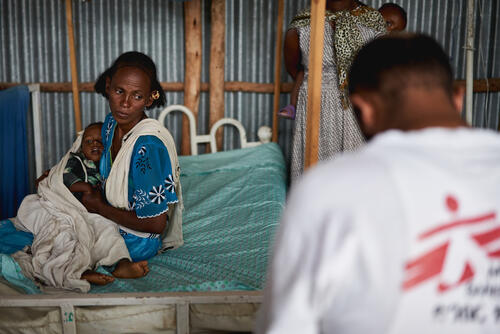
A mother holds her baby –affected by malaria - while an MSF medical team member attends to them. Between May and September, malaria is one of the main morbidities for refugees and the host community in the Tigray Region of Ethiopia.
Ethiopia

Fighting stigma and providing mental health to Eritrean refugees

Every month, around 5,000 Eritreans flee their country. Half of them arrive in refugee camps in the Tigray and Afar regions of Ethiopia. Since 2015, MSF has provided health services in the area, with a focus on mental health and psychiatric care, to the population of Hitsats and Shimelba refugee camps, as well as to the host community. Voices from the Field - 10 Jul 2018
 
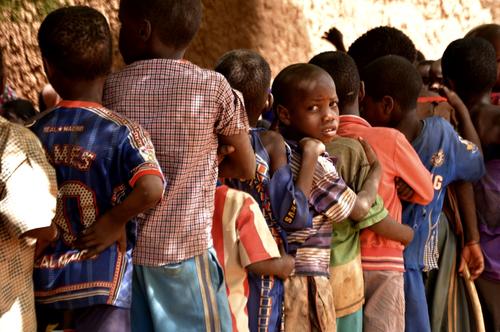
Young boys wait to be vaccinated against meningitis, at a site set up in their village by MSF and the MoH. More than 33,620 people aged between two and 29 years were vaccinated during this campaign.
Niger

“We should take every opportunity to vaccinate against deadly diseases”

Interview with Miriam Alía, MSF vaccination and outbreak response advisor, on the outbreaks of meningitis C and measles that have affected Niger in 2018. Interview - 5 Jul 2018
 
Improvised kitchen in Bambari general hospital. In Bambari, MSF supports the paediatric and maternity wards and supports the surgery national team. In February, the UN stabilisation mission, MINUSCA, declared Bambari a “city without armed groups”, strengthening the perception of it as a safe area for those fleeing violence elsewhere in the country. Currently, 50 percent of Bambari’s residents (113.800 people in total) have been displaced from their homes in other parts of Central African Republic. Of the 55,869 displaced people, 10,300 have arrived in Bambari since mid-March. Most are living in nine camps which ring the city but several moved in the hospital compound, where they feel safer.
Central African Republic

Ongoing fears of outbursts of violence in Bambari hamper access to healthcare

Interview with former head of mission Paul Brockman about recent outbursts of violence in Bambari, CAR, and their impact on the local population. Voices from the Field - 26 Jun 2018
 
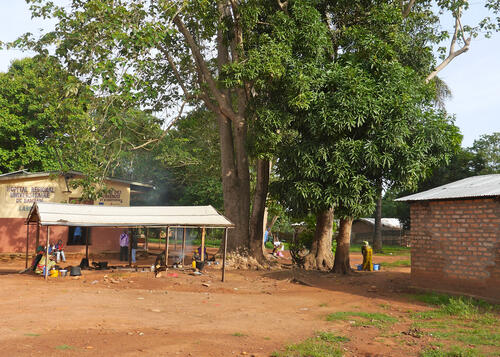
View of the hospital of Bikoro, where MSF has set up an Ebola treatment center (ETC)
DRC Ebola outbreaks

Ebola update June 2018

Since the Ebola epidemic in Democratic Republic of Congo (DRC) was declared on 8 May 2018, over 60 people who presented symptoms of haemorrhagic fever, including 38 confirmed Ebola cases and 28 deaths (of whom 14 were confirmed as Ebola)*, have been notified by the national health authorities in the Equateur region, in the west of the country, where the outbreak started. 24 patients (confirmed Ebola cases) have recovered from the disease and been discharged from treatment centres. Crisis Update - 19 Jun 2018
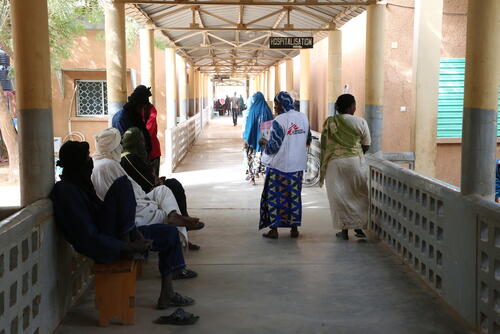
Four mothers posing in a corridor of the Hospital in Bili. All four of them are staying in the hospital with their child, that's suffering from a severe case of malaria. Since the beginning of the project in 2016, the pediatric ward already treated more than 4.000 cases of complicated/severe form of malaria.
Médecins Sans Frontières (MSF)

Independent medical humanitarian assistance

We provide medical assistance to people affected by conflict, epidemics, disasters, or exclusion from healthcare. Our teams are made up of tens of thousands of health professionals, logistic and administrative staff - most of them hired locally. Our actions are guided by medical ethics and the principles of independence and impartiality. We are a non-profit, self-governed, member-based organisation.

Learn more