



Ebola disease in DRC: find out how we're responding
Learn more
115 Results
 
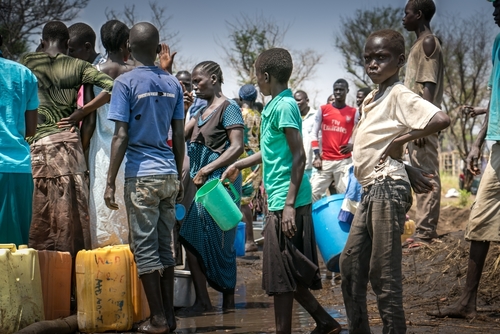
A water truck is stuck in the mud in Palorinya refugee camp, Uganda.

People take the opportunity to get much needed water when a water truck gets stuck in the mud after heavy rain. The impending rainy season will only make the situation worse as vehicles struggle to get around the camp.
Uganda

Over 900,000 South Sudanese refugees are in need of humanitarian aid

Over 630,000 refugees have since arrived in Uganda and thousands continue to arrive every week, bringing the total number of South Sudanese refugees and asylum-seekers to over 900,000. Project Update - 18 May 2017
 
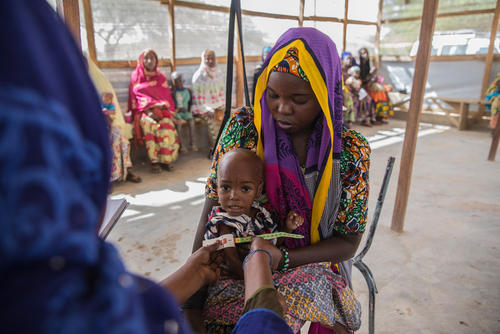
Diffa region. Chetimari IHC, supported by MSF. Screening for cases of malnutrition by the medical staff at the IHC.
Niger

Diffa - the burden of violence

"I had to leave one place after the other due to repeated attacks." Project Update - 10 May 2017
 
For years, the Diffa region in southeastern Niger, which borders Nigeria and Chad, has suffered the consequences of the armed conflict between Boko Haram and the armies of the area. Around 240,000 people have had their lives interrupted by the conflict, and have been forced to live in the camps for internally displaced and refugees that have proliferated throughout the region.
Niger

Hepatitis E outbreak linked to water shortages and poor sanitation

“Water and sanitation activities in Diffa are clearly insufficient to meet people’s needs." Press Release - 26 Apr 2017
 
In parallel with the study into a new rotavirus vaccine, over 1,000 pregnant women are being monitored as part of a substudy that aims to evaluate the impact of the nutritional condition of pregnant women on the health of their babies. These mothers receive nutritional supplements. 
During their pregnancy, they attend four scheduled appointments with the medical team for monitoring purposes and so that vaginal swabs, blood specimens (malaria/thick smear/syphilis/HIV AIDS), and urine and stool specimens can be taken.
These mothers also give permission for their newborn to be included in the study and monitored for two years by the Epicentre medical teams. At each of the scheduled appointments the mothers receive a transport allowance, plus three bars of soap and a food parcel containing bread, a drink and a tin of sardines.
Niger

Innovative vaccine against rotavirus

This slideshow explains the challenges posed by rotavirus and the existing constraints of the existing vaccines. It shows the story of the Epicentre Study in Maradi district, Niger. Photo Story - 21 Mar 2017
 
Tanzania

Testimonies from refugees in Nduta and Nyarugusu camps

Over 290,000 people live in refugee camps in Tanzania's northwestern Kigoma district. Voices from the Field - 20 Feb 2017
 
msf-placeholder
Nigeria

MSF supports awareness of sexual violence in Port Harcourt

In early 2015, MSF opened the first comprehensive programme dedicated to survivors of sexual violence in Port Harcourt, Nigeria. Voices from the Field - 5 Feb 2017
 
MSF staff vaccinate children at the MSF-supported health centre in Boguila.
Central African Republic

Testimonies from MSF patients and staff

"I don’t usually travel on the roads due to the security situation. There are often armed men on the roads demanding things from the people who try to pass by. Even if you are on a bike or a motorcycle, they harass you for money. Even if you are trying to transport a sick person," says Zita. Voices from the Field - 16 Nov 2016
 
Twice a day MSF organizes a health promotion in the VVF (Vesico-Vaginal Fistula)
camp of Shamwana. The "village" as it is called is a temporary institution in
Tanganyika province, in southern Democratic Republic of Congo (DRC), where women are
being operated in order to repair their fistulas. Through singing and dancing health
messages are passed on to the forty women and their caretakers, who are also
involved as well and support the health promotion acoustically.
Democratic Republic of Congo

Vesico vaginal fistula camp living with dignity in solidarity

In July and August 2016, MSF organised a fistula camp in Shamwana, where 40 women received operations to repair their fistulas. Project Update - 31 Aug 2016
Four mothers posing in a corridor of the Hospital in Bili. All four of them are staying in the hospital with their child, that's suffering from a severe case of malaria. Since the beginning of the project in 2016, the pediatric ward already treated more than 4.000 cases of complicated/severe form of malaria.
Médecins Sans Frontières (MSF)

Independent medical humanitarian assistance

We provide medical assistance to people affected by conflict, epidemics, disasters, or exclusion from healthcare. Our teams are made up of tens of thousands of health professionals, logistic and administrative staff - most of them hired locally. Our actions are guided by medical ethics and the principles of independence and impartiality. We are a non-profit, self-governed, member-based organisation.

Learn more