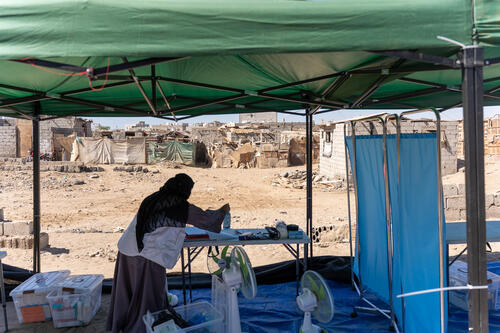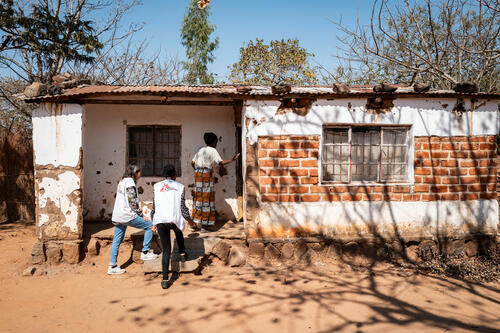
In Malawi, a large proportion of women with cervical cancer arrive at the hospital with already advanced cancer, requiring palliative care management. Some women do not respond well to the available curative treatments – which are limited in the country – or can no longer afford them. As their condition worsens, another obstacle arises: the more care patients need, the harder it is for them to reach a health facility. Since 2022, Médecins Sans Frontières (MSF) teams have been working with the Ministry of Health to bring palliative care closer to patients, even in the most remote villages.

Video
Palliative care in south Malawi
Managing intense pain
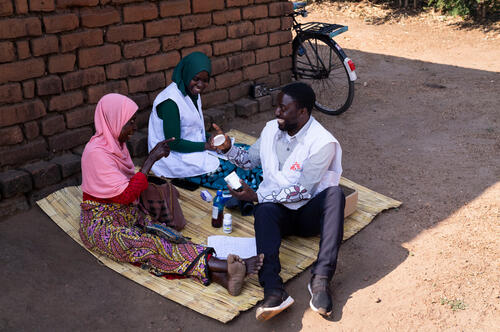
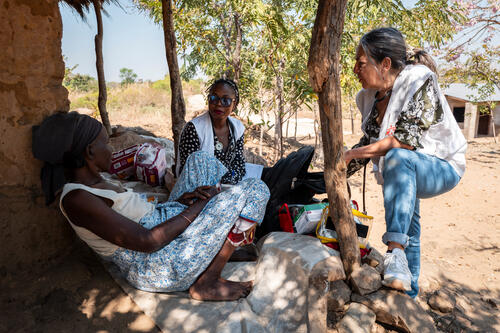
Jean Gama is sitting on a mat in front of her small red-brick house. She is surrounded by two members of the MSF team, with whom she is talking. From time to time, they laugh together. Jean is well acquainted with the team that regularly provides her with palliative care.
“They give me medicine and explain how to take it,” says Jean, who is 76 years old. “When I tell them I’m having a bad reaction to certain medications, they stop giving them to me and only give me the ones I tolerate well.”
It took the medical team nearly two hours that day to travel from Blantyre, the country’s commercial capital, to Jean’s home in a small rural community in the Mulanje district.
“Before we arrive, we ask the patient about the main problems she’s facing,” explains Christopher Chalunda, an MSF palliative care nurse. “When we arrive, we try to create a friendly atmosphere, joke around a bit, and make sure the patient is comfortably settled.”
Jean first received curative treatment before joining the palliative care programme at Queen Elizabeth Central hospital in Blantyre.
“Palliative care aims to improve the quality of life and preserve the dignity of patients with incurable illnesses or who are at the end of life,” says Dr Camille Desforges, a palliative care coordinator who previously worked in Malawi. “We manage both the symptoms caused by the disease and those resulting from treatment, but we also focus on providing psychological and social support.”
In the case of cervical cancer, one of the first challenges faced by MSF teams and the Ministry of Health – with whom they collaborate closely – is pain management. In the case of cervical cancer, pain is one of the most distressing symptoms.
“I was in terrible pain,” Jean recalls. “Now I feel much better. I’m able to cook again, for example.”
As the pain subsides, other concerns are taking centre stage in her daily life. During this visit from the MSF teams, Jean is more worried about the bad condition of her house than about her illness.
“Malawi is unique in that it has long had access to morphine, an essential medication for pain management,” says Dr Desforges. “The key issue was to establish a system that would allow patients to receive it right up until their final moments.”
Home visits and the decentralisation of palliative care – by strengthening care at health centres closest to patients’ homes – were designed to meet this need. Dr Desforges emphasises this is a common concern in palliative care: “We know that when the disease is very advanced, patients will be confined to their homes, unable to travel. It is imperative that we equip ourselves to support them until that moment.”
Aida Mailosi lives alone with her daughter in the village of Lirangwe, located about 30 kilometres from Blantyre. She is 66 years old and, like Jean, lives in a small house with a corrugated-iron roof. Her husband left her shortly after she was diagnosed with cervical cancer in 2022 — a situation that is very common in Malawi, and a known phenomenon for women who have serious illness outside of Malawi as well. A few weeks after her diagnosis, she was admitted to palliative care.
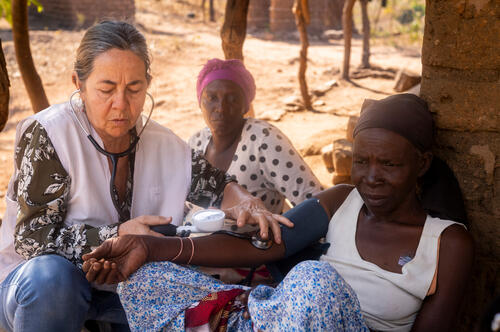
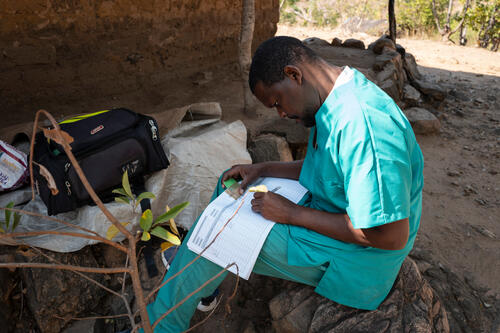
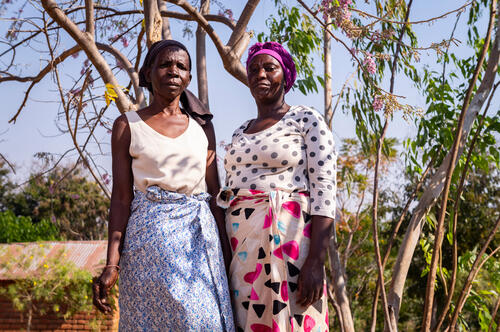
“Before I started treatment, I couldn’t even eat,” says Aida, who is helped daily by her daughter Rose, one of her six children. “I spent several months in bed. I couldn’t take care of my personal hygiene anymore; my family had to help me.”
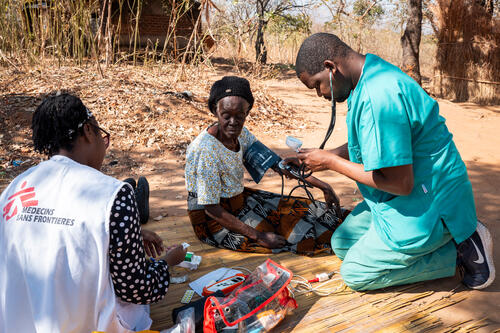
At each visit, the MSF medical team assesses the patients’ condition.
“We monitor their vital signs, assess their pain, and examine their symptoms,” says Chalunda, an MSF nurse. “We usually visit the patient once a month. If she is very weak, we see her again after a week. If she is at the end of her life, we see her again two or three days after the first visit.”
Aida has been receiving a monthly visit for several months now, which spares her an extremely complicated and costly trip to hospital in the city.
These women can spend their final days at home, in a familiar environment within their community. They can go through this stage with less suffering and greater dignity, while maintaining their social connections.
Shifting the centre of care as close as possible to patients
Long before the launch of MSF’s oncology project in Malawi, the country had a well-developed – yet incomplete and not fully-functional – palliative care system; a legacy of the HIV/AIDS epidemic that severely affected the country, beginning in the 1990s.
“We realised that this system, managed by the Ministry of Health needed support in certain areas,” says Dr Desforges. “Patients were given monthly appointments, but some did not return. Some facilities struggled to function due to a lack of sufficient resources. By identifying the gaps to reconnect the patients to care, we built on the existing system, worked with the Ministry of Health, and we gradually stopped losing track of patients.”
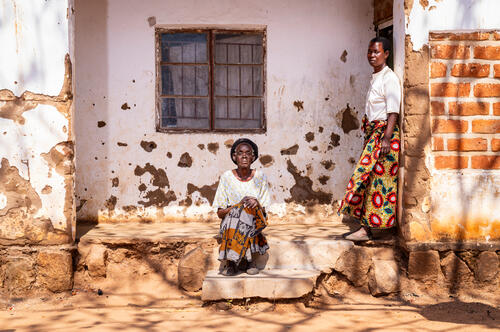
One of the keys to improving this system, which brings care as close as possible to patients, was the mentoring provided by MSF to the health centre’s workers. In consultation with the Ministry of Health, one of the objectives of the MSF programme became strengthening the existing teams by training them in pain management, the use of morphine, home follow-up, and medical, social and psychological support for patients.
“This programme also involved training our teams to become mentors themselves,” says Osman Assam, MSF’s palliative care supervisor Malawi. “Then, each MSF palliative care nurse mentored about 15 healthcare workers from the Ministry of Health, accompanying them every month for over a year. We did this site by site, district by district.”
“Even today, this support continues through guidance and regular visits by the teams,” says Assam.
Today, 46 health centres across the 11 districts that make up the greater southern region of Malawi have benefited from this mentoring programme.
The MSF programme also provided practical support to the ministry’s teams: fuel for home visits, phone credit, essential medications, and assistance with procurement procedures. This model, which has precise and specific components of patient care and is implemented with the Ministry of Health, is particularly relevant and replicable in a context of drastic cuts to international humanitarian and development funding.
Aida, in Lirangwe village, is now benefiting from this decentralisation of care.
“Because of my wounds, I had great difficulty walking,” she recalls. “When the health workers [at Queen Elizabeth Central hospital] saw that I was in pain, they told me to stay home and that they would come see me.”
Her daughter Rose, who was present during the MSF team visit, echoes her words: “To get to the hospital, my mother sometimes had to leave the house at four in the morning. First, she had to ride a motorcycle to the main road, then find a bus to Blantyre. With her wounds and pain, this trip could take several hours and was becoming increasingly difficult.”

The need for financial support
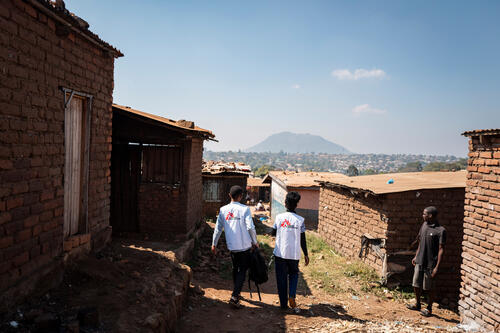
The expansion of home visits has also enabled MSF and the Ministry of Health teams to better consider the social realities within which patients live. During their visits, they encounter women who are alone or, conversely, supported by others; homes that are sometimes dilapidated or dangerous; and financial situations that are often complicated because illness and fatigue prevent the women from working.
“When you only see the patient in an outpatient clinic, you miss a lot,” says Chalunda. “If a patient tells us at the hospital, ‘I went to bed on an empty stomach,’ we can’t really understand the situation because we’ve never seen her home.”
“When we visit them, we see how the patient gets to the hospital, how she interacts with her loved ones, and just how much she’s really struggling,” he says. “Some are even victims of discrimination within their families or communities.”
Many patients, who receive care both at a health clinic and at the hospital, were no longer able to get there due to a lack of transportation. Poverty is an additional barrier to accessing care, even though it is free. In response, MSF has set up a financial assistance programme for patients — a component of the programme that was not initially prioritised.
Lucy Mchoma, a 60-year-old patient who lives in the Thyolo district south of Blantyre, takes between two and three hours by minibus to reach hospital.
“The cost of transportation is a problem,” says Lucy. “If this assistance stops, I wonder what will happen next. If I’m called to come to the hospital, will I still be able to afford the trip?”
The cost of transportation is a problem. If this assistance stops... If I’m called to come to the hospital, will I still be able to afford the trip?Lucy Mchoma, a patient in Thyolo district
Lucy was diagnosed with cervical cancer in 2022 and is supported solely by her sister, who accompanies her to medical appointments. She is divorced and does not receive support from either her daughter or her son.
Every month, like the other patients, Lucy receives a sum of money via a transfer to a phone number, provided as part of the programme. Done in partnership with the NGO GiveDirectly, the goal is to support patients with the associated costs related to their illness: transportation, food, and basic household needs. This should reduce the number of patients who drop out of care due to financial and social difficulties.
In addition to her daughter Rose’s support, Aida Mailosi relies heavily on outside support to meet her daily needs.
“I can’t work anymore; I just stay at home,” says Aida. “They help me with medicine and food by sending me money. All I want right now is to receive some kind of support, whatever it may be. I’m also worried about my house, which is gradually falling into disrepair.”
Her daughter has a very modest income. She makes a living doing odd jobs, such as extracting sand from the Lirangwe River and then reselling it.
For Chimwemwe Daison, a 38-year-old patient who lives in the Blantyre district, this assistance makes a real difference. After several years of illness, chemotherapy, a hysterectomy, and pain management, she says her main challenges are now financial.
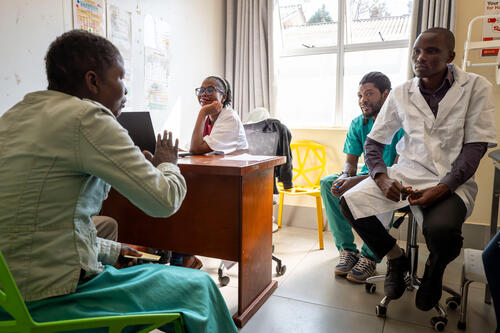
“At the end of each month, I receive some money, and things get a little better,” says Chimwemwe. “I buy corn, salt, and fish, and we’re able to eat. The rest of the time, life is hard because my husband doesn’t have a steady job.”
While it does not aim to lift patients out of poverty, this financial assistance nevertheless allows them to continue their treatment with peace of mind.
The essential role of caregivers
Another important aspect that became clearer as the home visits progressed is the role of caregivers. Cervical cancer also transforms the lives of those who remain by a patient’s side, as they often shoulder a large part of the daily care on their own. They prepare meals, help with personal hygiene, monitor medication intake, accompany patients to medical appointments, and are sometimes there day and night.
For Nick, Jean’s husband, this role has become second nature: “A sick person needs to be taken care of. For me, taking care of someone means feeding them and providing them with a decent place to sleep. I can cook for my wife, clean the things that she has soiled. I can do anything regarding her life.”
Rose, Aida’s daughter, has been fulfilling this role for years.
“Because of her sores, we also have trouble dressing her,” she says. “I do odd jobs to earn a little money so I can help her when she needs something. I often worry about her, but I keep going because she’s my mother.”
MSF healthcare workers regularly observe severe fatigue among caregivers.
“Caring for a sick person for such a long period of time is exhausting,” says Wilfred Nkhambule, an MSF palliative care nurse. “We try to talk with families to see if it’s possible to organise a rotation, so that caregivers can rest and continue to fulfil their own responsibilities.”
Wilfred Nkhambule, an MSF palliative care nurse
“Caring for a sick person for such a long period of time is exhausting. We try to talk with families to see if it’s possible to organise a rotation, so that caregivers can rest and continue to fulfil their own responsibilities.”
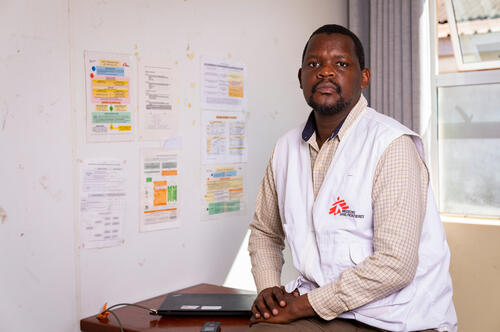
“Unfortunately, we often encounter patients who have been abandoned by their husbands,” says Nkhambule. “Many find themselves alone with their children. Their suffering stems not only from the illness but also from what is happening within their families and in their social lives.”
For Dr Desforges, this reality has long been underestimated: “Caregivers are often on the frontlines of all care, including technical care. Home visits aren’t just for the patients — they also provide support to those who care for them on a daily basis. That’s why psychological support is so important.”
Commitment to a standard of care
Since MSF started our programme of palliative care in 2019, more than 2,700 women have been able to receive continuous care until their final moments. Yet the training work continues.
“The challenge now is to keep the existing sites operational,” explains Assam. “There is an inevitable turnover of staff, and we need to regularly train new nurses. A long-term commitment is required to maintain the standard of care.”
While it is crucial for MSF and the Ministry of Health to continue providing high-quality palliative care to patients, one of the top priorities of MSF’s oncology programme in Malawi remains reducing mortality from this type of cancer. To achieve this, we must ensure that more women have access to better prevention and earlier diagnosis, so that the disease is detected at less advanced stages and curative treatments can be provided.
Behind the high incidence of cervical cancer and late diagnoses often lie the same obstacles: lack of awareness about the disease, the geographical distance to screening and treatment centres, the cost of transportation, delays and diagnostic errors, and the difficulty of accessing specialised examinations and treatments, such as those for precancerous lesions, chemotherapy, or radiation therapy, promptly, free of charge, and on an ongoing basis.
Furthermore, the incidence of the disease could be highly reduced through mass vaccination against human papillomavirus (HPV), which causes cervical cancer.
According to WHO, cervical cancer is the fifth most diagnosed cancer in women globally, with around 604,000 new women diagnosed and around 280,000 deaths in 2024. More than 80 per cent of deaths related to this disease occur in low- and middle-income countries.
Malawi is the country with the highest incidence and mortality rate for cervical cancer, with 6,773 women diagnosed and 3,844 deaths in 2024.*
* https://gco.iarc.who.int/media/globocan/factsheets/populations/454-malawi-fact-sheet.pdf
Non-communicable diseases
Delivering cancer care to women in humanitarian crises is possible
Press Release
21 Sep 2026