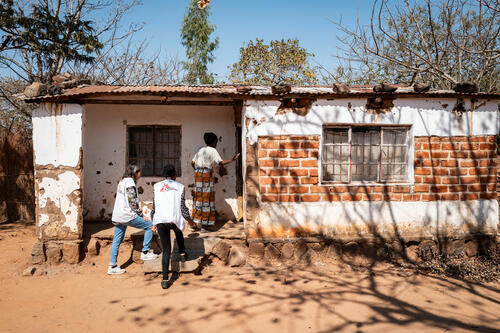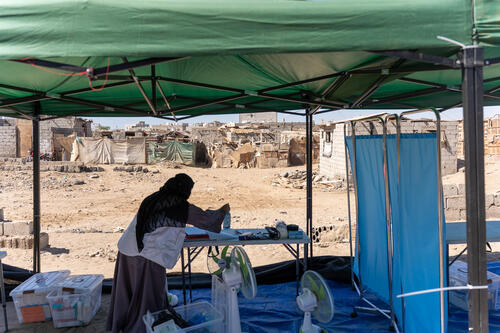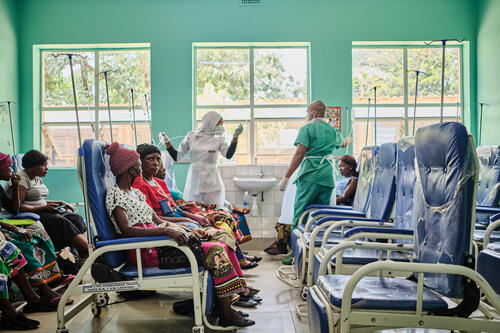
Médecins Sans Frontières (MSF) will speak for the first time at the World Cancer Congress in Hong Kong this week. We will share our experiences from our cancer programmes in Mali and Malawi, highlighting that cancer care is possible in resource-limited settings, but also that urgent action is needed to break barriers to accessing prevention, timely diagnosis and adequate treatment.
The burden of cancer is already a growing public health threat in many countries where MSF works — and women are disproportionately affected. About 80 per cent of deaths from breast and cervical cancer worldwide happen in low and middle-income countries. By 2050, global health experts estimate the number of cancer cases in such countries will rise by 150 per cent.
“Ten years ago, during the Syrian crisis, we were ill-equipped to respond to the health needs of displaced people whose treatment for non-communicable diseases, including cancer, had been abruptly interrupted by the conflict,” says Dr Claire Rieux, MSF’s medical director. “Today, our teams provide cancer care, from screening to treatment and palliative care, in several countries.”
“We partner with ministries of health, inspiring practitioners, community networks and experts in the fight against cancer,” says Dr Rieux. “We are eager to keep learning and contribute to advancing greater equity in this field.”
We are eager to keep learning and contribute to advancing greater equity in this field.Dr Claire Rieux, MSF’s medical director
In Mali, more than 2,300 women received medical care for breast or cervical cancer between 2021 and 2025 through a programme we ran with partners in Bamako.
A retrospective study1 to assess treatment results of women cared for by MSF and the Malian Ministry of Health between 2019 and 2022 shows tangible progress — despite unreliable access to radiotherapy, security constraints and the many obstacles that stand in the way of people living with cancer reaching care.
Only one quarter of the patients were diagnosed at an early stage of the disease, but the proportion kept improving over time. For instance, for women with cervical cancer, it doubled between 2019 (14%) and 2022 (28%). The retrospective study also found global survival rates for women with breast cancer that stood at 91% a year after the diagnosis and 72% after three years. These rates are promising but should be dealt with caution given the high proportion of patients whose survival status was unknown in the study (30% of patients were “lost to follow up”).
“Our efforts have also been focused on supporting people on their care pathway, providing health education, psychological care and social support, and working closely with local associations and survivors,” says Nancy Kamwaza, MSF’s health promotion and community engagement manager in Malawi.
“Medicines and clinical protocols alone are not enough: people with cancer need clear information, emotional and practical support, and continuity of care to help them navigate treatment and cope with the wider impact of the disease on their lives and families,” says Kamwaza.
... people with cancer need clear information, emotional and practical support, and continuity of care to help them navigate treatment and cope with the wider impact of the disease on their lives and families.Nancy Kamwaza, MSF’s health promotion and community engagement manager in Malawi
In Malawi, our programme in Blantyre helps to tackle the world’s second highest cervical cancer mortality rates. Through it, we are facilitating access to palliative care and treatment, including chemotherapy, surgery and radiotherapy, and to prevention tools, including vaccination against human papillomavirus (HPV), and early screening and treatment of precancerous lesions. In Blantyre district, the coverage of cervical cancer screening increased from 40 per cent in 2019 to close to 60 per cent last year.2
MSF also joined the PAVE3 study , an international research project designed to trial a new, low-cost strategy for screening and treating pre-cancerous cervical lesions in resource-limited settings. The strategy, which combines HPV genotyping and artificial intelligence-automated visual evaluation to detect precancerous lesions, was found particularly effective to achieve better detection and to better identify the most at-risk women in need of urgent treatment. Yet improved screening yields limited results if the next stages of diagnostic and care remain unavailable, unaffordable, or in higher demand than capacity can meet.
Too often, people with cancer are denied access to treatment and care not because effective tools do not exist, but because they are priced out of reach, unavailable when they are needed, or not suitable for resource-limited settings and countries.Dr Zarak Jan, MSF Access advocacy adviser
MSF’s work in cancer care has contributed to showing that it is possible to diagnose, prevent and treat cancer, even in fragile and humanitarian settings, when people with cancer have access to coordinated and adequately resourced care. However, in many resource-limited settings, high prices, drug shortages, limited specialised human resources, and weak supply chain and procurement systems continue to prevent people diagnosed with cancer from accessing treatment and care.
“Too often, people with cancer are denied access to treatment and care not because effective tools do not exist, but because they are priced out of reach, unavailable when they are needed, or not suitable for resource-limited settings and countries,” says Dr Zarak Jan, MSF Access advocacy advisor. “It’s time for countries and funders to show a strong political will to close this gap by investing in cancer care and ensuring that lifesaving diagnostics and treatments are affordable, adaptable and available for people in low-resource and humanitarian settings.”
Speaking at the World Cancer Congress, hosted in Hong Kong, is a unique opportunity for MSF to advocate for greater access to comprehensive care for people with cancer, exchange ideas with the global cancer community, and learn about the latest innovations and successful initiatives in cancer control.
Over the last five years, MSF has developed and supported cancer-related activities in countries including Malawi, Mali, Papua New Guinea, Ukraine, Kyrgyzstan, and Eswatini.
MSF will speak at the World Cancer Congress on Friday, 25 September, in two sessions. Cancer care in humanitarian crises: from neglect to action. Making cancer care possible: sharing experiences from MSF in humanitarian and low-resource settings.