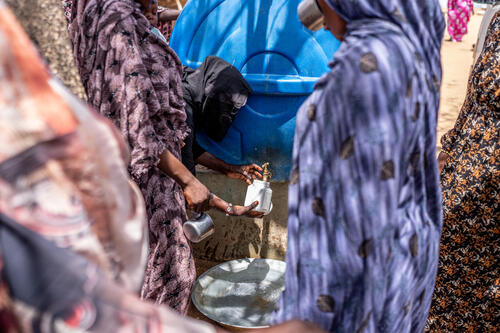
“I have been running away all my life,” says Samuel*, from Eritrea. “I have already experienced so much trauma, and I don’t know if I can handle or face another struggle. I’m sick of this life.”
For a person seeking safety, these words capture the weight of an uncertain and re-traumatising reality, as well as an unimaginable future. Unfortunately, Samuel’s is not an isolated experience. For over 10 years, Médecins Sans Frontières (MSF) psychologists in Greece have been supporting numerous people experiencing profound feelings of helplessness, hopelessness, fear, and despair.
Many of our patients have faced traumatic events – including torture, imprisonment, and the loss of loved ones – and undergone a dangerous journey to escape war, conflict, and persecution. When they arrive in Greece, their physical and psychological health further deteriorate because of restrictive European Union (EU) migration policies of deterrence and containment.
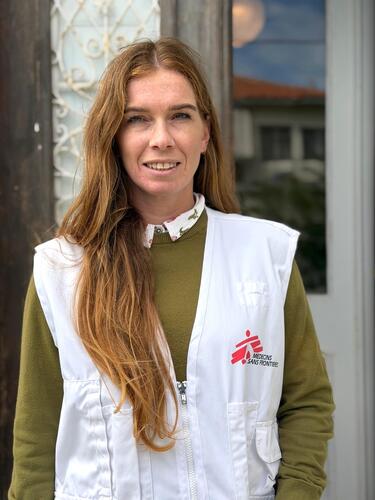
“Many people arrive in Greece already emotionally and physically exhausted from the exposure to unsafe conditions they faced in their country of origin and during the journey,” says Anzhelika Iastremska, MSF psychologist on Lesbos. “For many, arrival is associated with the expectation of finally reaching safety and stability. However, barriers in accessing healthcare, opaque asylum procedures, and poor living conditions may contribute to ongoing psychological distress and feelings of hopelessness.”
Anzhelika Iastremska, MSF psychologist on Lesbos
“For many, arrival is associated with the expectation of finally reaching safety and stability. However, barriers in accessing healthcare, opaque asylum procedures, and poor living conditions may contribute to ongoing psychological distress and feelings of hopelessness.”
When the system deepens trauma
Restrictive policies, deterrence measures, barriers to accessing healthcare, precarious living conditions, and complex asylum procedures can contribute to a cycle of trauma, creating an environment of perpetual uncertainty that severely degrades people’s mental health and leaves them in deep psychological distress.
For many of our patients, living isolated in remote prison-like reception facilities, with high barbed wire fences, contributes to their trauma.
“The environment of the reception facility often functions as a constant traumatic reminder for survivors of detention, violence, or persecution,” says Georgia Kotitsa, MSF psychologist on Lesbos. “Many patients describe feeling trapped, unsafe, and deprived of autonomy. For some individuals, for example those who have survived imprisonment or torture, the restrictive conditions, constant surveillance, and lack of privacy within the reception facilities trigger intense re-traumatisation.”
Moreover, complex and fast-track asylum procedures offer limited time to secure individualised counselling and legal assistance, and patients report difficulties in understanding and navigating the process. This severely worsens their mental health, preventing them from finding any sense of stability.
People live in a state of limbo, overstressed, being transferred from one facility or one city to another, through opaque asylum processes, with little information about what will happen next. Many live with the fear of rejection and deportation while they struggle to access healthcare, understand their rights and what the future holds, in an increasingly restrictive environment.
The environment of the reception facility often functions as a constant traumatic reminder for survivors of detention, violence, or persecution.Georgia Kotitsa, MSF psychologist on Lesbos
“Reaching Athens is not the end of their journey for many patients but the beginning of a different struggle,” says Katerina Kavakou, MSF psychologist in Athens. “They need to navigate unfamiliar systems in a huge city, language barriers, precarious employment, insecure housing, and the uncertainty of what comes next.”
Barriers to accessing healthcare
Since January 2026, MSF psychologists have conducted over 900 mental health consultations on the islands of Lesbos and Samos. Some of the main gaps they see in their daily work concern accessibility and continuity of mental health care. Their observations and patient reports suggest that the current healthcare system fails to provide sustained psychological and psychiatric support that people seeking safety in Greece urgently need, leaving them stuck in cycles of uncertainty and distress.
Services and interpretation are often limited, especially when it comes to trauma-informed care and support, which takes each person’s individual needs and experiences into consideration. At the same time, follow-up consultations are often inconsistent, which can result in missed appointments and interruptions in treatment.
MSF teams have documented a wide range of consequences over the years. Many of our patients describe signs of depression, anxiety, post-traumatic stress disorder, chronic stress, sleep disorders, excessive worrying, and suicidal thoughts.
Dreams out of reach
“I meet people who want to work, go to university, and continue their dreams,” says Nikolina Kazaki, MSF psychologist in Samos. “But the lack of support deprives them of the ability to build a new life and creates a devastating sense of despair and hopelessness.”
I meet people who want to work, go to university, and continue their dreams. But the lack of support deprives them of the ability to build a new life and creates a devastating sense of despair and hopelessness.Nikolina Kazaki, MSF psychologist in Samos
For over 10 years, MSF has provided psychological support to refugees, asylum seekers, and people in vulnerable situations in Greece, with a focus on victims and survivors of violence. Our teams offer a safe and inclusive space, where people can be heard and supported through a multidisciplinary and holistic approach that goes beyond medical and psychological care. Social workers also contribute to this care by helping people with broader social and practical challenges.
However, these efforts seem like a drop in the ocean when compared with the complexity of people’s needs and the significant gap between the level of support currently available and the realities faced by many refugees and asylum seekers.
“People need more comprehensive support systems, with better integration programmes and uninterrupted access to healthcare,” says Kazaki. “When you’re struggling to find a safe place to live, access healthcare, earn a living, or simply feel secure, the constant pressure can become unbearable, leaving you feeling trapped, exhausted, and hopeless.”
Moving forward against the odds
Despite the perilous journey, the uncertainty, and the numerous barriers, refugees and asylum seekers continue to move forward, adapt to new realities, care for their families, and look for ways to rebuild their lives.
“We meet people that are parents, students, friends, community members, workers, with dreams and hopes,” says Kavakou.
MSF sees that people need improved access to physical and mental health and social services, alongside better living conditions and dignified reception. At the same time, clearer, more informed procedures are necessary to reduce uncertainty, facilitate integration, and support people in this demanding journey to rebuild a sense of safety and stability.
* Name changed to protect identity.
DRC Ebola outbreaks
Ebola disease outbreak spreads like a megafire in North Kivu as new hotspots multiply
Project Update
5 Oct 2026