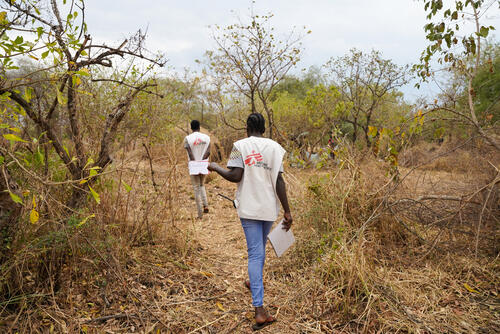
MSF outreach activities in Boma, GPAA
Content Portal

Latest

Daniel Kuju, health promotion supervisor, and Beatrice Johnson, community health educator, visit semi-nomadic communities in Labarab, Greater Pibor administrative area to conduct health awareness sessions. South Sudan, February 2024.
© Manon Massiat/MSF

Discover all our latest news, stories and publications. Use the filter to get to the content you're looking for.
MSF ethics review board

Reviewing the ethical acceptability of MSF research

Historically, research was not seen as core to the mission of Médecins Sans Frontières. However, MSF now initiates, sponsors or participates in numerous research projects in multiple field sites. Results from several research projects have had substantial impact on global health policy and provided benefits to populations served by MSF and elsewhere. As a result, research has become increasingly integral to MSF activities, both in the field and in global health advocacy.

MSF has paid particular attention to the ethical issues arising from the research in which they engage, manifested by the creation of an independent ethics review board (ERB) in 2002 that evaluates all research proposals involving MSF.

Why is there a need for ethical review of research?

The World Health Organization defines research with human subjects1 as any social science, biomedical, behavioural, or epidemiological activity that entails systematic collection or analysis of data with the intent to generate new knowledge, in which human beings:

  • are exposed to manipulation, intervention, observation, or other interaction with investigators either directly or through alteration of their environment; or
  • become individually identifiable through investigator's collection, preparation, or use of biological material or medical or other records.

Ethical reviews are conducted to protect the dignity, rights, well-being and welfare of research participants and communities. The MSF-ERB thus examines research protocols thoroughly to make sure that the research is scientifically sound, pertinent, relevant and beneficial for the community and/or the intended participants; that the methods by which the research will be conducted are rigorous; and that the participants’ rights are respected and protected.

MSF-ERB: Beyond ethical review of research

The MSF-ERB ensures that researchers adhere to universal humanitarian imperatives of alleviating human suffering, preserving human dignity as well as protecting and respecting human rights regardless of race, creed, nationality or political belief – unique ethical challenges, which may not be captured by typical research ethics guidelines. Furthermore, the Board engages with and provides advice to MSF regarding ethical issues.

The MSF-ERB board

The MSF-ERB is composed of a diverse group of professionals coming from different continents, with an understanding of humanitarian and NGO realities. The members of the board do not have a working relationship with MSF to avoid conflict of interest and ensure independence. The passion and high level of expertise of the Board pushes the organisation and, by its example, the field of research ethics itself to better and higher standards as well as to keep on questioning existing standards, in view of new field challenges.

  • المادة 1 من اتفاقية الأمم المتحدة لحقوق الطفل، التي اعتمدت وعرضت للتوقيع والتصديق والانضمام بموجب قرار الجمعية العامة 44/25 المؤرخ 20 تشرين الثاني/نوفمبر 1989، ودخلت حيز النفاذ في 2 سبتمبر/أيلول 1990، وفقا للمادة 1: "لأغراض هذه الاتفاقية، يعنى الطفل كل إنسان لم يتجاوز الثامنة عشرة، ما لم يبلغ سن الرشد قبل ذلك بموجب القانون المنطبق عليه".

Hero Image
MSF's Trauma and Orthopaedic Care Centre in Bunia, Ituri Province
Headline
The MSF ethics review board
Background
Image
Eyebrow
How we work
Schedule content for publication
Off
Description
MSF pays particular attention to the ethical issues arising from the research in which we engage, manifested by the creation of an independent ethics review board (ERB) in 2002 that evaluates all research proposals involving MSF.
Select caption
Short caption
Use a custom breadcrumb
No

Minimum field requirements

We recruit medical, administrative, and logistical support personnel to provide medical care to people in crisis in more than 70 countries worldwide.

Every year, over 8,000 internationally mobile staff provide assistance to people who would otherwise be denied access to even the most basic healthcare.

Below is a general overview of the minimum requirements for working with us. For more detailed information on the additional technical skills required of your profile, check the relevant specific field job profile description, or take a look at the job application pages of the MSF website in your country of residence, accessible through the form above.

Essential criteria for all potential field workers

To work in the field with MSF, every applicant must meet the following general requirements:

At least two years of relevant professional experience

For some physicians, and nurses, this may vary.

Availability for a minimum 9 to 12 months*

Most first missions are nine to twelve months long. This level of commitment is a requirement because of the degree of responsibility MSF humanitarian workers are expected to assume, the time needed to acclimatise to a project and context, and the need for continuity among field staff for the benefit of both our locally hired staff and patients.

*Due to the nature of their workload while in the field, a shorter time commitment is required of surgeons, anaesthetists, ob-gyns, OT nurses, and electricians.

Experience in low-income/developing countries and remote/rural areas

Recent and relevant experience working, volunteering, living, and/or travelling abroad, particularly in Africa, Asia, Central or South America is essential.

Demonstrated capacity for team management/supervision and training

Every MSF humanitarian worker will be in a supervisory or management position in the field and will often spend more of their time overseeing and training others than doing hands-on work themselves.

Demonstrated ability to live and work as a team

Our teams are made up of medical and non-medical professionals from an array of nationalities and cultural backgrounds who live and work together.

Willingness to work in potentially unstable environments

The nature of our work means that just over half of our projects are in unstable contexts due to conflict, instability, or post-conflict challenges. It is impossible to exclude all risks, but we do our utmost to mitigate these risks through strict security protocols.

Understanding of and commitment to the Médecins Sans Frontières Charter

We operate independently of any political, military, or religious agenda, observes neutrality, and provides impartial care delivered on the basis of need alone. These principles of action are described in our founding charter, and should resonate with anyone thinking of applying to MSF.

Flexibility and adaptability

To reflect changing needs in the field, activities can shift quickly and job descriptions change accordingly. Working environments, security protocols, and team size/composition may also change during assignments.

Ability to manage stress

Many of our projects are located in or near conflict areas. The environment is often chaotic and volatile and the target populations are large and in distress. Even in more stable areas, sizeable workloads and team living may cause stress.

Computer skills

All of our staff write and submit reports, and many are involved in data collection. You must have basic computer skills and must be comfortable using Microsoft Office applications (Word, Excel, and PowerPoint).

Desirable criteria

The following criteria are not essential, but are very highly valued. Individuals with these assets will be eligible for more positions and will usually be placed more quickly:

Flexible dates of availability

The more restricted your dates of availability, the more difficult it can be to match you with an appropriate field position.

Ability to depart at short notice

Some our projects are launched in response to sudden crises, whether natural or anthropogenic, requiring field workers who are available at short notice once successfully recruited.

Language skills (especially French and Arabic)

A significant number of our missions are in French- and Arabic-speaking countries, therefore these language skills are highly desirable as they allow for more opportunities for placement. Fluency is valuable but not essential. Skills in other languages, such as Spanish, Portuguese, or Russian, are also assets in the field.

Interest and/or experience in international humanitarian issues, international relations, anthropology

Previous field experience in a similar role with a non-government organisation

Hero Image
MSF hospital in Doro Refugee Camp
Hero Pathing Form
Apply for a job (Field)
Headline
Minimum field requirements
Background
Image
Eyebrow
Work with MSF
Hero Alignment
top
Schedule content for publication
Off
Description
Every year, thousands of international MSF field staff provide lifesaving medical assistance to people who would otherwise be denied access to even the most basic health care. To work in the field with MSF, every applicant must meet this list of general requirements.
Select caption
Short caption
Use a custom breadcrumb
No

Fighting abuse, exploitation and harassment in our work environment

Médecins Sans Frontières (MSF) promotes a working environment free of harassment and abuse. Our leadership has unequivocally committed to reinforce mechanisms and procedures to prevent and address abuse and harassment. All staff are expected to abide by the MSF movement's Behavioural Commitments and our guiding principles as stipulated in our Charter.

The integrity of our organisation is upheld by the good conduct of each individual staff member, in any location, with full respect for the communities we serve. For us, this means not tolerating any behaviour from our staff that exploits the vulnerability of others, or of employees taking advantage of their position for personal gain.

Grievance and whistle-blowing mechanisms

Procedures, including grievance mechanisms, are in place to encourage prevention, detection, reporting, and management of all types of misbehaviour, harassment and abuse. Through these mechanisms, all staff members are encouraged to report inappropriate behaviour or abuse either through their management line or through specific reporting channels outside any hierarchical lines, using dedicated email addresses. Victims or witnesses in the communities where MSF works are likewise encouraged to report misconduct to us so that allegations can be properly addressed.

Broad awareness activities are carried out to inform all staff of the mechanisms available to them to report abuse. This information is shared through specific communications, including in printed staff manuals, and is conveyed in briefings, field visits and trainings. Moreover, e-briefings and learning modules related to behaviour and management of abuse are regularly updated and improved.

There is a range of ongoing work in this area that has been taking place across the MSF movement in recent years. Examples include:

  • Creating new positions and/or increasing staff support to provide training, field visits and investigation on these issues.
  • Undertaking workshops and other forms of consultation with staff to assess the problem and the steps needed to address it.
  • Revising, promoting and strengthening guidance provided to staff on how to report harassment, abuse or exploitation.
  • Reinforcing awareness at the patient and community level where we have operations
  • Improving data-gathering and sharing across the MSF movement.

Managing misbehaviour cases confidentially

MSF aims to ensure that these situations are addressed with the utmost confidentiality, to create an environment where people feel they can safely file complaints, without fearing for their safety, their job, or their confidentiality.  

Our first priority when misbehaviour is reported is the safety and health of the potential victims. Immediate attention is given to provide support, which can include psychological and medical care, and securing legal assistance.

MSF always respects the victim’s decision to bring – or not – a matter to justice. In the event of sexual abuse against minors, MSF’s policy is to report the case to judiciary authorities depending on the child’s best interests and availability of such procedures.

Key challenge: reducing barriers to reporting

2024 update

Published 6 August 2025

In 2024, 67,077 individuals worked for MSF worldwide. During the year, we saw a total of 945 complaints about abuse or inappropriate behaviour made across the MSF movement. Of these, 864 were related to our medical and humanitarian projects, and 81 related to our international headquarter offices. Of those complaints, after investigation, 345 were confirmed to be cases of abuse or inappropriate behaviour, with some complaints still being investigated at the end of 2024. The paragraphs below break down data from project and headquarters cases separately, as they are not necessarily comparable in terms of legal and reporting processes.

The overall number of complaints received related to our medical and humanitarian projects increased by 21 per cent in 2024 (864 complaints), compared to 2023 (714 complaints). Complaints received in our international headquarter offices in 2024 (81 complaints) decreased 9 per cent compared to 2023 (109 complaints). Given the breadth of our activities and the reach of our operational footprint, we remain concerned about underreporting of abuse and inappropriate behaviour, especially from patients, their caregivers, and from community members in the areas where we work.

Complaints received related to our medical and humanitarian projects in 2024:

  • Around 89 per cent of MSF staff (60,580 people in total) in 2024 were working in MSF projects. A total of 864 complaints were made about the behaviour of staff in these projects, up from 714 in 2023.  
  • Of those complaints, after investigation, 308 were confirmed to be cases of abuse or of inappropriate behaviour (264 in 2023), with some cases still being investigated at the end of the year.
  • Of those 308 confirmed cases, 256 cases were confirmed as abuse, compared to 187 confirmed cases of abuse in 2023 (this includes different forms of abuse: sexual exploitation, abuse and harassment [SEAH]; abuse of power; harassment and bullying; discrimination; exploitation; aggression; and abuse of the case management process – including retaliation, false reporting, interference in a case, and breach of confidentiality).
  • A total of 83 staff members were dismissed for different types of abuse in 2024 (85 dismissals in 2023). Depending on the severity of the case, other types of sanctions were also issued, including, but not limited to, suspension, demotion, formal written warning, or mandatory training.
  • Of the 256 confirmed cases of abuse, 126 were cases of SEAH, compared to 85 in 2023. Fifty-nine (59) staff were dismissed based on the findings of investigations related to those SEAH cases in 2024 (45 in 2023), noting that behaviour like sexual harassment covers a range of behaviour.
  • The other confirmed cases of abuse included cases of harassment or bullying (35 confirmed cases); abuse of power (30 confirmed cases); aggression (17 confirmed cases); exploitation (14 confirmed cases); discrimination (22 confirmed cases); and abuse of the case management process (12 confirmed cases).
  • There were also 52 cases of inappropriate behaviour confirmed (77 in 2023). Inappropriate behaviour means behaviour which does not amount to the forms of abuse outlined above, but which are not in line with MSF’s behavioural standards. This includes, but is not limited to, mismanagement of people; inappropriate relationships; inappropriate behaviour not in line with societal standards or affecting team cohesion; inappropriate communication; and substance (mis)use.

We have continued to see some increases in the number of complaints submitted by previously underrepresented groups, such as locally hired staff. However, there is still much room for improvement, especially with patients and community members.

The total number of complaints submitted by patients and their caregivers was 45 in 2024, and 35 from community members (which may also include patients and others in the community whom MSF staff encounter) for a total of 80 (69 in 2023). There were also 40 complaints submitted by “other” external parties – a category which includes suppliers, media, other organisations, partners, ex-MSF staff, and non-MSF contracted staff.

Although patient complaints are increasing, more efforts are needed to reach out to patients and community members to make them aware of their rights and expected standards of behaviour by MSF staff. Efforts must also be improved to ensure there are accessible, appropriate complaints mechanisms available to patients and community members so that they hold MSF accountable for any abuse or inappropriate behaviour.

The total number of complaints submitted by locally hired staff increased from 328 in 2023 to 414 in 2024. Efforts to encourage and support these staff to report need to be continued, as locally hired staff account for around 87 per cent of the workforce in our medical and humanitarian projects, but are responsible for only 58 per cent of complaints made by MSF staff in these projects.

In reviewing all complaints from both MSF staff and individuals outside of the organisation, there has been an increase in complaints made about discrimination. A total of 75 complaints relating to discrimination were received in 2024, up  from 45 in 2023. While more people are coming forward to raise complaints about discrimination, there is still a need for continued and sustained efforts on diversity and inclusion, and to ensure people affected by acts of discrimination in any form report it.

Complaints from our offices worldwide

Since 2020, MSF has also compiled complaints from our offices around the world, in addition to the data gathered from our medical projects. Eleven per cent of the total MSF workforce is based in these international offices (7,505 people).

While efforts have been made to standardise reporting, this data relates to many different legal and human resource processes around the world, and so may not yet be fully harmonised.

From all of the headquarter offices, 81 complaints were received in 2024 (down 9 per cent from 109 in 2023).

Of these, 37 cases were confirmed to be abuse or inappropriate behaviour (with 11 complaints still under investigation at the end of the year, noting that some complaints made were not about abuse). There were 35 cases related to abuse and 19 to inappropriate behaviour. (Note: some cases were found to have elements of both abuse and inappropriate behaviour, so totals may not match). This compares to 34 confirmed cases of abuse and 21 of inappropriate behaviour in 2023.

Overall, 16 staff members were sanctioned (ranging from coaching to verbal or written warnings), and 12 staff members were dismissed for abuse in 2024.  

***

Achieving and maintaining a work environment free from abuse and harassment is an ongoing endeavour, for which we are all responsible. We also commit ourselves to do no harm to vulnerable people we are striving to help.

We continue to urge staff, patients, or anyone else who comes into contact with MSF, to report any incidents of abuse or inappropriate behaviour which they come across.  

2023 update

Published 16 July 2024

In 2023, over 69,000 individuals worked for the MSF movement worldwide. During that year, we saw a total of 823 complaints about abuse or inappropriate behaviour made across the MSF movement. Of these, 714 were related to our medical and humanitarian projects, and 109 related to our international headquarter offices. Of those complaints, after investigation, 300 were confirmed to be cases of abuse or inappropriate behaviour, with some complaints still being investigated at the end of 2023. The paragraphs below break down data from project and headquarters cases separately, as they are not necessarily comparable in terms of legal and reporting processes.

The overall number of complaints received related to our medical and humanitarian projects increased by 18 per cent in 2023 (714 complaints), compared to 2022 (606 complaints). Complaints received in our international headquarter offices in 2023 (109 complaints) increased by 22 per cent compared to 2022 (89 complaints). MSF remains concerned about under-reporting of abuse and inappropriate behaviour given the breadth of our activities and the reach of our operational footprint – especially from patients, their caregivers, and from community members in the areas where we work.

Complaints received related to our medical and humanitarian projects in 2023:

  • Around 89 per cent of MSF staff (69,100 people in total) in 2023 were working in MSF’s projects. A total of 714 complaints were made about the behaviour of staff in these projects, up from 606 in 2022.  
  • Of those complaints, after investigation, 264 were confirmed to be cases of abuse or of inappropriate behaviour (204 in 2022), with some cases still being investigated at the end of the year.
  • This includes 187 cases which were confirmed as abuse, compared to 121 confirmed cases of abuse in 2022 (this includes different forms of abuse: sexual exploitation, abuse and harassment [SEAH]; abuse of power; harassment and bullying; discrimination; exploitation; aggression; abuse of the case management process – including retaliation, false reporting, interference in a case, and breach of confidentiality).
  • A total of 85 staff members were dismissed for different types of abuse in 2023 (52 dismissals in 2022). Depending on the severity of the case, other types of sanctions were also issued, including but not limited to suspension, demotion, formal written warning, or mandatory training.
  • Of the 187 confirmed cases of abuse, 85 were cases of SEAH, compared to 67 in 2022. Forty-five (45) staff were dismissed based on the findings of investigations related to those SEAH cases in 2023 (35 in 2022), noting that behaviour like sexual harassment covers a range of behaviour.
  • The other confirmed cases of abuse included cases of harassment or bullying (31 confirmed cases); abuse of power (30 confirmed cases); aggression (23 confirmed cases); exploitation (13 confirmed cases); discrimination (9 confirmed cases); and abuse of the case management process (4 confirmed cases).
  • There were also 77 cases of inappropriate behaviour found (83 in 2022). Inappropriate behaviour means behaviour which does not amount to the forms of abuse outlined above, but which are not in line with MSF’s behavioural standards. This includes, but is not limited to, mismanagement of people; inappropriate relationships; inappropriate behaviour not in line with societal standards or affecting team cohesion; inappropriate communication; and substance (mis)use.

We have continued to see some increases in the number of complaints submitted by previously under-represented groups, like locally hired staff, though there is still much room for improvement, especially with patients and community members.

The total number of complaints submitted by patients and their caregivers was 33 in 2023, and 36 from community members (which may also include patients and others in the community whom MSF staff encounter) for a total of 69 (67 in 2022).  There were also 24 complaints submitted by “other” external parties – a category which includes suppliers, media, other organisations, partners, ex-MSF staff, non-MSF contracted staff.

It remains concerning that the number of complaints from patients, their caregivers, and community members has remained so low. Increased efforts are needed to reach out to patients and community members by making them aware of their rights and MSF expected standards of behaviour, and to ensure there are accessible, appropriate complaints mechanisms available to them to hold MSF accountable for any abuse or inappropriate behaviour.

The total number of complaints submitted by locally hired staff increased from 232 in 2022 to 328 in 2023. Efforts to encourage and support these staff to report need to be continued, as locally hired staff account for around 78 per cent of the global workforce, but are responsible for only 58 per cent of complaints made by MSF staff.  

In reviewing all complaints from both MSF staff and individuals outside of the organisation, there have been a relatively low number of complaints made about discrimination – despite ongoing movement-wide efforts to address it. A total of 45 complaints relating to discrimination were received in 2023, up slightly on the total of 40 in 2022. This suggests that continued and sustained efforts are needed on diversity and inclusion, to ensure people affected by acts of discrimination in any form, report it.

Complaints from our offices worldwide

Since 2020, MSF has also compiled complaints from our offices around the world, in addition to the data gathered from our medical projects. Eleven per cent of the total MSF workforce is based in these international offices.

While efforts have been made to standardise reporting, this data relates to many different legal and human resource processes, and so may not yet be fully harmonised.

From all of the headquarter offices, 109 complaints were received in 2023 (up from 89 in 2022).

Of these, 36 cases were confirmed to be abuse or inappropriate behaviour (with 11 complaints still under investigation at the end of the year, noting that some complaints made were not about abuse). There were 34 cases related to abuse and 21 to inappropriate behaviour.Note: some cases were found to have elements of both different types of abuse and inappropriate behaviour, so totals may not match. This compares to 38 confirmed cases of abuse and 30 of inappropriate behaviour in 2022.

Overall, 13 staff members were sanctioned (ranging from coaching to verbal or written warnings) and 15 staff members were dismissed for abuse in 2023.  

2022 update

Published 9 October 2023

In 2022, nearly 68,000 individuals worked for the MSF movement worldwide. During that year, we saw a total of 695 complaints relating to either abuse or inappropriate behaviour made across the MSF movement. Of these, 606 were related to our medical and humanitarian projects, and 89 related to our international headquarter offices. Of those complaints, after investigation, 248 were confirmed to be cases of abuse or of inappropriate behaviour, with some cases continuing to be investigated. Further details below break down project and headquarters cases separately, as they are not necessarily comparable in terms of legal and reporting processes.

The overall number of complaints received related to our medical and humanitarian projects increased by 24 per cent in 2022, compared to 2021. MSF continues to face a challenge to ensure reporting of abuse and inappropriate behaviour, especially from patients, their carers, and the communities we assist. However, the increase in complaints can be seen as a sign that we continue to make progress in addressing this long-term challenge – and that awareness of and confidence in our reporting mechanisms and channels is continuing to grow.

In 2022, we began also to include complaints about ‘exploitation’* and violations of the ‘case management process’** in our reporting. The latter was introduced to protect complainants, while ensuring that reporting mechanisms are not misused. Data was also collected about complaints related to ‘inappropriate communication’.***

Complaints received related to our medical and humanitarian projects in 2022:

  • Around 90 per cent of MSF staff (just under 62,000 individuals in total) in 2022 were working in MSF’s projects. A total of 606 complaints were made concerning the behaviour of staff in these projects, up from 490 in 2021.  
  • Of those complaints, after investigation, 204 were confirmed to be cases of abuse or of inappropriate behaviour (158 in 2021), with some cases continuing to be investigated.
  • This includes 121 cases which were confirmed as abuse, compared to 102 confirmed cases of abuse in 2021 (this covers different forms of abuse: sexual exploitation, abuse and harassment [SEAH]; abuse of power; psychological harassment; discrimination; exploitation; case management – including retaliation and breach of confidentiality; and physical violence).
  • A total of 52 staff members were dismissed for all forms of abuse in 2022 (54 dismissals in 2021). Depending on the severity of the case, other sanctions were also issued, such as suspension, demotion, formal written warning, or mandatory training.
  • Of the 121 confirmed cases of abuse, 60 were cases of SEAH, compared to 67 in 2021. 35 staff were dismissed based on the findings of investigations related to those SEAH cases in 2022 (33 in 2021).
  • The other confirmed cases of abuse included cases of psychological harassment (22 confirmed cases); abuse of power (17 confirmed cases); physical violence (12 confirmed cases); discrimination (3 confirmed cases); and exploitation (7 confirmed cases).
  • There were also 83 cases of inappropriate behaviour confirmed or found, up from 56 in 2021 (inappropriate behaviour includes: mismanagement of people; inappropriate relationships; inappropriate behaviour not in line with societal standards or affecting team cohesion; inappropriate communication; and substance [mis]use).

For the first time since we started reporting these figures, the total number of complaints submitted by locally hired staff in our programmes decreased in 2022 to 232 (down from 262 in 2021). More still needs to be done to encourage locally hired staff in our programmes to come forward with complaints, as they make up nearly 80 per cent of the global workforce but only represent just over one-third of complainants.

The total number of complaints submitted by patients and their carers increased slightly in 2022, to 67 (up from 53 in 2021). In the context of the millions of patients MSF sees each year, it is concerning that the number of complaints from patients and their carers continues to remain low. This is a clear indicator that, although efforts to inform patients and carers of expected staff behaviour standards and complaint mechanisms are ongoing, more needs to be done to advise patients of their rights and ensure access to reporting mechanisms to hold MSF accountable for any abuse or inappropriate behaviour.

The number of complaints submitted by “other” external parties – a category which includes suppliers, members of the media, members of other organisations, community members, partners, ex-MSF staff, non-MSF contracted staff, MSF association members, and anonymous complainants –increased to 107 (from 37 in 2021).

There remains a relatively low number of complaints made relating to discrimination and racism, despite ongoing movement-wide efforts to address these issues. A total of 40 complaints relating to discrimination were received in 2022, up slightly on the total of 32 in 2021. Existing efforts on highlighting diversity and inclusion in behaviour issues need to be scaled up, as does encouraging people to speak up.

Complaints from our offices worldwide

MSF continues to compile complaints from our offices around the world, in addition to the data gathered from our medical projects. Ten per cent of the total MSF workforce is based in these international offices.

While efforts have been made to standardise reporting, this data relates to many different legal and human resource processes, and so may not yet be fully harmonised.

Out of 38 headquarter offices providing data, 89 complaints were received in 2022 (up from 49 in 2021, across 38 offices).

Of these, 44 cases were confirmed, with 38 cases related to abuse and 30 to inappropriate behaviour.**** This compares to 19 confirmed cases of abuse and 11 of inappropriate behaviour in 2021.

Overall, 17 sanctions or dismissals were given in 2022, compared to 13 in 2021.


*Exploitation (separate from sexual exploitation) relates to someone using their authority, influence, or control over resources to pressure, coerce or manipulate a person to do something in exchange for resources or offer of resources.
**Case management process relates to abuse around retaliation, interference in a case, false reporting, and breach of confidentiality.
***Inappropriate communication relates to any spoken, written, or non-verbal language that is not respectful of others or their environment, even if it does not constitute abuse, which includes using an aggressive, annoying, or insulting tone.
****Note: one “case” can be qualified as several offences, so totals may not match.


2021 update

Published 28 July 2022; updated with a corrected figure 9 October 2023

In 2021, nearly 63,000 individuals worked for the MSF movement worldwide. During that year, we saw a total of 539 complaints relating to either abuse or inappropriate behaviour made across the MSF movement. Of these, 490 were related to our medical and humanitarian projects, and 49 related to our international headquarter offices. Further details below break down project and headquarters cases separately, as they are not necessarily comparable in terms of legal and reporting processes.

The overall number of complaints received increased by 21 per cent in 2021 compared to 2020. While MSF continues to face a challenge of under-reporting of behaviour incidents, especially from patients, their carers, and the communities we assist, this increase can be seen as a sign that MSF has made further progress in addressing this long-term problem – and that awareness and confidence in our reporting mechanisms and channels is continuing to grow.

Complaints from our projects

  • Around 90 per cent of MSF staff (around 57,000 individuals in total) in 2021 were working in MSF’s projects. A total of 490 complaints were made relating to this category of staff, up from 389 in 2020.  
  • Of those complaints, after investigation, 158 were confirmed as either situations of abuse or of inappropriate behaviour (149 in 2020).
  • This includes 102 cases which were qualified as abuse, compared to 82 confirmed cases of abuse in 2020 (this covers different forms of abuse: sexual exploitation, abuse and harassment [SEAH]; abuse of power; psychological harassment; discrimination; and physical violence).
  • A total of 54 staff members were dismissed for all forms of abuse in 2021 (40 dismissals in 2020). Depending on the severity of the case, other sanctions were also issued, such as suspension, demotion, formal written warnings or mandatory training.
  • Of the 102 confirmed cases of abuse, 67 were cases of SEAH, compared to 55 in 2020. 33 staff were dismissed as a result of those SEAH cases in 2021 (28 in 2020).
  • The other confirmed cases of abuse consisted of: psychological harassment (9 confirmed cases); abuse of power (16 confirmed cases); physical violence (4 confirmed cases); and discrimination (6 confirmed cases).
  • There were also 56 confirmed cases of inappropriate behaviour, down from 67 in 2020 (inappropriate behaviour includes: mismanagement of people; inappropriate relationships; inappropriate behaviour not in line with societal standards or affecting team cohesion; and substance use).

We have continued to see some increases in the number of complaints submitted by previously under-represented groups, though there remains a lot of work to be done. The total number of complaints submitted by locally hired staff increased again in 2021 to 262 (up from 172 in 2020). This represents an increase of 52 per cent year-on-year, and may be seen as an encouraging trend. However, more still needs to be done as locally hired colleagues account for around 90 per cent of the global workforce, but are responsible for only around half of complaints made.

The total number of complaints submitted by patients and their carers showed an increase, to 53 in 2021 (up from 20 in 2020). The number submitted by “other” external parties – a category which includes suppliers, media, other organisations, community members, partners, ex-MSF staff, non-MSF contracted staff and MSF association members – saw an increase of nearly 150 per cent, to 67 (from 27 in 2020). It is concerning that the number of complaints from patients and their carers has remained so low. This is a clear indicator that more needs to be done to reach out to and empower patients and community members, by making them aware of their rights to hold MSF accountable for any abusive and inappropriate behaviour.

Another notable point is that, across all complaints from both MSF staff and people outside the organisation, there have been a relatively low number relating to discrimination and racism – despite ongoing movement-wide efforts to address these issues. A total of 32 complaints relating to discrimination were received in 2021, down slightly on the total of 41 in 2020. This suggests that more efforts on diversity and inclusion need to be integrated into mainstream channels of awareness raising on behaviour issues.

Complaints from our offices worldwide

Since 2020, MSF has also compiled complaints from our offices around the world, in addition to the data gathered from our medical projects. Around 11 per cent of the total MSF workforce is based in these international offices.

While efforts have been made to standardise reporting, this data relates to a large number of different legal and HR processes, and so may not yet be fully harmonised.

Out of 38 headquarter offices, 49 complaints were received in 2021 (down slightly from 55 in 2020, across 37 offices).

Of these, 25 were confirmed, with 19 cases related to abuse and 11 to inappropriate behaviour. This compares to 20 confirmed cases of abuse and 18 of inappropriate behaviour in 2020.

Overall, 13 sanctions or dismissals were given in 2021, compared to 20 in 2020.  

***

Achieving and maintaining a work environment free from abuse and harassment is an ongoing endeavour, for which we are all responsible. We also commit ourselves to do no harm to vulnerable people we are striving to help.

We continue to urge staff, patients or anyone else who comes into contact with MSF to report any incidents of unacceptable behaviour which they come across. 


2020 update

Published 12 July 2021; updated with new figures 28 July 2022.

In 2020, MSF had more than 63,000 individual staff movement-wide. We saw a total of 444 complaints made across our staff working in medical and humanitarian projects in the field (389 complaints) and across international headquarter offices (55 complaints). Further details below break down field and headquarters cases separately, as they are not necessarily comparable in terms of terminology and reporting processes.

The overall number of complaints received increased by 22 percent in 2020 compared to 2019. While MSF continues to face a challenge of under-reporting of behaviour incidents, this increase can be seen as a sign that MSF is starting to address this long-term problem. It indicates that complainants and witnesses have increasing confidence to speak up, and that there is growing awareness of the various reporting mechanisms and channels that have been reinforced and put in place.

The pandemic has led to a reduction in face-to-face activities to prevent unacceptable behaviour, however significant effort has been put towards virtual training. The total number of staff trained to deal with behaviour issues actually increased compared to 2019.

Despite these improvements, under-reporting continues to be an issue. Of particular concern is the limited (if increasing) number of complaints from patients, care givers and community members. This indicates the need to focus on prevention and to develop adapted community complaints mechanisms for these groups.

Complaints from our projects in the field

  • Over 90 per cent of MSF staff (57,429 individuals in total) in 2020 were working in the field. A total of 389 complaints were made relating to this category of staff, up from 318 in 2019.  
  • Of those complaints, after investigation, 149 were confirmed as either situations of abuse or of inappropriate behaviour (156 in 2019).
  • This includes 82 cases which were qualified as abuse, compared to 106 confirmed cases of abuse in 2019 (this covers different forms of abuse: sexual abuse, harassment and exploitation; abuse of power; psychological harassment; discrimination; physical violence). A total of 40 staff members were dismissed for all forms of abuse in 2020 (55 dismissals in 2019). Depending on the severity of the case, other sanctions were also issued, such as suspension, demotion or formal written warnings.
  • Of the 82 confirmed cases of abuse, 55 were cases of sexual harassment, abuse, or exploitation (SEAH), compared to 63 in 2019. Twenty-eight (28) staff were dismissed as a result of those SEAH cases in 2020 (40 in 2019).
  • The other confirmed cases of abuse consisted of: psychological harassment (14 confirmed cases); abuse of power (8 confirmed cases); physical violence (3 confirmed cases); and discrimination (2 confirmed cases).
  • There were also 67 confirmed cases of inappropriate behaviour, up from 50 in 2019 (inappropriate behaviour includes: mismanagement of people; inappropriate relationships; inappropriate behaviour not in line with societal standards or affecting team cohesion; and substance use).

We have continued to see small but notable increases in the number of complaints submitted by previously under-represented groups, though there remains a lot of work to be done:

  • The total number of complaints submitted by locally hired staff increased again in 2020 to 172 (up from 144 in 2019). While this may be a marginal success in improving awareness and trust for colleagues to submit complaints, there is still more to be done considering that locally hired colleagues account for 80 per cent of the MSF work force.
  • The total number of complaints submitted by patients, caregivers, community members and other external parties showed no increase, at 23 in 2020 (also 20 in 2019). Considering that MSF undertakes millions of medical consultations each year in all our various projects, along with many other forms of contact with the communities we assist, this is very likely to be significant under-reporting. Existing complaint mechanisms need to be further adapted and improved to better reach patients and communities in individual project locations, especially given the extremely vulnerable position of many of those people whom MSF assists.

Complaints from our offices worldwide

2020 is the first year for which MSF has compiled complaints from our offices around the world, in addition to the data gathered from our medical projects in the field. Around 10 per cent of the total MSF workforce is based in these international offices.

As we have noted in previous years, the absence of these figures has led to a significant gap in our data. There is no prior year comparison. It is also worth noting that, while efforts have been made to standardise reporting, this data relates to a large number of different legal and HR processes, and so may not yet be fully harmonised.

  • Out of 37 headquarter offices (non-operational entities) which accounted for 5,596 staff (10 per cent of MSF workforce) in 2020, 55 cases were reported either through management lines or office-specific behaviour reporting mechanisms.
  • After investigation, 38 cases were confirmed as either abuse (20) or inappropriate behaviour (18).
  • Out of these cases, 20 people were either dismissed or received other sanctions, such as formal warnings, depending on the severity of the facts.  

Achieving and maintaining a work environment free from abuse and harassment is an ongoing endeavour, for which we are all responsible. We also commit ourselves to do no harm to vulnerable people we are striving to help.

We continue to urge staff, patients or anyone else who comes into contact with MSF to report any incidents of unacceptable behaviour which they come across.  


2019 update

First published 22 June 2020; updated with new figures 12 July 2021

MSF continues to face a challenge of under-reporting when it comes to issues related to behaviour. Since 2017, we have seen an increase in the number of complaints being reported, which is an encouraging sign that MSF’s reporting mechanisms are being more widely used. While the total number of reports has dipped slightly (by 10 per cent) between 2018 and 2019, we believe this is primarily due to a large number of historical cases having been reported in 2018 – likely a result of the increased levels of communication on this issue, both internally and externally. 

We need to continue working to improve levels of reporting, especially among groups which have tended to be under-represented when it comes to making complaints – including locally-hired MSF staff, patients in MSF projects, and their carers. 2019’s figures have showed increases in the number of reports received from these groups, which is encouraging, though we acknowledge that there is still a long way to go.

  • In 2019, we had nearly 65,000 individual staff movement-wide, of whom 90 per cent were working in the field. We saw a total of 318 grievance complaints made, down from 356 in 2018. This figure relates to alerts and complaints made in the field but does not cover headquarter offices.
  • Of those complaints, after investigation, 156 were confirmed as either situations of abuse or of inappropriate behaviour (134 in 2018). This includes 106 cases which were qualified as abuse, compared to 78 confirmed cases of abuse in 2018 (this covers many forms of abuse: sexual abuse, harassment and exploitation; abuse of power; psychological harassment; discrimination; physical violence). A total of 55 staff members were dismissed for all forms of abuse in 2019 (52 dismissals in 2018). 
  • Of the 106 cases of abuse, 63 were cases of sexual harassment, abuse, or exploitation, up from 59 in 2018. Forty (40) staff were dismissed as a result of those cases in 2019, up from 36 in 2018.
  • There were also 50 confirmed cases of inappropriate behaviour, down from 56 in 2018 (inappropriate behaviour includes: mismanagement of people; inappropriate relationships; inappropriate behaviour not in line with societal standard or affecting team cohesion; and the use of substances).

While the overall number of complaints is down by 10 per cent compared to 2018, it is encouraging to see an increase in the number of complaints being made by groups that have been particularly under-represented:

  • The number of complaints made by national staff increased from 128 in 2018 to 144 in 2019. This is a step in the right direction, although national staff continue to be under-represented, accounting for only 45 per cent of all complaints despite making up more than 90 per cent of MSF’s field-based workforce. 
  • The number of complaints made by MSF’s patients and their carers has also increased, although it must be noted that this was from a very low base: from 13 in 2018 to 20 in 2019 (an increase of 46 per cent). Under-reporting from patients and their carers clearly remains an area where we must continue to focus, to ensure that mechanisms are accessible and understood. During 2019, a number of measures were taken to address this, including the development of staff training modules and workshops to get input from patients and carers.

The reasons for under-reporting are similar to those found in society at large, including the fear of not being believed, prevailing stigma, and possible reprisals. This is all the more acute in many crisis settings where MSF operates, such as conflict areas, where there is often a general lack of protection mechanisms for victims, a high level of generalised violence and impunity, and where populations may be highly dependent on external assistance. The size, turn-over and diversity of our staff require a continued effort to inform and create awareness about MSF’s policies on harassment and abuse, as well as all mechanisms available for reporting any abuse or harassment.


2018 update

Published 17 June 2019; updated 22 July 2019

While the 2018 figures show an increase in the reporting of incidents of unacceptable behaviour compared to 2017, we still believe this picture to be a significant underestimate – this is likely due to a combination of challenges around both under-reporting and data gathering.  

  • In 2018, MSF had almost 65,000 staff working in field. We saw a significant increase in the number of alerts and complaints recorded in 2018, with a total of 356 grievance complaints made, up from 182 in 2017. This figure relates to alerts and complaints made on the field but does not cover headquarter offices. We hope that these figures are an indication that an increased focus on the issue has encouraged more people to come forward.
  • Of those complaints, after investigation, 134 were confirmed as either situations of abuse or of inappropriate behaviour (83 in 2017). This includes 78 cases which were qualified as abuse, compared to 61 cases of abuse in 2017. (This covers many forms of abuse: sexual abuse, harassment and exploitation; abuse of power; psychological harassment; discrimination; physical violence.) A total of 52 staff members were dismissed for all forms of abuse in 2018 (58 dismissals in 2017).   
  • Of the 78 cases of abuse, 59 were cases of sexual abuse, harassment or exploitation, up from 32 in 2017. Thirty-six staff were dismissed as a result of those cases in 2018 up from 20 in 2017.
  • There were also 56 confirmed cases of inappropriate behaviour, up from 22 in 2017 (inappropriate behaviour includes: mismanagement of people; inappropriate relationships; inappropriate behaviour not in line with societal standard or affecting team cohesion; and the use of substances).

We continue to urge staff, patients or anyone else who comes into contact with MSF to report any incidents of unacceptable behaviour which they come across.   

Note on changes to the figures

Update 22 July 2019

Due to improved data collection and compilation, MSF has updated its figures for 2017. As a result, the total number of complaints for 2017 is found to have been higher than previously reported: 182 as opposed to 146; the number of confirmed cases in 2017 has also risen slightly. Please note that some cases in 2018 are still being investigated, so the overall figures may change slightly.


Anchor Links
Hero Image
Mental Health in Jammu & Kashmir
Headline
Promoting a work environment free of harassment, exploitation and abuse
Background
Image
Eyebrow
Accountability and transparency
Schedule content for publication
Off
Description
We expect all staff to abide by our professional code of ethics. Our leadership has unequivocally committed to fight abuse and to reinforce mechanisms and procedures to prevent and address it. This includes enhancing grievance channels at all levels of the organisation, and supporting victims and whistle-blowers.
Select caption
Short caption
Use a custom breadcrumb
Yes
Select breadcrumbs elements in the order they should appear
 
Innovations to save lives in north-east Nigeria
Nigeria

Crisis update: Borno and Yobe states, June 2018

Crisis Update 5 Jun 2018
 
Wadi Khaled - Jandoula Clinic
Child health

Paediatrics in West Africa: small patients, big diseases

Project Update 1 Jun 2018
 
The Stop Stocks Outs Project South Africa April 2015
South Africa

Country takes landmark step for access to medicines

Press Release 31 May 2018
 
Outdoors support clinics, Thaker. Leer, South Sudan
South Sudan

People caught in the frontlines of intense fighting in country’s north

Press Release 31 May 2018
Chiradzulu: HIV care for adolescents
Annual Report

International Financial Report 2017

30 May 2018
Annual Report
 
Ebola Vaccination in Bikoro
DRC Ebola outbreaks

MSF starts Ebola vaccination targeting remote communities

Press Release 29 May 2018

Analysis, reflection and evaluation

We believe in openness, honesty and self-reflection as a way to constantly improve our work.

As well as delivering emergency medical aid to those affected by conflict, epidemics, disasters or exclusion from healthcare, we're also involved in medical research and reflection. Evaluation and operational research contribute to better understanding the contexts we work in and the projects we implement. This helps improve the effectiveness and quality of the medical care we deliver, and provides us with the tools to convince others to take action or change their treatment protocols.

MSF Research and reflection centres

Each MSF Operational Centre has its own Research and Reflection Centre. The purpose of these centres is to inspire debate and critical reflection on field practices and public positions, to improve the way our projects are implemented in the field and to participate in critical reflection on humanitarian and medical action. The centres also aim to give humanitarian workers the means to reflect on their own practices and challenges.

Lessons learned are then fed back into our operations, while at the same time giving visibility to practical and operational constraints in humanitarian practice.

MSF Evaluation Units

evaluation.msf.org

Formal evaluation processes are an integral part of our work. We actively seek transparency and accountability to improve the relevance, effectiveness and quality of our interventions.

Evaluations are a tool for assessing the potential and limitations of medical humanitarian action, thereby enhancing the effectiveness of our work. Through in-depth analysis and tested methodologies, evaluations may help explain why some activities are successful while others are not, and this information is used to improve approaches and methods applied in our work. Evaluation also provides our governance, donors and beneficiaries with documentation about the use and the results of our work. This way, evaluations contribute to accountability within MSF and beyond.

Evaluation Units have been established in Vienna, Stockholm, and Paris.

Visit Site
Liberia - Ebola management center in Foya
Pierre Vernier, GIS-Officer (Geographical information systems officer) studies one of his maps showing the origins of confirmed and probable patients, Foya Ebola management centre, northern Liberia, 06 September 2014.
© Martin Zinggl/MSF
msf.lu

The Luxembourg Operational Research (LuxOR) unit coordinates field research projects and operational research training, and provides support for documentation activities and routine data collection. Its goal is to improve healthcare delivery and policy by dissemination of research results including conference presentations and publications.

Visit site
Viral Load

An MSF lab technician operates a Samba machine at Namitambo health centre, in Chiradzulu, Malawi. The machine makes viral load testing quicker and easier and has improved life for HIV patients in a remote rural area of Malawi.

© Giulio Donini/UNITAID
benchmarking.msf.org

MSF aims to be a socially responsible employer for our over 67,000 employees worldwide, recruiting the best, most committed people to fulfil our social mission. To do so, MSF needs in-depth knowledge of the markets in the countries that we operate in.
 
The Intersectional Benchmarking Unit collects and analyses data about local labour markets in all locations where MSF employs people. We provide both regular and special-focus market intelligence. Our analysis contributes to informed decision-making in various technical platforms and departments.
 
The surveys cover

  • prevalent local wages and social benefits
  • socio-economic context and labour market practice
  • household expenditure and living wage assessment
  • market response to economic turmoil
  • analysis of regulatory compliance

The Benchmarking Unit is hosted by MSF Norway. Visit the site for more information, including on how to work for us.

Visit site
Cliniques mobiles de Bambari

Delpeche Cyrille Pissa Tendele, 27 ans, sans enfant, est infirmière d'Etat à MSF depuis deux ans et demi. « J'étais là depuis le début du projet à Bambari, ce que j'aime c'est qu'on va là où les autres ne vont pas, des endroits où les gens ont perdu espoir, c'est gratifiant. "Ce n'est pas facile, on est dans une zone de conflit, on est parfois insulté, mais les gens deviennent nos amis quand ils voient notre travail, on sauve des vies." MSF travaille en République centrafricaine. MSF doit négocier avec différents groupes armés pour garantir l'accès et la sécurité de leur personnel.

© Sylvain Cherkaoui/Cosmos for MSF
Anchor Links
Hero Image
Fighting against cervical cancer
Headline
Resource centre
Background
Image
Schedule content for publication
Off
Description
We believe in openness, honesty and self-reflection as a way to constantly improve our work. Evaluation and operational research contribute to better understanding the contexts we work in and the projects we implement. This helps improve the effectiveness and quality of the medical care we deliver, and provides us with the tools to convince others to take action or change their treatment protocols.
Select caption
Short caption
Use a custom breadcrumb
No

Medical resources

Our medical research helps us improve the medical care we deliver, as well as helping other medical practitioners in the field.

We produce medical guidelines in a number of languages - including in French, Arabic and Spanish - for a number of different diseases and medical protocols. We also produce drug procurement guidelines, a list of essential medicines, and information for drug manufacturers on having their medicines qualified for use by MSF.

medicalguidelines.msf.org

Médecins Sans Frontières (MSF) produces medical guides to help practitioners in the field. The contents of these guides are based on scientific data collected from MSF’s experience, the World Health Organization (WHO), other renowned international medical institutions, and medical and scientific journals. The medical guides are continually reviewed and improved. All guides are available in multiple languages. They are the fruit of a collective effort by a group of experienced practitioners and known experts in their specialty. The guidelines are distributed to tens of thousands of people around the world, and are used by other international health organisations, such as WHO and UNICEF.

Visit site
Operating Theatre | Boost Hospital - Lashkar Gah
MSF and Ministry of Public Health staff perform surgery in one of three operating theatres at Boost hospital, Lashkar Gah, Helmand Province, Afghanistan. In 2020 teams performed over 4,900 surgical interventions.
© Tom Casey/MSF
scienceportal.msf.org

As part of our humanitarian mission, MSF conducts hundreds of research studies every year to help us improve patient care and advocate in an evidence-based way for better global health programs and policies. The MSF Science Portal is an online one-stop-shop where you can find the outcomes of this work—in our peer-reviewed medical publications, MSF Scientific Days conference presentations, and other content relevant to our research activities.

Visit site
Advanced HIV management in Homa Bay
GEORGE ONDIJO IS A LAB TECHNICIAN AT NDIWAH HOSPITAL IN HOMA BAY COUNTY. HE IS IN CHARGE OF SPUTUM COLLECTION FOR TUBERCULOSIS DIAGNOSIS. THE USE OF MASK IS MANDATORY TO AVOID CONTAGION.
© Patrick Meinhardt

Quality Assurance for Medical Products

We attach the utmost importance to the quality of the medical products that are dispensed to patients. We have set up our own procurement centres, which are in charge of the purchase, storage and shipment of drugs, vaccines, medical material, and equipment needed for MSF to carry out our missions. Here you can find our principles and guidelines for MSF medical products qualification scheme and for medicine and products procurement. You will also find our policy for in-kind donations of medical products.

samumsf.org

Medical units throughout MSF consist of teams of experts that aim to improve the quality of our medical programmes worldwide. Part of the Medical Department of the Operational Centre in Brussels, our medical unit in Cape Town focuses on providing strategic, clinical and implementation support to various MSF projects with medical activities specifically related to HIV and TB. You can find all their research on a dedicated site, alongside info on training courses.

Visit site
Sibongile Xesha - MSF Treatment For TB in South Africa

Simbongile Xesha collects her medication from a pharmacy in in Khayelitsha township, South Africa, 11 October 2016.

© Sydelle WIllow Smith

MSF Research Affiliates

Anchor Links
Hero Image
X-ray scan
Headline
Resource centre
Background
Image
Schedule content for publication
Off
Description
Our medical research helps us improve the medical care we deliver, as well as helping other medical practitioners in the field. We produce medical guidelines in a number of languages - including in French, Arabic and Spanish - for a number of different diseases and medical protocols. We also produce drug procurement guidelines, a list of essential medicines, and information for drug manufacturers on having their medicines qualified for use by MSF.
Select caption
Short caption
Use a custom breadcrumb
No
 
Guerrero (Mexico): Under  siege
Mexico

Guerrero under siege

Voices from the Field 28 May 2018

Reports and finances

Each year our audited combined Financial Statements (International Financial Report/IFR) provide a global overview of MSF’s work. Our International Activity Report (IAR) gives details on our activities and expenditure in each country and reflects on the major challenges we faced over the year. Access our International Financial Reports and our International Activity Reports, and learn more about our funding policy, where our money comes from, and how your donations are used. 
 

In 2024, more than 7.1 million individual donors and private institutions (private companies and foundations) provided 98 per cent of the €2.36 billion raised.

Our funding relies largely on individuals donating small amounts. This helps to ensure our operational independence and flexibility to respond at a moment’s notice to the most urgent crises, including those which are underreported or neglected.

Donate to MSF
Surgical Care in Niono

Nurse Mariam Dembele takes a child's vital signs in the paediatric ward of the community health centre. Mali, 16 April 2024.

© Mohamed Dayfour Diawara

Internationally, government funding represents only around one per cent of the total funds raised. Since 2016, we’ve refused to take funds from the European Union, its Member States and Norway, in opposition to their damaging deterrence policies on migration and their intensifying attempts to push people away from European shores.

Moreover, we don’t accept contributions from companies and industries whose core activities may be in direct conflict with, or limit our ability to provide, medical humanitarian work. 
 
Hence, we don't accept money from:

  • pharmaceutical and biotechnology companies;
  • extraction industries (such as oil, natural gas, gold, or diamonds);
  • tobacco companies; and
  • arms manufacturers.
MSF charters 80 tons of medical equipment and supplies for its hospitals in Port-au-Prince

MSF air shipment of medical supplies arrived after Port-au-Prince international airport reopened, these shipments meet the urgent need to resupply MSF's programs. Port-au-Prince, Haiti, 13 June 2024.

© MSF

How your donations are spent

Financial control and transparency

Your donations pay for millions of consultations, surgeries, treatments and vaccinations every year.

We are a non-profit organisation and 79% of our financial resources are allocated to fulfilling our social mission: 63% to our humanitarian programmes, 12% to support our projects and programmes, and 3% to awareness-raising, the Access Campaign, and the Drugs for Neglected Diseases initiative (DNDi). The rest is spent on general management and fundraising costs. We also maintain reserves that allow us to respond immediately to a crisis without having to wait for a fundraising appeal. The use of MSF funds is tightly controlled, and the audited financial reports are publicly available.

*figures from 2024 International Financial Report

International Financial Report

Every year we publish our audited combined Financial Statements. These combined accounts are a means of transparency and accountability, providing a global overview of MSF’s work.

The International Financial report represents an aggregation of the Financial Statements of the 24 sections, 18 branch offices, numerous satellite organisations, and MSF International.

Download our 2024 Financial Report
*Figures from the 2024 Provisional International Financial Report

International Activity Report

Each year, the International Activity Report provides a recap of our field work. The report gives details on our activities in each country, provides global financial and operational information, and reflects on the major challenges we faced over the year.

16,493,900

16,493,9

outpatient consultations

3,877,100

3,877,1

malaria cases treated

2,473,700

2,473,7

emergency room admissions
*Figures from International Activity Report 2024
View 2024 Activity Report
Anchor Links
Hero Image
Fighting against cervical cancer
Headline
Financial independence and reporting
Background
Image
Eyebrow
Reports and finances
Hero Alignment
top
Schedule content for publication
Off
Description
Each year our audited combined Financial Statements (International Financial Report/IFR) provide a global overview of MSF’s work. Our International Activity Report (IAR) gives details on our activities and expenditure in each country and reflects on the major challenges we faced over the year. Access our International Financial Reports and our International Activity Reports and learn more about our funding policy, where our money comes from and how your donations are used.
Select caption
Short caption
Use a custom breadcrumb
No

كيف نعمل

تُقدّم منظمة أطباء بلا حدود الرعاية الطبية لملايين الأشخاص المتضررين من الأزمات في مختلف أنحاء العالم.

تجري فِرقُنا تقييمات مستقلّة لتحديد الاحتياجات الطبية وتقييم المساعدات التي يجب تقديمها. وتستند آلية عملنا الى معايير مختلفة، مثل حجم أزمة معينة، ومستويات المرض والوفيات بين السكان، مدى الإقصاء من الرعاية الصحية، والقيمة المضافة التي يمكننا تقديمها إلى الأشخاص المتضرّرين. تقيّم فرقنا طريقة عملنا، وملاءمتها في الأزمة الراهنة بشكل مستمر، مع الأخذ بعين الاعتبار ما تقوم به المنظمات الأخرى.

كيف ننفّذ مشاريعنا

في كل مكان نعمل فيه، تكون الظروف فريدة ومختلفة. ومع ذلك، فإن برامجنا تتّبع في العادة مجموعة مشتركة من الممارسات التي تم تصميمها لضمان استخدام مواردنا وخبراتنا لتحقيق أقصى تأثير ممكن.
3 Questions: How MSF Brought Down the Price of the Pneumonia Vaccine, EN
video

How MSF brought down the price of the pneumonia vaccine

الإدلاء بالشهادة والتحدث علانية عن المعاناة

ينطوي قربنا من السكان المنكوبين على واجب زيادة التوعية لتحسين وضعهم.

قد تشهد فرقنا أثناء تأدية عملها حالات عنف، وأعمال وحشية وإهمال. وتعني كلمة الإدلاء بالشهادة– تسليط الضوء على ما تشهده فرقنا، سواء على الصعيد الداخلي أو الخارجي.
وفي بعض الأحيان، قد تتحدث منظمة أطباء بلا حدود علانيةً لتسليط الضوء على أزمة منسية، أو للتنديد بالإساءات، أو الاعتراض على تحويل المساعدات، أو التنديد بالسياسات التي تحدّ من حصول المرضى على الرعاية الطبية أو الأدوية الأساسية.
وانطلاقاً من هذه الروح، أطلقنا حملة منظمة أطباء بلا حدود للحصول على الأدوية الأساسية في عام 1999 للمطالبة بحصول المرضى على الأدوية الأساسية، والاختبارات التشخيصية، واللقاحات ضمن مشاريعنا وخارجها. وموّلنا هذه المبادرة بأموال جائزة نوبل للسلام التي مُنحتْ لمنظمة أطباء بلا حدود عام 1999.
اقرأ المزيد عن جائزة نوبل للسلام التي مُنحتْ لمنظمة أطباء بلا حدود

اقرأوا المزيد حول حملة أطباء بلا حدود لتوفير الأدويّة الأساسيّة
Logistics –The cornerstone of our operations
video

Logistics – The cornerstone of our operations

كيف نعمل

قسم الشؤون اللوجستية: الركن الأساسي لعملياتنا

يضمن الآلاف من خبراء الشؤون اللوجستية في الميدان سير كافة التفاصيل بسلاسة، بدءاً من الحفاظ على نظام التبريد أثناء حملات التطعيم، ومركبات الخدمات، وتنظيم توفير خدمات المياه والصرف الصحي في المخيمات وصولاً الى إنشاء مستشفيات ميدانية – وفي الواقع فإن الخدمات اللوجستية هي ما تجعل عملنا ممكناً.

هذا وتقوم مراكز التوريد التابعة لنا في فرنسا وبلجيكا وهولندا (بالإضافة إلى مراكزها الإقليمية) بإرسال الأدوات المجهزة مسبقاً، والإمدادات، والأدوية اللازمة لعلاج المرضى وتسيير البرامج. وهي تضمن سلامة الإمدادات الطبية وغير الطبية، وإمداد فرقنا بما تحتاجه، أينما ومتى دعت الحاجة إلى ذلك.

ترعى منظمة أطباء بلا حدود أو تشارك في العديد من المشاريع البحثية في مجالات عملها، وقد أثّرت نتائج العديد من المشاريع البحثية على السياسة الصحية العالمية بشكل كبير، وأفادتْ على السواء الأشخاص الذين تخدمهم منظمة أطباء بلا حدود وغيرهم. ونتيجة لذلك، أصبحتْ الأبحاث جزءاً لا يتجزأ من أنشطتنا بشكل متزايد، سواء في الميدان أو في مجال حشد التأييد للقضايا الصحية العالمية.


وتجدر الإشارة هنا إلى أننا نُولي اهتماماً خاصاً للقضايا الأخلاقية الناشئة عن البحث الذي نشارك فيه. وقد تم إنشاء مجلس مستقل لمراجعة الأخلاقيات (ERB) في عام 2002، وتقييم  جميع المقترحات البحثية التي تعني منظمة أطباء بلا حدود.
 

اقرأوا المزيد حول مجلس مراجعة الأخلاقيات في منظمة أطباء بلا حدود
Clinical trial of a new vaccine against Rotavirus in Maradi / Niger
تجربة لقاح جديد ضد فيروس الروتا في مارادي النيجر. يتم تصنيع اللقاح بواسطة معهد سيروم في الهند باستخدام خمس سلالات من الفيروس تم جمعها حصريًا من أفريقيا جنوب الصحراء الكبرى.

مركز أطباء بلا حدود للأبحاث في مجال علم الأوبئة

epicentre.msf.org

إن مركز أطباء بلا حدود للأبحاث في مجال علم الأوبئة هو منظمة فرعية أنشأتها منظمة أطباء بلا حدود في عام 1986 لتوفير الخبرة في مجال علم الأوبئة لمشاريعها الميدانية. وهي معنية بشكل خاص بالتحقيق في الحالات الحرجة في الميدان، ولا سيما حالات النزوح السكانية والأوبئة، وإجراء بحوث نيابة عن منظمة أطباء بلا حدود في المناطق التي تعمل فيها، فضلاً عن تدريب العاملين في المجال الطبي على التقنيات الوبائية.

قم بزيارة موقع مركز أطباء بلا حدود للأبحاث في مجال علم الأوبئة
Violence in CAR. Bangui
© Juan Carlos Tomasi/MSF

مراكز التقييم

المراجعات النقدية ومراكز التقييم

بفضل أكثر من 40 عاماً من الخبرة الميدانية في مجال الطوارئ والمساعدات الإنسانية، وكجزء من حاجتنا للتفكير النقدي في أعمالنا وتطوير آليات عملنا المتّبعة، أنشأنا عدداً من مراكز التقييم داخل منظمة أطباء بلا حدود.

ويتمثّل دور هذه المراكز بشكل أساسي في دراسة وتحليل عمل المنظمة عن طريق مراجعة الأنشطة الإنسانية والطبية السابقة، واستخلاص الدروس المستفادة، وسُبل التقدّم في المستقبل، إلى جانب دعم جهود الدفع نحو التغيير مع الحرص على إثارة النقاش داخل المنظمة وخارجها.

وتجري المراكز دراسات وتحليل أعمال منظمة أطباء بلا حدود، كما أنها لا تتورّع عن الإشارة إلى الفجوات الأخرى في النظام الإنساني بشكل عام. وتشمل المواضيع التي يتم التطرق إليها من قبل هذه المراكز: الهجرة، واللاجئين، والحصول على المساعدات، والسياسات الصحية.

اقرأوا المزيد حول مراكز البحث والتقييم والابتكار في أطباء بلا حدود
Hero Image
Fighting against cervical cancer
Headline
كيف تُقدّم منظمة أطباء بلا حدود المساعدة الإنسانية الطبية
Background
Image
Schedule content for publication
Off
Description
تعرّفوا على آلية عمل منظمة أطباء بلا حدود وطريقة تنفيذ مشاريعها
Select caption
Short caption
Use a custom breadcrumb
No
 
Tal Abyad Hospital
سوريا

نرغب في مساعدة السوريين المحتاجين، أينما كانوا

بيان صحفي 28 May 2018
 
Diabetes Day - Syrian and Jordanian patients living with diabetes in Irbid
الأردن

حصول السوريين على الرعاية الصحيّة في خطر

بيان صحفي 28 May 2018
 
Rohingya New arrivals
أزمة اللاجئين الروهينغا

"ليس لدينا أي مكان آخر نذهب إليه"

أصوات من الميدان 28 May 2018

The International Office

Within MSF International, the International Office (IO) was established to act as a facilitator within the global MSF network.

The IO helps develop common policies, priorities and accountability mechanisms across MSF. It also acts as a secretariat to the International Board and International General Assembly members to help them carry out their mandate. It can also provide representation support for the whole MSF movement – such as through the International President or even through the website you’re visiting today.

The International Office (IO) is headed by the Secretary General, who manages the team of International Coordinators.

Together they facilitate:

  • coordination and information sharing within the MSF movement to identify medical humanitarian issues we need to tackle together; or to jointly review our response in a major emergency;
  • to help develop our public positioning around a humanitarian crisis; or develop common policies on the best use of our resources for our medical and humanitarian action.

Shared policies and tools are developed for medical activities, logistics and supply, fundraising, finance, communications, human resources and representation. For example, this includes working on shared medical guidelines for our field teams; common policies on drug procurement; improving joint logistics supply systems to send medical and relief items to the projects; or publishing the annual International Financial and Activity reports.

The International Office is registered in Switzerland but our staff are based in different MSF offices around the world, including in countries where we run our field programmes.

Secretary General, MSF International
Portrait Laura Leyser
Laura Leyser

Laura Leyser is a humanitarian and international development professional with over 20 years’ experience. Originally from Austria, Laura holds master’s degrees in development, management, and anthropology from the University of Vienna and the London School of Economics. Her experience includes working as a strategy consultant in Germany and Brazil, before she joined the Austrian Development Agency in 2008, working in both Vienna and in Mozambique.

In 2013, Laura joined the UK’s Department for International Development (DFID), where she worked in Nepal, helping to lead the UK’s response to the 2015 Nepal earthquake. After working for DFID in London in senior management roles, she joined Médecins Sans Frontières Austria in 2018, becoming its General Director. While leading MSF Austria, she was a member of or chaired a number of MSF strategic and leadership platforms, before being appointed Secretary General of MSF International, taking up the role in March 2026.

Current vacancies at MSF International

Below you will find a list of current vacancies within our International Office.


msf.org

We have a strong ethical and legal responsibility regarding the collection and processing of personal data; we are duty-bound to protect the privacy of all people who entrust their personal information to us. This includes candidates’ personal data.

This Notice describes how MSF International collects, holds and processes personal data about Candidates when applying to MSF International.

Read the privacy notice for candidates
2016 International General Assembly
How we're run

Committed to independent medical humanitarian action

We are run by MSF associations, whose members are mostly current and former field staff. 

The MSF associations are linked to six operational directorates (OD) who directly manage our humanitarian action in the field and decide when, where, and what medical care is needed. 

All 28 MSF associations, as well as individuals and the International President, are members of MSF International, the association that safeguards the identity of the MSF movement.

Learn more
Anchor Links
Hero Image
OCG office
Headline
The International Office
Background
Image
Eyebrow
Work with MSF
Hero Alignment
top
Schedule content for publication
Off
Description
The International Office (IO) was established to act as a facilitator within the global MSF network. Here you will find a list of current vacancies within our International Office.

Select caption
Short caption
Use a custom breadcrumb
No
 
اليمن

اخر المستجدات حول الأزمة الإنسانيّة – يناير/كانون الثاني 2018

آخر تطورات أزمة إنسانيّة 28 May 2018
 
Violence hit Paoua region
جمهورية إفريقيا الوسطى

تشريد عشرات الألاف من السكان بسبب الاقتتال في باوا

أصوات من الميدان 28 May 2018
 
Aquarius Miracle
Mediterranean migration

A healthy baby boy called Miracle born on the Aquarius

Voices from the Field 27 May 2018

How we are run

We are run by MSF associations, whose members are mostly current and former project staff

Associative engagement and participation among MSF staff and members.
video

Associative engagement and participation among MSF staff and members.

The MSF Associations

We are a movement, rooted in our medical operations, which engages MSF staff from all over the world in a shared commitment to medical humanitarian action.

Through MSF associations, members have the right and responsibility to voice their opinions and contribute to the definition and guidance of our social mission. The associations bring together people in formal and informal debates and activities - in our programmes, in general assemblies at national and regional levels, and in an annual international assembly.

Because the people making the decisions are current or former staff, MSF remains relevant to the needs seen in the countries where we work, and focused on medical care and on our core principles: independence, impartiality, and neutrality.

28 MSF Associations

Today, the international MSF movement is composed of 28 associations around the world.

Each of them is an independent legal entity registered in the country where they operate. The associations elect their own board of directors and president during their General Assembly.

The associations are: Australia, Austria, Belgium, Brazil, Canada, Central America & Mexico (CAMEX), Democratic Republic of Congo, Denmark, East Africa, France, Germany, Greece, Hong Kong, Japan, Italy, Korea, Latin America, Luxembourg, Netherlands, Norway, South Asia, Southern Africa, Spain, Sweden, Switzerland, United Kingdom, USA, and West and Central Africa.

Our offices around the world

The MSF associations are linked to six Operational Directorates who directly manage our humanitarian action in the field and decide when, where, and what medical care is needed.

MSF sections are offices that support our field work. They mainly recruit staff, organise fundraising, and raise awareness on the humanitarian crises our teams are witnessing. Each MSF section is linked to an association which defines the strategic direction of the section, and holds the section accountable for its work.

Some MSF sections have opened branch offices to extend this support work further. Currently there are 24 sections and 18 branch offices around the world.

Additional satellite offices exist to support our work, mainly for logistics, supply and epidemiology.

Operational Centre
The MSF associations are linked to five Operational Centres (OC) who directly manage our humanitarian action in the field and decide when, where, and what medical care is needed.
Partner Section
MSF sections are offices that support our field work. They mainly recruit staff, organise fundraising, and raise awareness on the humanitarian crises our teams are witnessing. Each MSF section is linked to an association which defines the strategic direction of the section, and holds the section accountable for its work.
Branch Office
Some MSF sections have opened branch offices to extend this support work further.
The place names and boundaries used in this map do not reflect any position by MSF on their legal status.

MSF International

All 28 MSF associations, as well as individuals and the International President, are members of MSF International, the association that safeguards the identity of the MSF movement.

The highest authority of MSF International, the annual International General Assembly (IGA) is made up of representatives of each association, as well as of individual membership, and the International President. The International President, who is currently Dr Javid Abdelmoneim, is elected by the IGA. Representatives and the International President vote on issues brought to the assembly for resolution.

The IGA is responsible for safeguarding MSF’s medical humanitarian mission, and provides strategic orientation to all MSF entities. It delegates duties to the International Board, and holds the board accountable for those tasks.

MSF International's executive office - called the International Office - provides coordination, information and support to the MSF movement, and implements international projects and initiatives as requested. Its costs are paid by MSF’s national executive offices. Laura Leyser is the current Secretary General of MSF International. MSF International is registered in Switzerland.

Learn about the International Office
2024 International General Assembly
Dr Maria Guevara (second left), MSF's International Medical Secretary, speaks to delegates at the 2024 International General Assembly. Geneva, Switzerland, June 2024.
© Bruno De Cock/MSF

The International President

The International President of Médecins Sans Frontières (MSF) chairs the International Board and the International General Assembly, and represents MSF International externally.

The International President is elected by the International General Assembly. They must have a medical background. They cannot hold an executive position or sit on the board of another MSF association. The International President can serve a maximum of two three-year terms. Dr Javid Abdelmoneim was elected as the International President of Médecins Sans Frontières, taking up his post in September 2025. He succeeds Dr Christos Christou, who was International President for two terms, from September 2019.

A profile picture of Dr Javid Abdelmoneim
Dr Javid Abdelmoneim

Dr Mohamed Javid Abdelmoneim is a Sudanese Iranian emergency medicine doctor, with extensive experience in both the United Kingdom’s National Health Service and with MSF. Born in Cambridge, UK, he graduated with a degree in medicine from University College London, holds a diploma from the London School of Hygiene and Tropical Medicine, and is a Fellow of the Royal College of Physicians. 

 Having joined MSF in September 2009 as an emergency doctor in Basra, Iraq, Dr Abdelmoneim has worked in medical and programme coordination roles since then in Haiti, Ethiopia, South Sudan, Syria, Chad, Ukraine, UK, in Mediterranean search and rescue, and in Sierra Leone during the West Africa Ebola epidemic. His most recent roles with MSF have been as medical team leader in Gaza, Palestine, and as medical team leader in Omdurman, Sudan, until February 2025.

 Dr Abdelmoneim served on the board of MSF UK from May 2015 and was appointed its president in 2017, a role he held until 2021. Outside of medical roles and his time with MSF, he is also an experienced television presenter, having been nominated for both Emmy and BAFTA awards for his work on science documentary and health entertainment series which have appeared on Netflix, BBC, HBO, Channel 4, and Al Jazeera English.

 Dr Abdelmoneim was elected as International President for a three-year term by MSF’s International General Assembly, held in Colombo, Sri Lanka, on 27 June 2025. He took up his role on 3 September 2025.

The International Board

The International Board (IB) is the board of MSF International. It acts on behalf of and is accountable to the International General Assembly (IGA). As the highest associative governance body of MSF, the IGA delegates duties to the Board, as defined in the Statutes of the association.

The International Board (IB)  is intended to have mainly a guiding role, ensuring accountability and facilitating agreement within the MSF movement in a timely manner.

The IB is composed of: the International President; one representative for each operational centres; six additional people elected by the IGA. Two-thirds of IB members must have a medical background. Additional non-voting members, such as a treasurer, can be co-opted by the IB depending on its needs.

The members of the International Board, in addition to the International President, are:

Dr Oscar Bernal
Dr Oscar Bernal

Dr Oscar Bernal grew up and studied medicine in Colombia and has doctorate in public health from Spain. He has worked with MSF for more than 28 years in more than 20 countries, including Angola as a field doctor/surgeon, in Liberia (1995) as medical coordinator, Sudan (1996) as head of mission, Russia (1997) as project coordinator, and Guatemala (1999), Bolivia (2001), Indonesia (2007), and Colombia (2009) as a medical coordinator. Oscar also worked as a technical adviser on infectious diseases from 2003 to 2009. He has participated in several MSF associations, including MSF France and MSF Spain, and was involved in the creation and development of MSF Latin America. He works as a professor and MPH coordinator in the University of Andes, Colombia. Oscar was elected to the International Board in 2023.   

Portrait of Sam Bumicho
Sam Bumicho

Sam Bumicho has a diploma in Clinical Medicine & Surgery. After completing his medical internship at Kenyatta National Referral hospital in Nairobi in 2004, Sam started working with MSF in Kenya, first as a Project Coordinator Assistant in Mbagathi district hospital, Nairobi and later on as a clinical officer and HIV/TB contact clinician in Kibera. After he left MSF in 2016, Sam started working with Amref Health Africa. He is currently County Coordinator of Amref Health Africa’s project in the county of Tana River, Kenya.

Erastus Cheti
Erastus Cheti
Dr Isabelle Defourny
Portrait of Paula Gil
Paula Gil
Dr Saleem Kassam
Dr Saleem Kassam
Profile photo of woman smiling, Katrin Kisswani
Katrin Kisswani
Yves McGale
Yves McGale
A photo of Dr Ali Ouattara speaking at an event.
Dr Ali Ouattara
A portrait photo of Dr Micaela Serafini.
Dr Micaela Serafini
Portrait photo of Ingrid Johansen.
Ingrid Johansen
A portrait photo of Bhelakazi Mdlalose
Bhelakazi Mdlalose
Marc DuBois, IB member
Marc DuBois
Teresa Bonyo, IB member
Dr Teresa Bonyo
Eric Stobbaerts, IB member
Eric Stobbaerts
Anchor Links
Hero Image
Mental Health in Jammu & Kashmir
Headline
Run by MSF staff, for people we treat and assist
Background
Image
Eyebrow
How we’re run
Hero Alignment
center
Schedule content for publication
Off
Description
We are run by MSF associations, whose members are mostly current and former field staff. The associations are linked to Operational Centres (OC) who directly manage our humanitarian action. All MSF associations, as well as individuals and the International President, are members of MSF International.
Select caption
Short caption
Use a custom breadcrumb
No
 
Libya

Dozens of refugees and migrants wounded after trying to escape horrific captivity conditions

Press Release 25 May 2018
 
Patrick Durrant, MSF PC, Sulaymaniyah
العراق

استعداد دائم للمستشفيات، إذ لا يمكنك تنبؤ بما قد يحصل بعد يوم أو بعد ساعة أو حتى بعد دقيقة

أصوات من الميدان 25 May 2018
MSF Logistique - Bordeaux
How we work

How we deliver medical humanitarian assistance

Everywhere we work, the circumstances are unique. Nonetheless, our programmes generally follow a common set of practices designed to make sure our resources and expertise are used to maximum effect.


Learn more