


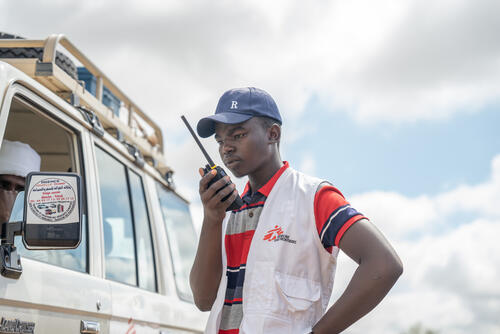

Data collection is a vital tool for medical and humanitarian response
Médecins Sans Frontières (MSF) collects a vast amount of data as part of our medical and humanitarian activities. Working in low-resource settings does not absolve us from the responsibility of rigorously documenting our actions. From the moment a patient arrives, we create a record, followed by a detailed consultation report. If they need to be admitted, a medical file is opened.
These records are essential for patient follow-up, activity tracking and accountability – to both local authorities and our donors. They also help us measure the scale of our activities, allocate resources efficiently, and, most importantly, assess and improve the quality of care we provide. MSF’s dedicated centre for epidemiology, Epicentre, where I work, was created in 1986 for this purpose.
In many crises, MSF is the sole healthcare provider for isolated or conflict-affected communities. This unique access comes with a profound responsibility. Besides routine data, we often need to gather additional information to address critical medical and humanitarian questions. We have a duty not only to treat patients, but also to generate knowledge that can improve their situation.
This data helps answer key research questions: What are the risk factors for disease? How effective is a new treatment or vaccine in our settings?Etienne Gignoux, Epicentre's director of department of epidemiology and learning
This data helps answer key research questions: What are the risk factors for disease? How effective is a new treatment or vaccine in our settings? It also allows us to quantify the scale of an outbreak or crisis in an objective and representative manner. However, collecting reliable and interpretable data in extreme conditions, such as during an Ebola outbreak or in an active war zone, is a significant challenge. Let’s examine two examples in more detail.
Ebola in Democratic Republic of Congo
In 2018, an Ebola outbreak emerged in eastern Democratic Republic of Congo. Within days, MSF sent two epidemiologists, Rebecca Coulborn and myself, to support the response. One of our top priorities was to establish a patient data collection system that was both precise and practical, while adhering to ethical and medical standards.
The system needed to be comprehensive enough to describe the outbreak and the patients affected, but also concise and focused on essential questions: the patient’s age, gender, place of residence, symptoms and onset date, possible exposure events, contact history, vaccination status, laboratory results, and disease progression.
Being concise is all the more crucial, as interviews are conducted by healthcare workers in uncomfortable protective gear that can only be worn for a limited time. With patients requiring rapid care in an emergency setting, workers juggle multiple priorities including setting up clinical care, surveillance, contact tracing, and ensuring that health facilities continue to operate for other needs, without becoming a source of transmission.
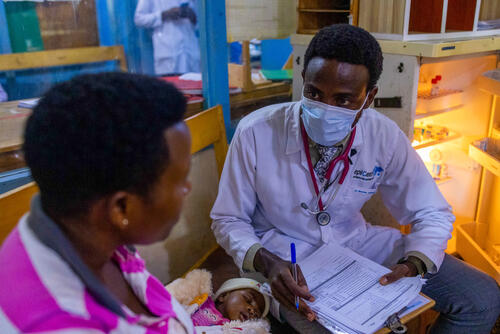
This data collection tool was rapidly adopted by the Ministry of Health and implemented across all Ebola treatment centres, improving patient care and strengthening outbreak control efforts. After the epidemic, we reviewed the data to check for consistency, corrected data entry errors, and excluded unreliable records (for example, cases where a male patient was mistakenly recorded as pregnant). This validated dataset became an invaluable resource for advanced analysis. It provided evidence of the high effectiveness of the Ebola vaccine in an outbreak setting.1 We also discovered that even when the vaccine was administered too late to prevent infection, it still reduced the risk of death by half among hospitalised patients.2
The war in Sudan
The work of our epidemiologists is not limited to outbreaks – it also extends to humanitarian crises caused by conflict. When war broke out in Sudan in 2023, media coverage was limited, despite the conflict escalating into one of the world’s worst humanitarian disasters. MSF teams, working at the heart of the crisis, deeply shaken by the suffering they witnessed, felt a responsibility to document the scale of the catastrophe and the number of victims. In addition, they needed to assess people’s urgent needs for medical care, food, water, and shelter.
In such situations, we rely on standardised protocols refined through experience. In a representative sample of the population, we interview an adult member of each household, asking about deaths in their home since the start of the conflict, incidents of violence, recent illnesses, and living conditions. For their children, we review vaccination records and use simple tools to assess malnutrition status. But how do we conduct these surveys in the midst of an active war?
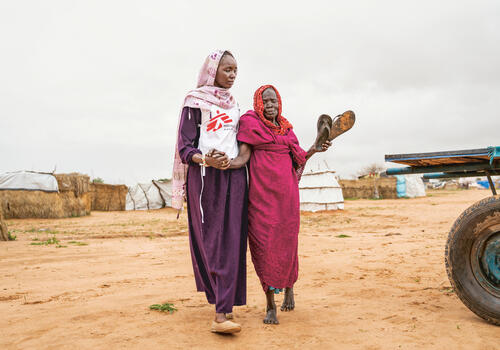
Ensuring the safety of our teams is paramount, and we must carefully weigh whether to prioritise data collection or focus solely on urgent medical care and humanitarian aid distribution. In Sudan, we resolved this dilemma by conducting interviews with families who had fled the conflict and were now refugees and returnees in Chad. These interviews provided critical insights into their experiences before and during their displacement, as well as their current living conditions.
The findings were alarming: in one city in Darfur, more than one in 20 adult men had been killed in acts of violence.3 This data helped inform international humanitarian organisations, and raise awareness of the crisis among policymakers and the public.
Overcoming the challenges of data collection in crises
Whether responding to epidemics, natural hazards, or armed conflicts, collecting reliable and interpretable information in crisis settings is complex and often dangerous. Yet, without data, we cannot accurately assess needs, improve activities, or bear witness to the suffering of affected communities. To overcome logistical and security challenges, we continuously explore alternative data collection methods. In places where movement is too risky, but communication networks are still functional, such as Port-au-Prince in Haiti, or Gaza, Palestine, we conduct phone surveys. In Mauritania, we use satellite imagery to estimate the scale and location of displaced people. In northern Nigeria, we monitor social media for early signs of disease outbreaks. In remote villages in Democratic Republic of Congo, we collaborate with schoolteachers to assess childhood vaccination coverage.
These efforts are not optional – they are essential. Collecting and analysing data in crisis situations is fundamental to improving humanitarian response and ensuring that the voices of affected people are heard. Despite the challenges, we remain committed to this work, because we know that better information leads to better action – and ultimately, better outcomes for those in need.