




26,500
26,5
7,440
7,44
4,480
4,48
320
32
280
28
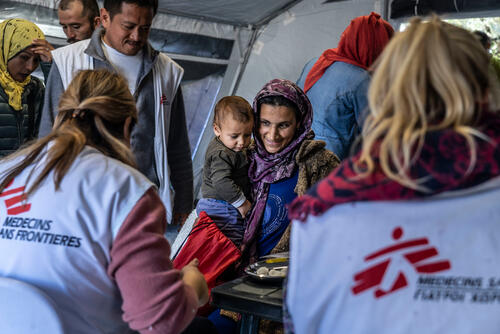
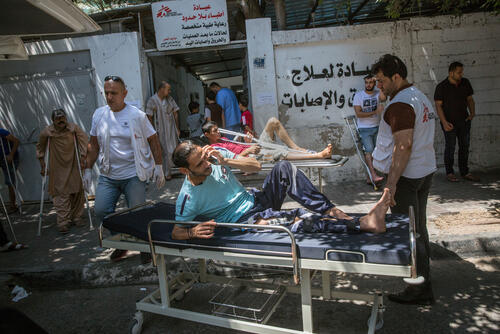
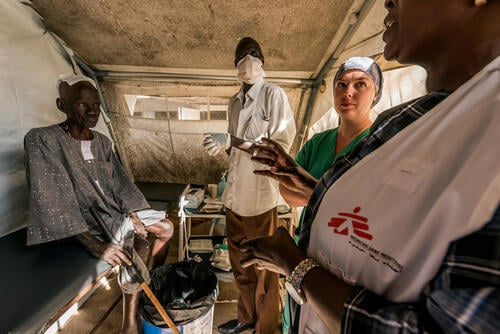
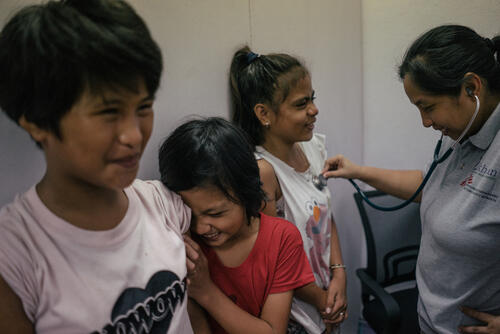
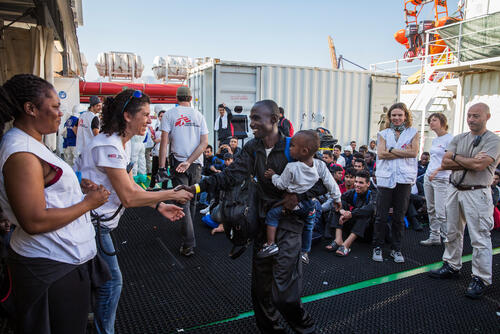
More than 50,000 migrants and refugees from countries such as Syria, Afghanistan and Iraq arrived in Greece in 2018.<a href="https://data2.unhcr.org/en/situations/mediterranean/location/5179">UNHCR Operational Portal, Mediterranean Situation</a> Between January and December, our teams conducted around 26,500 outpatient consultations across the country and vaccinated around 4,500 children against the most common childhood diseases.
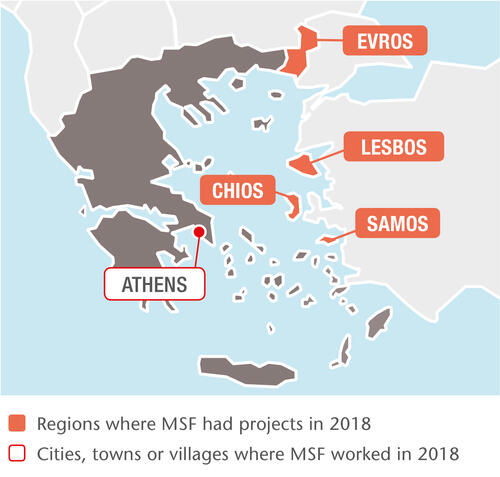
Greek islands
Since the so-called EU-Turkey deal in March 2016, migrants and refugees who were in transit through the Greek islands have been trapped, waiting for their status to be determined. Consequently, they spend long periods in inadequate reception centres, with poor access to healthcare and the fear of being sent back to Turkey, which exacerbates their medical and mental health problems. We continued to denounce this deal and its dramatic impact on the health of men, women and children trapped on the islands in 2018.
Since 2016, we have been running a clinic on Lesbos offering primary healthcare, sexual and reproductive health services and mental health support. In late 2017, we set up an additional clinic outside Moria reception centre, providing the same services for children under 16, pregnant women and victims of sexual violence.
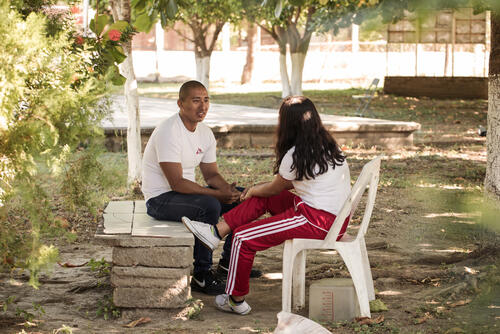
We also have a team in Mytilene town treating patients with severe mental health conditions caused by trauma and violence in their country of origin or on their journey to Greece. Many of our patients, including minors, reported that the insecure and inhumane conditions in Moria itself played a major part in pushing them towards despair, self-harm or suicidal thoughts.
On Chios, we provide primary healthcare, sexual and reproductive healthcare, mental health support and social care for refugees and migrants. We have cultural mediators and social workers in the hospital on the island, and in April started running travel medicine services to guarantee healthcare continuity for patients in transit, including health advice, vaccinations, medication and referrals to MSF services in Athens.
Until April, we also provided mental healthcare, health promotion and temporary shelter for people in the town of Vathy, on the island of Samos, which hosts mostly women, children and patients requiring urgent medical treatment on the mainland.
Athens
We run two clinics in Athens to respond to the specific needs of migrants and refugees. At our ‘day care centre’, teams provide sexual and reproductive healthcare, mental health support, social care and treatment for chronic diseases.
In our second centre, run in collaboration with Day Centre Babel and the Greek Council for Refugees, we offer comprehensive care to victims of torture, ill-treatment and other forms of degrading treatment. The clinic’s multidisciplinary approach comprises medical and mental healthcare, physiotherapy, social assistance and legal support.
Northern Greece
In response to the huge increase in arrivals (more than 18,000 in 2018 compared with around 6,500 in 2017), and the absolute lack of healthcare provision by the Ministry of Health, in July we sent a team to work in the reception and identification centre in Fylakio, in Evros region, on the border with Turkey, until the end of the year. We provided general healthcare consultations, sexual and reproductive health and travel medicine consultations.