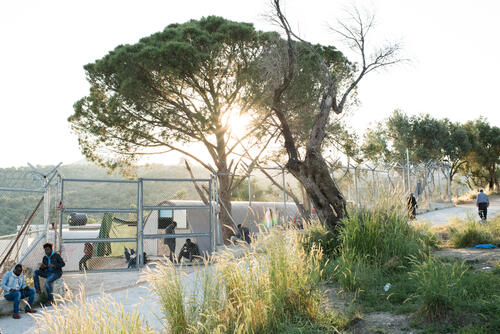
Thousands of people seeking safety after fleeing countries such as Syria, Afghanistan, Iraq, Sudan, and Congo continue to risk their lives to reach Europe. Those who try to arrive via Turkey and the Aegean Sea have been trapped for an indefinite period of time on islands in Greece as part of the EU/Turkey deal and its deterrence and containment approach. 
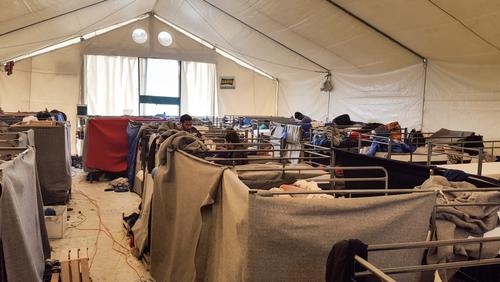
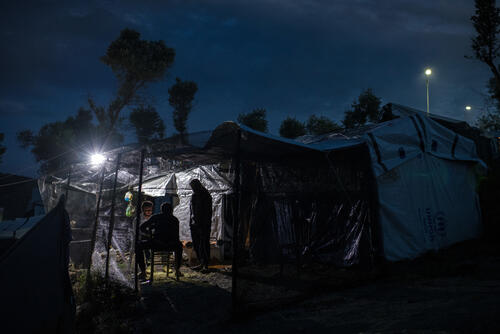
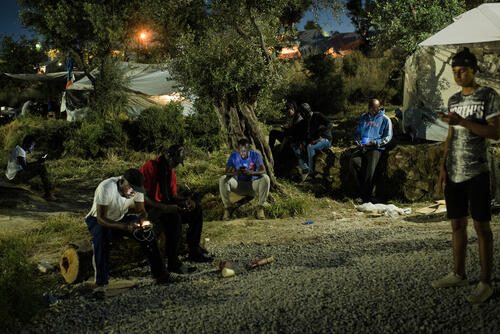
In Moria refugee camp, on Lesbos island, there are currently more than 7,500 people in a camp made for a maximum of 2,500. With the camp so full, refugees are now staying in an informal extension of the camp known as Olive Grove. The awful conditions at Moria camp/Olive Grove and arbitrary administrative situations have had a dramatic impact on their health and in particular their mental health. 
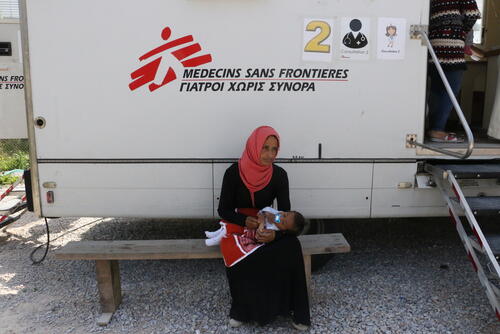
Médecins Sans Frontières teams provide medical and mental health support outside Moria camp and run a clinic for severe mental health cases in Mytilene, the capital of the island.

Trapped in Moria

Ebola disease in DRC: find out how we're responding
Learn more

Thousands of people seeking safety after fleeing countries such as Syria, Afghanistan, Iraq, Sudan, and Congo continue to risk their lives to reach Europe. Those who try to arrive via Turkey and the Aegean Sea have been trapped for an indefinite period of time on islands in Greece as part of the EU-Turkey deal and its deterrence and containment approach.

In Moria camp, on Lesbos island, there are currently more than 7,500 people in a camp made for a maximum of 2,500. With the camp so full, refugees are now staying in an informal extension of the camp known as Olive Grove. The awful conditions in Moria camp and Olive Grove and arbitrary administrative situations have had a dramatic impact on their health and, in particular, their mental health.

MSF teams provide medical and mental health support outside Moria camp and run a clinic for severe mental health cases in Mytilene, the capital of the island.
Thousands of people seeking safety after fleeing countries such as Syria, Afghanistan, Iraq, Sudan, and Congo continue to risk their lives to reach Europe. Those who try to arrive via Turkey and the Aegean Sea have been trapped for an indefinite period of time on islands in Greece as part of the EU/Turkey deal and its deterrence and containment approach. 
In Moria refugee camp, on Lesbos island, there are currently more than 7,500 people in a camp made for a maximum of 2,500. With the camp so full, refugees are now staying in an informal extension of the camp known as Olive Grove. The awful conditions at Moria camp/Olive Grove and arbitrary administrative situations have had a dramatic impact on their health and in particular their mental health. 
Médecins Sans Frontières teams provide medical and mental health support outside Moria camp and run a clinic for severe mental health cases in Mytilene, the capital of the island.
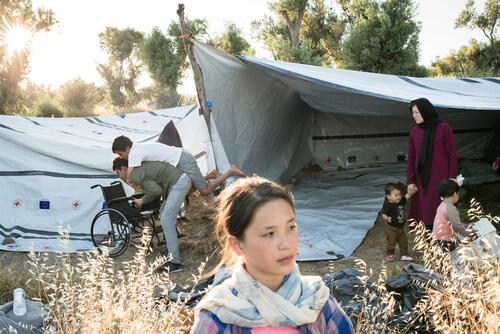
Moria refugee camp, on Lesbos island.
Robin Hammond/Witness Change
Thousands of people seeking safety after fleeing countries such as Syria, Afghanistan, Iraq, Sudan, and Congo continue to risk their lives to reach Europe. Those who try to arrive via Turkey and the Aegean Sea have been trapped for an indefinite period of time on islands in Greece as part of the EU/Turkey deal and its deterrence and containment approach. 
In Moria refugee camp, on Lesbos island, there are currently more than 7,500 people in a camp made for a maximum of 2,500. With the camp so full, refugees are now staying in an informal extension of the camp known as Olive Grove. The awful conditions at Moria camp/Olive Grove and arbitrary administrative situations have had a dramatic impact on their health and in particular their mental health. 
Médecins Sans Frontières teams provide medical and mental health support outside Moria camp and run a clinic for severe mental health cases in Mytilene, the capital of the island.
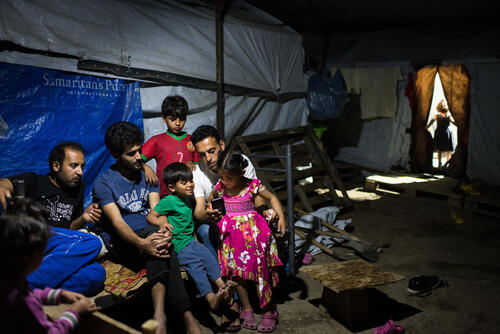
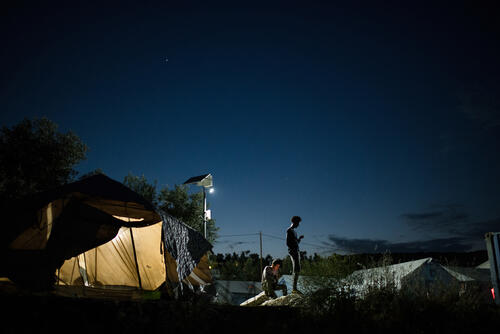
Moria camp by night.
Robin Hammond/Witness Change
Thousands of people seeking safety after fleeing countries such as Syria, Afghanistan, Iraq, Sudan, and Congo continue to risk their lives to reach Europe. Those who try to arrive via Turkey and the Aegean Sea have been trapped for an indefinite period of time on islands in Greece as part of the EU/Turkey deal and its deterrence and containment approach. 
In Moria refugee camp, on Lesbos island, there are currently more than 7,500 people in a camp made for a maximum of 2,500. With the camp so full, refugees are now staying in an informal extension of the camp known as Olive Grove. The awful conditions at Moria camp/Olive Grove and arbitrary administrative situations have had a dramatic impact on their health and in particular their mental health. 
Médecins Sans Frontières teams provide medical and mental health support outside Moria camp and run a clinic for severe mental health cases in Mytilene, the capital of the island.
Olive Grove, an informal extension of Moria, where there are currently more than 7,500 people in a camp made for a maximum of 2,500.
© Robin Hammond/Witness Change
I wish I could go back to a peaceful Syria. If there was peace in Syria, I would not wait here one minute. Kasim, Deir Ez-Zor, Syria
The extended Al Salih family from Deir Ez-Zor, Syria. 
They left Syria in July 2017 after their home and neighborhood was destroyed by barrel-bombs dropped by the Syrian government. They travelled with 10 members of their extended family at night to avoid the bombing and ISIS, who controlled the city. They left by foot, taking several days to get to Idlib in the north of the country. They stayed there for three months trying approximately 20 times to cross into Turkey, being caught and turned back each time by the Turkish police, before finally successfully crossing to Turkey. They then spent a month in Turkey trying to get to Greece. They attempted to cross the sea about 10 times, each time being caught, before a successful crossing and them arriving in Lesbos three and a half months ago. It was not what they expected after working so hard to get to Europe: “It’s been very bad here. There is no life here. I wish I stayed in Syria and died,” says Kasim (head of the family in black t-shirt). He talks about the mental health of his family: “Any time the kids hear an airplane they are afraid. They think bombs are coming.” Talking of life in the camp he says, “All the time I’m angry. I’ve lost my daughter in Syria, and then I come here and there is not enough water, not enough food, no life.”  His family has now completed the registration to be sent to Athens. They are now waiting to be taken there. Asked what he wants for his future he says, “I wish I could go back to a peaceful Syria. If there was peace in Syria I would not wait here one minute.” 
Thousands of people seeking safety after fleeing countries such as Syria, Afghanistan, Iraq, Sudan, and Congo continue to risk their lives to reach Europe. Those who try to arrive via Turkey and the Aegean Sea have been trapped for an indefinite period of time on islands in Greece as part of the EU/Turkey deal and its deterrence and containment approach. 
In Moria refugee camp, on Lesbos island, there are currently more than 7,500 people in a camp made for a maximum of 2,500. With the camp so full, refugees are now staying in an informal extension of the camp known as Olive Grove. The awful conditions at Moria camp/Olive Grove and arbitrary administrative situations have had a dramatic impact on their health and in particular their mental health. 
Médecins Sans Frontières teams provide medical and mental health support outside Moria camp and run a clinic for severe mental health cases in Mytilene, the capital of the island.
The extended Al Salih family from Deir Ez-Zor, Syria.
Robin Hammond/Witness Change

The Al Salih family from Deir Ez-Zor left Syria in July 2017 after their home and neighbourhood were destroyed by barrel-bombs dropped by the Syrian government. They travelled with 10 members of their extended family at night to avoid the bombing and ISIS, who controlled the city. They left by foot, taking several days to get to Idlib in the north of the country. They stayed there for three months trying some 20 times to cross into Turkey. They were caught and turned back each time by the Turkish police, before finally successfully crossing to Turkey. They then spent a month in Turkey trying to get to Greece. They attempted to cross the sea about 10 times, each time being caught, before a successful crossing and them arriving in Lesbos. It was not what they expected after working so hard to get to Europe.

“It’s been very bad here. There is no life here. I wish I had stayed in Syria and died,” says Kasim, the head of the family. He talks about the mental health of his family: “Any time the kids hear an airplane they are afraid. They think bombs are coming.” Talking of life in the camp he says, “All the time I’m angry. I’ve lost my daughter in Syria, and then I come here and there is not enough water, not enough food, no life.” His family has now completed the registration to be sent to Athens. They are now waiting to be taken there.
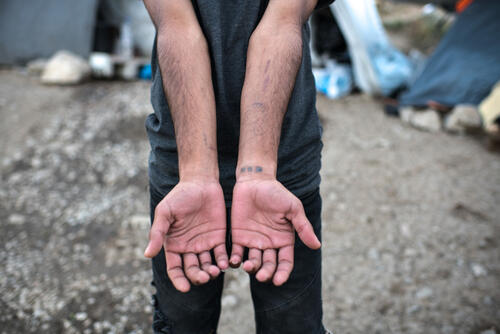
55-year-old Naima Bilal arrived from Afrin in Kurdish Syria 5 days ago with 7 family members fleeing the Turkish armies bombing of their city. 
Thousands of people seeking safety after fleeing countries such as Syria, Afghanistan, Iraq, Sudan, and Congo continue to risk their lives to reach Europe. Those who try to arrive via Turkey and the Aegean Sea have been trapped for an indefinite period of time on islands in Greece as part of the EU/Turkey deal and its deterrence and containment approach. 
In Moria refugee camp, on Lesbos island, there are currently more than 7,500 people in a camp made for a maximum of 2,500. With the camp so full, refugees are now staying in an informal extension of the camp known as Olive Grove. The awful conditions at Moria camp/Olive Grove and arbitrary administrative situations have had a dramatic impact on their health and in particular their mental health. 
Médecins Sans Frontières teams provide medical and mental health support outside Moria camp and run a clinic for severe mental health cases in Mytilene, the capital of the island.
55-year-old Naima Bilal arrived from Afrin in Kurdish Syria five days ago with seven family members fleeing the Turkish army's bombing of their city.
Robin Hammond/Witness Change
Newly arrived  family from Afghanistan at Olive Grove extension to Moria camp.  
Thousands of people seeking safety after fleeing countries such as Syria, Afghanistan, Iraq, Sudan, and Congo continue to risk their lives to reach Europe. Those who try to arrive via Turkey and the Aegean Sea have been trapped for an indefinite period of time on islands in Greece as part of the EU/Turkey deal and its deterrence and containment approach. 
In Moria refugee camp, on Lesbos island, there are currently more than 7,500 people in a camp made for a maximum of 2,500. With the camp so full, refugees are now staying in an informal extension of the camp known as Olive Grove. The awful conditions at Moria camp/Olive Grove and arbitrary administrative situations have had a dramatic impact on their health and in particular their mental health. 
Médecins Sans Frontières teams provide medical and mental health support outside Moria camp and run a clinic for severe mental health cases in Mytilene, the capital of the island.
A newly arrived family from Afghanistan at the Olive Grove extension to Moria camp.
Robin Hammond/Witness Change
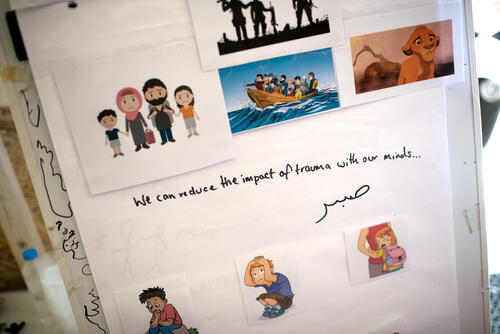
A therapeutic group for children coming from war zones using play, art and story-telling. The sessions take place at the MSF clinic stationed just outside Moria camp. 
Thousands of people seeking safety after fleeing countries such as Syria, Afghanistan, Iraq, Sudan, and Congo continue to risk their lives to reach Europe. Those who try to arrive via Turkey and the Aegean Sea have been trapped for an indefinite period of time on islands in Greece as part of the EU/Turkey deal and its deterrence and containment approach. 
In Moria refugee camp, on Lesbos island, there are currently more than 7,500 people in a camp made for a maximum of 2,500. With the camp so full, refugees are now staying in an informal extension of the camp known as Olive Grove. The awful conditions at Moria camp/Olive Grove and arbitrary administrative situations have had a dramatic impact on their health and in particular their mental health. 
Médecins Sans Frontières teams provide medical and mental health support outside Moria camp and run a clinic for severe mental health cases in Mytilene, the capital of the island.
The MSF clinic stationed just outside Moria camp organises therapeutic group sessions for children coming from war zones, involving play, art and story-telling.
© Robin Hammond/Witness Change
In the past four weeks, we have received an increase in the number of minors suffering from intense panic attacks, suicidal ideations and suicide attempts. Dr Alessandro Barberio, MSF psychiatrist at Mytilene clinic
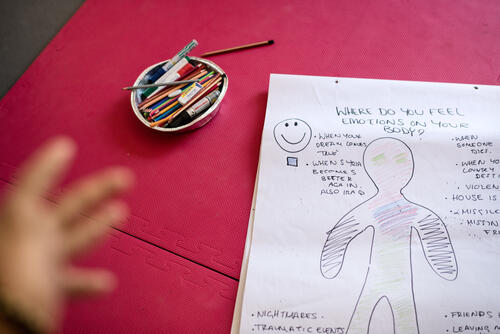
A therapeutic group for children coming from war zones using play, art and story-telling. The sessions take place at the MSF clinic stationed just outside Moria camp. 
Thousands of people seeking safety after fleeing countries such as Syria, Afghanistan, Iraq, Sudan, and Congo continue to risk their lives to reach Europe. Those who try to arrive via Turkey and the Aegean Sea have been trapped for an indefinite period of time on islands in Greece as part of the EU/Turkey deal and its deterrence and containment approach. 
In Moria refugee camp, on Lesbos island, there are currently more than 7,500 people in a camp made for a maximum of 2,500. With the camp so full, refugees are now staying in an informal extension of the camp known as Olive Grove. The awful conditions at Moria camp/Olive Grove and arbitrary administrative situations have had a dramatic impact on their health and in particular their mental health. 
Médecins Sans Frontières teams provide medical and mental health support outside Moria camp and run a clinic for severe mental health cases in Mytilene, the capital of the island.
Art is a key part of the therapeutic groups sessions organised for children at the MSF clinic just outside Moria camp.
Robin Hammond/Witness Change

The family of Abdalrazaq Almohamad left their home in Deir Ez-Zor, Syria, in November 2017 with many people from their neighbourhood. “Our house was completely destroyed,” says Kafa, his wife. “There are terrorists. That’s why we left. Six years ago we had hope but after our home was destroyed, when there were no longer jobs, when my cousin was killed, my brother went missing, when we saw people dead in the street, people dead in their homes, people cut in two - then we lost hope.”

14-year-old Bidoor continues: “I remember when the airplane came very close with the big noise, and dropped the bomb and people on the street outside were dead.” Their mother continues, “Every time we heard the plane we had to run. The airplane came and we would run. The bombs didn’t just target the terrorists. Even now when we hear the planes the children become afraid. Garam runs to us and we hug her and comfort her.”

“I remember when the helicopters came with the barrel bombs,” said Bidoor, “and destroyed everything and people ran away to the river but the airplane would follow them and kill them.”
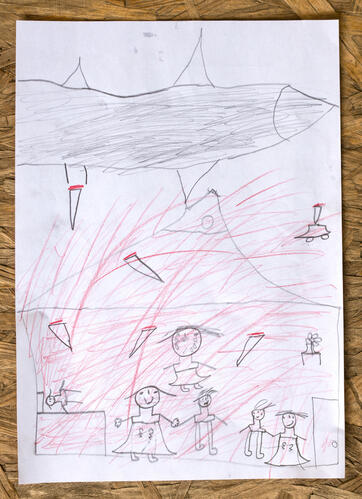
The family of Abdalrazaq Almohamad, 38. His wife, Kafa Alisa, 34. His daughters, Bidoor Almohamad, 14, Noor Almohamad, 12 . Minar Almohamad, 12, Garam Almohamad, 11, and sons, Mohamad Almohamad, 10, Hamza Almohamad, 7. The family left their home in Deir Ez-Zor, Syria in November 2017 with many people from their neighborhood. “Our house was completely destroyed,” says Kafa. “There are terrorists. That’s why we left. Six years ago we had hope but after our home was destroyed, when there were no longer jobs, when my cousin was killed, my brother went missing, when we saw people dead in the street, people dead in their homes, people cut in two, then we lost hope.” 14-year-old Bidoor continues: “I remember when the airplane came very close with the big noise, and dropped the bomb and people on the street outside were dead.” Their mother continues, “Every time we heard the plane we had to run. The airplane came and we would run. The bombs didn’t just target the terrorists. Even now when we hear the planes the children become afraid. Garam runs to us and we hug her and comfort her.” 
“I remember when the helicopters came with the barrel bombs,” said Bidoor, “and destroyed everything and people ran away to the river but the airplane would follow them and kill them.” 
Thousands of people seeking safety after fleeing countries such as Syria, Afghanistan, Iraq, Sudan, and Congo continue to risk their lives to reach Europe. Those who try to arrive via Turkey and the Aegean Sea have been trapped for an indefinite period of time on islands in Greece as part of the EU/Turkey deal and its deterrence and containment approach. 
In Moria refugee camp, on Lesbos island, there are currently more than 7,500 people in a camp made for a maximum of 2,500. With the camp so full, refugees are now staying in an informal extension of the camp known as Olive Grove. The awful conditions at Moria camp/Olive Grove and arbitrary administrative situations have had a dramatic impact on their health and in particular their mental health. 
Médecins Sans Frontières teams provide medical and mental health support outside Moria camp and run a clinic for severe mental health cases in Mytilene, the capital of the island.
The family of Abdalrazaq Almohamad, as drawn by his 12-year-old daughter Noor Almohamad. “I remember when the airplane came very close with the big noise, and dropped the bomb and people on the street outside were dead,” 14-year-old Bidoor explains.
Robin Hammond/Witness Change