




7,030
7,03
1,550
1,55
380
38
Since 2015, El Salvador has been ranked among the countries with the highest homicide rates in the world,<a href="http://www3.weforum.org/docs/Media/GCR1617/GCR_16.pdf">World Economic Forum, 2017</a> and an average of 13 women a day are victims of sexual violence.<a href="http://www.sv.undp.org/content/el_salvador/es/home/library/womens_empowerment/informe-sobre-hechos-de-violencia-contra-las-mujeres-2016-2017.html">UNDP, Salvadoran Security Ministry and National Direction of Statistics and USAID, 2018</a> Fights between rival gangs and their clashes with security forces create invisible borders that limit people’s mobility, and the ability of health services to reach them.
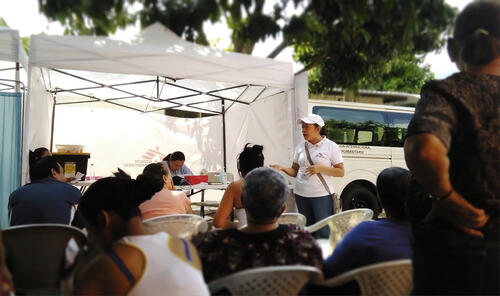
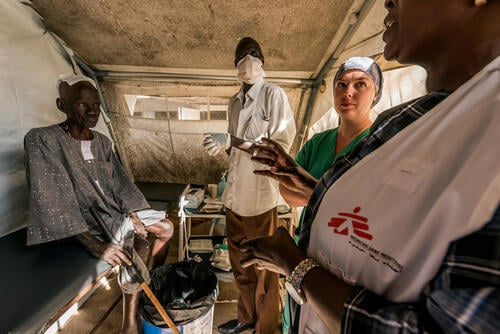
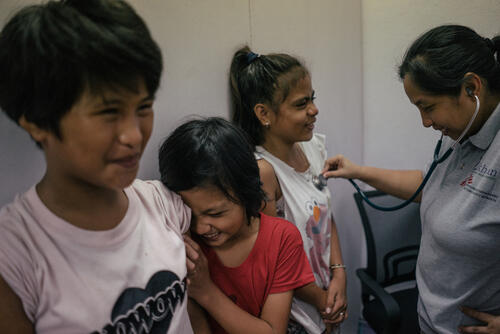
We set up mobile clinics in areas where access to healthcare is particularly affected by violence and insecurity. As well as primary healthcare and mental health support, the teams provided sexual and reproductive healthcare services and ran community activities including local support groups and health promotion.
We worked with the Comandos de Salvamento in Soyapango, using medically equipped MSF vehicles to provide urgent care and carry out an average of 100 hospital referrals a month in places that are considered no-go zones by other ambulance services.
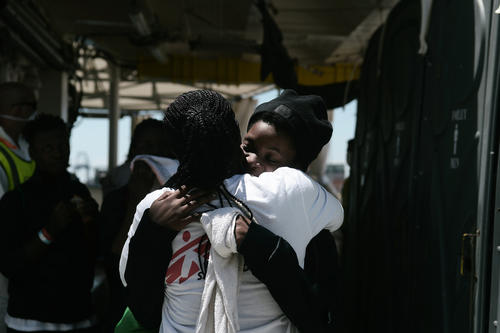
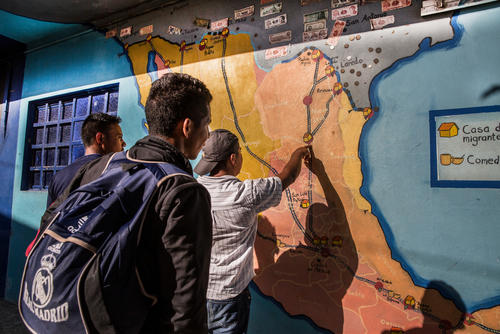
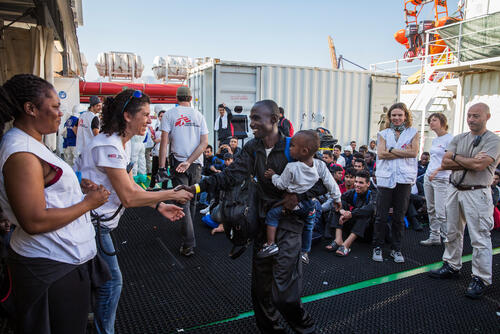
We also worked alongside national institutions and other NGOs in shelters for migrants and displaced or returned Salvadorans who had attempted to flee violence, poverty or a combination of the two.
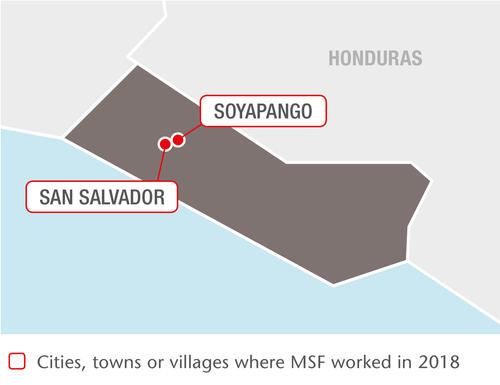
By the end of the year, our activities had reached 11 neighbourhoods in San Salvador and Soyapango, and enabled Ministry of Health medical teams to resume services in other areas.
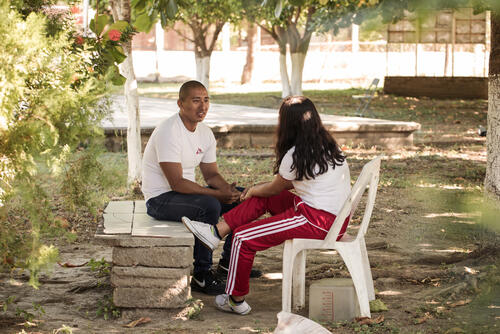
Over 9,300 people participated in our community activities and almost 600 patients benefited from our sexual and reproductive healthcare services in 2018. We advocate treating sexual violence as a medical emergency and providing comprehensive care to protect victims from further suffering.