




4,300
4,3
The political and military crises of 2002-2010 have taken a severe toll on the Ivorian health system: according to the World Health Organization, it is one of the weakest in Africa, with only one medical doctor and five midwives per 10,000 inhabitants. As the maternal mortality rate is very high, the Ministry of Health has made maternal healthcare one of its main priorities, offering it free of charge to all pregnant women. However, budgetary restrictions, drug stockouts and a lack of trained health personnel, among other factors, continue to hamper access to quality medical services for women and young children.
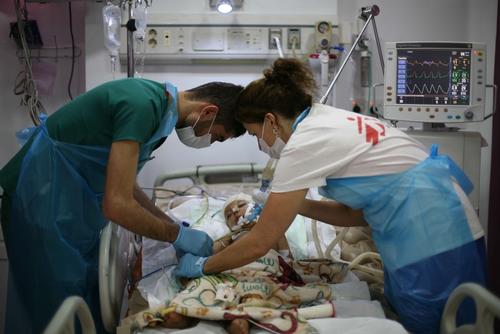
In the Hambol Region, where the mortality ratio is estimated at 661 per 100,000 live births, according to an Epicentre Survey in 2015, MSF runs a project in collaboration with the Ministry of Health. The team aims to improve the management of obstetric and neonatal emergencies in this rural setting by supporting the Katiola referral hospital and three primary health centres in the region. MSF supports these facilities by providing additional personnel and medical supplies and by facilitating an efficient referral system for complicated deliveries, while implementing a training, coaching and supervision programme for the Ministry of Health staff.
Every month in 2016, an average of 350 deliveries were assisted in MSF-supported facilities, 55 newborns were admitted to the neonatal ward and 50 caesarean sections were performed at Katiola hospital.
86
86
3.6 M
3.6M
1990
199