


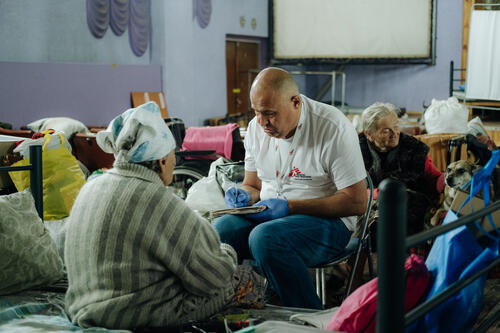
For 11 years, medics and humanitarians have worked near the frontline of the war in Ukraine. Today, and since Russia’s full-scale invasion in February 2022, Médecins Sans Frontières (MSF) teams are still operating near frontlines. In two documentaries following our colleagues, we show how humanitarians are working and living through the experiences of war.
Help from the frontline
Just a few kilometres away from the frontline, one of our medical teams is working on two-week rotations at a hospital in Kherson, in southern Ukraine. During their rotation, they do not leave the hospital building and sleep in the concrete basement. In the emergency room, they are often treating people who have gone too long without any care.

Video
Help from the frontline
Eyes and ears of MSF
Yuliia Trofimova is working as our communications officer in Ukraine, acting as our eyes and ears by documenting MSF responses to mass casualties and strikes, as well as collecting testimonies from people who have been affected by the war.

Video
Eyes and ears of MSF
Ukraine
What four years of full-scale war has taken from people in Ukraine
Project Update
19 Feb 2026
