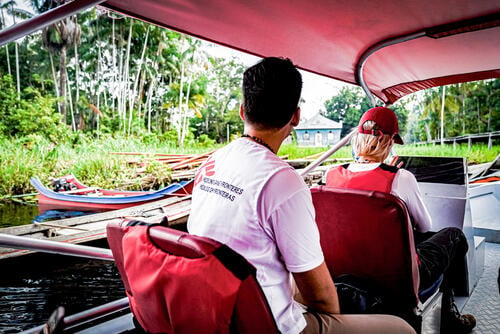
A boat taking MSF staff to the rural area of Portel travels through a river in the Brazilian Northern state of Pará. MSF is supporting local authorities in order to improve healthcare access to the town’s population. Portel has dealt historically with a lack of health professionals and facilities, particularly in hard-to-reach remote areas which are home to vulnerable river dweller communities.

Where we work

A boat taking MSF staff to the rural area of Portel travels through a river in the northern state of Pará. Brazil, November 2023.
© Diego Klein/MSF
Ebola disease in DRC: find out how we're responding
Learn more

In more than 75 countries, Médecins Sans Frontières provides medical humanitarian assistance to save lives and ease the suffering of people in crisis situations. Find out more about our actions in every country below.
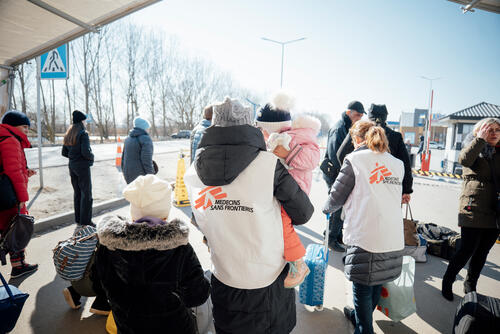
Adelina Ciumac, from Tudora, and Olena Starovoitova, from Cuciurgan, MSF community health workers, help people with general information and emotional support.

Moldova

MSF briefly returned to Moldova in 2022 to support Ukrainian refugees.
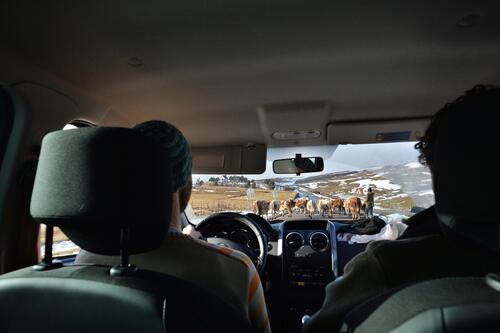
Mongolia: National staff in car..
In 2001 MSF supported some 30,000 people after a quarter of their livestock died due to the 'dzud', exceptionally cold and dry winter weather.  More details in supplementary caption.

Mongolia

MSF closed its projects in Mongolia in 2010.
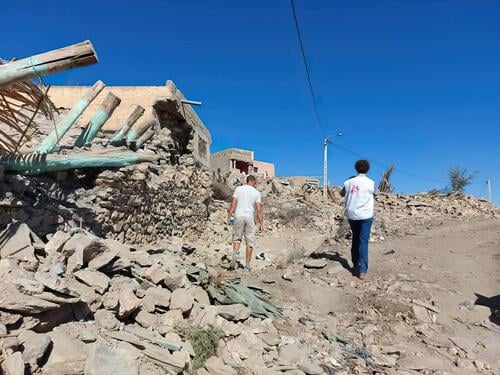
MSF teams are assessing the needs in Taharat village, after a powerful earthquake struck the centre of Morocco on 8 September 2023.

Morocco

Learn about MSF's previous activities in Morocco.
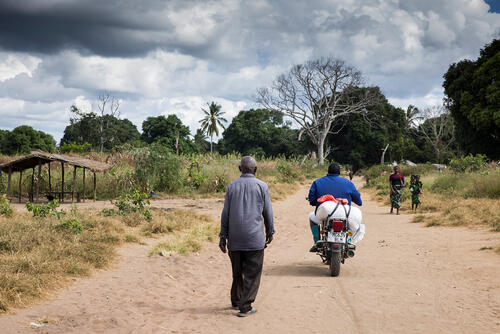
Lucas Matagodi at Lianda IDP camp in Mueda. Lucas Matangodi Shilongo is over 70 years old, but he doesn't know exactly how old. He is in Lyanda IDP camp in Mueda district, far from his home in Nangade district further north. 

"If we were at home we would know how to get food, but not here. 

Many of Lucas' neighbours in the camp are also from Nangade. The war there forced thousands of people to flee. Lucas says that in one of the attacks, insurgents killed his wife, one of his children and another of his grandchildren. He cries when he remembers them, especially his wife. He misses her. He is devastated.

"I dream that I'm running away and falling. I dream that I am being chased," he says. 

Lucas lives with his sister and other relatives in one of the windowed cottages built in this part of the camp. His daughter cooks with her granddaughter inside the hut. In the next room, where the conversation takes place, there is a tin roof and an empty sack of rice from India. Lucas recalls the attack on his village. 
"They came in and burnt the houses, they kidnapped many people, I was sleeping in the forest, because they had already tried to attack twice and we were waiting for them, the people had left their houses pre-emptively and were mostly sleeping in the forest on the day of the attack. They attacked during sunset. They burnt houses.

It was not then that his wife, son and grandson were killed. It was in another attack. Many of the camp residents report fleeing several villages and suffering several attacks along the way. 

"Before that attack, my wife went to another village to visit my son, and on the same day the insurgents attacked, captured the village and killed my wife, son and grandson. The other grandchildren fled and they were the ones who informed us". 
Lucas went to the mobile clinic set up by Médecins Sans Frontières in Lyanda camp today for the first time to seek relief. He needs psychological help. 
"On a daily basis, I think mainly of my wife. I am alone. Sometimes I cry. When I wake up, I'm no longer sleepy and I start to think. I feel bad for my grandchildren, I don't want to talk to them about what happened. I don't have any more worries, because I have the support of my grandchildren. What I think about is that I will never be able to see my wife again. 
"For the moment I don't think about going back. I want to stay because I am safe here, what worries me is only the food, because it is not enough".

Mozambique

Learn about our medical projects in Mozambique, where we provide specialised care to help curb the country's HIV epidemic while also assisting people in conflict-ridden Cabo Delgado.
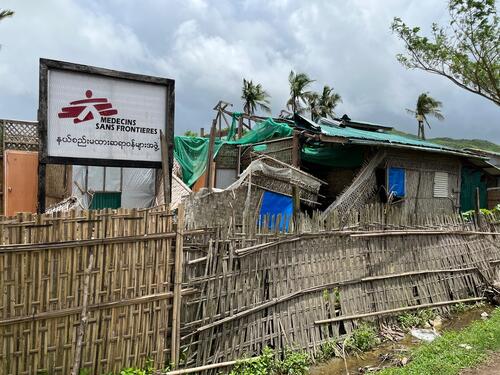
One month after Cyclone Mocha hit parts of Myanmar, MSF staff are still witnessing damage caused by the storm in many areas of Rakhine state.

Myanmar

We work with the Myanmar Ministry of Health to provide care for HIV and TB patients, primary healthcare, and vaccinations.

Map of MSF activities around the world

The place names and boundaries used in this report do not reflect any position by MSF on their legal status.

Our Programmes

The place names and boundaries used in this report do not reflect any position by MSF on their legal status.