


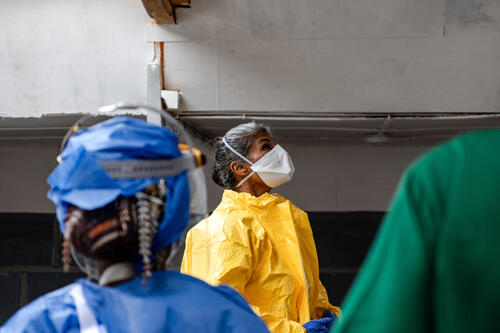
Democratic Republic of the Congo (DRC) is currently facing the largest and deadliest Ebola disease outbreak in its history. The outbreak is unfolding in eastern DRC amid a decades-long humanitarian crisis marked by conflict, violence, displacement, food insecurity, and multiple overlapping health emergencies. These conditions make it much harder to stop the outbreak, which continues to spread at an alarming rate.
More than 8,000 people have been confirmed to have contracted Ebola, while at least 3,900 have died from the disease.
Stopping the spread of Ebola disease requires multiple coordinated actions to be carried out at the same time. The response must include finding people suspected to have the disease, safely isolating them and transferring them for care, tracing contacts who may have been exposed, preventing infection in health facilities and in communities, and working closely with affected communities to build trust, share information about the disease, and encourage people to seek care early.
Focusing on just one area is not enough. No matter how difficult they may be to implement, all these actions are essential and rely on each other to end the outbreak.
Surveillance
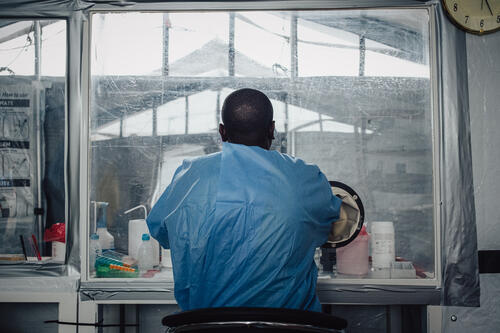
Epidemiological surveillance means collecting, gathering and analysing key information to understand how an outbreak is evolving and where the disease is spreading. It helps those responding to an outbreak see how quickly it is spreading and where more action is needed to stop it. By tracking this information over time, health teams can spot warning signs that the outbreak may be spreading to new areas, respond faster, and adapt the response as the situation changes. This includes tracking test results, suspected and confirmed cases, and people who may have been exposed to the disease through contact with an infected person.
Infection prevention and control
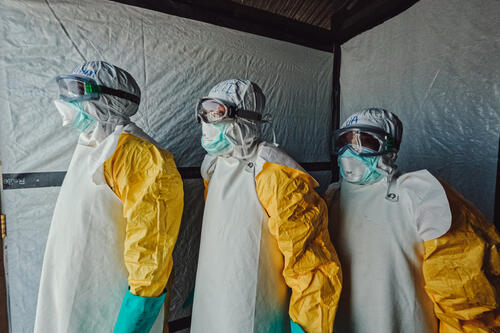
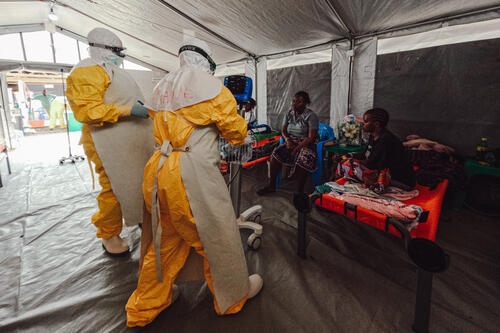
Infection prevention and control (IPC) refers to the measures used to stop Ebola disease from spreading, especially within healthcare facilities. Because Ebola disease is spread through contact with infected bodily fluids, preventing exposure is critical. In treatment centres and hospitals, IPC begins as soon as a person arrives: anyone suspected of having Ebola disease is identified quickly, separated from others, and isolated while awaiting test results. Patients with confirmed Ebola disease are then cared for in dedicated areas to reduce the risk of transmission.
IPC depends on strict protocols to protect healthcare workers and other patients. Staff wear full personal protective equipment (PPE) and are specially trained to put it on and remove it safely. It also includes safe blood collection, careful disposal of needles and contaminated waste, routine cleaning and disinfection of beds and equipment, and clear ways for patients, staff, family, and equipment to move within the facility.
Water, sanitation and hygiene
Water, sanitation, and hygiene (sometimes abbreviated to WASH or WatSan) plays an important part of wider IPC efforts, helping to prevent the spread of Ebola disease.
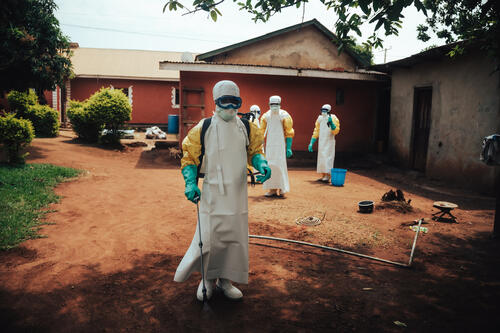
In Ebola treatment centres (ETCs), WASH teams regularly clean rooms, beds, toilets, floors, and shared spaces, because bodily fluids can carry the virus. They do this using strict cleaning procedures with soap, water, and chlorine.
WASH also means making sure there is enough water for cleaning, laundry, disinfection, handwashing, and safe wastewater disposal. It helps patients that have survived Ebola disease return home safely by making sure they can wash, change into clean clothes, and disinfect their belongings before leaving the treatment centre. WASH teams also clean ambulances and homes of infected patients, and help carry out safe burials, since the body of someone who has died from Ebola can still spread the disease.
Community engagement
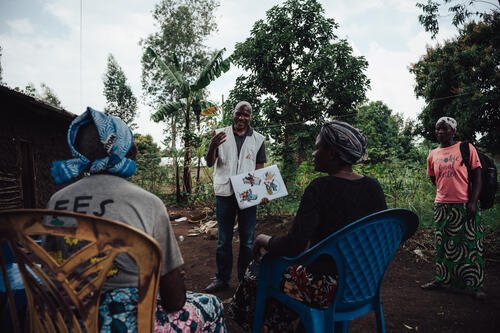
Communities play a crucial role in ending Ebola disease outbreaks. Working in partnership with community leaders helps to ensure that correct information about the disease is shared within affected communities. It also helps people adapt their behaviour to keep themselves and their families safe and seek care when needed. This also builds trust in the broader response.
Community-based surveillance – community members gathering information from within their communities – is also key to make sure we understand how the outbreak is spreading.
Patient care
Patient care is a key part of the Ebola response. It involves caring for people with the disease in a safe and respectful way, giving them the best possible chance of recovery while reducing the risk of infecting others.
Although there is currently no specific cure or vaccine for Bundibugyo virus – which is driving the current outbreak – early supportive care can still save lives. Patients can receive treatment for symptoms such as pain, fever, vomiting, and diarrhoea, which includes fluids, food, rest, and treatment for other illnesses, such as malaria.
Patient care also helps build trust. When people know that treatment centres offer safe, dignified care, they are more likely to seek help early. This helps health teams detect cases sooner, start treatment more quickly, and reduce further spread of the disease.
Bringing care closer to affected communities, including through isolation centres linked to existing health facilities, is especially important. It improves access, helps families stay connected, and strengthens other essential health services at the same time.
DRC Ebola outbreaks
Children are being left behind in the current Ebola disease outbreak response
Press Release
15 Oct 2026
DRC Ebola outbreaks
Ebola disease outbreak spreads like a megafire in North Kivu as new hotspots multiply
Project Update
5 Oct 2026
Democratic Republic of Congo
MSF staff member tests positive for Ebola disease and is medically evacuated
Statement
1 Oct 2026