


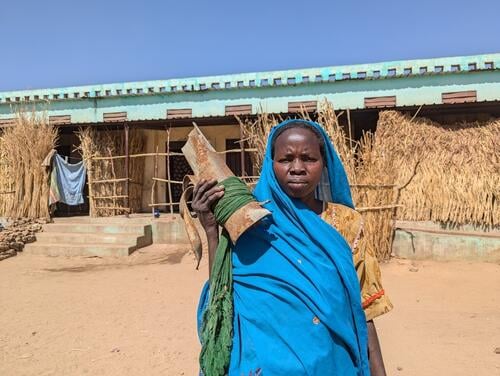
- As Sudan marks two years of war, people continue to experience the catastrophic consequences and can no longer wait for real assistance.
- As the rainy season approaches, humanitarian organisations must scale up, and the warring parties must allow, desperately-needed humanitarian assistance.
- As bombing and violence continues, MSF calls on the warring parties to ensure civilians, humanitarian personnel, and medical teams are protected.
Sudan – As the war in Sudan between the Rapid Support Forces (RSF) and the Sudanese Armed Forces (SAF) enters its third year, people remain unseen, bombed, besieged, displaced, and deprived of food, and basic lifesaving services. Of the country’s 50 million people, 60 per cent need humanitarian assistance,1 and people are facing simultaneous health crises and limited access to public healthcare. Médecins Sans Frontières (MSF) reiterates our calls on the warring parties and their allies to ensure that civilians, humanitarian personnel, and medical teams are protected. All restrictions on the movements of humanitarian supplies and staff must be removed, especially as the rainy season fast approaches.
“The warring parties are not only failing to protect civilians — they are actively compounding their suffering,” says Claire San Filippo, MSF Emergency Coordinator. “Wherever you look in Sudan, you will find needs — overwhelming, urgent, and unmet.”
“Millions are receiving almost no humanitarian assistance, medical facilities and staff remain under attack, and the global humanitarian system is failing to deliver even a fraction of what’s required,” says San Filippo.
These compounding crises reflect not just the brutality of the conflict, but the dire consequences of the crumbling public healthcare system and a failing humanitarian response.Marta Cazorla, MSF Emergency Coordinator
As frontlines have shifted over the course of the war, especially in Khartoum and Darfur, civilians feared retaliatory attacks from both warring parties. For the past two years, both RSF and SAF have repeatedly and indiscriminately bombed densely- populated areas. RSF and allied militias have unleashed a campaign of brutality, including systematic sexual violence, abductions, mass killings, looting of aid, erasure of civilian neighbourhoods, and occupation of medical facilities. Both sides have laid siege to towns, destroyed vital infrastructure, and blocked humanitarian aid.
Widespread starvation is taking hold, according to the UN; Sudan is currently the only place in the world where famine has been officially declared in multiple locations. Famine was first declared in Zamzam internally displaced people’s camp in August 2024, and has since spread to a further 10 areas, while 17 additional regions are now on the brink. Without immediate action, hundreds of thousands of lives are at risk.
In March 2025, MSF supported multi-antigen catch up vaccination campaigns for children under the age of two in South Darfur. Over 17,000 children who received vaccinations were also screened for malnutrition, with a rate of 30% global acute malnutrition, and 7% suffering from severe acute malnutrition. In December 2024, during a therapeutic food distribution in Tawila locality, North Darfur, MSF teams screened over 9,500 children under five years old. They found a staggering 35.5% global acute malnutrition rate, with 7% of children suffering from severe acute malnutrition.
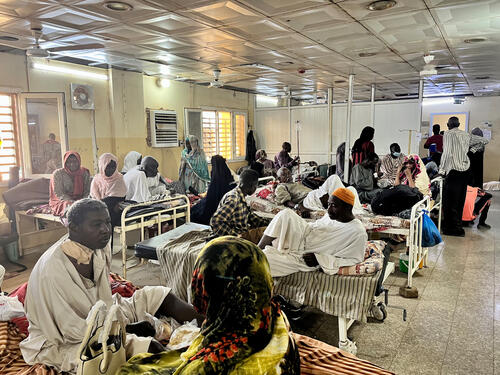
Simultaneously, Sudan is facing multiple, overlapping health emergencies. MSF teams have treated over 12,000 patients — including women and children — for trauma injuries directly resulting from violent attacks. During the first week of February 2025, MSF teams in Khartoum, North Darfur, and South Darfur states treated mass influxes of war-wounded patients. Sudan is also experiencing one of the worst maternal and child health crises we are seeing anywhere in the world. In October 2024, in two MSF-supported facilities in Nyala, the capital of South Darfur, 26 per cent of the pregnant and breastfeeding women seeking care were acutely malnourished.
“Outbreaks of measles, cholera and diphtheria are spreading, driven by poor living conditions and disrupted vaccination campaigns,” says Marta Cazorla, MSF Emergency Coordinator. “Mental health support and care for survivors of sexual violence remain painfully limited.”
“These compounding crises reflect not just the brutality of the conflict, but the dire consequences of the crumbling public healthcare system and a failing humanitarian response,” says Cazorla.
Since April 2023, more than 1.7 million people have sought medical consultations at hospitals, health facilities and mobile clinics MSF supports or is working in. More than 320,000 people were admitted in our emergency wards.
The warring parties are not only failing to protect civilians — they are actively compounding their suffering.Claire San Filippo, MSF Emergency Coordinator
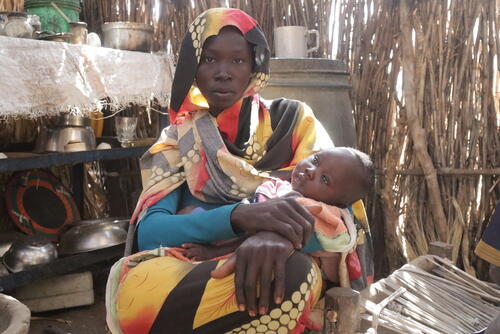
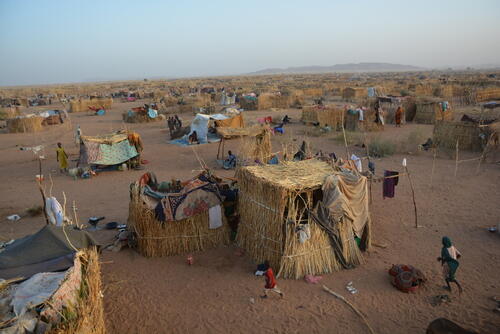
More than 13 million people have been displaced by the conflict,2 many of them multiple times. Of these, 8.9 million remain displaced inside Sudan, while 3.9 million have crossed into neighbouring countries. Many live in overcrowded camps or makeshift shelters, without access to food, water, or healthcare. People depend entirely on humanitarian organisations — but only where these organisations are responding.
Health facilities destroyed
According to the World Health Organization (WHO), more than 70 per cent of health facilities in conflict-affected areas are barely operational or have closed, leaving millions of people without access to critical care amid one of the worst humanitarian crises in recent history. Since the war began, MSF has recorded over 80 violent incidents targeting our staff, infrastructure, vehicles, and supplies. Clinics have been looted and destroyed, medicines stolen, and healthcare workers assaulted, threatened, or killed.
In June 2023, Tawila hospital, in North Darfur, was attacked and looted.
“Buildings were destroyed, even beds were looted, and medicines were burned to the ground,” says Muhammad Yusuf Ishaq Abdullah, MSF health promotion officer in Tawila. “From afar, it looked like a hospital, but when you entered it, it was a shelter for snakes and grass.”
These attacks must stop — medical personnel and facilities are not targets.
Upcoming rainy season
The rainy season, fast approaching, threatens to make an already catastrophic situation even worse. Supply routes could be severed and entire regions flooded, cutting off people just as the hunger gap peaks, and malnutrition and malaria spike.
MSF calls for immediate preparedness measures ahead of the rainy season. More border crossings must be opened, and key roads and bridges must be repaired and kept accessible, especially in Darfur, where seasonal flooding isolates communities year after year.
Humanitarian restrictions must be lifted, and unhindered access must be guaranteed. MSF urges all groups — including donors, governments, and UN agencies — to enable and prioritise aid delivery, ensuring that assistance not only reaches the country but is transported swiftly and safely to the hardest-hit and most remote communities. Without a serious commitment to overcoming the political, financial, logistical, and security barriers that hinder last-mile delivery, countless lives will remain beyond the reach of help.
The people of Sudan have endured this horror for two years too long; they cannot and should not wait any longer.
Conflict in Sudan
After watching her mother killed, she was raped: Darfur’s sexual violence must end
Project Update
25 Sep 2025
Conflict in Sudan
Deadly attacks across Darfur leave nearly 100 wounded in MSF-supported facilities
Press Release
11 Sep 2025
Conflict in Sudan
Sudan: MSF suspends activities at Zalingei hospital following armed attack
Press Release
19 Aug 2025